
Picture a cozy evening, the aroma of a delicious stir-fry wafting through your home. That’s the magic of a glass noodles recipe — it’s quick, colorful, and perfect for a weeknight dinner or a gathering with friends.
These delicate noodles soak up flavors beautifully, providing a unique texture that complements a variety of ingredients. Whether you’re using them in a salad, soup, or stir-fry, they never fail to impress!
Why You’ll Love This Recipe
This recipe is a delightful blend of flavors and textures that brings joy to any meal. Here are a few reasons to give it a try:
- Quick to prepare, perfect for busy nights.
- Versatile — great in salads, soups, or stir-fries.
- Light and chewy, making them a unique pasta alternative.
- Can be customized with your favorite vegetables and proteins.
- Gluten-free option, suitable for various diets.
My Experience Making This Recipe
The first time I made glass noodles, I was instantly hooked. The noodles transformed into a silky, smooth base for a medley of colorful veggies and savory sauce.
Everyone at the table was raving about the dish, and it quickly became a staple in my kitchen. I love how easy it is to switch up ingredients based on what I have on hand!
Recipe Overview
- Recipe Name: Glass Noodles
- Servings: 4
- Prep Time: 10 minutes
- Cook Time: 10 minutes
- Total Time: 20 minutes
- Course: Main Dish
- Cuisine: Asian
- Calories per Serving: 200
Equipment You Will Need
- Large pot
- Colander
- Wok or large skillet
- Measuring cups and spoons
- Cooking spatula
Ingredients for Glass Noodles
- 8 oz glass noodles
- 2 tbsp vegetable oil
- 1 cup bell peppers, sliced
- 1 cup carrots, julienned
- 1 cup broccoli florets
- 3 cloves garlic, minced
- 3 tbsp soy sauce
- 2 tbsp oyster sauce (or vegetarian alternative)
- 1 tsp sesame oil
- Green onions, chopped for garnish
Ingredient Notes and Substitutions
- Glass noodles: They offer a unique chewy texture; you can substitute with rice noodles if needed.
- Vegetable oil: This helps to sauté the vegetables; olive oil can be used as a substitute.
- Bell peppers: They add sweetness and color; zucchini can work in their place.
- Oyster sauce: It adds depth of flavor; hoisin sauce is a good vegetarian alternative.
- Garlic: Essential for aroma; shallots can be used if you prefer a milder flavor.
How to Make Glass Noodles
Step 1: Soak the Noodles
Begin by soaking the glass noodles in warm water for about 15 minutes until they are soft. This step is crucial as it ensures the noodles are pliable for cooking.
Step 2: Drain the Noodles
Once softened, drain the noodles in a colander and rinse them under cold water. This prevents them from sticking together as you cook.
Step 3: Prepare the Vegetables
While the noodles soak, slice your bell peppers, julienne the carrots, and chop the broccoli. Fresh vegetables add color, crunch, and nutrition to the dish.
Step 4: Heat the Oil
In a wok or large skillet, heat the vegetable oil over medium-high heat. This helps to sauté the vegetables quickly while retaining their flavor and texture.
Step 5: Sauté the Garlic
Add the minced garlic to the heated oil and stir for about 30 seconds until fragrant. Sautéing garlic first infuses the oil with flavor.
Step 6: Add the Vegetables
Throw in the bell peppers, carrots, and broccoli, cooking for about 3-4 minutes until just tender. This ensures your veggies are cooked but still crisp.
Step 7: Mix in the Noodles
Add the drained glass noodles to the skillet with the sautéed vegetables. Stir gently to combine everything without breaking the noodles.
Step 8: Add the Sauces
Pour in the soy sauce, oyster sauce, and sesame oil, tossing everything together to coat the noodles evenly. This step ensures that every bite is packed with flavor!
Pro Tip: Make sure to stir-fry the noodles over high heat for that perfect chewy texture.
Tips for the Best Glass Noodles
- Do not over-soak the noodles; they should be just soft enough to handle.
- Use a mix of colorful vegetables for a vibrant dish.
- Adjust the sauces according to your taste preference; more soy sauce will add saltiness.
- For extra protein, add cooked chicken, shrimp, or tofu.
- Garnish with sesame seeds or fresh herbs for added flavor.
Common Mistakes to Avoid
- Overcooking the noodles will make them mushy; always follow the soaking time.
- Not rinsing the noodles can lead to clumping; cold water is key.
- Cooking on low heat may result in steaming rather than stir-frying; high heat is essential.
- Skipping the garlic will diminish flavor; it’s a must for this dish.
Serving Suggestions
This dish is great on its own but pairs beautifully with various sides. Consider these options:
- Spring rolls for a crunchy appetizer.
- Grilled chicken or shrimp for added protein.
- Steamed dumplings for a comforting touch.
- Fresh salad with a tangy dressing to balance flavors.
- Spicy chili sauce on the side for a kick.
Variations to Try
- Add sautéed mushrooms for an earthy flavor.
- Incorporate snap peas for extra crunch.
- Try a spicy peanut sauce instead of soy sauce for a nutty twist.
- Mix in some scrambled eggs for added richness.
- Substitute veggies based on the season for freshness.
Dietary Adaptations
- Gluten-free: Use tamari instead of soy sauce.
- Dairy-free: This recipe is naturally dairy-free.
- Vegan: Omit oyster sauce or use a vegan substitute.
- Low-carb/keto: Consider using zucchini noodles for a low-carb option.
Storage and Reheating
Refrigerator
Store any leftovers in an airtight container in the fridge for up to 3 days.
- Let the dish cool before sealing.
- Reheat in a skillet over medium heat to preserve texture.
Freezer
You can freeze the noodles, but they may lose some texture. Store in a freezer-safe container for up to 2 months.
- Thaw in the fridge overnight before reheating.
- Reheat quickly in a pan for best results.
Reheating
Reheat on the stove over medium heat, adding a splash of water to prevent sticking. This keeps the noodles from drying out.
- Stir frequently until heated through.
- Enjoy your leftovers like they are fresh!
Nutrition Information
| Nutrient | Amount |
|---|---|
| Calories | 200 |
| Total Fat | 8g |
| Saturated Fat | 1g |
| Carbohydrates | 30g |
| Fiber | 2g |
| Sugar | 3g |
| Protein | 5g |
| Sodium | 600mg |
| Cholesterol | 0mg |
This information is an estimate and may vary based on ingredient brands and preparation methods.
Frequently Asked Questions
Can I use a different type of noodle?
Absolutely! Rice noodles are a great substitute if you can’t find glass noodles.
Can I make this dish ahead of time?
Yes, you can prepare the ingredients in advance and cook them right before serving.
How do I store leftovers?
Store leftovers in an airtight container in the refrigerator for up to 3 days.
Why are my glass noodles sticking together?
If they stick, they might have been over-soaked; rinse them with cold water to separate.
Can I add protein to this dish?
Absolutely! Cooked chicken, shrimp, or tofu work wonderfully in this recipe.
Final Thoughts
This glass noodles recipe is a delightful way to bring some Asian flair to your dinner table. With its quick preparation and endless customization options, it’s bound to become a family favorite.
So go ahead and give this recipe a try — you won’t be disappointed! For more delicious ideas, check out my recipes for hibachi noodles and ramen salad.
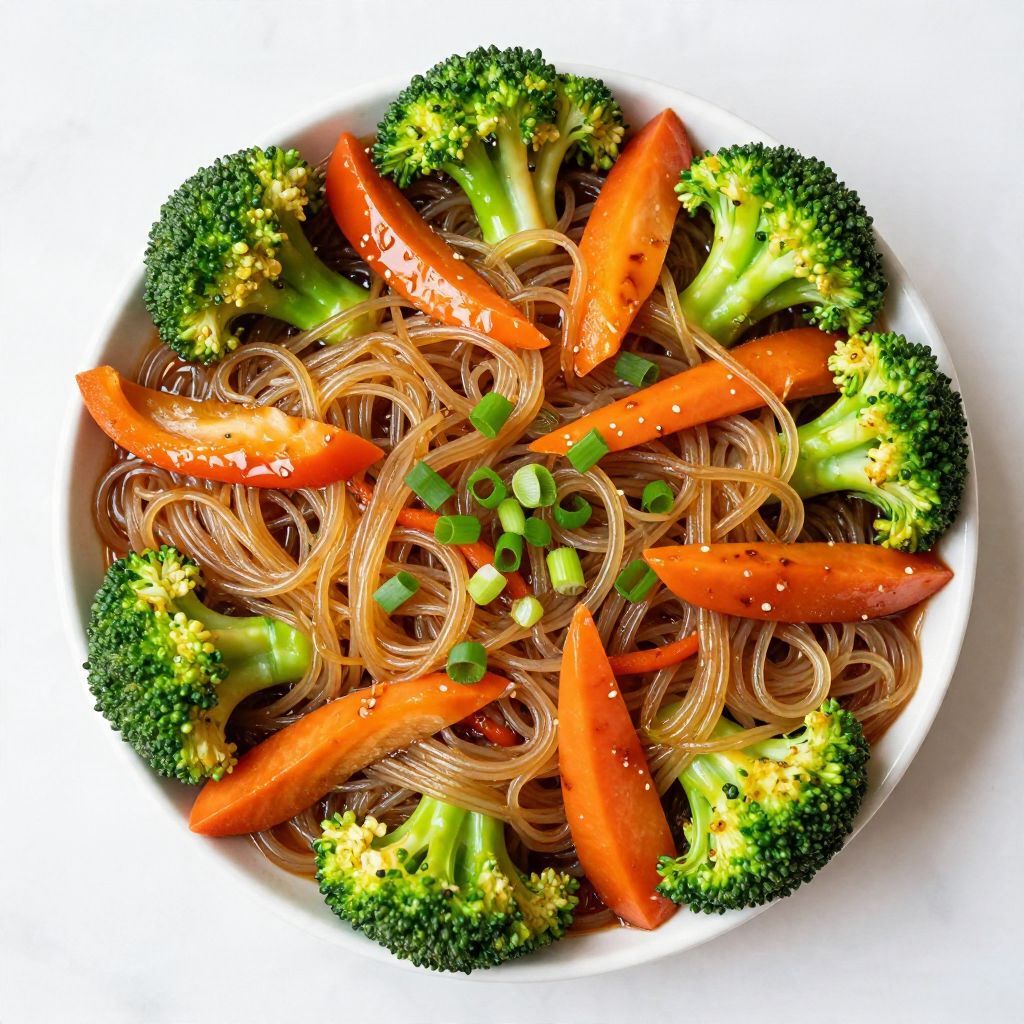
Glass Noodles
Ingredients
Equipment
Method
- Soak the glass noodles in warm water for about 15 minutes until they are soft.
- Drain the noodles in a colander and rinse them under cold water.
- Slice the bell peppers, julienne the carrots, and chop the broccoli.
- In a wok or large skillet, heat the vegetable oil over medium-high heat.
- Add the minced garlic to the heated oil and stir for about 30 seconds until fragrant.
- Add the bell peppers, carrots, and broccoli, cooking for about 3-4 minutes until just tender.
- Add the drained glass noodles to the skillet and stir gently to combine.
- Pour in the soy sauce, oyster sauce, and sesame oil, tossing everything together.