
If you’ve ever experienced the vibrant flavors of Korean cuisine, you know there’s nothing quite like the savory depth of a good bibimbap sauce. This sauce is the secret to transforming a simple bowl of rice and veggies into a culinary masterpiece bursting with flavor and personality. With its spicy, sweet, and umami notes, this sauce is versatile enough to complement any dish, not just bibimbap.
Why You’ll Love This Recipe
This bibimbap sauce is a must-try for anyone who loves bold flavors. It’s quick to whip up and remarkably satisfying.
- Perfect balance of spicy, sweet, and salty.
- Ready in just minutes with minimal effort.
- Great for dipping, drizzling, or marinating.
- Customizable with your favorite ingredients.
- Enhances any dish from rice bowls to grilled meats.
My Experience Making This Recipe
The first time I made this sauce, I couldn’t believe how just a few ingredients could create such a punchy flavor. After mixing it together, I could hardly wait to drizzle it over my rice and veggies.
When my family tried it, their eyes lit up, and I knew I had struck gold. It became an instant favorite, and I now always keep a batch ready in the fridge.
Recipe Overview
- Recipe Name: Bibimbap Sauce
- Servings: 4
- Prep Time: 10 minutes
- Cook Time: 0 minutes
- Total Time: 10 minutes
- Course: Sauce
- Cuisine: Korean
- Calories per Serving: 80
Equipment You Will Need
- Mixing bowl
- Whisk or fork
- Measuring spoons
- Storage container
Ingredients for Bibimbap Sauce
- 3 tablespoons of gochujang (Korean red chili paste)
- 1 tablespoon of soy sauce
- 1 tablespoon of sesame oil
- 1 tablespoon of rice vinegar
- 1 tablespoon of honey or maple syrup
- 1 teaspoon of sesame seeds
- 1 clove of minced garlic
- 1 teaspoon of water (to thin, if needed)
Ingredient Notes and Substitutions
- Gochujang: This gives the sauce its signature heat and flavor. Substitute with sriracha for a different spice profile.
- Soy sauce: Adds saltiness and depth. Use tamari for a gluten-free option.
- Sesame oil: Provides a rich, nutty flavor. You can swap it with olive oil, but the flavor will change.
- Rice vinegar: Balances the flavors with acidity. Apple cider vinegar works as an alternative.
- Honey: Sweetens the sauce. Maple syrup can be used for a vegan option.
How to Make Bibimbap Sauce
Step 1: Gather Your Ingredients
Start by gathering all your ingredients to make the process smooth. This way, you won’t be running around the kitchen searching for that elusive gochujang.
Step 2: Combine the Base
In a mixing bowl, add the gochujang, soy sauce, and sesame oil. This trio forms the flavorful foundation of your sauce.
Step 3: Add the Acidity
Next, pour in the rice vinegar. This will brighten the sauce and add a nice tang that balances the heat.
Step 4: Sweeten It Up
Add the honey or maple syrup. This sweetness is key to cutting through the heat of the gochujang.
Step 5: Mix in the Garlic
Stir in the minced garlic. This adds an aromatic punch that elevates the sauce’s overall flavor.
Step 6: Whisk Until Smooth
Use a whisk or fork to mix everything until smooth. You want a creamy consistency that will coat your ingredients beautifully.
Step 7: Adjust the Consistency
If the sauce is too thick, add a teaspoon of water to thin it out. Adjusting the consistency will help it drizzle perfectly over your bibimbap.
Step 8: Store and Enjoy
Transfer your sauce to a storage container and refrigerate it until you’re ready to use it. It keeps well for about a week and only gets better with time.
Pro Tip: Make a double batch so you always have this delicious sauce ready on hand.
Tips for the Best Bibimbap Sauce
- Use high-quality gochujang for authentic flavor.
- Experiment with the sweetness level to suit your taste.
- Let the sauce sit for a few minutes after mixing for flavors to meld.
- Adjust the spiciness by adding more or less gochujang.
- Pair it with fresh ingredients for a delightful contrast.
Common Mistakes to Avoid
- Using too much gochujang can overpower the sauce. Start with less and add more to taste.
- Not balancing the sweet and salty components can result in a flat flavor.
- Skipping the garlic removes a key flavor element.
- Forgetting to adjust the consistency can lead to a sauce that’s too thick.
Serving Suggestions
This bibimbap sauce shines when drizzled over rice bowls, grilled meats, or even as a dipping sauce. Here are some great pairing ideas:
- Steamed vegetables
- Grilled chicken or beef
- Tofu stir-fry
- Rice noodles
Variations to Try
- Add a splash of lime juice for a citrusy twist.
- Incorporate minced ginger for an extra layer of flavor.
- Mix in chopped scallions for added freshness.
- Use chili flakes for an extra kick instead of gochujang.
Dietary Adaptations
- Gluten-free: Use tamari instead of soy sauce.
- Dairy-free: All ingredients are naturally dairy-free.
- Vegan: Substitute honey with maple syrup.
- Low-carb/Keto: Use a sugar substitute instead of honey.
Storage and Reheating
Refrigerator
Store the sauce in an airtight container in the refrigerator. It will keep for up to a week.
- Label the container with the date.
- Check for any changes in smell or texture before use.
Freezer
For longer storage, freeze the sauce in ice cube trays. Once frozen, transfer to a freezer bag.
- Use within three months for best flavor.
- Thaw in the refrigerator before using.
Reheating
Simply mix and enjoy the sauce cold, or warm it gently in a small saucepan. Avoid boiling to preserve the flavors.
- Stir well to recombine if separated.
- Heat gently to avoid altering the taste.
Nutrition Information
| Nutrient | Amount |
|---|---|
| Calories | 80 |
| Total Fat | 5g |
| Saturated Fat | 0.5g |
| Carbohydrates | 9g |
| Fiber | 0g |
| Sugar | 5g |
| Protein | 1g |
| Sodium | 300mg |
| Cholesterol | 0mg |
This nutritional information is approximate and can vary based on specific ingredients used.
Frequently Asked Questions
Can I make this sauce ahead of time?
Absolutely! This sauce can be made a week in advance and stored in the refrigerator.
What if I don’t have gochujang?
You can substitute with sriracha or another chili paste, but it will change the flavor slightly.
How can I adjust the spice level?
Start with a smaller amount of gochujang and add more to taste for control over the heat.
Can I use this sauce as a marinade?
Yes, this sauce works wonderfully as a marinade for chicken, beef, or tofu.
What should I serve with bibimbap sauce?
This sauce pairs well with rice bowls, grilled meats, and fresh vegetables. Get creative!
Final Thoughts
This bibimbap sauce is a flavor powerhouse that you will want to keep on hand for all your meals. With just a few ingredients, you can create a sauce that elevates any dish.
Give this recipe a try, and don’t be surprised if it becomes a staple in your kitchen. For more delicious sauces, check out this Gochujang Sauce Recipe and this Hot Honey Sauce Recipe.
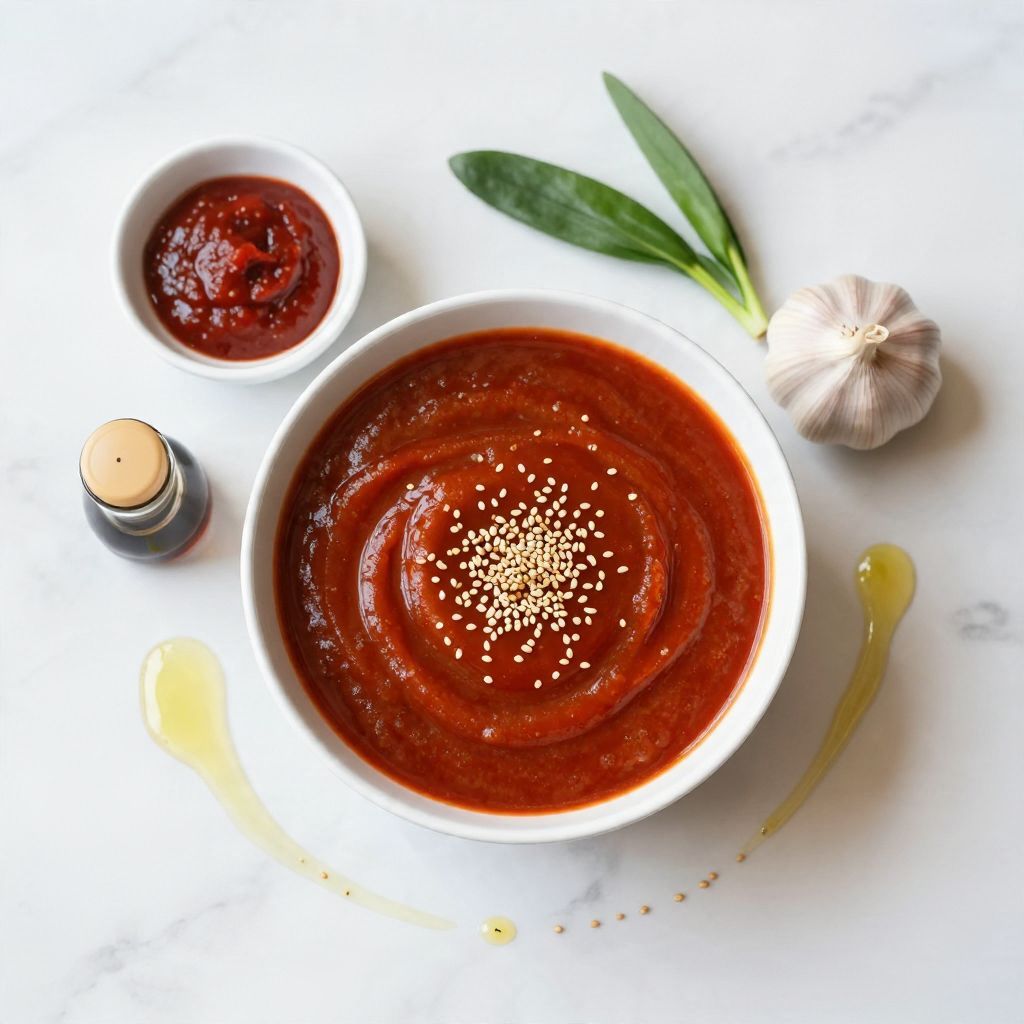
Bibimbap Sauce
Ingredients
Equipment
Method
- In a mixing bowl, add the gochujang, soy sauce, and sesame oil.
- Pour in the rice vinegar and mix.
- Add the honey or maple syrup and stir until well combined.
- Stir in the minced garlic.
- Use a whisk or fork to mix everything until smooth.
- If the sauce is too thick, add a teaspoon of water to thin it out.
- Transfer the sauce to a storage container and refrigerate.