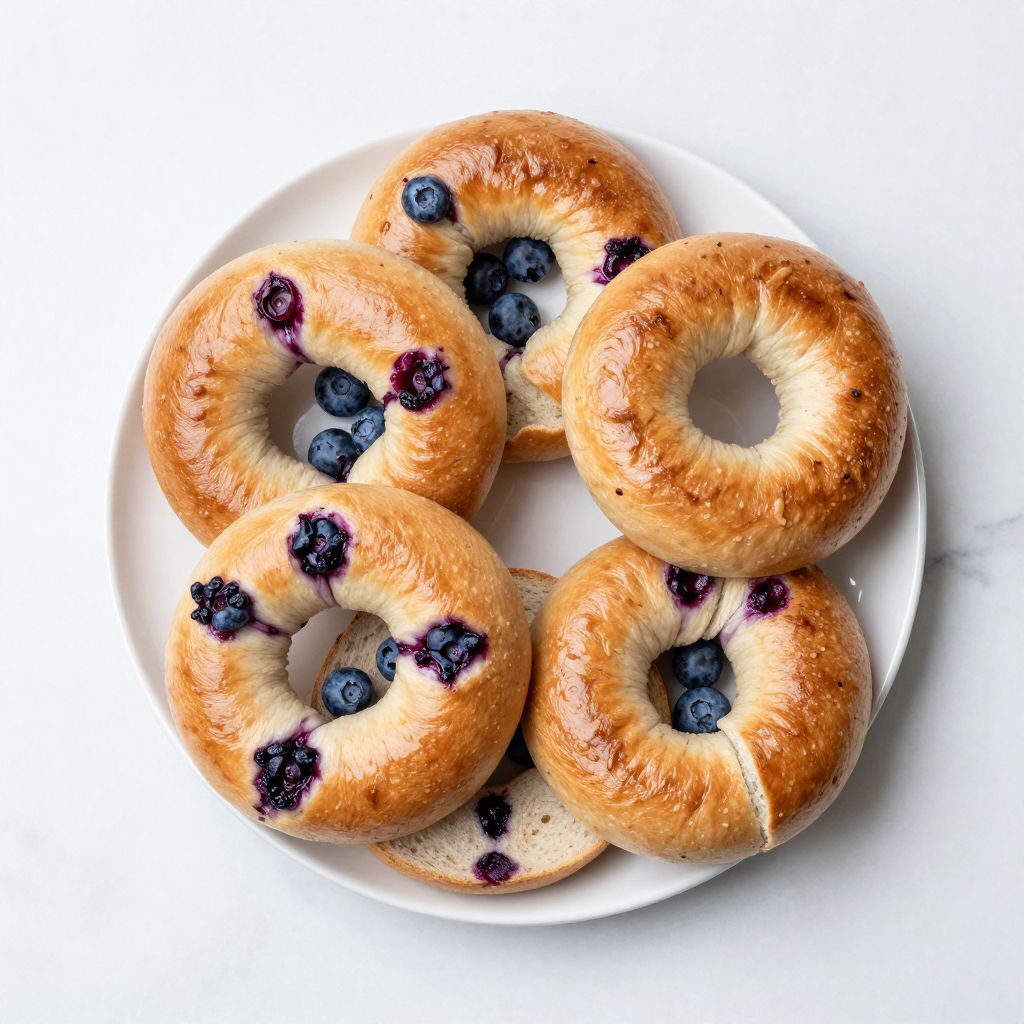
Nothing beats the smell of fresh bagels toasting in your kitchen on a lazy weekend morning, especially when those bagels are studded with plump, juicy blueberries. The blueberry bagel is a classic for good reason: it strikes the perfect balance between soft, chewy dough and bursts of sweet-tart fruit that make breakfast feel special without requiring hours of effort.
This recipe yields chewy, bakery-quality bagels with blueberries folded right into the dough, so every bite delivers that delicious fruit flavor. You’ll master the bagel-boiling technique that gives these their signature tender crumb and glossy exterior, and the whole process is more manageable than you might think.
Whether you’re a seasoned baker or someone who’s never made bagels before, you’ll find this recipe forgiving and rewarding. Let’s get started.
Why You’ll Love This Recipe
Homemade bagels beat the frozen or day-old grocery store versions by a mile. Once you nail this recipe, you’ll understand why people line up at bagel shops on weekend mornings.
- Soft, pillowy centers with a satisfying chew that store-bought bagels simply cannot match.
- Sweet blueberries throughout the dough mean you skip the jam jar and get fruit in every bite.
- The boiling step creates that signature glossy crust and tender crumb that makes bagels distinct.
- You control the sweetness level and can use fresh or frozen blueberries depending on your pantry.
- Impress your family or guests with fresh bagels that taste like they came straight from a New York bakery.
My Experience Making This Recipe
The first time I made bagels at home, I was nervous about the boiling step. I had visions of my carefully shaped dough falling apart in the water, but the dough is tougher than you’d expect.
What surprised me most was how quickly the dough comes together and how the blueberries release their color as the bagels bake, creating a beautiful purple-hued crust. My kitchen smelled incredible, and my partner came downstairs asking what bakery I’d raided.
The bagels stayed fresh for three days in an airtight container, and they toasted beautifully on day two. Now I make a batch every other weekend because homemade blueberry bagels have completely spoiled me for the store-bought kind.
Recipe Overview
- Recipe Name: Homemade Blueberry Bagels
- Servings: 8 bagels
- Prep Time: 20 minutes
- Rise Time: 2 to 3 hours (first rise) plus 30 to 45 minutes (second rise)
- Cook Time: 25 to 30 minutes
- Total Time: Approximately 4 hours
- Course: Breakfast or Brunch
- Cuisine: American
- Calories per Serving: 220
Equipment You Will Need
- Large mixing bowl
- Stand mixer with dough hook attachment (or strong arms for hand-kneading)
- Kitchen scale for accurate measurements (highly recommended)
- Bench scraper or dough cutter
- Parchment paper
- Large pot or Dutch oven for boiling
- Slotted spoon or skimmer
- Baking sheet or sheet pan
- Instant-read thermometer (optional but helpful)
- Small mesh strainer or colander
Ingredients for Blueberry Bagels
- 500 grams (3.5 cups) bread flour or all-purpose flour
- 7 grams (1.5 teaspoons) instant yeast
- 10 grams (2 teaspoons) salt
- 20 grams (1.5 tablespoons) granulated sugar
- 15 grams (1 tablespoon) honey
- 350 milliliters (1.5 cups) lukewarm water
- 150 grams (1 cup) fresh or frozen blueberries
- 1 tablespoon vegetable oil for coating the dough
- 2 tablespoons honey or light brown sugar for the boiling water
Ingredient Notes and Substitutions
- Bread flour creates the chewiest texture because of its higher protein content, which develops gluten. All-purpose flour works fine but will yield a slightly less chewy bagel.
- Instant yeast activates faster than active dry yeast and requires no blooming. Use active dry yeast at the same weight, but dissolve it in a small amount of warm water for 5 minutes before mixing.
- Salt strengthens the dough structure and controls fermentation speed. Kosher salt works, but table salt is saltier, so reduce to 1.5 teaspoons if using table salt.
- Sugar and honey feed the yeast and add subtle sweetness without making the bagels cake-like. You can swap the honey for another tablespoon of sugar, but honey adds moisture and a slight depth of flavor.
- Fresh blueberries are ideal, but frozen blueberries work perfectly well and won’t bleed as much if you don’t thaw them first. Wild blueberries are smaller and pack more flavor than cultivated varieties.
How to Make Blueberry Bagels
Step 1: Mix the Dry Ingredients
Combine the bread flour, instant yeast, salt, and sugar in a large bowl. Whisk them together for about 30 seconds to distribute the yeast evenly throughout the flour.
Even distribution of yeast prevents pockets of over-fermentation and ensures consistent rise. This simple step takes 30 seconds but makes a real difference in final texture.
Step 2: Add Water and Combine
Pour the lukewarm water (around 90 to 95 degrees Fahrenheit) into the bowl with the dry ingredients. Stir with a wooden spoon or the paddle attachment of your stand mixer until a shaggy dough forms and no dry flour remains.
Lukewarm water activates the yeast without killing it, which happens with water hotter than 110 degrees. You want the dough to feel slightly stiff and very sticky at this stage.
Step 3: Knead the Dough
Transfer the dough to a stand mixer fitted with the dough hook and knead on medium speed for 8 to 10 minutes. If mixing by hand, turn the dough onto a clean counter and knead firmly for 12 to 15 minutes until it becomes smooth and elastic.
Kneading develops gluten, which creates the chewy texture bagels are known for. The dough should feel smooth and slightly tacky but not sticky when you press your finger into it.
Step 4: Add Blueberries
Once the dough is smooth, add the blueberries gradually while the mixer is running on low speed. Mix for another minute until the blueberries are somewhat distributed, though some will break apart and color the dough slightly.
Adding blueberries after kneading prevents them from breaking up too much during the kneading process. If using frozen blueberries, you can add them straight from the freezer without thawing.
Step 5: First Rise
Form the dough into a ball and place it in a lightly oiled bowl. Cover with a damp kitchen towel or plastic wrap and let it rise at room temperature (68 to 72 degrees Fahrenheit) for 2 to 3 hours, until doubled in size.
A slow, cool rise develops flavor and creates a more open crumb structure. You can also refrigerate the dough overnight (8 to 12 hours) and continue the next morning, which actually improves the flavor.
Step 6: Shape the Bagels
Turn the dough out onto a lightly floured counter and gently pat it into a rectangle. Divide the dough into 8 equal pieces using a bench scraper or knife.
Working with one piece at a time, roll it into a tight ball, then poke your thumb through the center to create a hole. Gently stretch the dough to form a ring about 3 inches in diameter with a 1.5-inch hole in the center.
The hole should be large enough that it doesn’t close up during proofing and baking. Undersized holes will shrink and create dense, gummy centers.
Step 7: Second Rise (Proofing)
Place shaped bagels on a parchment-lined baking sheet and cover loosely with plastic wrap. Let them proof for 30 to 45 minutes at room temperature.
The bagels should puff slightly and feel springy when you gently poke them, but they should still retain an indent. If proofing too long, the bagels become overstuffed and lose their structure during boiling.
Step 8: Prepare for Boiling
Fill a large pot with about 3 quarts of water and bring it to a rolling boil. Add the honey or brown sugar to the boiling water, which adds slight sweetness and helps create the bagel’s signature crust.
Honey caramelizes on the outside of the bagels, creating a glossy, slightly sweet exterior. The honey also raises the pH of the water slightly, which affects how the gluten sets.
Step 9: Boil the Bagels
Working in batches to avoid crowding the pot, gently place 2 to 3 bagels into the boiling water. They will sink initially, then float to the surface after about 30 to 45 seconds.
Boil for 1 minute per side (flip with a slotted spoon). The boiling gelatinizes the starches on the surface, creating that signature chewy exterior.
Remove each bagel with a slotted spoon and transfer to a clean kitchen towel or parchment paper to drain briefly. Do not skip the boiling step or leave bagels in the water too long, as they’ll become dense and gummy.
Step 10: Bake the Bagels
Place the boiled bagels on a parchment-lined baking sheet and bake in a preheated 425-degree Fahrenheit oven for 20 to 25 minutes. The bagels are done when the crust is deep golden brown and sounds hollow when tapped on the bottom.
The high oven temperature creates a crispy, caramelized exterior while the inside stays soft. If bagels aren’t browning after 20 minutes, increase the oven temperature to 450 degrees for the final few minutes.
Step 11: Cool
Transfer the bagels to a wire rack and let them cool completely, about 30 to 45 minutes. This allows the interior to set properly and prevents a gummy texture when you slice and toast them.
Bagels are best enjoyed fresh but will stay fresh in an airtight container at room temperature for up to 3 days. Slice them horizontally using a serrated knife with a gentle sawing motion.
Pro Tip: If your bagels turn out dense or gummy, your oven temperature during baking was too low or you boiled them too long. Aim for 1 minute per side and a 425-degree oven for bagels that are crispy outside and tender inside.
Tips for the Best Blueberry Bagels
- Use a kitchen scale to measure flour and water by weight for consistency. Measuring by volume (cups) can vary by up to 10 percent depending on how tightly you pack the flour.
- Keep your water temperature between 90 and 95 degrees Fahrenheit when mixing. Water that’s too cold slows fermentation, while water that’s too hot kills the yeast.
- Don’t skip the first rise or rush it. A longer, slower fermentation develops flavor and improves the final texture far more than a quick 45-minute rise.
- Pat your bagels dry after boiling before placing them on the baking sheet. Excess water on the surface prevents proper browning and crust formation.
- Invest in an instant-read thermometer to check your water temperature. This single tool prevents most bagel-making mistakes.
- If you want extra-shiny, gorgeous bagels, brush them lightly with an egg white wash before baking. This step is optional but creates a beautiful finish.
Common Mistakes to Avoid
- Boiling bagels for too long causes them to absorb excess water and become dense and gummy. Stick to 1 minute total, 30 seconds per side.
- Skipping the boiling step entirely results in a bread-like texture instead of the chewy, distinct bagel crumb. Boiling is not optional.
- Under-proofing bagels before boiling means they sink and stay underwater instead of floating. This creates heavy, dense bagels instead of light and chewy ones.
- Using water that’s too hot kills the yeast and prevents proper rise. Always test temperature with a thermometer.
- Shaping bagels too loose means the hole closes up during baking and you end up with dense, gummy centers. Make sure the hole is at least 1.5 inches in diameter.
Serving Suggestions
Fresh blueberry bagels are delicious on their own, but they also pair beautifully with a variety of spreads and toppings. Toast them until the crust crisps slightly, then top with your favorite accompaniment.
- Cream cheese and a thin drizzle of honey, letting the sweetness of the bagel shine through.
- Lightly whipped ricotta with a pinch of cinnamon and a sprinkle of granulated sugar.
- Greek yogurt with a touch of vanilla extract and fresh strawberries for a breakfast bowl vibe.
- Smoked salmon, cream cheese, capers, and red onion for a savory brunch option.
- Almond butter and sliced banana for a simple, satisfying breakfast sandwich.
Variations to Try
- Blueberry and Lemon: Add the zest of one lemon to the dough for a bright, citrusy flavor that complements the blueberries beautifully. This creates a lighter, more summery bagel.
- Blueberry and Poppy Seed: Fold poppy seeds into the dough along with the blueberries for a nod to the classic poppy seed bagel with a fruity twist. The seeds add a subtle earthiness.
- Blueberry Cinnamon Swirl: Brush the shaped bagels with a mixture of softened butter, cinnamon, and brown sugar before proofing. This creates cinnamon roll notes within the bagel.
- Mixed Berry: Swap half the blueberries for raspberries or blackberries. The tartness of raspberries creates interesting flavor variation while maintaining the chewy texture.
- Blueberry Cream Cheese Bagels: Partially shape the bagels, add a spoonful of plain cream cheese in the center, then fold the dough over and reshape. You’ll have a bagel with cream cheese baked right in.
Dietary Adaptations
- Gluten-Free: Substitute bread flour with a gluten-free flour blend designed for bagels, using an extra tablespoon of water and adding 1 teaspoon of xanthan gum. The texture won’t be quite as chewy, but you’ll still get a satisfying bagel.
- Dairy-Free: This recipe contains no dairy, so it’s naturally dairy-free. Use any spread you prefer, from dairy-free cream cheese to plant-based butter.
- Vegan: The recipe is already vegan-friendly. For the egg wash shine, use a mixture of plant milk and cornstarch instead of egg white.
- Low-Carb or Keto: This traditional bagel recipe is not suitable for low-carb or keto diets. Making true low-carb bagels requires specialty flours and results in a very different texture.
- Lower Sugar: Reduce the sugar in the dough to 10 grams (2 teaspoons) and omit the honey in the boiling water. You’ll lose some browning, but the bagels will be less sweet.
Storage and Reheating
Refrigerator
Store cooled bagels in an airtight container or resealable bag for up to 4 days. They’ll firm up slightly but remain perfectly fresh.
- Slice before storing if you plan to toast them.
- Check for any mold before eating, though bagels rarely mold within 4 days.
Freezer
Freeze bagels in a freezer-safe bag for up to 3 months. Slice them before freezing for easy toasting later.
- Thaw at room temperature for 30 minutes or toast directly from frozen for 2 to 3 minutes per side.
- Frozen bagels taste nearly as fresh as fresh bagels when toasted.
Reheating
Toast bagels in a regular toaster or toaster oven until the crust crisps, about 1 to 2 minutes. Avoid the microwave, which makes them rubbery and dense.
- For a softer bagel, wrap it in a damp paper towel and microwave for 15 to 20 seconds (though toasting is superior).
- A toaster oven gives you the most control over browning and texture.
Nutrition Information
| Nutrient | Amount |
|---|---|
| Calories | 220 |
| Total Fat | 1.5 grams |
| Saturated Fat | 0 grams |
| Carbohydrates | 45 grams |
| Fiber | 2 grams |
| Sugar | 5 grams |
| Protein | 8 grams |
| Sodium | 440 milligrams |
| Cholesterol | 0 milligrams |
Nutritional values are approximate and based on USDA data and standard ingredient measurements. Values may vary depending on specific ingredients and brands used.
Homemade Blueberry Bagels
Chewy, bakery-quality bagels studded with fresh or frozen blueberries and a glossy crust from a quick honey water boil.
- Large mixing bowl
- Stand mixer with dough hook (or for hand-kneading)
- Kitchen scale
- Bench scraper
- Parchment paper
- Large pot or Dutch oven
- Slotted spoon
- Baking sheet
- Instant-read thermometer (optional)
- Wire rack
Main
- 500 grams 3.5 cups bread flour or all-purpose flour
- 7 grams 1.5 teaspoons instant yeast
- 10 grams 2 teaspoons salt
- 20 grams 1.5 tablespoons granulated sugar
- 15 grams 1 tablespoon honey
- 350 milliliters 1.5 cups lukewarm water
- 150 grams 1 cup fresh or frozen blueberries
- 1 tablespoon vegetable oil for coating the dough
- 2 tablespoons honey or light brown sugar for the boiling water
- In a large bowl whisk together the flour, instant yeast, salt, and granulated sugar until evenly distributed.
- Add lukewarm water (90–95°F) and stir until a shaggy dough forms with no dry flour remaining.
- Knead the dough in a stand mixer with the dough hook on medium speed for 8–10 minutes, or by hand on a floured surface for 12–15 minutes, until smooth and elastic.
- With the mixer on low speed, gradually add the blueberries and mix for 1 minute until they are evenly incorporated.
- Form the dough into a ball in a lightly oiled bowl, cover, and let rise at room temperature (68–72°F) for 2–3 hours or until doubled.
- Turn the dough onto a lightly floured surface, divide into 8 equal pieces, roll each into a ball, and create a 1.5-inch hole by poking and stretching.
- Place shaped bagels on a parchment-lined baking sheet, cover loosely, and proof for 30–45 minutes at room temperature until puffy.
- Heat 3 quarts of water in a large pot to a rolling boil, add 2 tablespoons honey or brown sugar, and maintain a gentle boil.
- Boil bagels in batches, 2–3 at a time, for 1 minute total (30 seconds per side); drain on parchment or a clean towel.
- Preheat the oven to 425°F and bake boiled bagels on a parchment-lined sheet for 20–25 minutes until deep golden brown.
- Transfer baked bagels to a wire rack and cool completely, about 30–45 minutes, before slicing and serving.
Bagels are best enjoyed fresh but will stay fresh in an airtight container at room temperature for up to 3 days.
Frequently Asked Questions
Can I use whole wheat flour instead of bread flour?
Yes, but replace only 25 to 50 percent of the bread flour with whole wheat flour to maintain chewiness. Full whole wheat bagels are much denser and will require extra water.
How far in advance can I make bagel dough?
You can refrigerate the bulk dough for up to 24 hours after the first rise, or shape the bagels and refrigerate them overnight before boiling. Overnight proofing in the fridge actually improves flavor through cold fermentation.
My bagels sank instead of floated during boiling. What went wrong?
Your bagels were under-proofed. They need to rise enough that they’re light and airy before boiling. Next time, extend the second rise until the bagels feel puffy and springy when poked.
Can I add blueberry jam to the dough instead of whole blueberries?
Jam will make the dough too wet and sticky, and it won’t distribute evenly. Stick with whole blueberries, either fresh or frozen, for the best texture and flavor distribution.
What’s the difference between these homemade bagels and New York style bagels?
This recipe yields chewy, traditional bagels similar to New York style. True NYC bagels use slightly higher hydration dough and sometimes include a touch of malt barley for color, but this recipe gets you very close.
Why do my bagels have a dense, gummy center?
This happens from boiling too long, insufficient baking temperature, or under-proofing before boiling. Boil for exactly 1 minute total, bake at 425 degrees, and ensure your bagels are puffy before the water bath.
Can I make half a batch?
Absolutely. Divide all ingredient quantities by 2 to make 4 bagels instead of 8. The process remains the same.
Final Thoughts
Making blueberry bagels at home seems intimidating at first, but once you understand the boiling step and master shaping, you’ll never look back. These bagels rival anything you’ll find at a bakery, and the satisfaction of slicing into one you made yourself is unbeatable.
Your first batch might not be perfect, and that’s completely fine. Bagel-making rewards practice, and even “imperfect” homemade bagels taste infinitely better than store-bought versions. Set aside an afternoon, gather your ingredients, and enjoy the process of becoming a bagel maker.
Explore More Bagel and Breakfast Recipes
If you loved making these blueberry bagels, you might enjoy exploring other bagel and breakfast options in your kitchen. Check out our cottage cheese bagel recipe for a protein-packed variation, or try our cottage cheese flatbread recipe for a quicker breakfast option that uses similar techniques.