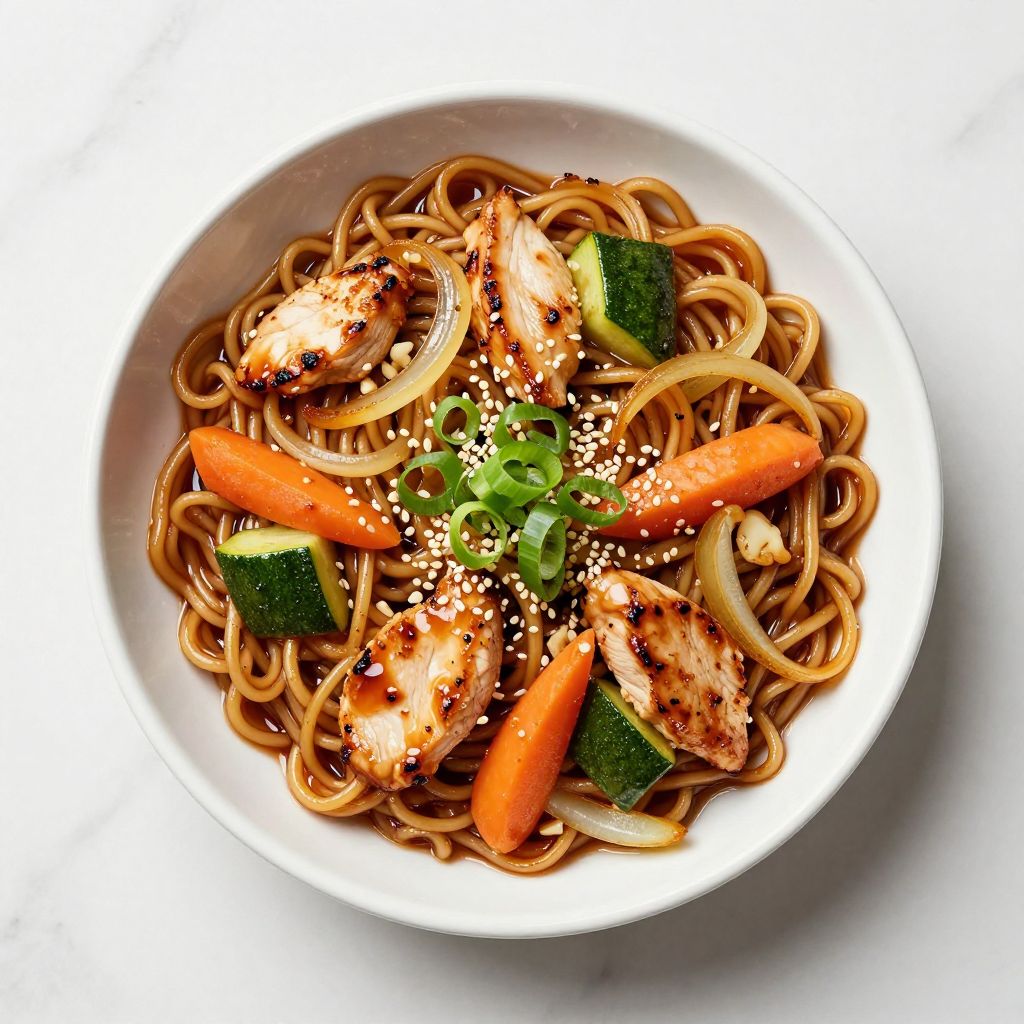
Ingredients
Equipment
Method
- Bring a large pot of salted water to a rolling boil, then add all four ramen blocks broken into chunks. Cook for 3 minutes until just barely tender, not soft. Drain the noodles in a colander and spread them on a clean kitchen towel or paper towels to dry for a couple of minutes.
- While the noodles cook, whisk together the soy sauce, oyster sauce, mirin, and sesame oil in a small bowl. Stir until the mirin fully dissolves and everything looks smooth and glossy. Taste and adjust seasoning if needed.
- Dice your protein into small, bite-sized pieces. Slice the onion thinly, dice the zucchini and carrots into small pieces, and mince the garlic. Have everything prepped and within arm's reach.
- Place your cast iron skillet or flat-top griddle over medium-high heat for 2 minutes until a drop of water sizzles on contact.
- Add 1 tablespoon of butter and 1 tablespoon of vegetable oil to the hot skillet, then immediately add your diced chicken or shrimp. Spread it out in a single layer and let it cook untouched for 2 minutes so it develops color. Use your spatula to chop and stir the protein, breaking it into smaller pieces as it cooks. Season with a pinch of white pepper and cook for another 2 minutes until cooked through. Transfer to a clean plate.
- Add the remaining butter and oil to the same skillet, then toss in the onions, carrots, and zucchini. Stir frequently for about 4 minutes until the vegetables soften and the onions start to caramelize slightly.
- Push the vegetables to the sides and add the drained noodles to the center of the skillet in a single layer. Spread the minced garlic over the noodles and let them sit undisturbed for 2 minutes so the bottom gets crispy and golden.
- Toss the noodles with the vegetables and garlic, breaking up any clumps with your spatula. Pour the sauce over everything and toss constantly for 2 minutes so the sauce coats every noodle and everything heats through.
- Return the cooked protein to the skillet and toss everything together for another 30 seconds. The noodles should look glossy and slightly darkened from the sauce, and everything should be steaming hot.
- Remove the skillet from heat and taste a bite. Add more white pepper if it needs heat, or a splash of soy sauce if it needs more saltiness. Garnish with sliced green onions and sesame seeds before serving.
Notes
The key to restaurant-quality hibachi noodles is hot heat and dry noodles; don't skip drying them after cooking, and keep your pan screaming hot throughout the entire process. Use a cast iron skillet rather than a non-stick pan for superior char. Leftovers can be stored in an airtight container for up to 3 days and reheat best on the stovetop in a hot skillet.