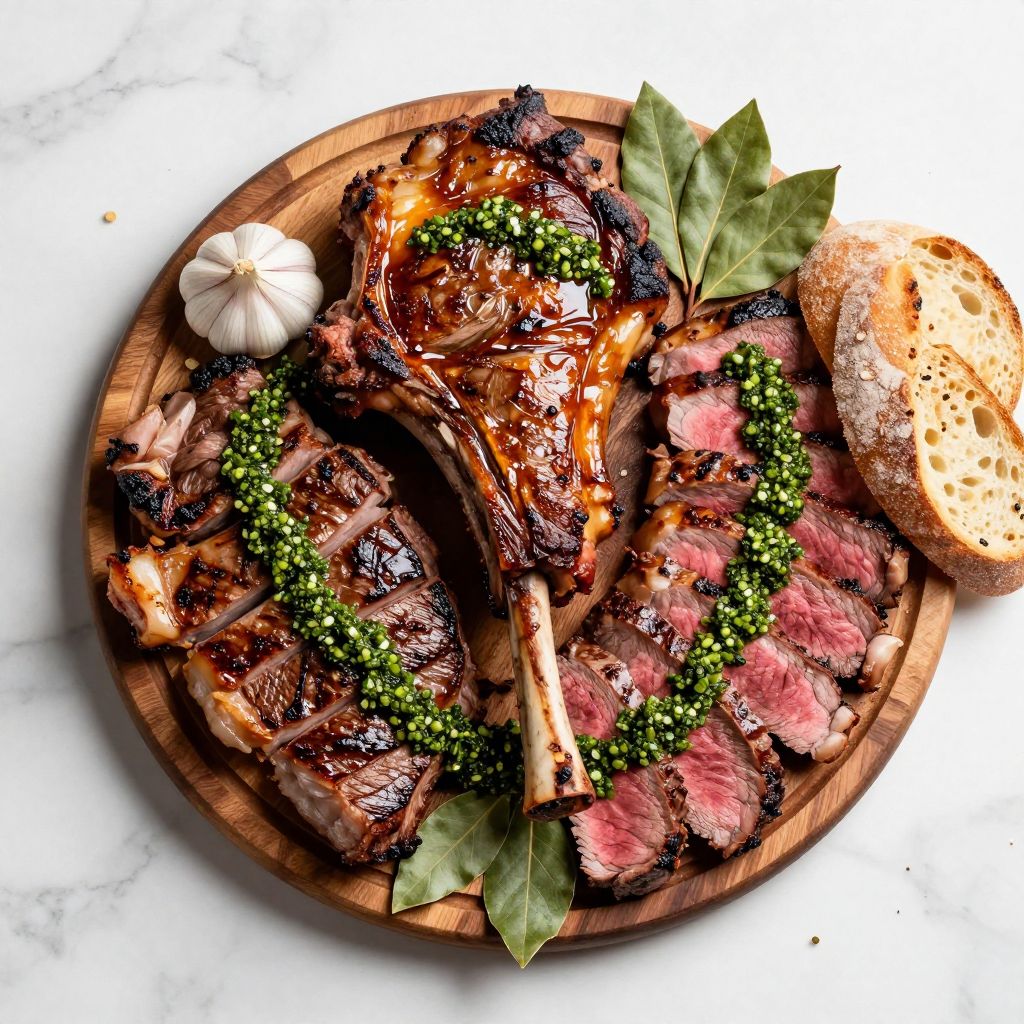
Ingredients
Equipment
Method
- Light your charcoal using a chimney starter and wait until the coals are completely covered with white ash, about 25 to 30 minutes. Spread the coals in an even layer on one side of the grill, creating a two-zone fire with direct and indirect heat areas.
- Remove the beef from refrigeration 30 minutes before cooking to bring it closer to room temperature. Sprinkle the coarse salt liberally over all sides of each cut, using more than feels comfortable since much of it will fall off during cooking.
- Place the short ribs bone-side down on the indirect heat zone, away from the coals, and close the lid. Cook for 2 to 2.5 hours to break down the connective tissue. Position them fat-side up so the rendering fat bastes the meat as it melts.
- After 30 minutes, toss a handful of soaked wood chips or a small log directly onto the coals to generate smoke. Add more wood every 45 minutes to maintain a light smoke throughout the cooking process.
- After the ribs have cooked for 90 minutes, place the flank steak on the indirect zone next to the ribs. Cook for about 45 to 60 minutes to reach medium-rare perfection. Turn it only once halfway through its cooking time.
- About 30 minutes before you plan to serve, move the skirt steak directly over the coals for a quick, hot sear. Cook for only 3 to 4 minutes per side to reach medium-rare with a gorgeous char.
- Insert a meat thermometer into the thickest part of the short ribs, aiming for 200 to 205 degrees Fahrenheit for fall-off-the-bone tenderness. The flank and skirt steaks should hit 130 to 135 degrees for medium-rare.
- Transfer all the meat to a large cutting board and let it rest for 10 to 15 minutes before slicing. Slice the flank and skirt steaks against the grain into thin strips, and separate the short ribs into individual bones for serving.
Notes
Keep a spray bottle filled with water near the grill to quickly tame flare-ups. Build your fire at least 45 minutes before you plan to start cooking. Keep the grill lid closed as much as possible to maintain consistent temperature. Place a drip pan under the indirect zone to catch rendered fat. Don't slice the meat until you're ready to serve it. Store leftover asado wrapped tightly in aluminum foil or in an airtight container for up to 4 days in the refrigerator.