A properly made whiskey sour hits that perfect balance of tart citrus, smooth bourbon, and just enough sweetness to round out the edges. This classic cocktail has been ordered at bars for over 150 years, yet most home versions fall flat because they skip the one ingredient that transforms it from ordinary to silky. I spent years making mediocre whiskey sours before I figured out what I was doing wrong, and now this is the drink I reach for when I want something that feels like a real cocktail without the fuss.
What separates a forgettable whiskey sour from one that makes you close your eyes and nod? It comes down to technique, fresh ingredients, and understanding why each component matters. Let me walk you through exactly how to make one that rivals what you would get at a craft cocktail bar.
What Makes This Recipe Worth Your Time
This whiskey sour recipe produces a cocktail with a velvety texture and balanced flavor that store bought sour mix will never achieve. The difference between this and what most people make at home is night and day.
- Fresh citrus gives you bright, clean acidity instead of the artificial taste of bottled mixes
- The dry shake technique creates a luxurious foam without any dairy or complicated equipment
- Total time from start to sipping is under five minutes once you have your ingredients ready
- One recipe scales easily for batch cocktails when you need to serve a crowd
- You likely have most ingredients in your kitchen already, minus maybe the bitters
A Little Background on This Dish
The whiskey sour first appeared in print in 1862, though sailors had been mixing spirits with citrus for decades before that to ward off scurvy. Jerry Thomas, the grandfather of American bartending, included it in his original cocktail guide and established the template we still follow today.
The addition of egg white came later, likely borrowed from fizz cocktails popular in the late 1800s. Some purists argue a true whiskey sour needs no egg, but I side with the crowd that believes the silky texture elevates this drink from simple to sophisticated.
My Experience With This Recipe
I started making whiskey sours about fifteen years ago when I wanted a go to cocktail I could make without thinking. For years I used bottled lemon juice and skipped the egg white entirely because it seemed like too much trouble.
The results were drinkable but harsh, with that sharp citric acid bite that made me wince on the first sip. It took watching a bartender friend make one properly for me to realize I had been shortchanging myself the entire time.
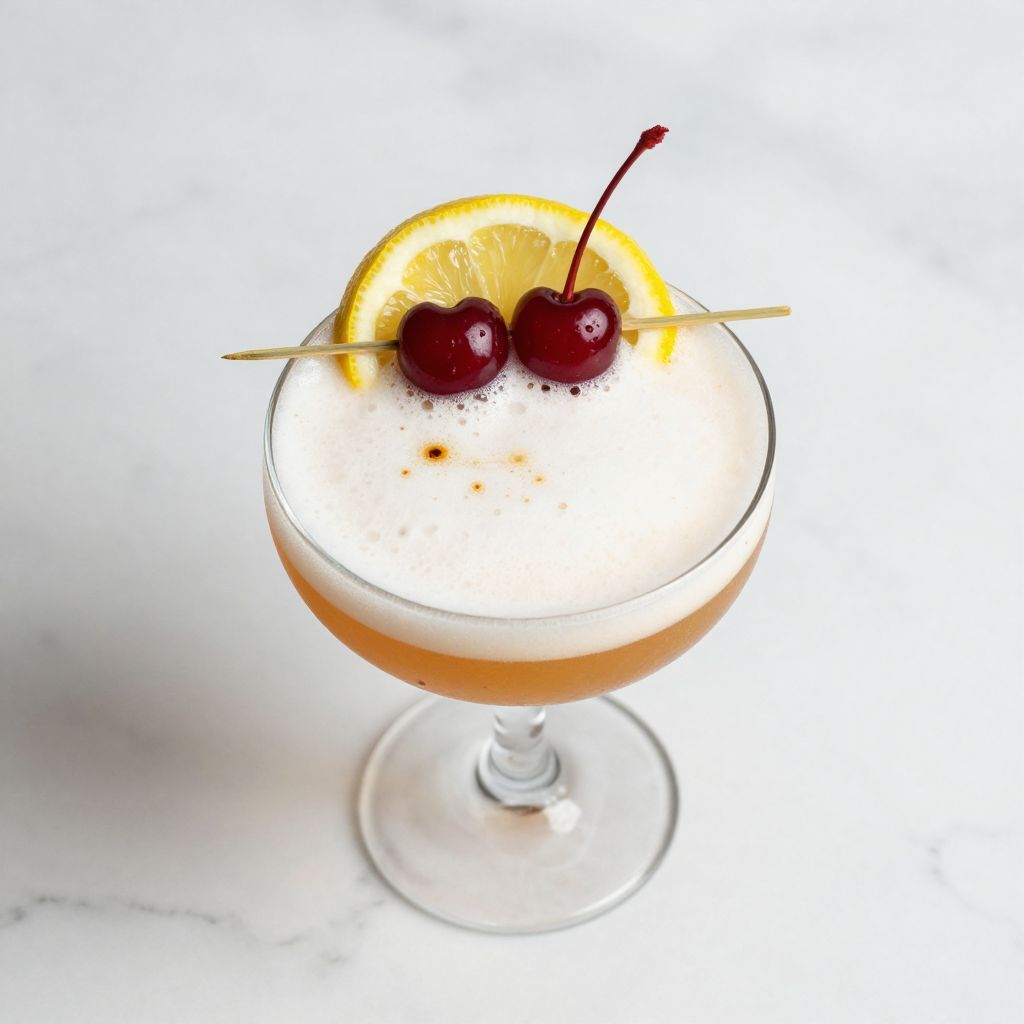
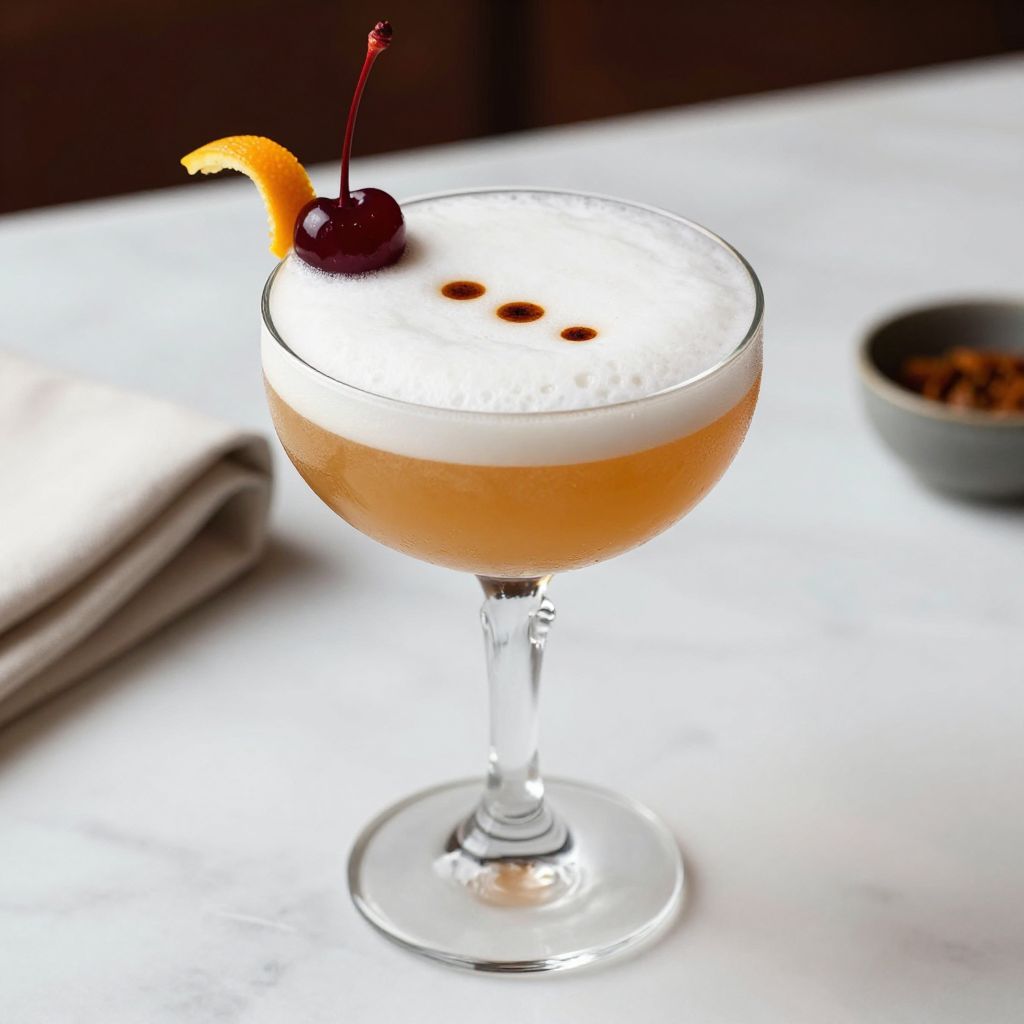
The first time I made it correctly, with fresh lemon, real simple syrup, and the dry shake for the egg white, my wife asked what bar I had ordered it from. That foam on top, catching the aromatic bitters in little dots, made me feel like I had unlocked something I should have figured out years earlier.
Before You Start: Key Things to Know
This cocktail suits complete beginners, though the egg white step requires attention to get that signature foam. The biggest challenge is nailing the dry shake technique, which takes about 30 seconds of vigorous effort.
- Difficulty level: Easy, perfect for your first craft cocktail attempt
- Active time vs passive time: About 3 minutes active, no passive time required
- Most important equipment: A cocktail shaker with a tight seal for the dry shake
- Step requiring most attention: The dry shake must be vigorous and thorough to emulsify the egg white properly
Recipe at a Glance
- Recipe Name: Classic Whiskey Sour
- Yield: 1 cocktail
- Prep Time: 3 minutes
- Cook Time: 0 minutes
- Total Time: 3 minutes
- Difficulty: Easy
- Course: Cocktail
- Cuisine: American
- Calories per Serving: 165
How to Source the Best Ingredients
The quality of your whiskey sour depends entirely on using fresh, quality ingredients because there is nowhere for anything to hide. With only four main components, each one carries significant weight in the final taste.
- Bourbon: Choose a mid range bottle with caramel and vanilla notes; avoid anything too smoky or peaty which fights the citrus
- Lemons: Look for fruits that feel heavy for their size with thin, bright yellow skin; thick skinned lemons have less juice
- Eggs: Use the freshest eggs possible; fresh whites whip into more stable foam and have less sulfur smell
- Angostura bitters: Accept no substitutes for the garnish; the aromatic blend is specifically balanced for whiskey cocktails
Ingredients for Whiskey Sour
For the Cocktail
- 2 ounces bourbon whiskey
- 1 ounce fresh lemon juice, about one medium lemon
- 3/4 ounce simple syrup
- 1 egg white, from a large egg
- 2 dashes Angostura bitters, for garnish
- 1 maraschino cherry, for garnish, optional
- 1 lemon wheel, for garnish, optional
For Simple Syrup
- 1 cup granulated sugar
- 1 cup water
Smart Substitutions and Swaps
- Bourbon: Provides the sweet, caramel backbone of the drink. Rye whiskey works as a substitute and gives a spicier, drier result that some prefer.
- Fresh lemon juice: Delivers the essential acidity that defines a sour. Bottled lemon juice works in emergencies but tastes noticeably flatter and more metallic.
- Simple syrup: Adds sweetness that integrates smoothly into cold liquid. Honey syrup (equal parts honey and warm water) creates a richer, more complex sweetness.
- Egg white: Creates the silky foam and softens the drink’s texture. Aquafaba (chickpea liquid) from a can of chickpeas foams identically and works for vegan guests.
- Angostura bitters: Adds aromatic complexity and visual appeal on top. Orange bitters work as a backup and shift the drink toward a citrus forward profile.
Tools and Equipment You Will Need
Having everything within arm’s reach before you start means the difference between a smooth three minute process and a frustrating hunt through drawers. The dry shake technique requires a secure seal, so check your shaker before you begin.
- Cocktail shaker (a Boston shaker or cobbler shaker both work; the seal must be tight for dry shaking)
- Hawthorne strainer or built in strainer
- Fine mesh strainer (for double straining out ice chips and egg foam bits)
- Jigger or measuring cup (precision matters in cocktails where ratios define the balance)
- Citrus juicer or reamer
- Rocks glass or coupe glass
- Small saucepan (if making simple syrup fresh)
How to Make Whiskey Sour
Read through all steps before starting so you understand the flow. If you need to make simple syrup, do that first and let it cool completely; warm syrup will affect your final drink temperature.
Step 1: Make Simple Syrup
Combine 1 cup sugar and 1 cup water in a small saucepan over medium heat. Stir until the sugar fully dissolves, then remove from heat immediately.
Making your own syrup takes two minutes and tastes cleaner than store bought options, which often contain preservatives. The 1:1 ratio produces a syrup that pours easily and integrates smoothly into cold drinks.
The syrup is ready when no sugar granules remain visible and the liquid looks completely clear. Let it cool to room temperature before using, or refrigerate for up to two weeks.
Step 2: Juice the Lemon
Roll the lemon firmly on your countertop using your palm to break down the internal membranes. Cut it in half and juice one half into your jigger until you reach 1 ounce.
Fresh juice oxidizes quickly and loses its bright flavor within hours. Juicing right before mixing ensures maximum citrus punch and none of the dull, slightly off taste of juice that has been sitting.
You want clear, seed free juice with no pulp chunks that could clog your strainer. If seeds fall in, fish them out now rather than dealing with them later.
Step 3: Separate the Egg
Crack your egg and carefully pass the yolk back and forth between the shell halves, letting the white fall into a small bowl. Inspect the white for any yolk contamination.
Even a tiny bit of yolk contains fat that will prevent the white from foaming properly during the dry shake. This step determines whether you get luxurious foam or a flat, underwhelming drink.
The white should be completely clear with no yellow streaks visible. If you break the yolk, start over with a fresh egg.
Step 4: Add Ingredients to Shaker
Pour 2 ounces bourbon, 1 ounce fresh lemon juice, 3/4 ounce simple syrup, and the egg white into your cocktail shaker. Do not add ice yet.
The order does not matter here, but measuring precisely does. Cocktails are about ratios, and a heavy hand on the bourbon or a light pour on the citrus will throw off the entire balance.
Check that all ingredients are in the shaker before proceeding; once you start shaking, you cannot easily add anything you forgot.
Step 5: Dry Shake Vigorously
Seal your shaker tightly and shake without ice for 30 to 45 seconds as hard as you can. Use both hands and put your whole arm into it.
The dry shake emulsifies the egg white and creates the proteins that will form your foam. Without ice chilling the mixture, the egg white can expand and aerate fully. This is the technique that separates amateur whiskey sours from professional ones.
You will feel the mixture change texture as you shake; it becomes thicker and you will hear less liquid sloshing. The shaker should feel slightly pressurized when you finish.
Step 6: Add Ice
Open your shaker carefully (it may be pressurized) and fill it to the top with ice cubes. Use standard ice cubes, not crushed ice.
Large ice cubes chill the drink efficiently while diluting it slowly and evenly. Crushed ice would dilute too fast and water down your carefully balanced ratios.
Fill the shaker completely so the ice has room to move and agitate the liquid during the second shake.
Step 7: Shake with Ice
Seal the shaker again and shake hard for another 15 to 20 seconds. The goal now is to chill and slightly dilute the drink.
Proper dilution is not a flaw; it is part of the recipe. The water from the melting ice opens up the bourbon’s flavors and softens the citrus edge into something smooth and sippable.
The shaker should feel ice cold to the touch when finished. If the metal does not frost slightly, shake a few seconds longer.
Step 8: Double Strain into Glass
Hold your Hawthorne strainer over the shaker and pour through a fine mesh strainer into your glass. The double strain catches ice chips and any egg white bits.
For a rocks glass, add a large ice cube first. For a coupe glass, serve without ice. Either presentation is traditional and correct.
The liquid should pour thick and glossy, with foam forming immediately on the surface. Stop pouring before any ice slips through.
Step 9: Let the Foam Settle
Wait 15 to 20 seconds for the foam to rise and separate from the liquid below. Do not rush this step or skip it.
The foam will float up and form a distinct layer about half an inch thick on top. This layer is where your bitters garnish will sit, creating the visual signature of a proper whiskey sour.
The foam should look dense and white, not bubbly or thin. If your foam looks sparse, your dry shake was not vigorous enough.
Step 10: Garnish with Bitters
Dash 2 to 3 drops of Angostura bitters onto the foam surface. Use a toothpick or straw to drag through the dots and create a pattern if desired.
The bitters provide aromatic complexity that hits your nose before each sip, adding another dimension to the drinking experience. The visual element also signals to anyone watching that you know what you are doing.
The bitters should float on top of the foam in distinct droplets, not sink through. Add your cherry and lemon wheel now if using.
Pro Tip: The dry shake is everything. If your foam falls flat, shake longer and harder next time. Your arms should feel the effort; if shaking feels easy, you are not going hard enough.
The Science Behind the Technique
Egg whites contain proteins called albumins that unfold when agitated and trap air bubbles, creating stable foam. The dry shake allows maximum aeration because cold temperatures would cause the proteins to stiffen before they can expand fully.
The acid from lemon juice actually helps stabilize this foam by denaturing the proteins further, which is why whiskey sours hold their foam longer than gin fizzes made with lime. This protein matrix also creates the silky mouthfeel that makes the drink feel luxurious instead of harsh.
Chef Note: Think of the dry shake like whipping meringue; you need vigorous action and no fat interference for the proteins to do their job properly.
Tips for Getting It Right Every Time
- Chill your glass in the freezer for 5 minutes before making the drink; it keeps the cocktail cold longer and looks more professional
- Always fresh squeeze your lemon juice within an hour of mixing; bottled juice will never taste as bright or clean
- Use a kitchen scale for simple syrup if you want perfect consistency; sugar can pack differently depending on how you measure
- Room temperature eggs foam better than cold ones; take your egg out 15 minutes early if you remember
- If you dislike raw egg, aquafaba from canned chickpeas foams identically and adds no flavor
- Taste your simple syrup before storing; if it tastes even slightly off, start fresh because syrups can harbor bacteria quickly
Mistakes That Will Ruin Your Dish
- Skipping the dry shake: You will get a thin, harsh drink with no foam and none of the silky texture that makes this cocktail special
- Using bottled lemon juice: The preservatives and processing create a metallic, artificial taste that overpowers the bourbon
- Over diluting with crushed ice: The drink becomes watery and weak within minutes, losing all balance
- Yolk contamination in the white: Even a small amount of fat from the yolk will completely prevent foam from forming
- Forgetting to double strain: Ice chips and egg bits create an unpleasant texture that distracts from every sip
Make Ahead and Meal Prep Tips
Cocktails are best made fresh, but you can prep components ahead for quick assembly when guests arrive. This is especially useful if you are hosting a party and want to spend time with people instead of bartending all night.
- Simple syrup: Make up to two weeks ahead and store in a sealed jar in the refrigerator; bring to room temperature before using
- Fresh lemon juice: Squeeze up to 4 hours ahead and keep tightly covered in the refrigerator; any longer and it loses brightness
- Batched base: Combine bourbon, lemon juice, and syrup in a pitcher up to 2 hours ahead; add egg white and shake individually per drink
- Garnish prep: Cut lemon wheels and skewer cherries up to a day ahead; store covered in the refrigerator until needed
What to Serve With Whiskey Sour
A whiskey sour works beautifully as a pre dinner cocktail or alongside rich appetizers that can stand up to its assertive flavor. The citrus cuts through fat while the bourbon complements savory, smoky elements.
- Charcuterie board: The acidity of the drink cleanses your palate between bites of rich cured meats and aged cheeses
- Bacon wrapped dates: Sweet, salty, and fatty flavors play perfectly against the sour citrus and caramel bourbon notes
- Spiced nuts: Warm spices echo the bitters while the crunch provides textural contrast to the silky drink
- Smoked salmon crostini: The bright lemon in the cocktail mirrors classic salmon pairings and cuts through the fish’s richness
- Dark chocolate: The bitter cocoa notes complement bourbon’s vanilla and caramel undertones beautifully
Drink Pairings
If cocktails are not your thing or you need a non alcoholic option, a sparkling lemonade with a splash of aromatic bitters delivers similar tart, complex flavors without the bourbon.
- Wine pairing: A crisp Champagne or dry sparkling wine makes a sophisticated companion if alternating drinks throughout an evening
- Beer pairing: A bourbon barrel aged stout echoes the whiskey notes and works well for those who want variety
- Non alcoholic pairing: Sparkling water with lemon and a dash of bitters provides palate cleansing refreshment between cocktails
- Hot drink pairing: A dark roast coffee after dessert complements the bourbon notes and helps conclude the evening
Flavour Variations Worth Trying
- New York Sour: Float half an ounce of dry red wine on top of the finished drink. The wine creates a beautiful layered look and adds tannic depth.
- Honey Bourbon Sour: Replace simple syrup with honey syrup made from equal parts honey and warm water. The honey adds floral complexity and pairs exceptionally with bourbon.
- Maple Whiskey Sour: Swap simple syrup for real maple syrup and use rye whiskey. The result tastes like autumn in a glass with warm, woodsy notes.
- Spiced Sour: Add a small pinch of cinnamon and two dashes of orange bitters alongside the Angostura. The spice amplifies the bourbon’s natural warmth.
- Stone Fruit Sour: Muddle two fresh peach or apricot slices before adding other ingredients. The fruit adds summery sweetness and gorgeous color.
How to Adapt This Recipe for Your Diet
- Gluten free: Most bourbons are gluten free despite being made from grain, but verify your specific brand if you have celiac disease; the drink requires no other modifications.
- Dairy free: This recipe contains no dairy whatsoever and is naturally suitable for dairy free diets.
- Vegan: Replace egg white with 1 ounce aquafaba (chickpea liquid from a can); it foams identically and adds no flavor.
- Low carb: Replace simple syrup with a zero calorie sweetener syrup designed for cocktails; expect slightly thinner body and adjust sweetness to taste.
- Lower alcohol: Reduce bourbon to 1.5 ounces and increase lemon juice slightly; the drink will taste lighter but still balanced.
How to Store and Reheat
In the Refrigerator
Completed whiskey sours do not store well because the foam collapses and the ice dilutes the drink. If you must step away, cover tightly and refrigerate for no more than 30 minutes.
- Simple syrup stores for up to two weeks in a sealed glass jar
- Pre batched base without egg white keeps for up to 4 hours covered
In the Freezer
Freezing completed cocktails is not recommended as the texture changes dramatically upon thawing. However, you can freeze components separately for longer storage.
- Fresh lemon juice freezes well in ice cube trays for up to 3 months
- Simple syrup can be frozen in small containers for up to 6 months
Reheating
Cocktails are not reheated, but cold components should be brought to proper temperature before use. Here is how to handle stored ingredients:
- Refrigerated simple syrup: Let sit at room temperature for 10 minutes or warm briefly in a water bath
- Frozen lemon juice: Thaw in refrigerator overnight or in a bowl of cool water for 30 minutes
- Batched base: Shake vigorously with ice; the dilution from shaking replaces any lost during storage
Cost Breakdown
Making whiskey sours at home costs roughly one quarter what you would pay at a cocktail bar. A single drink runs about $2.50 in ingredients, compared to $12 to $18 at most establishments.
| Ingredient | Estimated Cost |
|---|---|
| Bourbon (2 oz) | $1.50 |
| Fresh lemon | $0.40 |
| Simple syrup | $0.10 |
| Egg white | $0.25 |
| Bitters (2 dashes) | $0.15 |
| Garnishes | $0.20 |
| Total Per Serving | $2.60 |
Nutrition Information
| Nutrient | Amount |
|---|---|
| Calories | 165 |
| Total Fat | 0g |
| Saturated Fat | 0g |
| Trans Fat | 0g |
| Cholesterol | 0mg |
| Sodium | 15mg |
| Total Carbohydrates | 12g |
| Dietary Fiber | 0g |
| Total Sugars | 11g |
| Added Sugars | 9g |
| Protein | 1g |
| Vitamin D | 0mcg |
| Calcium | 4mg |
| Iron | 0mg |
| Potassium | 35mg |
Nutritional values are estimates based on standard ingredients and may vary depending on specific brands, bourbon proof, and portion sizes used.
Your Questions Answered
Can I use rye whiskey instead of bourbon?
Absolutely, and many people prefer it. Rye produces a spicier, drier cocktail that feels more assertive than the sweeter bourbon version.
Can I make the cocktail ahead for a party?
Batch the bourbon, lemon juice, and simple syrup up to 2 hours ahead, but add egg white and shake each drink individually to order. The foam will not hold if shaken in advance.
How long does a finished whiskey sour stay good?
Drink it immediately for best results. The foam begins collapsing within minutes and the ice dilutes the drink past its optimal balance.
Why is my foam thin or nonexistent?
Either your dry shake was not vigorous enough or yolk contaminated your white. Shake harder for at least 30 seconds and ensure your egg white is completely yolk free.
How do I double this recipe?
Double all ingredients and use a larger shaker or work in batches. The dry shake becomes harder with more volume, so consider shaking individual drinks for best foam.
Do I have to use egg white?
No, but you will get a different drink. Without egg white, the cocktail tastes sharper and lacks the silky texture that defines a classic whiskey sour.
Can I serve this without ice?
Yes, strain into a chilled coupe glass for an elegant, concentrated presentation. This style is called “up” and keeps the cocktail from diluting as you drink.
My Final Word
A well made whiskey sour is one of those drinks that makes you wonder why you ever ordered one at a mediocre bar. The foam, the balance, the way the bitters hit your nose before each sip: it all comes together into something genuinely satisfying.
I have made this recipe more times than I can count, and it rewards attention to detail every single time. Once you nail the dry shake and commit to fresh lemon juice, you will never go back to the lazy version.
If you give this recipe a try, I would love to hear how it turns out. Drop a comment below or tag Recipe Papa on social media with your creation. Happy shaking.
Classic Whiskey Sour
Ingredients
Equipment
Method
- Make Simple Syrup: Combine 1 cup sugar and 1 cup water in a small saucepan over medium heat. Stir until the sugar fully dissolves, then remove from heat immediately. Let it cool to room temperature before using, or refrigerate for up to two weeks.
- Juice the Lemon: Roll the lemon firmly on your countertop using your palm to break down the internal membranes. Cut it in half and juice one half into your jigger until you reach 1 ounce. Remove any seeds.
- Separate the Egg: Crack your egg and carefully pass the yolk back and forth between the shell halves, letting the white fall into a small bowl. Ensure the white is completely clear with no yolk contamination.
- Add Ingredients to Shaker: Pour 2 ounces bourbon, 1 ounce fresh lemon juice, 3/4 ounce simple syrup, and the egg white into your cocktail shaker. Do not add ice yet.
- Dry Shake Vigorously: Seal your shaker tightly and shake without ice for 30 to 45 seconds as hard as you can. Use both hands and put your whole arm into it until the mixture becomes thicker.
- Add Ice: Open your shaker carefully and fill it to the top with standard ice cubes.
- Shake with Ice: Seal the shaker again and shake hard for another 15 to 20 seconds until the shaker feels ice cold to the touch.
- Double Strain into Glass: Hold your Hawthorne strainer over the shaker and pour through a fine mesh strainer into your glass. For a rocks glass, add a large ice cube first. For a coupe glass, serve without ice.
- Let the Foam Settle: Wait 15 to 20 seconds for the foam to rise and form a distinct layer about half an inch thick on top.
- Garnish with Bitters: Dash 2 to 3 drops of Angostura bitters onto the foam surface. Use a toothpick to drag through the dots to create a pattern if desired. Add cherry and lemon wheel if using.