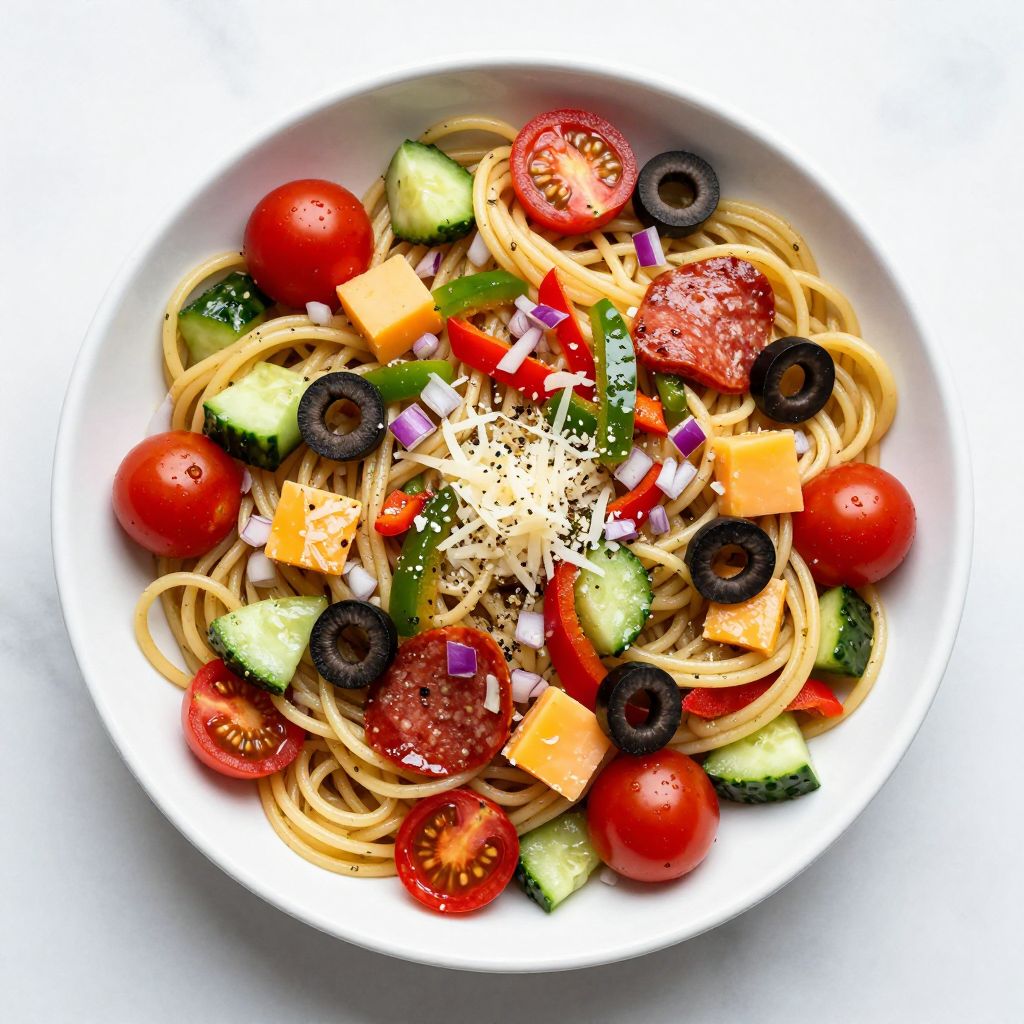
Picture a potluck table on a sweltering summer afternoon, and there it is: a bowl of spaghetti salad that somehow vanishes before the main course even arrives. This chilled pasta dish breaks all the rules of traditional Italian cooking, yet it has earned its place as a warm-weather staple at picnics, barbecues, and family gatherings across America.
What makes this recipe so irresistible is the way tender pasta mingles with crisp vegetables, sharp cheese, and a tangy Italian dressing that gets better as it sits. The texture contrast alone keeps you coming back for another forkful.
Best of all, you make it ahead, let the flavors marry in the fridge, and show up looking like the hero who actually planned something. No last-minute kitchen panic required.
Why You’ll Love This Recipe
This spaghetti salad hits that sweet spot between impressive and effortless, delivering maximum flavor with minimal fuss. It feeds a crowd without breaking your budget or your schedule.
- Prep it a day early and let the fridge do the heavy lifting while flavors intensify
- Holds up beautifully at room temperature during outdoor events without wilting or turning soggy
- Uses simple ingredients you probably already have in your pantry and crisper drawer
- Scales up or down easily, making it perfect for intimate dinners or block party quantities
- Appeals to picky eaters and adventurous palates alike with its familiar yet exciting flavor profile
My Experience Making This Recipe
The first time I made this, I doubted whether breaking spaghetti into bite-sized pieces would work. But watching those shorter strands tangle perfectly with cherry tomatoes and cucumber convinced me this was genius, not sacrilege.
The aroma of Italian dressing hitting the still-warm pasta released this intoxicating cloud of garlic and herbs that had my family circling the kitchen. I had to physically guard the bowl while it chilled because someone kept “taste testing” with increasingly larger spoons.
When I finally served it at our neighborhood cookout, three different people asked for the recipe before they even finished their first serving. One neighbor admitted she’d never considered spaghetti as anything other than a hot dish, and now she was questioning everything she knew about pasta.
Recipe Overview
- Recipe Name: Spaghetti Salad
- Servings: 8
- Prep Time: 20 minutes
- Cook Time: 10 minutes
- Total Time: 2 hours 30 minutes (includes chilling)
- Course: Side Dish, Salad
- Cuisine: American
- Calories per Serving: 285
Equipment You Will Need
- Large pot for boiling pasta
- Colander for draining
- Large mixing bowl (at least 4 quarts)
- Sharp knife and cutting board
- Measuring cups and spoons
- Wooden spoon or silicone spatula for tossing
- Plastic wrap or airtight container for chilling
Ingredients for Spaghetti Salad
For the Salad Base
- 1 pound spaghetti, broken in half
- 2 cups cherry tomatoes, halved
- 1 large cucumber, diced (about 2 cups)
- 1 medium green bell pepper, diced
- 1 medium red bell pepper, diced
- 1 small red onion, finely diced
- 1 cup black olives, sliced
- 8 ounces sharp cheddar cheese, cubed
- 4 ounces pepperoni slices, quartered (optional)
For the Dressing
- 1 bottle (16 ounces) Italian dressing
- 2 tablespoons grated Parmesan cheese
- 1 tablespoon Italian seasoning
- 1 teaspoon garlic powder
- 1/2 teaspoon black pepper
Ingredient Notes and Substitutions
- Spaghetti: Provides the perfect texture that holds dressing without getting mushy; swap for linguine or angel hair if needed, though thicker pastas work better.
- Cherry tomatoes: Add juicy bursts of sweetness and bright color; grape tomatoes or quartered Roma tomatoes make excellent substitutes.
- Italian dressing: Brings tangy, herbaceous flavor that ties everything together; homemade vinaigrette works beautifully if you prefer to skip bottled dressing.
- Sharp cheddar cheese: Contributes bold, salty richness that stands up to the acidic dressing; mozzarella pearls or provolone cubes offer a milder alternative.
- Bell peppers: Provide satisfying crunch and natural sweetness; use any color combination you like, or substitute with diced celery for similar texture.
- Black olives: Deliver briny, savory depth that balances the sweeter elements; Kalamata or green olives work if you prefer a stronger olive flavor.
- Red onion: Adds sharp bite and purple color contrast; green onions or shallots offer a gentler onion presence.
- Pepperoni: Brings meaty, spiced richness for those who want heartier salad; leave it out for vegetarian version or swap with diced salami.
How to Make Spaghetti Salad
Step 1: Cook the Spaghetti
Bring a large pot of salted water to a rolling boil and add the broken spaghetti pieces. Cook according to package directions until al dente, usually 8 to 10 minutes, stirring occasionally to prevent clumping.
Salting the water seasons the pasta from within, which matters even more in cold salads where you can’t rely on hot sauce to carry flavor. Cooking to al dente prevents mushy pasta later since it continues softening slightly as it absorbs dressing.
Step 2: Drain and Cool the Pasta
Drain the cooked spaghetti in a colander and rinse thoroughly under cold running water until completely cool to the touch. Shake the colander vigorously to remove excess water, then spread the pasta on a clean kitchen towel for a few minutes.
This cooling step stops the cooking process immediately, preventing overcooked, sticky pasta. Removing surface starch through rinsing helps the dressing coat each strand evenly instead of sliding off.
Step 3: Prepare the Vegetables
While the pasta cools, dice the cucumber, bell peppers, and red onion into uniform bite-sized pieces. Halve the cherry tomatoes and slice the black olives if they aren’t pre-sliced.
Uniform sizing matters more than you’d think because it creates balanced bites where every forkful includes multiple components. Cutting vegetables too large makes the salad awkward to eat, while too-small pieces disappear into the pasta.
Step 4: Cube the Cheese and Pepperoni
Cut the cheddar cheese into small cubes, roughly half-inch pieces that match your vegetable size. If using pepperoni, quarter each slice into smaller wedges.
Cubed cheese distributes more evenly than shredded and maintains its texture instead of clumping together. The quartered pepperoni provides flavor in every bite without overwhelming the salad with meat.
Step 5: Combine Everything in a Large Bowl
Transfer the cooled spaghetti to your largest mixing bowl and add all the prepared vegetables, cheese, olives, and pepperoni if using. Toss gently with your hands or a large spoon to distribute ingredients evenly throughout.
Mixing before adding dressing ensures even distribution since thick dressing can make it harder to incorporate ingredients later. Your hands actually work better than utensils here because you can feel whether everything is mixing properly.
Step 6: Mix the Dressing Ingredients
In a separate small bowl, combine the Italian dressing with grated Parmesan cheese, Italian seasoning, garlic powder, and black pepper. Whisk together until the seasonings are fully incorporated and the Parmesan is evenly distributed.
Enhancing bottled dressing with extra seasonings and cheese transforms it from ordinary to restaurant-quality. These additions create layers of flavor that make people wonder what your secret ingredient is.
Step 7: Dress the Salad
Pour the seasoned dressing over the pasta and vegetable mixture, starting with about three-quarters of the bottle. Toss everything together thoroughly, ensuring every strand of pasta gets coated, then add more dressing if needed.
The pasta will absorb significant dressing as it chills, so what looks overly dressed now will be perfect later. You can always add more dressing before serving if it seems dry, but you can’t remove excess.
Step 8: Chill and Let Flavors Develop
Cover the bowl tightly with plastic wrap or transfer to an airtight container and refrigerate for at least 2 hours, preferably overnight. Stir the salad once or twice during chilling if you remember.
This resting period allows flavors to meld together while the pasta absorbs the dressing, creating that signature tangy-savory taste. The vegetables also release some of their juices, which mingle with the dressing to create something greater than the sum of its parts.
Step 9: Final Seasoning and Serving
Remove the salad from the refrigerator about 15 minutes before serving to take the chill off. Taste and adjust seasoning with additional Italian seasoning, salt, or pepper if needed, and toss once more.
Slightly cool rather than ice-cold allows the flavors to shine more brightly on your palate. This final toss redistributes any dressing that settled to the bottom and refreshes the appearance.
Pro Tip: Always reserve about a quarter cup of your dressed salad before serving it to guests. This untouched portion stays pristine in the fridge and can refresh leftovers the next day by adding moisture and flavor back to pasta that has absorbed all its dressing.
Tips for the Best Spaghetti Salad
- Break the spaghetti before cooking rather than after to create uniform lengths that are much easier to serve and eat. Trying to cut cooked pasta results in uneven, ragged pieces.
- Slightly undercook the pasta by one minute less than package directions since it continues softening in the acidic dressing. What feels perfectly al dente hot becomes ideal when cold.
- Drain vegetables like cucumbers and tomatoes on paper towels if they seem particularly juicy to prevent watering down your dressing. Excess moisture dilutes flavor and makes the salad soggy.
- Use a high-quality Italian dressing with visible herbs and a good balance of oil to vinegar as your base. Cheap, watery dressings require so much extra seasoning that you might as well make your own.
- Taste the salad cold before serving since flavors mute at lower temperatures. What tastes perfectly seasoned when warm often needs an extra pinch of salt or dash of pepper when chilled.
- Add fresh herbs like chopped basil or parsley just before serving rather than mixing them in early. They stay vibrant and aromatic instead of turning dark and wilted.
Common Mistakes to Avoid
- Skipping the pasta rinse leaves excess starch that creates a gummy, clumpy texture instead of distinct strands. Cold water also stops the cooking instantly, preventing mushy pasta.
- Adding dressing to hot pasta causes it to be absorbed too quickly and unevenly, leaving some parts dry while others are soggy. Always cool pasta completely first.
- Using pre-shredded cheese introduces anti-caking agents that create a chalky texture and prevent proper flavor distribution. Block cheese you cube yourself tastes infinitely better.
- Not chilling long enough means the flavors stay separate and distinct rather than melding into that cohesive, tangy profile you want. Patience pays off dramatically here.
- Overdressing initially because you forget pasta absorbs liquid leads to soupy salad, while underdressing creates dry, bland bites by serving time. Aim for what looks slightly over-dressed before chilling.
Serving Suggestions
This spaghetti salad shines as a standalone lunch or plays beautifully alongside grilled proteins at summer gatherings. Its tangy, refreshing profile cuts through rich, smoky flavors perfectly.
- Serve alongside barbecued ribs, pulled pork, or grilled chicken for a classic cookout spread that balances heavy and light
- Pair with garlic bread and a simple green salad for an easy, satisfying vegetarian meal that feels complete
- Pack into individual containers for make-ahead lunches that actually improve over the first few days
- Offer at potlucks with burgers, hot dogs, and baked beans for that quintessential American summer feast
- Set out with a charcuterie board and wine for a casual appetizer spread that encourages grazing
Variations to Try
- Mediterranean Version: Swap cheddar for feta cheese, add artichoke hearts and sun-dried tomatoes, and use Greek vinaigrette instead of Italian for a brighter, tangier profile with distinct Mediterranean character.
- Caprese Style: Use fresh mozzarella balls, lots of fresh basil, and balsamic vinaigrette, keeping the tomatoes but eliminating peppers and olives for a simpler, more elegant presentation that highlights quality ingredients.
- Southwest Twist: Replace Italian dressing with cilantro-lime vinaigrette, use pepper jack cheese, add corn and black beans, and finish with diced avocado for a Mexican-inspired version with a spicy kick.
- Garden Veggie Loaded: Double the vegetables by adding blanched broccoli florets, shredded carrots, and diced zucchini for a nutrition-packed version that still tastes indulgent.
- Protein-Packed Version: Add diced grilled chicken, cubed ham, or canned tuna to transform this side dish into a complete main course that satisfies heartier appetites.
Dietary Adaptations
- Gluten-Free: Use your favorite gluten-free pasta and check that your Italian dressing is certified gluten-free; the texture works beautifully though you may need slightly less dressing as gluten-free pasta absorbs differently.
- Dairy-Free: Omit the cheese entirely or use a quality dairy-free cheddar alternative, and skip the Parmesan in the dressing; the salad loses some richness but the vegetables and dressing still deliver plenty of flavor.
- Vegan: Follow the dairy-free adaptation and skip the pepperoni, adding extra olives, artichoke hearts, or chickpeas for substance; nutritional yeast in the dressing provides cheesy flavor without animal products.
- Low-Carb: Replace spaghetti with spiralized zucchini noodles or hearts of palm noodles, though the texture becomes more delicate and watery; this version works better as a fresh salad rather than make-ahead.
Storage and Reheating
Refrigerator
Store spaghetti salad in an airtight container in the refrigerator where it keeps beautifully for 3 to 5 days. The flavors actually improve over the first 48 hours as everything continues marinating together.
- Stir before serving each time to redistribute dressing that settles to the bottom
- Add a splash of fresh Italian dressing if the pasta seems dry after a couple days
- Keep away from strong-smelling foods since pasta absorbs odors readily
Freezer
Freezing is not recommended for this salad since the vegetables lose their crisp texture and the dressing separates unappealingly. The cheese also becomes crumbly and weird when thawed.
- If you must freeze, do so without vegetables and cheese, adding them fresh after thawing
- Expect significant texture changes that make it less appealing than freshly made
Reheating
This salad is meant to be served cold or at cool room temperature, so reheating is not applicable. Simply remove from the refrigerator 15 to 20 minutes before serving to take the chill off.
- Never microwave this salad as it wilts the vegetables and makes the pasta unpleasantly soft
- If serving outdoors, keep it in a bowl set over ice to maintain food safety in warm weather
Nutrition Information
| Nutrient | Amount |
|---|---|
| Calories | 285 |
| Total Fat | 12g |
| Saturated Fat | 4g |
| Carbohydrates | 35g |
| Fiber | 3g |
| Sugar | 5g |
| Protein | 10g |
| Sodium | 620mg |
| Cholesterol | 18mg |
Nutritional values are approximate and vary based on specific brands and exact measurements used. These calculations assume standard Italian dressing and include
Spaghetti Salad
A chilled pasta dish that combines tender spaghetti with crisp vegetables, sharp cheese, and tangy Italian dressing. Perfect for picnics, barbecues, and family gatherings, this make-ahead recipe gets better as it sits in the fridge.
- Large pot for boiling pasta
- Colander for draining
- Large mixing bowl (at least 4 quarts)
- Sharp knife and cutting board
- Measuring cups and spoons
- Wooden spoon or silicone spatula for tossing
- Plastic wrap or airtight container for chilling
For the Salad Base
- 1 pound spaghetti (broken in half)
- 2 cups cherry tomatoes (halved)
- 1 large cucumber (diced (about 2 cups))
- 1 medium green bell pepper (diced)
- 1 medium red bell pepper (diced)
- 1 small red onion (finely diced)
- 1 cup black olives (sliced)
- 8 ounces sharp cheddar cheese (cubed)
- 4 ounces pepperoni slices (quartered (optional))
For the Dressing
- 1 bottle (16 ounces Italian dressing)
- 2 tablespoons grated Parmesan cheese
- 1 tablespoon Italian seasoning
- 1 teaspoon garlic powder
- 1/2 teaspoon black pepper
- Bring a large pot of salted water to a rolling boil and add the broken spaghetti pieces. Cook according to package directions until al dente, usually 8 to 10 minutes, stirring occasionally to prevent clumping.
- Drain the cooked spaghetti in a colander and rinse thoroughly under cold running water until completely cool to the touch. Shake the colander vigorously to remove excess water, then spread the pasta on a clean kitchen towel for a few minutes.
- While the pasta cools, dice the cucumber, bell peppers, and red onion into uniform bite-sized pieces. Halve the cherry tomatoes and slice the black olives if they aren’t pre-sliced.
- Cut the cheddar cheese into small cubes, roughly half-inch pieces that match your vegetable size. If using pepperoni, quarter each slice into smaller wedges.
- Transfer the cooled spaghetti to your largest mixing bowl and add all the prepared vegetables, cheese, olives, and pepperoni if using. Toss gently with your hands or a large spoon to distribute ingredients evenly throughout.
- In a separate small bowl, combine the Italian dressing with grated Parmesan cheese, Italian seasoning, garlic powder, and black pepper. Whisk together until the seasonings are fully incorporated and the Parmesan is evenly distributed.
- Pour the seasoned dressing over the pasta and vegetable mixture, starting with about three-quarters of the bottle. Toss everything together thoroughly, ensuring every strand of pasta gets coated, then add more dressing if needed.
- Cover the bowl tightly with plastic wrap or transfer to an airtight container and refrigerate for at least 2 hours, preferably overnight. Stir the salad once or twice during chilling if you remember.
- Remove the salad from the refrigerator about 15 minutes before serving to take the chill off. Taste and adjust seasoning with additional Italian seasoning, salt, or pepper if needed, and toss once more before serving.
This salad keeps beautifully for 3 to 5 days in the refrigerator and actually improves over the first 48 hours as flavors meld. Add a splash of fresh Italian dressing if the pasta seems dry after a couple days. Reserve about a quarter cup of dressed salad before serving to refresh leftovers later. Not recommended for freezing as vegetables lose their crisp texture.