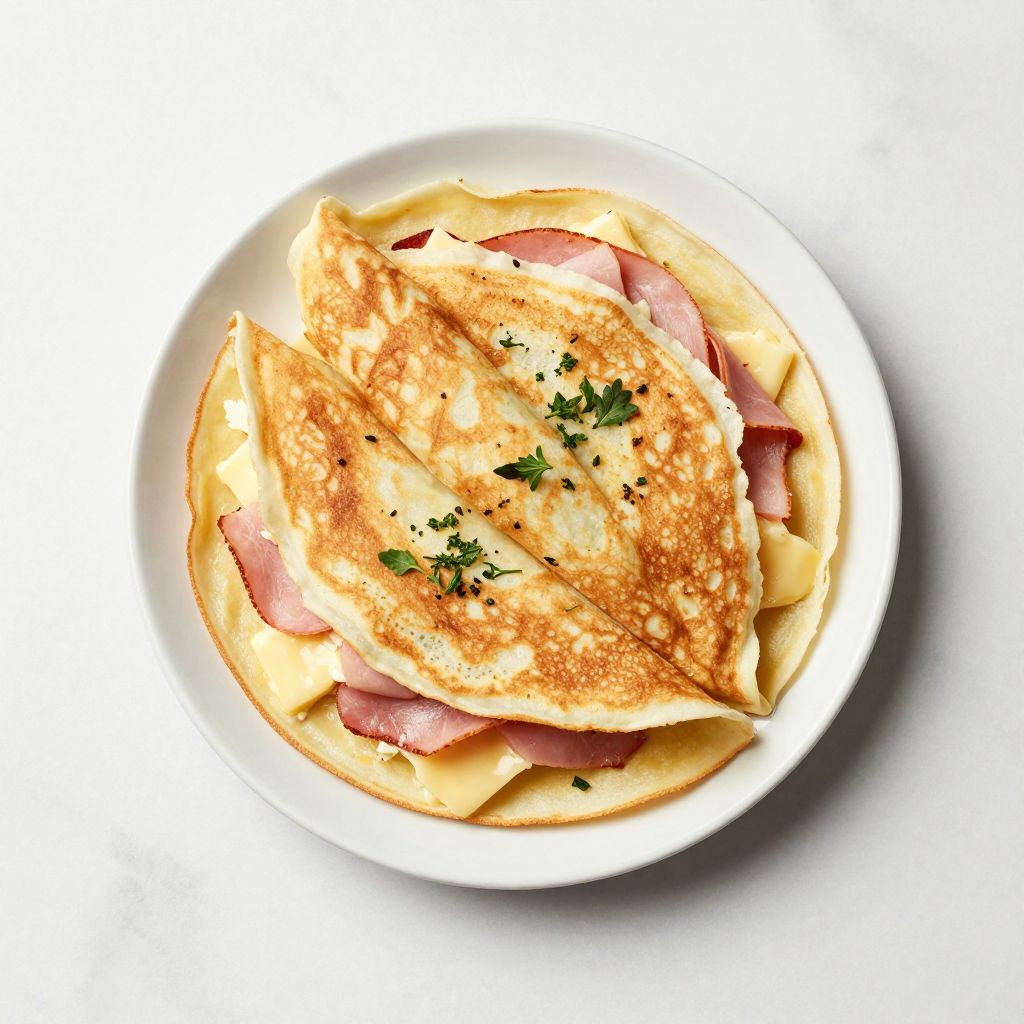
Savory Crepe Recipe
There’s something almost magical about watching a thin batter transform into a delicate, lacy crepe in a hot pan, filling your kitchen with the aroma of butter and toasted flour. Savory crepes are one of those dishes that look impressive but come together faster than you’d expect, making them perfect for weeknight dinners, fancy brunches, or impressing guests without hours of prep.
What makes this recipe special is its versatility paired with authentic French technique that doesn’t require culinary school to master. The crepes themselves are delicate yet sturdy enough to hold generous fillings, and once you nail the basic batter, you’ll find yourself making them constantly.
Why You’ll Love This Recipe
Savory crepes deliver restaurant-quality elegance in your own kitchen while remaining surprisingly simple to execute. The magic lies in the batter resting and the pan temperature, not in complicated steps or hard-to-find ingredients.
- Quick to prepare once the batter has rested, with crepes cooking in under two minutes each
- Naturally gluten-free friendly and easily adaptable to dietary preferences
- Impressive enough for guests but casual enough for a Tuesday night dinner
- The batter keeps for days, so you can make crepes on a whim
- Endlessly customizable with fillings, from ham and cheese to sauteed mushrooms and spinach
My Experience Making This Recipe
The first time I made savory crepes, I was convinced I’d mess them up spectacularly. My pan was too hot, and the first three crepes looked like lace doilies with more holes than substance.
After adjusting the heat and trusting the process, something clicked. The batter spread into thin, even circles, and I was suddenly flipping crepes like a French chef with years of practice behind me.
My family devoured them with ham, gruyere, and fresh herbs, and I watched them go back for seconds without being asked. Once you experience that moment when everything works, you’ll understand why crepes feel less like cooking and more like kitchen magic.
Recipe Overview
- Recipe Name: Savory Crepes
- Servings: 8 crepes (serves 2-3 as a main course)
- Prep Time: 15 minutes plus 30 minutes resting
- Cook Time: 15 minutes
- Total Time: 60 minutes
- Course: Main Course or Appetizer
- Cuisine: French
- Calories per Serving: 95 calories (crepe only, without filling)
Equipment You Will Need
- 8-inch or 9-inch non-stick crepe pan or large non-stick skillet
- Blender or food processor
- Measuring cups and spoons
- Medium mixing bowl
- Rubber spatula or silicone crepe spreader
- Paper towels
- Small ladle or 1/4-cup measure
- Plate or cooling rack for finished crepes
Ingredients for Savory Crepes
- 1 cup all-purpose flour
- 2 large eggs
- 1/2 cup whole milk
- 1/2 cup water
- 1/4 teaspoon salt
- 2 tablespoons unsalted butter, melted, plus more for the pan
- 1/4 teaspoon white pepper (optional but recommended)
- 1/4 teaspoon nutmeg (just a pinch for subtle depth)
Ingredient Notes and Substitutions
- All-purpose flour: Provides structure and helps the crepes hold together without becoming tough. You can substitute with buckwheat flour for an earthier flavor, though you’ll need to adjust the liquid slightly since buckwheat absorbs differently.
- Eggs: Bind the batter and create the crepes’ tender texture. You cannot skip these, but you can use egg substitutes like flax eggs if needed, though the crepes will be slightly more fragile.
- Milk and water: The combination creates thin batter without being too rich. Using all milk makes crepes richer but heavier; all water creates delicate but more fragile crepes.
- Unsalted butter: Adds richness and helps the crepes brown slightly. Salted butter works, but reduce the added salt to 1/8 teaspoon to avoid over-salting.
- Nutmeg: Adds a subtle warmth that complements savory fillings beautifully. Omit it if you prefer, or swap for a pinch of cayenne pepper for gentle heat.
How to Make Savory Crepes
Step 1: Combine Dry Ingredients
Add the flour and salt to your blender or food processor. Pulse a few times to combine and aerate the flour, which helps prevent lumps in your batter.
Step 2: Add Wet Ingredients
Crack the eggs into the blender with the flour, then pour in the milk and water. The wet ingredients should go in after the dry so the flour doesn’t clump up immediately when liquid hits it.
Step 3: Blend the Batter
Blend on medium speed for about one minute until the batter is completely smooth and looks like thin pancake batter. Small bubbles on the surface are normal and actually help crepes cook evenly.
Step 4: Add Butter and Seasonings
Pour the melted butter into the blender along with the white pepper and nutmeg. Blend for just 10-15 seconds until everything is fully incorporated and the batter looks silky.
Step 5: Rest the Batter
Pour the batter into a bowl and let it rest for at least 30 minutes at room temperature. This resting period allows the flour to fully hydrate and actually makes the crepes lighter and more delicate, not heavier like you might expect.
Step 6: Heat Your Pan
Place your crepe pan or non-stick skillet over medium-high heat and let it preheat for about two minutes. The correct temperature is crucial; if the pan is too cool, crepes will stick and be thick, but too hot and they’ll brown too fast and tear.
Step 7: Butter the Pan
Lightly butter the hot pan using a paper towel or small brush, using just enough to coat the surface thinly. Too much butter makes crepes greasy and heavy, while too little causes sticking.
Step 8: Pour and Spread the Batter
Ladle about 1/4 cup of batter into the center of the hot pan, then immediately tilt and swirl the pan so the batter spreads into a thin, even circle. The batter should spread almost on its own; if it’s not spreading, your pan isn’t hot enough.
Step 9: Cook the First Side
Let the crepe cook for about one minute until the bottom is light golden and the top looks dry and set. You’ll notice the edges start to pull away from the pan slightly when the crepe is ready to flip.
Step 10: Flip and Cook the Second Side
Using a thin spatula, loosen the edges and flip the crepe gently, then cook the second side for about 30 seconds until it’s just lightly speckled with brown spots. The second side cooks much faster because the batter is already set.
Step 11: Transfer to a Plate
Slide the cooked crepe onto a plate or cooling rack. If you’re stacking crepes, you can layer them with parchment paper between each one to prevent sticking, or stack them directly if you’re filling them right away.
Step 12: Repeat Until Done
Continue buttering the pan lightly and cooking crepes with the remaining batter until it’s all used up. You should yield about eight crepes, depending on how thin you spread them.
Pro Tip: The first crepe is always a test; don’t stress if it looks imperfect because it’s actually helping your pan reach the ideal temperature for the rest.
Tips for the Best Savory Crepes
- Let your batter rest for at least 30 minutes before cooking; this is not optional if you want tender, delicate crepes. The resting period hydrates the flour fully and allows the batter to bubble slightly, creating lighter crepes.
- Keep a small bowl of melted butter and a paper towel next to your stove so you can quickly butter the pan between crepes without letting it cool down. Consistent butter coating and pan temperature are what separate mediocre crepes from restaurant-quality ones.
- If your batter gets too thick during cooking, whisk in a tablespoon of water or milk to thin it back out. Batter thickens slightly as it sits and cools because the flour continues absorbing liquid.
- Cook crepes at medium-high heat, not high, because high heat will brown them too quickly before the inside sets properly. The pan should be hot enough that batter sizzles slightly when it hits, but not smoking.
- Stack finished crepes on a warm plate and loosely cover with a clean kitchen towel to keep them warm and pliable while you cook the rest. Cold crepes become brittle and crack when you try to fold them.
- If you want crepes with texture variation, don’t worry about making them perfectly even; slightly thicker spots add character and aren’t a flaw.
Common Mistakes to Avoid
- Skipping the resting period: This produces tough, thick crepes instead of delicate ones. The rest really does matter, so set a timer and let it happen.
- Not buttering the pan between each crepe: This causes sticking and frustration. A light coat of butter takes five seconds and prevents wasted batter.
- Using a pan that’s too cool: Cool pans produce thick, doughy crepes that stick and won’t spread properly. Medium-high heat is your friend.
- Overfilling the crepes: Too much batter creates thick, doughy crepes instead of the delicate, lacy texture you’re aiming for. Start with 1/4 cup and adjust up slightly if needed for your pan size.
- Trying to flip too early: Flipping before the top looks mostly dry causes crepes to tear. Wait for the top surface to lose its shiny wet appearance before flipping.
Serving Suggestions
Savory crepes are a complete meal on their own when paired with the right fillings and a simple side. The beauty of crepes is that they’re elegant enough for a dinner party but casual enough for a quick weeknight meal.
- Fill with ham, gruyere, and fresh thyme, then top with a simple beurre blanc or light cream sauce
- Layer with sauteed mushrooms, caramelized onions, and melted fontina cheese for an earthy, umami-rich filling
- Combine spinach, ricotta, and nutmeg for a classic French-Italian fusion that’s simple but sophisticated
- Try a smoked salmon and dill filling with creme fraiche and capers for a brunch-style crepe
- Create a vegetable medley with roasted bell peppers, zucchini, and goat cheese for a lighter option
Variations to Try
- Herb crepes: Add two tablespoons of finely chopped fresh herbs like parsley, chives, or tarragon to the batter before resting. Herbs add aromatic flavor and make the crepes look professionally speckled, though they can brown slightly faster.
- Whole wheat crepes: Replace half the all-purpose flour with whole wheat flour for nuttier flavor and added nutrition. Whole wheat absorbs more liquid, so you might need an extra tablespoon or two of milk to reach the right consistency.
- Cornmeal crepes: Swap 1/4 cup of flour for cornmeal to create crepes with subtle sweetness and interesting texture. Cornmeal gives a slightly grainier feel and pairs beautifully with cheese and ham fillings.
- Cheese crepes: Stir 1/3 cup of grated gruyere or emmental into the batter just before cooking for crepes that are savory and rich on their own. These need less additional filling since they’re already flavorful.
- Spicy crepes: Add 1/8 teaspoon of cayenne pepper or a few dashes of hot sauce to the batter for crepes with a gentle heat that builds. Spice pairs wonderfully with ham, vegetables, and cream-based fillings.
Dietary Adaptations
- Gluten-free: Replace all-purpose flour with a one-to-one gluten-free flour blend and add 1/4 teaspoon of xanthan gum if your blend doesn’t contain it. The crepes will be slightly less delicate but still delicious and completely functional.
- Dairy-free: Use unsweetened plant-based milk instead of dairy milk, and substitute vegan butter for regular butter. The crepes will work fine, though they won’t brown quite as richly without dairy butter.
- Vegan: Replace eggs with 1/2 cup of aquafaba (canned chickpea liquid) or flax eggs, and use plant-based milk and vegan butter. The crepes will be more fragile and tear more easily, so handle them gently.
- Low-carb/keto: Use almond flour or coconut flour mixed with regular flour in a one-to-one ratio, and substitute the milk with unsweetened almond milk. The texture will be slightly different and denser, but still very tasty.
Storage and Reheating
Refrigerator
Stack cooled crepes between parchment paper and place them in an airtight container, where they’ll keep for up to five days. The parchment prevents them from sticking together, making it easy to pull out just one or two when you need them.
- Store unfilled crepes for maximum flexibility
- Filled crepes are fine too but best eaten within two days
- Crepes with cream-based fillings don’t store as well as those with cheese or vegetable fillings
Freezer
Wrap the stack of parchment-separated crepes in plastic wrap and then aluminum foil, where they’ll freeze for up to three months. Freezing crepes is a brilliant make-ahead strategy since the batter is the time-consuming part.
- Freeze unfilled crepes for best results
- Thaw at room temperature for about 30 minutes before using
- Do not thaw in the microwave, which makes them tough
Reheating
Gently warm crepes in a dry non-stick skillet over low heat for about 30 seconds per side, or wrap them in a damp paper towel and microwave for 10-15 seconds. Low heat ensures they warm through without drying out or toughening.
- Warm empty crepes before filling them for best texture
- If reheating filled crepes, cover the pan to trap steam and soften them
- Room temperature crepes are delicious too if you’re in a hurry
Nutrition Information
| Nutrient | Amount |
|---|---|
| Calories | 95 |
| Total Fat | 4g |
| Saturated Fat | 2.5g |
| Carbohydrates | 12g |
| Fiber | 0g |
| Sugar | 1g |
| Protein | 3g |
| Sodium | 105mg |
| Cholesterol | 50mg |
Nutrition values are calculated for the crepe itself without fillings, which will vary based on what you add. Filled crepes typically range from 250 to 400 calories depending on the filling.
Frequently Asked Questions
Can I make the batter ahead of time?
Yes, you can make the batter up to two days ahead and store it in the refrigerator in an airtight container. Stir it gently before cooking since the flour will have settled, and you may need to add a tablespoon of milk or water if it’s thickened.
What’s the difference between savory and sweet crepes?
Savory crepes omit sugar and sometimes include white pepper and nutmeg instead, while sweet crepes add sugar and vanilla to the batter. You can make either version with the same basic technique; the batter differences are minimal.
Why are my crepes sticking to the pan?
This usually means you need to butter the pan more generously between crepes or your pan temperature is too low. If your crepes are sticking despite these adjustments, your pan might need seasoning or you may need to upgrade to a truly non-stick surface.
Can I make crepes without a crepe pan?
Absolutely; a large non-stick skillet works perfectly well, though you might end up with slightly thicker crepes since there’s a deeper edge. An 8 or 9-inch skillet is ideal for the right proportions.
How do I know when the batter is thin enough?
The batter should flow slowly off a spoon and spread almost on its own when you tilt the pan; it should look like thin pancake batter. If it’s too thick, it won’t spread and you’ll get thick crepes instead of thin, delicate ones.
What filling would pair well with the crepes?
You can try ham salad recipe mixed with a bit of cream for a simple filling, or layer with cheese and hamburger steak recipe leftovers for heartier fare. The crepe’s delicate nature complements both light and substantial fillings beautifully.
Final Thoughts
Savory crepes are proof that simple techniques and quality ingredients create magic in the kitchen. Once you’ve mastered the basic batter and pan technique, you’ll find yourself making these constantly for weeknight dinners, impressive brunch parties, and quick lunches.
The next time you’re looking for something that feels restaurant-fancy but comes together in under an hour, remember that savory crepes are waiting for you. Go make a batch, fill them with whatever looks good in your kitchen, and experience that same joy I felt watching my family devour every single one.
Savory Crepes

Savory French-style crepes made from a simple batter that rests for delicate, lacy crepes perfect for filling with ham, cheese, vegetables, and more.
- 8-inch or 9-inch non-stick crepe pan or large non-stick skillet
- Blender or food processor
- Measuring cups and spoons
- Medium mixing bowl
- Rubber spatula or silicone crepe spreader
- Paper towels
- Small ladle or 1/4 cup measure
- Plate or cooling rack for finished crepes
Main
- 1 cup all-purpose flour
- 2 large eggs
- 1/2 cup whole milk
- 1/2 cup water
- 1/4 teaspoon salt
- 2 tablespoons unsalted butter (melted, plus more for the pan)
- 1/4 teaspoon white pepper (optional but recommended)
- 1/4 teaspoon nutmeg (just a pinch for subtle depth)
- Add the flour and salt to a blender or food processor and pulse a few times to combine and aerate the flour.
- Crack the eggs into the blender with the flour, then pour in the milk and water, adding wet ingredients after dry to prevent clumping.
- Blend on medium speed for about 1 minute until the batter is completely smooth with small bubbles on the surface.
- Add the melted butter, white pepper, and nutmeg to the blender and blend for 10–15 seconds until the batter is silky.
- Pour the batter into a bowl, cover, and let it rest at room temperature for at least 30 minutes.
- Preheat an 8-inch non-stick crepe pan or large non-stick skillet over medium-high heat for about 2 minutes.
- Lightly butter the hot pan with a thin coat of butter using a paper towel or small brush.
- Ladle 1/4 cup of batter into the center of the pan, then immediately tilt and swirl to spread into a thin, even circle.
- Cook the crepe for about 1 minute until the bottom is light golden and the top looks dry and set.
- Use a thin spatula to loosen the edges and flip the crepe, then cook the second side for about 30 seconds until lightly speckled.
- Slide the cooked crepe onto a plate or cooling rack, stacking with parchment paper if desired.
- Repeat the cooking process with the remaining batter, lightly buttering the pan between each crepe to yield about 8 crepes.
The batter can be made up to 2 days ahead and stored in the refrigerator; crepes keep in the fridge up to 5 days or freeze up to 3 months between parchment sheets.