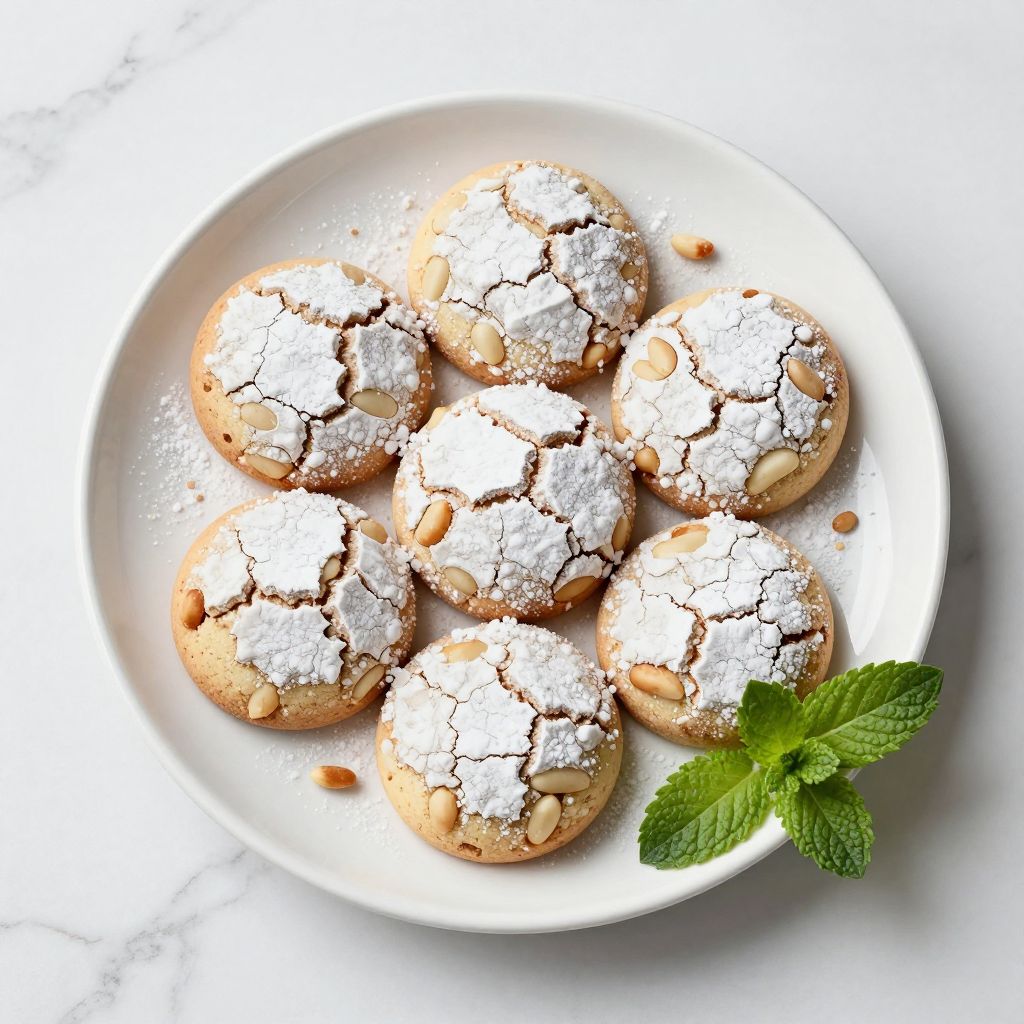
The smell of toasted pine nuts and almond paste filling your kitchen is one of those unmistakable signals that something special is happening in the oven. Pignoli cookies are Italian treasures that look like tiny pinecones dusted with powdered sugar, and they taste even better than they look.
These chewy, nutty cookies have a tender crumb and a sophisticated flavor that makes them feel fancy enough for holiday platters yet simple enough for a casual afternoon treat. The combination of almond paste and pine nuts creates a naturally sweet, deeply satisfying cookie that doesn’t require a long ingredient list or advanced techniques. If you’ve ever wondered how to nail that perfect balance between chewy and cake-like, this recipe delivers it every single time.
Why You’ll Love This Recipe
Pignoli cookies offer a rare combination of elegance and ease that appeals to both seasoned bakers and beginners.
- Naturally gluten-free when made with certified gluten-free almond paste, no special flour blending needed
- Just seven simple ingredients create a sophisticated, restaurant-quality cookie
- The texture is perfectly chewy inside with a soft, slightly crispy exterior
- No mixer required; you can mix everything by hand in under five minutes
- Keeps fresh for up to five days, making them ideal for gift-giving or meal prep
My Experience Making This Recipe
I first encountered pignoli cookies at a Italian bakery in my neighborhood, and I was immediately struck by how different they felt from typical sugar cookies. The moment I bit into one, I tasted almond, pine nut, and a subtle sweetness that lingered pleasantly instead of being cloying. I went home determined to recreate them.
My first attempt was a learning experience; I overworked the dough and ended up with dense, cakey results that lacked that signature chew. After adjusting my technique and being gentler with the dough, I nailed it, and now I make a batch every few weeks. The best part is watching people’s faces light up when they taste one, followed by the inevitable question: “How did you make these?”
The pine nuts toast slightly as the cookies bake, which deepens their flavor and creates that toasted, nutty aroma that makes your home smell incredible. Every batch I make feels a little less like baking and a little more like creating edible gifts.
Recipe Overview
- Recipe Name: Pignoli Cookies
- Servings: 24 cookies
- Prep Time: 15 minutes
- Cook Time: 12 minutes
- Total Time: 27 minutes
- Course: Dessert
- Cuisine: Italian
- Calories per Serving: 85
Equipment You Will Need
- Large mixing bowl
- Wooden spoon or rubber spatula
- Measuring cups and spoons
- Baking sheets
- Parchment paper
- Small shallow bowl for rolling
- Oven with accurate temperature control
Ingredients for Pignoli Cookies
- Almond paste, 8 ounces (one 8-ounce can or package)
- Granulated sugar, 1 cup
- Egg whites, 2 large
- Vanilla extract, 1 teaspoon
- Salt, 1/4 teaspoon
- Pine nuts (pignoli), 1 cup, divided into 1/2 cup for mixing and 1/2 cup for rolling
- Powdered sugar, 1/2 cup for rolling
Ingredient Notes and Substitutions
- Almond paste is the backbone of these cookies, providing natural sweetness, moisture, and that distinctive almond flavor that makes pignoli cookies unmistakable. If you cannot find almond paste, you can blend 1 cup of blanched almonds with 2 tablespoons of powdered sugar in a food processor until it reaches a paste consistency, though the texture may be slightly different.
- Egg whites act as the binder and create structure while keeping the cookies tender and chewy. You can substitute 1/4 cup aquafaba (liquid from canned chickpeas) if making a vegan version, though the texture will be slightly less chewy.
- Pine nuts are essential to the authentic flavor and appearance of these cookies. Blanched sliced almonds work as a budget-friendly substitute but will change the flavor profile noticeably and won’t create the same visual effect.
- Vanilla extract enhances the almond flavor and adds depth without competing. Almond extract at 1/2 teaspoon can replace vanilla if you want to intensify the almond flavor, though this makes them quite rich.
How to Make Pignoli Cookies
Step 1: Combine Almond Paste and Sugar
Place your 8 ounces of almond paste into a large mixing bowl and add 1 cup of granulated sugar. Using a wooden spoon or rubber spatula, break apart the almond paste into smaller chunks and mix it with the sugar until the mixture resembles coarse breadcrumbs with small almond paste pieces still visible. This takes about two to three minutes of steady stirring, and you don’t need it perfectly smooth yet.
Step 2: Add Egg Whites and Vanilla
Pour in your 2 egg whites and 1 teaspoon of vanilla extract to the almond paste mixture. Stir gently but constantly, folding the wet ingredients into the dry until everything comes together in a thick, sticky dough. Be careful not to overmix; stop as soon as the dough is uniform, which should take about one minute of mixing.
Step 3: Fold in Half the Pine Nuts
Add 1/2 cup of pine nuts to your dough and fold them in using your spatula with gentle, sweeping motions. The pine nuts will distribute throughout the dough and add texture and flavor to the inside of each cookie. Stop folding as soon as the nuts are incorporated, about 15 to 20 seconds of folding.
Step 4: Add Salt for Balance
Sprinkle 1/4 teaspoon of salt over the dough and fold it in with just a few turns of your spatula. Salt enhances both the almond and pine nut flavors while preventing the cookies from tasting one-dimensional or overly sweet. This small amount creates surprising depth.
Step 5: Prepare Your Work Station
Line two baking sheets with parchment paper and set them near your work area. Pour your remaining 1/2 cup of pine nuts into a shallow bowl, and pour your 1/2 cup of powdered sugar into another shallow bowl next to it. Having these ready before you start shaping cookies saves time and keeps your hands from getting too sticky.
Step 6: Shape the Dough into Balls
Using a tablespoon measure or a small cookie scoop, portion out roughly 1-tablespoon mounds of dough onto your prepared baking sheets, spacing them about 2 inches apart. These cookies don’t spread much, so you have some flexibility with spacing, but giving them room ensures they bake evenly. Gently round each mound with your hands into a ball shape.
Step 7: Coat with Powdered Sugar and Pine Nuts
Working with one cookie at a time, roll each ball in the powdered sugar bowl until it’s evenly coated on all sides, then immediately roll it in the bowl of pine nuts, pressing gently so the nuts adhere to the sugar coating. The sugar acts as a sticky base for the pine nuts to cling to, and the contrast between the white powdered sugar and dark pine nuts creates the signature appearance. Return each coated ball to the baking sheet.
Step 8: Preheat and Bake
Preheat your oven to 350 degrees Fahrenheit for 10 minutes while your shaped cookies rest on the baking sheets. The rest time allows the dough to firm up slightly, which helps the cookies maintain their shape during baking. Once the oven reaches temperature, place both baking sheets in the oven on the middle rack.
Step 9: Bake Until Edges Are Set
Bake for 12 to 14 minutes, until the edges of the cookies are firm and lightly golden but the centers still look slightly underbaked. The cookies should jiggle slightly when you gently tap the baking sheet; this is the sweet spot for achieving that signature chewy center. The tops will crack naturally as the cookies bake, which is exactly what you want.
Step 10: Cool and Serve
Remove the baking sheets from the oven and let the cookies cool on the sheets for 5 minutes without moving them. They’ll firm up considerably during this time without becoming hard. Transfer them to a wire rack or serving plate using a spatula, and let them cool completely before eating.
Pro Tip: The cookies are actually chewier and taste better after sitting for a few hours or overnight, so resist the urge to dive in immediately.
Tips for the Best Pignoli Cookies
- Use room-temperature egg whites; cold eggs won’t incorporate as smoothly into the thick dough. Let your eggs sit on the counter for 15 minutes before cracking them.
- Don’t overmix the dough after adding wet ingredients, as this toughens the cookies and creates a cakey texture instead of chewy. Aim for minimal mixing once the egg whites are added.
- Toast your pine nuts in a dry skillet over medium heat for 2 to 3 minutes before using them if you want an even more pronounced nutty flavor. Let them cool before rolling the cookies.
- Check your oven temperature with an oven thermometer; even a 25-degree variance can affect baking time and texture. A too-hot oven creates hard, overly browned cookies.
- Use parchment paper instead of greasing your baking sheets; the sugar coating can burn on oiled surfaces, but parchment prevents this.
- Measure your almond paste by weight if possible, as canned almond paste can vary in density and affect the dough consistency slightly.
Common Mistakes to Avoid
- Overbaking the cookies is the most common error; they should look slightly underbaked when you remove them from the oven. Overbaking dries them out and turns them cake-like instead of chewy.
- Using almond butter instead of almond paste creates a runnier dough that spreads too much and lacks the proper texture. Almond paste is thicker and contains more ground almond solids.
- Skipping the cooling time on the baking sheets causes the cookies to break apart when you try to move them. The five-minute rest is essential for structural integrity.
- Overmixing after adding egg whites develops too much gluten in the almond paste, creating dense, tough cookies instead of tender ones. Mix just until combined.
Serving Suggestions
Pignoli cookies are elegant enough to serve at holiday parties or formal gatherings, yet casual enough for everyday snacking. They pair beautifully with coffee, tea, or a small glass of sweet wine.
- Serve alongside espresso or strong black coffee for a classic Italian pairing
- Arrange on a dessert platter with other Italian cookies like biscotti or amaretti
- Package in a decorative box or bag as a homemade gift for coworkers or neighbors
- Include in a dessert board with fresh fruit, chocolate, and nuts for entertaining
- Serve with a sweet wine like moscato or dessert sherry for a sophisticated after-dinner treat
Variations to Try
- Chocolate Pignoli Cookies: Add 2 tablespoons of unsweetened cocoa powder to the almond paste mixture before adding egg whites. The cocoa adds richness and slight bitterness that balances the sweetness beautifully.
- Pistachio Pignoli: Replace half the almond paste with pistachio paste and use chopped pistachios instead of pine nuts. This creates a subtly different flavor with a beautiful green tint to the interior.
- Orange-Scented Pignoli: Add 1 tablespoon of fresh orange zest and 1/4 teaspoon of orange extract to the dough for a bright, citrusy twist. The orange complements the nuttiness without overpowering it.
- Mini Pignoli Cookies: Use teaspoon-sized portions instead of tablespoon portions to create bite-sized cookies that bake in just 8 to 10 minutes. These are perfect for parties or gift boxes.
- Filled Pignoli Cookies: Place a small spoonful of chocolate ganache or jam in the center of each ball before rolling in powdered sugar. Seal the filling by pressing the edges of the dough together gently.
Dietary Adaptations
- Gluten-Free: This recipe is naturally gluten-free when using certified gluten-free almond paste and powdered sugar. No substitutions needed, and the texture remains identical to the original.
- Dairy-Free: The recipe contains no dairy products, so it’s automatically dairy-free and safe for those with milk allergies. Verify that your almond paste and vanilla extract are dairy-free certified if you have concerns.
- Vegan: Replace the 2 egg whites with 1/4 cup aquafaba (the liquid from canned chickpeas drained and whisked), and use vegan powdered sugar if needed. The cookies will be slightly less chewy but still delicious.
- Low-Carb or Keto: Replace the 1 cup of granulated sugar with 3/4 cup of erythritol or monk fruit sweetener, and use allulose for the coating powdered sugar. The texture may be slightly different as sugar affects both sweetness and moisture.
Storage and Reheating
Refrigerator
Store your cooled pignoli cookies in an airtight container in the refrigerator for up to seven days. The cookies will actually become chewier as they age, which many people prefer.
- Layer cookies with parchment paper to prevent sticking
- Keep the container sealed tightly to prevent moisture loss
- Remove cookies 15 minutes before serving to let them return to room temperature
Freezer
Pignoli cookies freeze beautifully for up to three months, making them ideal for preparing ahead. Freeze them in a single layer on a baking sheet before transferring to a freezer bag to prevent breakage.
- Freeze in an airtight container or freezer bag with parchment between layers
- Thaw at room temperature for 30 minutes before serving
- Cookies can go straight from freezer to mouth for an almost frozen treat
Reheating
Pignoli cookies are best eaten at room temperature, but you can warm them gently if desired. Place them on a baking sheet and warm in a 250-degree Fahrenheit oven for just 3 to 4 minutes to refresh their texture without drying them out.
- Warm only briefly; extended heating hardens them
- Alternatively, microwave a single cookie for 10 seconds on low power
Nutrition Information
| Nutrient | Amount |
|---|---|
| Calories | 85 |
| Total Fat | 6g |
| Saturated Fat | 0.5g |
| Carbohydrates | 8g |
| Fiber | 1g |
| Sugar | 7g |
| Protein | 2g |
| Sodium | 25mg |
| Cholesterol | 0mg |
These values are approximate and based on standard ingredient sizes. Individual nutrition may vary depending on specific brands and preparation methods used.
Frequently Asked Questions
Can I make these cookies without almond paste?
Almond paste is really the heart of pignoli cookies, and substituting it fundamentally changes the recipe. You could make a similar cookie with ground almonds mixed with a binder, but it won’t be an authentic pignoli cookie.
Why are my cookies spreading too much?
Spreading usually means your oven temperature is too low or your dough was too warm when you baked it. Use an oven thermometer to verify temperature, and chill your shaped cookies for 15 minutes before baking if your kitchen is warm.
Can I make the dough ahead of time?
Yes, you can refrigerate the mixed dough in an airtight container for up to 24 hours. Let it come to room temperature for 10 minutes before shaping and baking, as cold dough is harder to work with.
What causes the cracks on top of the cookies?
The cracks appear naturally as the cookies bake and the surface dries while the interior stays soft. This is actually desirable and creates the authentic pignoli cookie appearance.
Are these cookies good for gift-giving?
Absolutely, they make excellent gifts because they stay fresh for several days and look beautiful in a decorated box. Most people appreciate homemade cookies, especially ones that look as impressive as pignoli cookies.
Can I use egg whites from a carton instead of fresh eggs?
Yes, liquid egg whites work perfectly in this recipe at a ratio of 1/4 cup to replace 2 large egg whites. The results will be virtually identical to using fresh egg whites.
Pignoli Cookies
Italian almond paste cookies coated with pine nuts and powdered sugar. These chewy, naturally gluten-free cookies have a tender crumb and sophisticated flavor that’s perfect for holiday platters or everyday treats.
- Large mixing bowl
- Wooden spoon or rubber spatula
- Measuring cups and spoons
- Baking sheets
- Parchment paper
- Small shallow bowl for rolling
- Wire cooling rack
Main
- 8 ounces almond paste
- 1 cup granulated sugar
- 2 large egg whites
- 1 teaspoon vanilla extract
- 1/4 teaspoon salt
- 1 cup pine nuts (pignoli, divided into 1/2 cup for mixing and 1/2 cup for rolling)
- 1/2 cup powdered sugar for rolling
- Place 8 ounces of almond paste into a large mixing bowl and add 1 cup of granulated sugar. Using a wooden spoon or rubber spatula, break apart the almond paste into smaller chunks and mix it with the sugar until the mixture resembles coarse breadcrumbs with small almond paste pieces still visible, about 2 to 3 minutes.
- Pour in 2 egg whites and 1 teaspoon of vanilla extract to the almond paste mixture. Stir gently but constantly, folding the wet ingredients into the dry until everything comes together in a thick, sticky dough, about 1 minute. Do not overmix.
- Add 1/2 cup of pine nuts to the dough and fold them in using gentle, sweeping motions until incorporated, about 15 to 20 seconds.
- Sprinkle 1/4 teaspoon of salt over the dough and fold it in with just a few turns of your spatula.
- Line two baking sheets with parchment paper. Pour remaining 1/2 cup of pine nuts into a shallow bowl, and pour 1/2 cup of powdered sugar into another shallow bowl.
- Using a tablespoon measure or small cookie scoop, portion out roughly 1-tablespoon mounds of dough onto the prepared baking sheets, spacing them about 2 inches apart. Gently round each mound with your hands into a ball shape.
- Working with one cookie at a time, roll each ball in the powdered sugar bowl until evenly coated on all sides, then immediately roll it in the bowl of pine nuts, pressing gently so the nuts adhere to the sugar coating. Return each coated ball to the baking sheet.
- Preheat oven to 350 degrees Fahrenheit. Let shaped cookies rest on the baking sheets for 10 minutes while the oven preheats.
- Bake for 12 to 14 minutes at 350 degrees Fahrenheit, until the edges of the cookies are firm and lightly golden but the centers still look slightly underbaked. The cookies should jiggle slightly when you gently tap the baking sheet.
- Remove the baking sheets from the oven and let the cookies cool on the sheets for 5 minutes without moving them. Transfer them to a wire rack or serving plate using a spatula, and let them cool completely before eating.
The cookies are actually chewier and taste better after sitting for a few hours or overnight. Store in an airtight container at room temperature for up to 5 days, in the refrigerator for up to 7 days, or freeze for up to 3 months. Use room-temperature egg whites and do not overmix the dough for best results. Cookies should look slightly underbaked when removed from the oven.