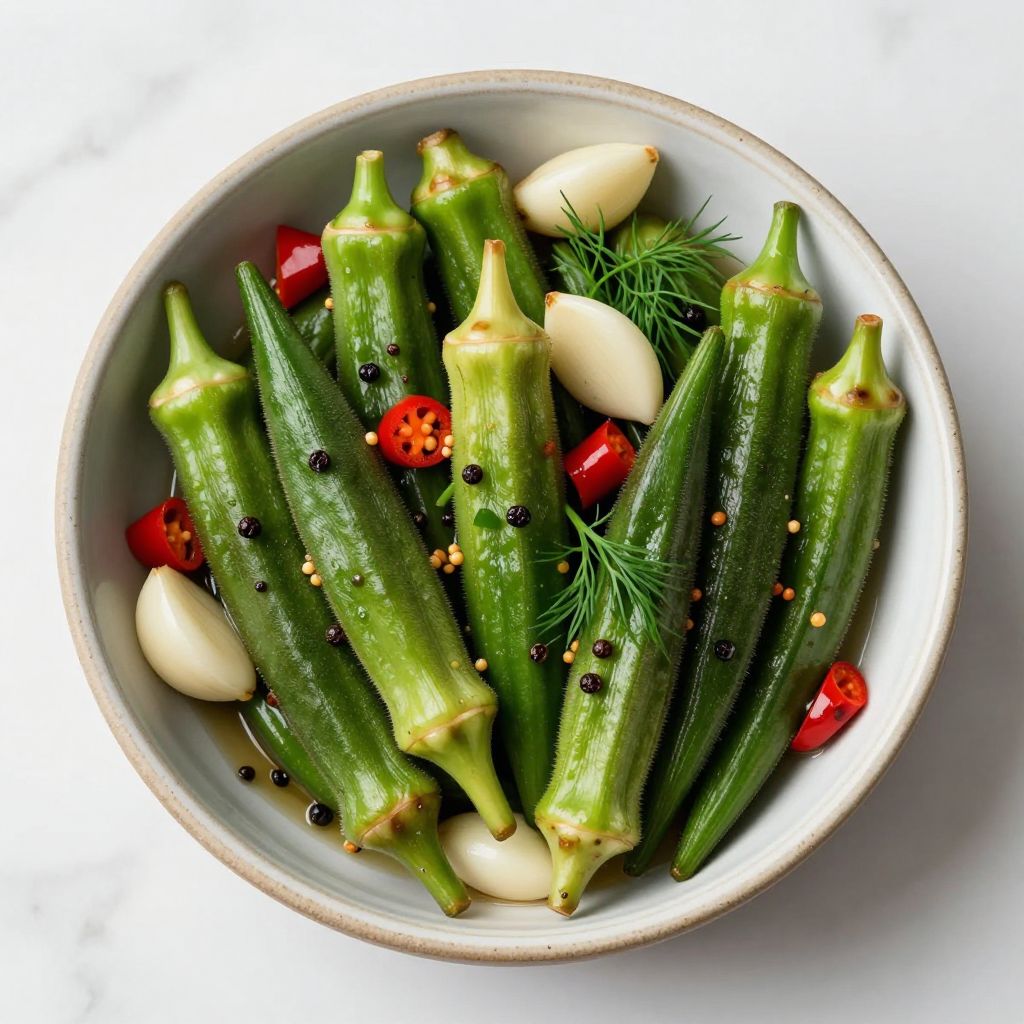
There’s something deeply satisfying about the sharp snap of a perfectly pickled okra pod, followed by that tangy, garlicky bite that makes your taste buds sit up and pay attention. Pickled okra transforms this Southern staple into a crunchy, flavorful snack that works equally well as a cocktail garnish, a sandwich topper, or straight from the jar at midnight when nobody’s watching.
This recipe delivers that classic deli-style pickle crunch without any sliminess, which is the downfall of poorly prepared okra. The brine balances vinegar tang with just enough heat and aromatics to keep things interesting, and the process is surprisingly forgiving for first-time picklers.
You’ll have shelf-stable jars of addictive pickled okra ready in about a week, though they improve with age if you can resist diving in early.
Why You’ll Love This Recipe
This pickled okra combines traditional Southern flavors with a straightforward technique that won’t intimidate beginners. The result tastes better than anything you’d find at the store, and you control the heat level completely.
- Requires no canning experience or special equipment beyond basic jars
- Stays crisp and never develops that slimy texture okra haters complain about
- Customizable spice level from mild to mouth-numbing
- Keeps for months in the refrigerator once opened
- Makes an impressive homemade gift that looks far fancier than the effort required
My Experience Making This Recipe
I grew up thinking okra only came fried at fish fries until a friend’s grandmother handed me a jar of her pickled okra at a cookout. That first bite changed everything, and I’ve been perfecting my own version ever since.
The brine fills your kitchen with a sharp, vinegary aroma that smells like summer preservation and old-school food wisdom. I learned the hard way that overpacking the jars leads to bent, bruised pods, so now I treat them gently and leave proper headspace.
My batch disappeared in three days at the last potluck, with people asking if I’d sell jars at the farmers market. I won’t, but I do make extra batches now because these never last as long as the recipe claims they should.
Recipe Overview
- Recipe Name: Pickled Okra
- Servings: 4 pint jars (approximately 16 servings)
- Prep Time: 20 minutes
- Cook Time: 10 minutes
- Total Time: 30 minutes plus 7 days pickling time
- Course: Condiment, Snack, Appetizer
- Cuisine: Southern American
- Calories per Serving: 25
Equipment You Will Need
- Four pint-sized mason jars with lids and bands
- Large pot or saucepan for brine
- Small pot for sterilizing lids
- Ladle or measuring cup with a spout
- Wooden spoon for stirring
- Clean kitchen towels
- Jar lifter or tongs (helpful but not required)
- Funnel (makes filling jars cleaner)
Ingredients for Pickled Okra
- 2 pounds fresh okra pods, small to medium size, stems trimmed
- 3 cups white vinegar (5% acidity)
- 3 cups water
- 3 tablespoons pickling salt or kosher salt
- 4 cloves garlic, peeled and halved
- 4 small dried red chili peppers or 2 teaspoons red pepper flakes
- 4 teaspoons dill seeds or 4 fresh dill heads
- 2 teaspoons mustard seeds
- 2 teaspoons black peppercorns
- 1 teaspoon celery seeds
Ingredient Notes and Substitutions
- Fresh okra: Smaller pods stay crunchier and fit better in jars; you can substitute frozen okra in a pinch, but expect softer texture and more slime.
- White vinegar: Provides clean, sharp acidity that preserves color; apple cider vinegar works but gives a darker, slightly sweeter result.
- Pickling salt: Dissolves cleanly without additives that cloud brine; table salt works but may make the brine slightly cloudy without affecting safety or taste.
- Garlic cloves: Add savory depth and that classic deli pickle flavor; omit entirely if you’re not a garlic fan, though the flavor mellows considerably during pickling.
- Dried chili peppers: Control heat level; substitute fresh jalapeño slices, double the amount for serious heat, or skip completely for mild pickles.
- Dill seeds: Give traditional pickle flavor; fresh dill works beautifully but fades faster, and you can substitute fennel seeds for a different aromatic profile.
How to Make Pickled Okra
Step 1: Prepare and Sterilize the Jars
Wash your mason jars, lids, and bands in hot soapy water, then rinse thoroughly. Place the jars upright in a 200-degree oven for 10 minutes or run them through a dishwasher cycle, keeping them hot until you’re ready to fill them.
Hot jars prevent thermal shock when you add the boiling brine, which could crack cold glass. Heat the lids in a small pot of simmering water to soften the sealing compound.
Step 2: Wash and Trim the Okra
Rinse the okra pods under cold running water and pat them completely dry with clean towels. Trim the stem caps carefully without cutting into the pod itself, which would expose the interior and create sliminess.
Select pods that are roughly the same length so they pack evenly and look professional in the jars. Discard any bruised, spotted, or overly large woody pods that won’t pickle well.
Step 3: Pack the Spices and Okra
Divide the garlic halves, chili peppers, dill seeds, mustard seeds, peppercorns, and celery seeds evenly among your four jars. Pack the okra pods vertically into each jar, standing them stem-end up and fitting them snugly without crushing.
Vertical packing shows off the okra beautifully and helps them stay straight during brining. Leave about half an inch of headspace at the top of each jar for the brine and proper sealing.
Step 4: Prepare the Pickling Brine
Combine the vinegar, water, and pickling salt in your large pot and bring the mixture to a rolling boil over high heat. Stir occasionally to dissolve the salt completely, which takes about 3 minutes once the liquid starts bubbling.
The correct salt-to-acid ratio prevents bacterial growth and provides the flavor balance that makes pickles addictive. Never reduce the vinegar or salt amounts, as this compromises food safety in preserved goods.
Step 5: Pour the Hot Brine
Carefully ladle or pour the boiling brine over the okra in each jar, covering the pods completely and maintaining that half-inch headspace. Use a wooden chopstick or skewer to release any air bubbles by sliding it down the inside of the jar.
Air bubbles can prevent proper sealing and create uneven pickling, so take this step seriously. The brine should be visibly hot and steaming when it goes into the jars.
Step 6: Seal the Jars
Wipe the rim of each jar with a clean, damp cloth to remove any brine or okra particles that would interfere with sealing. Place a hot lid on each jar and screw the band on fingertip-tight, which means snug but not forcefully cranked down.
Overtightening prevents air from escaping during cooling and can actually cause seal failure. You’ll hear the satisfying “pop” of each lid sealing as the jars cool over the next few hours.
Step 7: Cool and Store
Let the sealed jars sit undisturbed at room temperature for 12 to 24 hours. Check that each lid has sealed by pressing the center; it should not flex up and down.
Properly sealed jars can be stored in a cool, dark pantry for up to one year, though the texture stays crispest in the first six months. Refrigerate any jars that didn’t seal and use them within three weeks.
Step 8: Wait for the Magic
Store your sealed jars in a cool, dark place for at least seven days before opening to allow the flavors to develop fully. The okra will transform from bright green to olive-drab as the acids penetrate, and the brine will mellow from harsh to complex.
Longer aging creates deeper, more rounded flavors, so if you can wait two or three weeks, you’ll be rewarded. Once opened, refrigerate and consume within two months, though they rarely last that long.
Pro Tip: Choose okra pods no longer than four inches for the best crunch and easiest packing. Larger pods tend to be tough and fibrous, and they never pickle as satisfyingly as their smaller counterparts.
Tips for the Best Pickled Okra
- Use the freshest okra possible, ideally picked within 24 hours, as older pods lose their crisp texture and develop that dreaded slime factor even in brine.
- Maintain the full vinegar concentration; never dilute beyond the recipe ratios or you risk spoilage and mushy texture that ruins the whole batch.
- Keep the okra submerged completely under brine throughout the pickling period by packing jars firmly but not crushing the delicate pods.
- Add a grape leaf or oak leaf to each jar if you can find them; the tannins help maintain crispness through a traditional preservation trick.
- Label your jars with the date so you know when they hit their prime aging period, which is that sweet spot between two and eight weeks.
- Resist opening a jar early to taste-test, as breaking the seal interrupts the pickling process and shortens shelf life dramatically.
Common Mistakes to Avoid
- Cutting into the okra pods releases the mucilaginous interior that creates sliminess, turning crisp pickles into an unpleasant, gooey mess nobody wants to eat.
- Using iodized table salt instead of pickling salt creates cloudy brine and can add metallic off-flavors that overpower the other seasonings.
- Packing okra horizontally causes them to bend and break during processing, creating an unprofessional look and inconsistent texture throughout the jar.
- Reducing the vinegar to make the brine “less sour” compromises the acidity needed for safe preservation and proper texture development.
- Opening jars too soon means underdeveloped flavor and wasted potential, since the real transformation happens after that first week of patient waiting.
Serving Suggestions
Pickled okra shines as a tangy counterpoint to rich, heavy foods and makes every charcuterie board more interesting. The vinegary crunch cuts through fatty meats and creamy cheeses like nothing else can.
- Spear them on toothpicks as cocktail garnishes for Bloody Marys or dirty martinis
- Serve alongside fried chicken, pulled pork, or barbecue ribs for authentic Southern balance
- Chop them into potato salad, egg salad, or tuna salad for unexpected tangy crunch
- Add whole pods to cheese and charcuterie boards with sharp cheddar and smoked meats
- Slice them into thin rounds as a tangy topping for burgers, hot dogs, or grilled sausages
Variations to Try
- Spicy Cajun style: Add 1 tablespoon of Cajun seasoning and extra cayenne to each jar for Louisiana heat that builds with each bite.
- Sweet and hot: Stir 2 tablespoons of sugar into the brine and add sliced fresh jalapeños for a sweet-heat combination that’s dangerously addictive.
- Garlic-forward version: Triple the garlic and add whole peeled cloves throughout each jar for serious garlic lovers who want that flavor front and center.
- Mediterranean twist: Replace dill with fresh oregano, add lemon slices, and include a few dried bay leaves for a completely different flavor profile.
- Asian-inspired pickles: Add sliced ginger, star anise, and Sichuan peppercorns while reducing the dill for an unexpected fusion that works surprisingly well.
Dietary Adaptations
- Gluten-free: This recipe contains no gluten naturally, but verify that your vinegar and spices haven’t been processed in facilities with cross-contamination if you have celiac disease.
- Dairy-free: Already completely dairy-free with no modifications needed whatsoever.
- Vegan and vegetarian: Fully plant-based as written, making these pickles suitable for any dietary restriction related to animal products.
- Low-carb and keto: With only 4 grams of carbs per serving and zero added sugars, pickled okra fits easily into ketogenic meal plans without modification.
Storage and Reheating
Refrigerator
Unopened jars stay shelf-stable in a cool pantry, but once opened, refrigeration becomes necessary. Transfer opened jars to the refrigerator immediately and consume within two months for best quality.
- Keep pickled okra submerged in brine to prevent drying and oxidation
- Use clean utensils every time to avoid introducing bacteria
- Check for any off smells or mold before eating from older jars
Freezer
Freezing pickled okra changes the texture significantly and isn’t recommended for whole pods. If you absolutely must freeze them, expect mushier results after thawing.
- Drain pickles and freeze in airtight containers for up to 3 months
- Use thawed frozen pickled okra only in cooked dishes or chopped applications
- Never refreeze previously frozen pickled vegetables
Reheating
Pickled okra is meant to be enjoyed cold or at room temperature. Heating destroys the crisp texture and bright flavors that make pickles appealing in the first place.
- Remove from refrigerator 15 minutes before serving for best flavor
- Drain excess brine before adding to sandwiches or burgers
- Never microwave pickled okra unless you’re adding it to a hot dish
Nutrition Information
| Nutrient | Amount |
|---|---|
| Calories | 25 |
| Total Fat | 0g |
| Saturated Fat | 0g |
| Carbohydrates | 4g |
| Fiber | 2g |
| Sugar | 1g |
| Protein | 1g |
| Sodium | 580mg |
| Cholesterol | 0mg |
Nutritional values are approximate and vary based on specific ingredients used and serving size. Pickled vegetables are naturally high in sodium due to the preservation process.
Frequently Asked Questions
Can I use apple cider vinegar instead of white vinegar?
Yes, but your pickles will have a darker color and slightly sweeter, less sharp flavor profile. Make sure any vinegar substitute contains at least 5% acidity for safe preservation.
How long do I need to wait before eating the pickled okra?
Wait at least seven days for the flavors to develop properly, though two to three weeks produces even better results. The texture and taste improve dramatically after that first week of patience.
Why did my okra turn out slimy even though I pickled it?
You likely cut into the pods or used okra that was too old and already starting to break down. Always keep pods intact with just the stem trimmed, and use the freshest okra available.
Can I process these jars in a water bath canner for longer shelf life?
Yes, process pint jars in a boiling water bath for 10 minutes (adjust for altitude) to create truly shelf-stable pickles. This recipe’s acidity level is safe for water bath canning.
What should I do if a jar didn’t seal properly?
Refrigerate any unsealed jars immediately and treat them as refrigerator pickles to be consumed within three weeks. Never leave unsealed preserved foods at room temperature.
Can I reuse the brine after eating all the okra?
The brine loses acidity and potency after the first use, making it unsafe for preserving new vegetables. You can use leftover brine as a salad dressing ingredient or marinade, but not for pickling.
How can I make my pickled okra extra crunchy?
Use the smallest, freshest pods you can find, add
Pickled Okra
This Southern-style pickled okra delivers a perfect tangy, garlicky crunch without any sliminess. The classic deli-style brine transforms fresh okra into addictive shelf-stable pickles that are ready in about a week and improve with age.
- Four pint-sized mason jars with lids and bands
- Large pot or saucepan for brine
- Small pot for sterilizing lids
- Ladle or measuring cup with a spout
- Wooden spoon
- Clean kitchen towels
- Jar lifter or tongs
- Funnel
Main
- 2 pounds fresh okra pods (small to medium size, stems trimmed)
- 3 cups white vinegar (5% acidity)
- 3 cups water
- 3 tablespoons pickling salt or kosher salt
- 4 cloves garlic (peeled and halved)
- 4 small dried red chili peppers or 2 teaspoons red pepper flakes
- 4 teaspoons dill seeds or 4 fresh dill heads
- 2 teaspoons mustard seeds
- 2 teaspoons black peppercorns
- 1 teaspoon celery seeds
- Wash your mason jars, lids, and bands in hot soapy water, then rinse thoroughly. Place the jars upright in a 200-degree oven for 10 minutes or run them through a dishwasher cycle, keeping them hot until you’re ready to fill them. Heat the lids in a small pot of simmering water to soften the sealing compound.
- Rinse the okra pods under cold running water and pat them completely dry with clean towels. Trim the stem caps carefully without cutting into the pod itself. Select pods that are roughly the same length and discard any bruised, spotted, or overly large woody pods.
- Divide the garlic halves, chili peppers, dill seeds, mustard seeds, peppercorns, and celery seeds evenly among your four jars. Pack the okra pods vertically into each jar, standing them stem-end up and fitting them snugly without crushing. Leave about half an inch of headspace at the top of each jar.
- Combine the vinegar, water, and pickling salt in your large pot and bring the mixture to a rolling boil over high heat. Stir occasionally to dissolve the salt completely, which takes about 3 minutes once the liquid starts bubbling.
- Carefully ladle or pour the boiling brine over the okra in each jar, covering the pods completely and maintaining that half-inch headspace. Use a wooden chopstick or skewer to release any air bubbles by sliding it down the inside of the jar.
- Wipe the rim of each jar with a clean, damp cloth to remove any brine or okra particles. Place a hot lid on each jar and screw the band on fingertip-tight, which means snug but not forcefully cranked down.
- Let the sealed jars sit undisturbed at room temperature for 12 to 24 hours. Check that each lid has sealed by pressing the center; it should not flex up and down. Properly sealed jars can be stored in a cool, dark pantry for up to one year. Refrigerate any jars that didn’t seal and use them within three weeks.
- Store your sealed jars in a cool, dark place for at least seven days before opening to allow the flavors to develop fully. Once opened, refrigerate and consume within two months.
Choose okra pods no longer than four inches for the best crunch. Use the freshest okra possible, ideally picked within 24 hours. Never reduce the vinegar or salt amounts, as this compromises food safety. Add a grape leaf or oak leaf to each jar if available; the tannins help maintain crispness. The okra will transform from bright green to olive-drab as the acids penetrate.