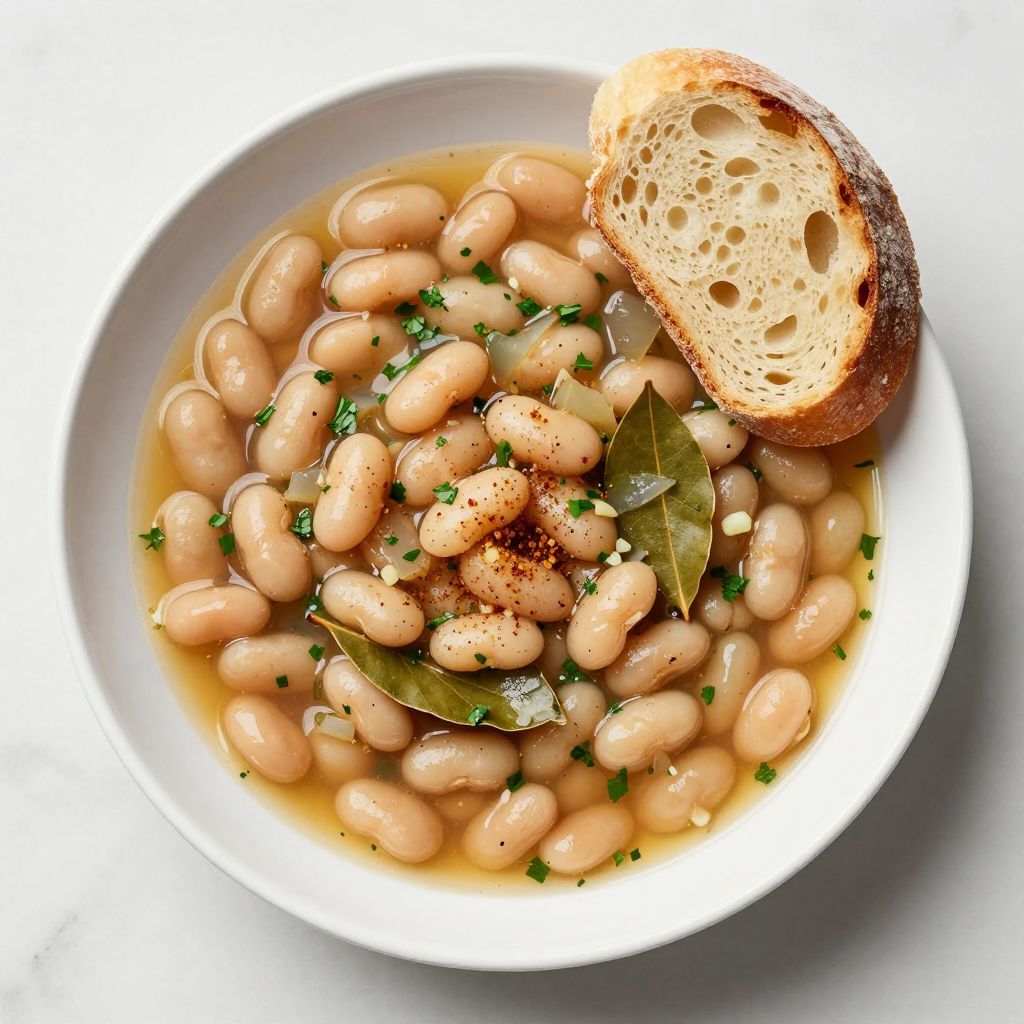
Great Northern Beans Recipe delivers tender, creamy beans in a savory broth that works perfectly as a hearty side dish or a satisfying main course. This simple recipe uses pantry staples like onions, garlic, and herbs to create a comforting dish that pairs beautifully with cornbread or crusty bread.
These mild, versatile beans become incredibly flavorful when simmered slowly with aromatics. Whether you need a protein-packed vegetarian meal or a classic side for grilled meats, this recipe gives you perfectly cooked beans every time.
Why You’ll Love This Recipe
This great northern beans recipe transforms simple ingredients into something truly special. The beans absorb all the savory flavors while maintaining their signature creamy texture.
- Budget-friendly and uses affordable pantry ingredients that you probably already have
- Naturally high in protein and fiber, making it filling and nutritious
- Incredibly versatile and works as a side dish, main course, or base for other recipes
- Meal prep friendly and tastes even better the next day after the flavors meld
- Simple preparation with mostly hands-off cooking time
My Experience Making This Recipe
I started making this recipe years ago when I needed something hearty but healthy for weeknight dinners. The aroma of onions and garlic simmering with the beans always fills my kitchen with the most welcoming scent.
My family requests these beans constantly, especially during cooler months. The texture is what really won me over: creamy on the inside but with enough structure that they don’t turn mushy.
I’ve served these to guests who claimed they didn’t like beans, and they always ask for seconds. The secret is not rushing the cooking process and letting those flavors develop naturally.
Recipe Overview
- Recipe Name: Great Northern Beans Recipe
- Servings: 6
- Prep Time: 15 minutes (plus overnight soaking)
- Cook Time: 2 hours
- Total Time: 2 hours 15 minutes (plus soaking)
- Course: Side Dish or Main Course
- Cuisine: American
- Calories per Serving: 245
Equipment You Will Need
- Large pot or Dutch oven (at least 5 quarts)
- Wooden spoon for stirring
- Sharp knife and cutting board
- Measuring cups and spoons
- Large bowl for soaking beans
- Colander for draining
Ingredients for Great Northern Beans Recipe
- 1 pound dried great northern beans
- 6 cups water or vegetable broth
- 1 medium yellow onion, diced
- 4 cloves garlic, minced
- 2 tablespoons olive oil
- 2 bay leaves
- 1 teaspoon dried thyme
- 1 teaspoon smoked paprika
- 1 1/2 teaspoons salt (adjust to taste)
- 1/2 teaspoon black pepper
- 2 tablespoons fresh parsley, chopped (for garnish)
Ingredient Notes and Substitutions
- Great Northern Beans: These white beans have a mild flavor and hold their shape well during cooking. You can substitute navy beans or cannellini beans with similar results.
- Vegetable Broth: Using broth instead of water adds depth and richness to the beans. Plain water works fine if you prefer a lighter flavor or want to reduce sodium.
- Smoked Paprika: This spice adds a subtle smoky flavor that makes the beans taste more complex. Regular paprika or a pinch of cumin works as a substitute.
- Olive Oil: The oil helps sauté the aromatics and adds richness to the dish. Butter or any neutral cooking oil can replace it.
- Fresh Parsley: The herb brightens the finished dish and adds a fresh element. Cilantro or green onions make good alternatives.
How to Make Great Northern Beans Recipe
Step 1: Soak the Beans Overnight
Place the dried great northern beans in a large bowl and cover them with at least 3 inches of cold water. Let them soak for 8 to 12 hours at room temperature.
Soaking softens the beans and reduces cooking time significantly while also making them easier to digest. Drain and rinse the beans thoroughly before cooking.
Step 2: Sauté the Aromatics
Heat the olive oil in your large pot over medium heat. Add the diced onion and cook for 5 to 6 minutes until softened and translucent, stirring occasionally.
Cooking the onion first caramelizes its natural sugars and creates a flavorful base for your beans. Add the minced garlic during the last minute and cook until fragrant.
Step 3: Add the Beans and Liquid
Add the drained beans to the pot with the sautéed aromatics. Pour in 6 cups of water or vegetable broth, making sure the beans are fully submerged.
The liquid should cover the beans by about 2 inches to account for evaporation during cooking. Add the bay leaves now so they infuse their flavor throughout the cooking process.
Step 4: Add Seasonings and Bring to a Boil
Stir in the dried thyme, smoked paprika, and black pepper. Bring the pot to a rolling boil over high heat.
Starting with a boil helps break down the bean skins faster before you reduce the heat. This initial high heat also helps blend all the flavors together.
Step 5: Reduce Heat and Simmer
Once the pot reaches a boil, reduce the heat to low and maintain a gentle simmer. Cover the pot partially, leaving a small gap for steam to escape.
This slow, gentle cooking method prevents the beans from breaking apart and ensures they cook evenly. A full boil would make them split and turn mushy.
Step 6: Cook Until Tender
Simmer the beans for 1.5 to 2 hours, stirring occasionally and checking the liquid level. Add more water or broth if the beans start looking dry.
The beans are done when they’re tender all the way through but still hold their shape. Cooking time varies based on bean age and your desired texture.
Step 7: Season with Salt
Add the salt during the last 30 minutes of cooking. Taste and adjust the seasoning as needed.
Adding salt too early can toughen the bean skins and extend cooking time dramatically. Waiting until the beans are almost tender ensures they cook properly and absorb the seasoning.
Step 8: Finish and Garnish
Remove the bay leaves and discard them. Let the beans rest for 10 minutes off the heat to allow the broth to thicken slightly.
The resting period helps the flavors settle and the liquid becomes more sauce-like. Garnish with fresh chopped parsley before serving for a pop of color and freshness.
Pro Tip: If you forget to soak your beans overnight, use the quick soak method by boiling them for 2 minutes, then letting them sit covered for 1 hour before draining and proceeding with the recipe.
Tips for the Best Great Northern Beans Recipe
- Use beans that are less than a year old for best results since older beans take forever to soften and may never reach the right texture.
- Don’t add acidic ingredients like tomatoes or vinegar until the beans are fully cooked, as acid prevents them from becoming tender.
- Stir gently and infrequently to avoid breaking the beans, which can make your dish starchy and thick.
- Keep the simmer gentle with just a few bubbles breaking the surface; a hard boil will cause the skins to split and create a mushy texture.
- Reserve some of the cooking liquid if you want a brothier consistency since you can always thin the beans later but can’t easily thicken them.
- Add a parmesan rind to the pot while cooking for extra umami depth that makes vegetarian beans taste incredibly rich.
Common Mistakes to Avoid
- Skipping the soaking step leads to uneven cooking where some beans are mushy while others remain hard in the center.
- Cooking at too high a temperature causes the bean skins to burst and creates an unappealing, starchy texture.
- Adding salt at the beginning toughens the skins and can double your cooking time, leaving you frustrated.
- Not tasting and adjusting seasonings at the end results in bland beans that need doctoring at the table.
- Overcrowding the pot without enough liquid causes uneven cooking and scorched beans on the bottom.
Serving Suggestions
These great northern beans shine as a standalone dish with crusty bread for soaking up the flavorful broth. They also make an excellent side dish for grilled meats, roasted chicken, or barbecue.
- Serve over rice with a sprinkle of hot sauce for a complete protein-packed meal
- Pair with cornbread and collard greens for a classic Southern-style dinner
- Top with crumbled bacon, shredded cheese, and sour cream for a hearty comfort food experience
- Serve alongside roasted vegetables and a simple green salad for a balanced vegetarian plate
- Use as a base for bean and ham soup by adding diced ham and extra broth
Variations to Try
- Smoky Bacon Version: Cook 4 strips of diced bacon first, use the rendered fat instead of olive oil, and add the crispy bacon back at the end for a meaty, smoky flavor.
- Tuscan White Beans: Add fresh rosemary, extra garlic, and a splash of white wine for an Italian-inspired version that pairs beautifully with roasted lamb.
- Spicy Southwest Style: Stir in diced jalapeños, cumin, and a squeeze of lime juice for beans with a kick that work perfectly in tacos or burrito bowls.
- Herbed Garden Beans: Add fresh thyme sprigs, oregano, and diced tomatoes during the last 30 minutes for a brighter, garden-fresh flavor.
- Ham and Bean Version: Add a smoked ham hock or ham bone to the pot for rich, meaty flavor that makes these beans taste like they cooked all day in a Southern kitchen.
Dietary Adaptations
- Gluten-Free: This recipe is naturally gluten-free as written, but double-check that your broth doesn’t contain any gluten-based additives.
- Dairy-Free: The recipe contains no dairy, so it’s already dairy-free and suitable for those avoiding milk products.
- Vegan: Keep it vegan by using vegetable broth and olive oil, avoiding any meat-based additions like ham or bacon, and this becomes a perfect plant-based protein source.
- Low-Carb: Beans are naturally higher in carbohydrates, so this recipe doesn’t adapt well to strict low-carb or keto diets, though the protein and fiber make them lower glycemic than many carb sources.
Storage and Reheating
Refrigerator
Store cooled beans in an airtight container in the refrigerator for up to 5 days. The flavors actually improve after a day or two as they continue to meld together.
- Keep the beans stored in their cooking liquid to prevent them from drying out
- Let them cool completely before refrigerating to prevent condensation
Freezer
Great northern beans freeze beautifully for up to 3 months. Portion them into freezer-safe containers with some of the cooking liquid for best results.
- Leave headspace in containers since the liquid expands when frozen
- Label with the date and thaw overnight in the refrigerator before reheating
- Freeze in individual portions for quick single-serve meals
Reheating
Reheat beans gently on the stovetop over medium-low heat, stirring occasionally. Add a splash of water or broth if they’ve thickened too much.
- Microwave individual portions on 50% power to prevent hot spots
- Avoid reheating at high temperatures, which can make the beans mushy
Nutrition Information
| Nutrient | Amount |
|---|---|
| Calories | 245 |
| Total Fat | 5g |
| Saturated Fat | 1g |
| Carbohydrates | 38g |
| Fiber | 12g |
| Sugar | 2g |
| Protein | 14g |
| Sodium | 590mg |
| Cholesterol | 0mg |
Nutrition information is approximate and calculated based on the ingredients listed. Your actual values may vary depending on specific brands and modifications.
Frequently Asked Questions
Can I use canned great northern beans instead of dried?
You can use canned beans for a much quicker version, using three 15-ounce cans drained and rinsed. Reduce the cooking time to just 20 to 30 minutes since canned beans are already cooked and just need to absorb the flavors.
Can I make this recipe in a slow cooker?
Absolutely, and it works beautifully by sautéing the aromatics first, then transferring everything to your slow cooker for 6 to 8 hours on low or 3 to 4 hours on high. Add salt during the last hour of cooking.
Why are my beans still hard after hours of cooking?
Old beans or hard water can prevent beans from softening no matter how long you cook them. Try adding a pinch of baking soda to the cooking water, which helps soften the beans in hard water areas.
Can I make this recipe ahead of time?
These beans are perfect for meal prep and actually taste better the next day after the flavors have had time to develop. Make them up to 3 days in advance and store them in the refrigerator until ready to serve.
How do I thicken the cooking liquid if it’s too watery?
Mash about a cup of the cooked beans against the side of the pot and stir them back in to naturally thicken the broth. You can also simmer uncovered for an additional 15 to 20 minutes to reduce the liquid through evaporation.
Can I cook great northern beans without soaking them first?
You can skip soaking but expect the cooking time to increase to 3 to 4 hours, and the texture may be less consistent. Some beans might turn mushy while others remain slightly firm.
Final Thoughts
This great northern beans recipe proves that simple ingredients can create something truly satisfying and delicious. The creamy texture and savory flavor make these beans a staple you’ll want to keep in your regular rotation.
Whether you serve them as a hearty main dish or a comforting side, these beans deliver nutrition and flavor in every bite. Give this recipe a try and discover why great northern beans deserve a place at your table.
Great Northern Beans Recipe
Great Northern Beans Recipe delivers tender, creamy beans in a savory broth that works perfectly as a hearty side dish or a satisfying main course. This simple recipe uses pantry staples like onions, garlic, and herbs to create a comforting dish that pairs beautifully with cornbread or crusty bread.
- Large pot or Dutch oven (at least 5 quarts)
- Wooden spoon for stirring
- Sharp knife and cutting board
- Measuring cups and spoons
- Large bowl for soaking beans
- Colander for draining
Main
- 1 pound dried great northern beans
- 6 cups water or vegetable broth
- 1 medium yellow onion (diced)
- 4 cloves garlic (minced)
- 2 tablespoons olive oil
- 2 bay leaves
- 1 teaspoon dried thyme
- 1 teaspoon smoked paprika
- 1 1/2 teaspoons salt (adjust to taste)
- 1/2 teaspoon black pepper
- 2 tablespoons fresh parsley (chopped (for garnish))
- Place the dried great northern beans in a large bowl and cover them with at least 3 inches of cold water. Let them soak for 8 to 12 hours at room temperature. Drain and rinse the beans thoroughly before cooking.
- Heat the olive oil in your large pot over medium heat. Add the diced onion and cook for 5 to 6 minutes until softened and translucent, stirring occasionally.
- Add the minced garlic during the last minute and cook until fragrant.
- Add the drained beans to the pot with the sautéed aromatics. Pour in 6 cups of water or vegetable broth, making sure the beans are fully submerged by about 2 inches. Add the bay leaves.
- Stir in the dried thyme, smoked paprika, and black pepper. Bring the pot to a rolling boil over high heat.
- Once the pot reaches a boil, reduce the heat to low and maintain a gentle simmer. Cover the pot partially, leaving a small gap for steam to escape.
- Simmer the beans for 1.5 to 2 hours, stirring occasionally and checking the liquid level. Add more water or broth if the beans start looking dry. The beans are done when they’re tender all the way through but still hold their shape.
- Add the salt during the last 30 minutes of cooking. Taste and adjust the seasoning as needed.
- Remove the bay leaves and discard them. Let the beans rest for 10 minutes off the heat to allow the broth to thicken slightly.
- Garnish with fresh chopped parsley before serving.
If you forget to soak your beans overnight, use the quick soak method by boiling them for 2 minutes, then letting them sit covered for 1 hour before draining and proceeding with the recipe. These beans store well in the refrigerator for up to 5 days and freeze beautifully for up to 3 months. The flavors actually improve after a day or two as they continue to meld together.