
There’s something magical about the way fresh dandelions transform into a golden syrup that captures the essence of spring. Making dandelion honey is not just a delightful kitchen project; it’s a way to connect with nature and celebrate the versatility of this often-overlooked flower. This syrup has a unique flavor that dances between floral and earthy, perfect for drizzling over pancakes or sweetening your tea. With just a few simple ingredients, you can create a sweet treat that brings a taste of sunshine to your table.
Why You’ll Love This Recipe
This recipe is a delightful way to use dandelions in a sweet and unexpected way.
- Unique floral flavor that brightens dishes.
- Simple ingredients you probably have on hand.
- Versatile for various uses, from sweetening beverages to topping desserts.
- Perfect way to make use of your backyard or garden dandelions.
My Experience Making This Recipe
When I first decided to try making dandelion honey, I was skeptical about how those pesky weeds could transform into something so delicious. But as I watched the petals steep and the syrup bubble, I was amazed at how a simple process could yield such complex flavors.
The first taste left me with a warm feeling of nostalgia, reminiscent of childhood days spent in the garden. Each drizzle over my morning toast brought a smile to my face, and my family couldn’t get enough of this sweet concoction.
Recipe Overview
- Recipe Name: Dandelion Honey
- Servings: 1 cup
- Prep Time: 30 minutes
- Cook Time: 1 hour
- Total Time: 1 hour 30 minutes
- Course: Condiment
- Cuisine: American
- Calories per Serving: 70
Equipment You Will Need
- Large pot
- Strainer or cheesecloth
- Measuring cups
- Glass jar for storage
- Wooden spoon
Ingredients for Dandelion Honey
- 2 cups fresh dandelion petals (make sure they are pesticide-free)
- 4 cups water
- 3 cups granulated sugar
- 1 tablespoon lemon juice
Ingredient Notes and Substitutions
- Dandelion petals: These give the syrup its unique flavor; use only the yellow petals for the best taste. You can substitute with other edible flowers if needed.
- Granulated sugar: This is used for sweetness and preserving the syrup. Brown sugar can be used for a richer flavor, but it may alter the color.
- Lemon juice: It balances the sweetness and enhances the flavor. You can replace it with apple cider vinegar for a different tang.
How to Make Dandelion Honey
Step 1: Gather Dandelions
Start by collecting fresh dandelions from a pesticide-free area. Make sure to pick only the vibrant yellow petals, as the green parts can add bitterness.
Step 2: Prepare the Dandelions
Remove the petals from the green base and rinse them gently to remove any dirt or insects. This step ensures a clean syrup without any unwanted flavors.
Step 3: Steep the Petals
In a large pot, combine the dandelion petals and water. Bring it to a gentle boil, then reduce the heat and let it simmer for about 30 minutes.
Step 4: Strain the Liquid
After the mixture has steeped, strain it through a fine strainer or cheesecloth. This process captures the essence of the petals while leaving behind any solid bits.
Step 5: Add Sugar and Lemon Juice
Return the strained liquid to the pot and add granulated sugar and lemon juice. Stir well to dissolve the sugar completely, which is crucial for a smooth syrup.
Step 6: Simmer the Mixture
Bring the mixture back to a boil, then reduce the heat and let it simmer for about 30 minutes. This helps thicken the syrup and intensify the flavor.
Step 7: Test for Consistency
To check if the syrup is ready, drop a small amount onto a cold plate and let it sit for a minute. If it holds its shape, it’s ready to be bottled.
Step 8: Bottle the Syrup
Carefully pour the hot syrup into a sterilized glass jar. Seal it tightly and let it cool completely before storing it in the refrigerator.
Pro Tip: For a more floral flavor, let the dandelions steep longer, but avoid bitterness by not overcooking the petals.
Tips for the Best Dandelion Honey
- Use only bright yellow petals for the best flavor.
- Try to gather dandelions early in the day when they are fully open.
- Don’t skip the lemon juice; it brightens the flavor and acts as a preservative.
- Store your syrup in a cool, dark place to extend its shelf life.
- Experiment with other edible flowers for unique flavor combinations.
Common Mistakes to Avoid
- Using the green parts of dandelions; they can make the syrup bitter.
- Not rinsing the dandelions thoroughly, which can result in unwanted flavors.
- Overcooking the syrup, which can lead to a caramelized taste instead of a fresh one.
- Skipping the testing step; this can result in a syrup that is too thin.
Serving Suggestions
This dandelion honey is incredibly versatile and can elevate many dishes.
- Drizzle over pancakes or waffles for a floral twist.
- Add a spoonful to your tea for a natural sweetener.
- Use it as a topping for yogurt or oatmeal.
- Incorporate into salad dressings for a unique flavor.
Variations to Try
- Mix in a few sprigs of mint while steeping for a refreshing twist.
- Add a few slices of ginger to the pot for a spicy kick.
- Experiment with different citrus juices like lime or orange for a new flavor profile.
- Blend in a teaspoon of vanilla extract for a sweet depth.
Dietary Adaptations
- Gluten-free: This recipe is naturally gluten-free, so enjoy without worry.
- Dairy-free: No dairy is used, making it suitable for all diets.
- Vegan: As a plant-based recipe, it is perfect for vegans.
- Low-carb/Keto: Substitute sugar with a keto-friendly sweetener for low-carb options.
Storage and Reheating
Refrigerator
Store your dandelion honey in the refrigerator for up to three months. Make sure it is in a tightly sealed jar to prevent moisture from entering.
- Use a clean spoon each time to avoid contamination.
- Label the jar with the date to keep track of freshness.
Freezer
You can freeze dandelion honey for longer storage. Just pour it into an airtight container.
- Leave some space at the top for expansion.
- Thaw in the refrigerator before use.
Reheating
To reheat, place the jar in warm water until the syrup softens. Avoid microwaving, as it can change the texture.
- Stir well after reheating to ensure even consistency.
Nutrition Information
| Nutrient | Amount |
|---|---|
| Calories | 70 |
| Total Fat | 0g |
| Saturated Fat | 0g |
| Carbohydrates | 18g |
| Fiber | 0g |
| Sugar | 17g |
| Protein | 0g |
| Sodium | 0mg |
| Cholesterol | 0mg |
This nutritional information may vary based on specific ingredients used.
Frequently Asked Questions
Can I use dried dandelions instead of fresh?
While fresh dandelions are best for flavor, dried petals can work in a pinch; just adjust steeping time.
Can I make this ahead of time?
Yes, dandelion honey can be prepared in advance and stored in the refrigerator.
How should I store this syrup?
Keep it in a sealed jar in the refrigerator for up to three months.
What if my syrup is too thin?
If it’s too thin, simmer it longer to thicken or add more sugar to help it set.
Can I use other flowers?
Absolutely! Other edible flowers like clover or chamomile can give you a delightful twist.
Final Thoughts
Making dandelion honey is a rewarding experience that connects you with nature’s bounty. I hope you feel inspired to try this unique recipe and share its sunny flavor with friends and family.
If you enjoyed this recipe, check out my other favorites like dandelion greens and a refreshing Honey Deuce cocktail for more delightful ways to enjoy seasonal ingredients.
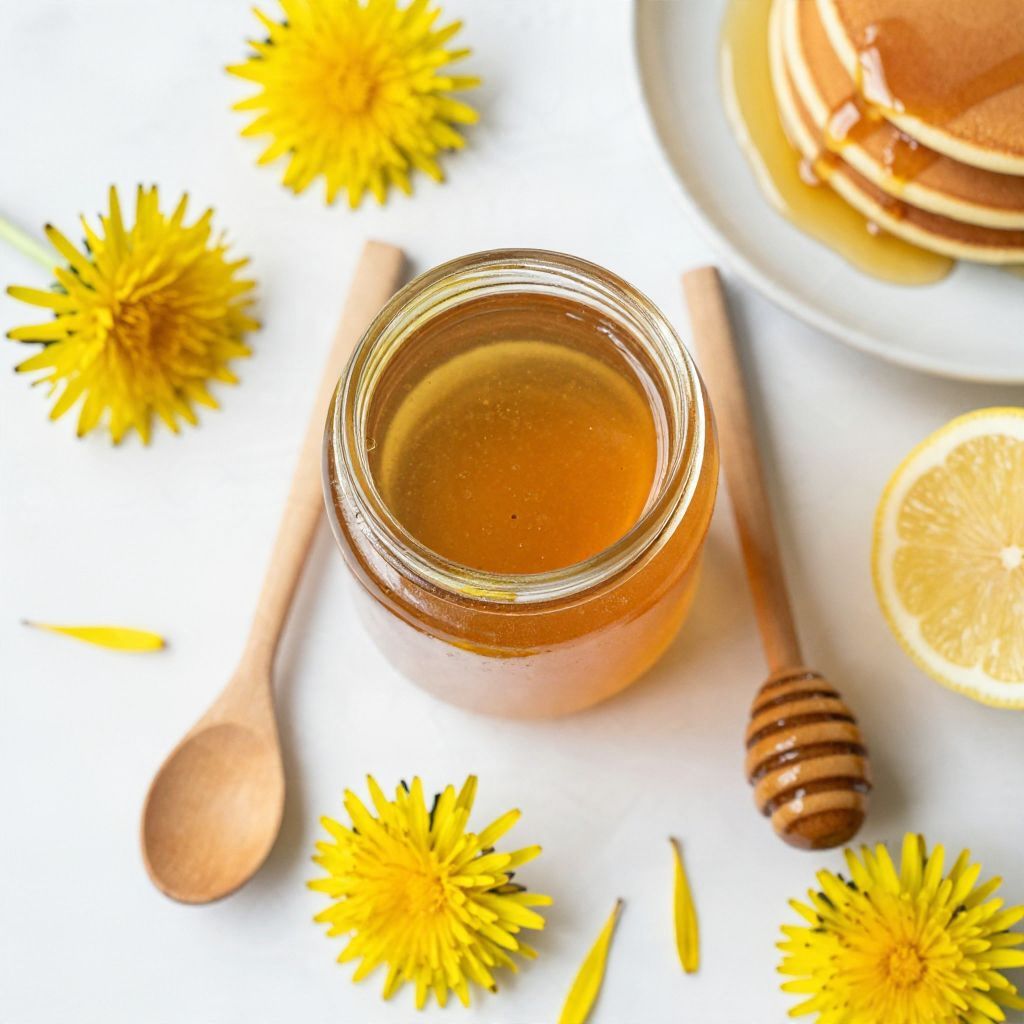
Dandelion Honey
Ingredients
Equipment
Method
- Gather fresh dandelions from a pesticide-free area.
- Remove the petals from the green base and rinse them gently.
- In a large pot, combine the dandelion petals and water. Bring to a gentle boil, then simmer for about 30 minutes.
- Strain the mixture through a fine strainer or cheesecloth.
- Return the strained liquid to the pot and add granulated sugar and lemon juice. Stir well until sugar is completely dissolved.
- Bring the mixture back to a boil, then reduce heat and let it simmer for another 30 minutes.
- Drop a small amount of syrup onto a cold plate to test for consistency.
- Pour the hot syrup into a sterilized glass jar. Seal it tightly and let it cool completely.