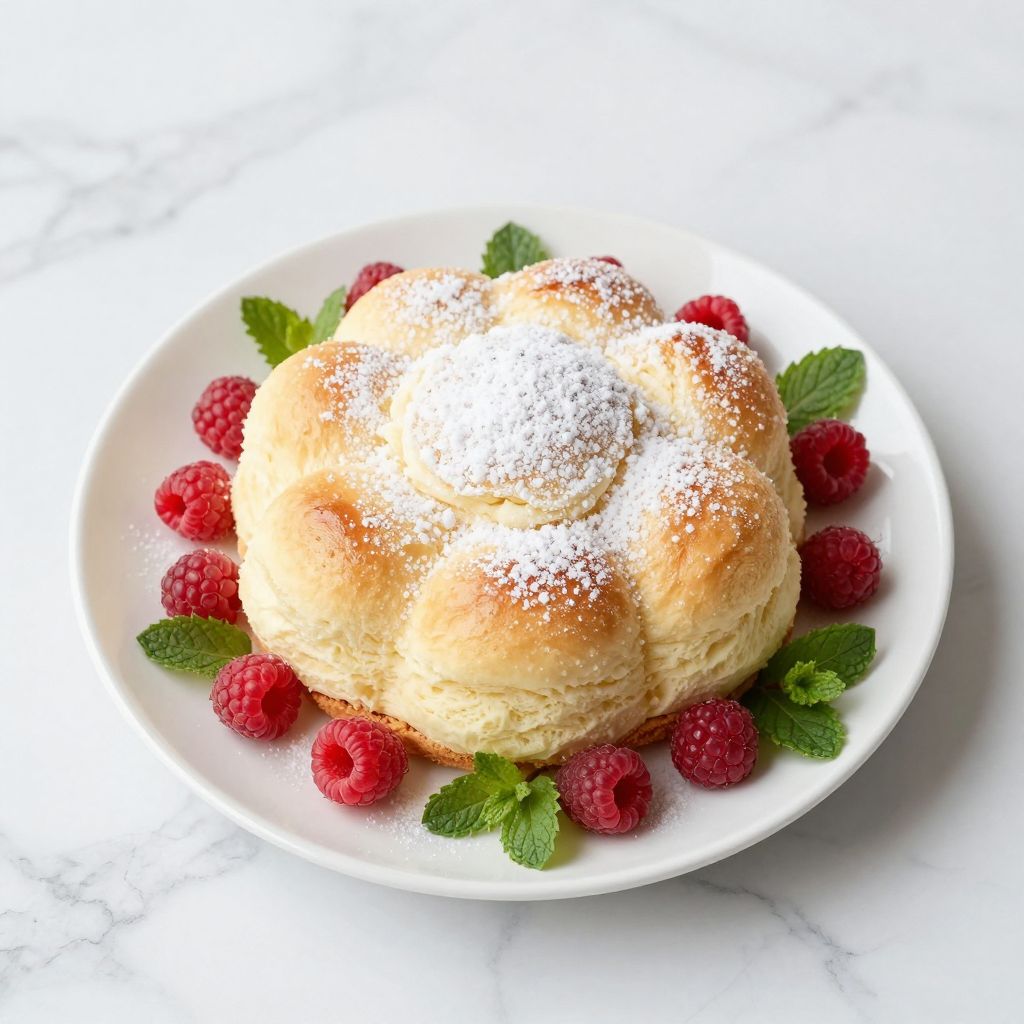
Cloud cake is a light, fluffy dessert that melts in your mouth like a sweet dream made real. This Japanese-inspired treat uses just a handful of simple ingredients like eggs, cream cheese, and sugar to create an impossibly airy texture perfect for afternoon tea or elegant dinner parties.
The secret lies in whipped egg whites that get folded into a creamy base, creating those signature billowy layers. You will love how simple it is to make something that looks and tastes this impressive.
Why You’ll Love This Recipe
This cloud cake delivers bakery-quality results with minimal effort and equipment. The texture is unlike any other cake you have tried.
- Only 6 basic ingredients needed, most already in your fridge
- Naturally gluten-free without any special flour substitutes
- Light enough to enjoy guilt-free, yet rich enough to satisfy dessert cravings
- Wobbles adorably when you move the pan, making it fun to serve
- Impressive presentation that makes you look like a pastry chef
My Experience Making This Recipe
I first attempted this cake after seeing it trend online, skeptical that something so simple could work. The batter looked oddly loose and jiggly going into the oven, which had me convinced I had messed up somehow.
But watching it puff up through the oven door was pure magic. The cake emerged golden and trembling, filling my kitchen with the most delicate vanilla aroma.
My family devoured half the cake within minutes of it cooling. Even my notoriously picky teenager asked for seconds, which is basically a five-star review in my house.
Recipe Overview
- Recipe Name: Cloud Cake
- Servings: 8
- Prep Time: 20 minutes
- Cook Time: 25 minutes
- Total Time: 45 minutes
- Course: Dessert
- Cuisine: Japanese-inspired
- Calories per Serving: 145
Equipment You Will Need
- 8-inch round cake pan
- Parchment paper
- Large mixing bowl
- Medium mixing bowl
- Electric hand mixer or stand mixer
- Rubber spatula
- Fine mesh sieve
- Large roasting pan for water bath
- Whisk
Ingredients for Cloud Cake
- 4 large eggs, separated into whites and yolks
- 4 ounces cream cheese, softened to room temperature
- 1/3 cup whole milk
- 1/2 cup granulated sugar, divided
- 1/4 cup cornstarch
- 1 teaspoon vanilla extract
Ingredient Notes and Substitutions
- Cream cheese: Provides richness and structure to the delicate batter. You can use Neufchatel cheese as a lower-fat substitute, though the texture will be slightly less creamy.
- Cornstarch: Creates the signature tender crumb without gluten development. Potato starch works equally well if that is what you have on hand.
- Whole milk: Adds moisture and helps blend the cream cheese smoothly. Two percent milk works fine, but avoid skim as it makes the cake less rich.
- Granulated sugar: Sweetens and stabilizes the egg white foam. Caster sugar dissolves faster and creates a smoother meringue if you have it available.
- Vanilla extract: Adds aromatic depth without overpowering the delicate flavor. Almond extract creates a lovely variation if you prefer nuttier notes.
How to Make Cloud Cake
Step 1: Prepare Your Pan and Oven
Preheat your oven to 320°F and line the bottom of your 8-inch cake pan with parchment paper. Place a large roasting pan on the lower oven rack and fill it with about 1 inch of hot water.
This water bath creates steam that prevents the cake from cracking and drying out. The gentle, moist heat is what gives cloud cake its custardy texture.
Step 2: Mix the Cream Cheese Base
Beat the softened cream cheese in a medium bowl until completely smooth and lump-free. Add the egg yolks one at a time, mixing well after each addition until fully incorporated.
Room temperature cream cheese blends much easier and prevents lumps that can ruin the silky texture. Cold cream cheese will create stubborn clumps no matter how long you beat it.
Step 3: Add Milk and Dry Ingredients
Pour in the milk and vanilla extract, whisking until the mixture is smooth. Sift the cornstarch directly into the bowl and whisk until no streaks remain.
Sifting prevents cornstarch clumps that create gummy pockets in the finished cake. The batter should look thin and pourable at this stage, which is perfectly normal.
Step 4: Whip the Egg Whites
In a large, completely clean bowl, beat the egg whites with an electric mixer on medium speed until foamy. Gradually add the sugar one tablespoon at a time while continuing to beat.
Increase the speed to high and beat until stiff peaks form, about 5 to 7 minutes total. The meringue should stand up straight when you lift the beaters and look glossy and smooth.
Step 5: Fold the Mixtures Together
Add about one-third of the whipped egg whites to the cream cheese mixture and gently fold with a rubber spatula until mostly combined. Add the remaining egg whites in two additions, folding very gently to preserve the air bubbles.
Stop folding as soon as you no longer see large white streaks. Overmixing deflates the egg whites and results in a dense, flat cake instead of a fluffy cloud.
Step 6: Pour and Smooth the Batter
Pour the batter into your prepared pan and gently tap it on the counter twice to release any large air bubbles. Use a spatula to smooth the top if needed.
The batter will look almost liquid and jiggly, which might seem wrong but is exactly right. Trust the process here, even if it looks too thin to set.
Step 7: Bake in the Water Bath
Carefully place the cake pan into the roasting pan with water, making sure the water comes about halfway up the sides of the cake pan. Bake for 25 minutes, then reduce the temperature to 285°F and bake for an additional 55 minutes.
The cake should be golden on top and jiggly in the center when you gently shake the pan. Underbaking slightly is better than overbaking, as the cake continues cooking from residual heat.
Step 8: Cool Completely
Turn off the oven and crack the door open slightly, leaving the cake inside for 15 minutes. Remove from the oven and let it cool in the pan at room temperature for at least 2 hours.
This gradual cooling prevents the dramatic shrinking and cracking that happens when you shock a delicate cake with cold air. Patience here makes the difference between a beautiful cake and a collapsed one.
Step 9: Unmold and Serve
Run a thin knife around the edges of the pan to loosen the cake. Place a plate over the pan, flip it over, and gently remove the pan and parchment paper.
Flip the cake right-side up onto your serving plate. Dust with powdered sugar if desired and slice with a sharp, thin knife wiped clean between cuts.
Pro Tip: Make sure your mixing bowl for the egg whites is completely grease-free. Even a tiny bit of oil or egg yolk will prevent the whites from whipping to stiff peaks, and you will be stuck with a flat, sad cake.
Tips for the Best Cloud Cake
- Bring all ingredients to room temperature before starting. Cold eggs do not whip as well, and cold cream cheese creates lumps that never fully smooth out.
- Use a scale to measure ingredients if possible, as volume measurements can vary. Precision matters more in this delicate recipe than in sturdier cakes.
- Do not open the oven door during the first 40 minutes of baking. The temperature drop can cause the cake to collapse before it sets properly.
- Check that your oven temperature is accurate with an oven thermometer. Too hot and the cake browns before cooking through; too cool and it never sets properly.
- Let the cake cool completely before slicing, at least 2 hours. Warm cloud cake is too fragile to cut cleanly and will squish under the knife.
- Wipe your knife clean between each slice for the prettiest presentation. The soft texture sticks to the blade and drags if you do not clean it.
Common Mistakes to Avoid
- Overbeating the batter after adding egg whites deflates all those precious air bubbles. You want to fold just until combined, accepting a few small streaks rather than mixing to complete uniformity.
- Skipping the water bath leads to a dry, cracked cake with uneven texture. The steam keeps everything moist and helps the cake rise evenly without a tough crust.
- Opening the oven door too early causes the unstable structure to collapse. Wait until at least 40 minutes have passed before peeking, no matter how curious you are.
- Using cold cream cheese creates lumps that never disappear. Those white specks in your finished cake are not charming, they are just evidence of impatience.
- Cutting the cake while still warm turns it into a mushy mess. I know waiting is hard, but the texture firms up considerably as it cools to room temperature.
Serving Suggestions
Cloud cake shines on its own, but pairing it with complementary flavors takes it to another level. The subtle sweetness makes it incredibly versatile for different occasions.
- Fresh berries like strawberries, raspberries, or blueberries add color and tartness that balances the richness
- A light dusting of matcha powder creates a beautiful green contrast and adds earthy flavor
- Whipped cream sweetened with a touch of honey makes it feel more indulgent
- A drizzle of berry coulis or chocolate sauce adds visual appeal and flavor complexity
- Serve alongside hot green tea or coffee for a traditional Japanese-style tea time experience
Variations to Try
- Lemon Cloud Cake: Add 2 tablespoons of lemon zest and 1 tablespoon of lemon juice to the cream cheese mixture. The citrus brightness cuts through the richness beautifully and makes the cake taste even lighter.
- Chocolate Cloud Cake: Replace 2 tablespoons of cornstarch with unsweetened cocoa powder. The result is less intensely chocolatey than regular cake, more like a delicate chocolate mousse in cake form.
- Matcha Cloud Cake: Sift 1 tablespoon of matcha powder with the cornstarch for a gorgeous green color. The earthy, slightly bitter matcha creates an elegant flavor that is not overly sweet.
- Coconut Cloud Cake: Substitute coconut milk for regular milk and add 1/2 teaspoon of coconut extract. Toast some coconut flakes to sprinkle on top for extra texture and visual interest.
- Espresso Cloud Cake: Dissolve 1 tablespoon of instant espresso powder in the milk before adding. Coffee enhances the vanilla and creates a sophisticated grown-up dessert perfect for dinner parties.
Dietary Adaptations
- Gluten-Free: This recipe is naturally gluten-free since it uses cornstarch instead of wheat flour. Just verify your cornstarch is certified gluten-free if you have celiac disease, as some brands process in shared facilities.
- Dairy-Free: Replace cream cheese with dairy-free cream cheese and use unsweetened almond or oat milk. The texture will be slightly less rich, but still pleasantly light and fluffy.
- Lower Sugar: You can reduce the sugar to 1/3 cup total, though the egg whites will not whip quite as stiffly. The cake will be less sweet and slightly denser, but still delicious.
- Keto/Low-Carb: Substitute the sugar with erythritol and use almond flour instead of cornstarch. Be aware this changes the texture significantly, making it more like a traditional cake and less cloud-like.
Storage and Reheating
Refrigerator
Store leftover cloud cake covered loosely with plastic wrap in the refrigerator for up to 3 days. The texture firms up when cold, becoming more cheesecake-like and less fluffy.
- Let it sit at room temperature for 20 minutes before serving for the best texture
- Cover loosely rather than tightly to prevent condensation from making the top soggy
- Keep it away from strong-smelling foods as the delicate cake absorbs odors easily
Freezer
You can freeze cloud cake for up to 1 month, though the texture becomes slightly denser. Wrap individual slices tightly in plastic wrap, then place in a freezer bag.
- Thaw overnight in the refrigerator rather than at room temperature
- The texture will be more compact and less airy after freezing, but still tasty
- Freeze without toppings and add fresh fruit or cream after thawing
Reheating
Cloud cake is best enjoyed at room temperature or chilled, not reheated. Warming it in the microwave or oven changes the texture unpleasantly, making it rubbery and tough.
- Simply let refrigerated slices sit out for 15 to 20 minutes before eating
- If you prefer it slightly warm, microwave for just 5 seconds at 50% power
Nutrition Information
| Nutrient | Amount |
|---|---|
| Calories | 145 |
| Total Fat | 7g |
| Saturated Fat | 4g |
| Carbohydrates | 15g |
| Fiber | 0g |
| Sugar | 13g |
| Protein | 5g |
| Sodium | 85mg |
| Cholesterol | 105mg |
Nutrition information is approximate and based on standard ingredient measurements. Values may vary depending on specific brands used and portion sizes.
Frequently Asked Questions
Can I make cloud cake without cream cheese?
You can substitute with Greek yogurt or mascarpone for a similar tangy richness. The texture will be slightly different, less dense and more delicate, but still delicious.
Why did my cloud cake collapse after baking?
The most common cause is opening the oven door too early or removing the cake from the oven too quickly. Always let it cool gradually in the turned-off oven with the door cracked to prevent sudden temperature changes that cause collapse.
Can I make this cake ahead of time?
Absolutely, cloud cake actually tastes better the next day after the flavors meld. Make it up to 2 days ahead, store it covered in the refrigerator, and bring to room temperature before serving.
Why is my cloud cake dense instead of fluffy?
You likely deflated the egg whites by overmixing when folding them into the batter. Use a gentle folding motion and stop as soon as you no longer see large streaks, even if the mixture looks slightly uneven.
Do I really need the water bath?
Yes, the water bath is critical for the signature texture and prevents cracking. Baking without it results in a drier, denser cake with a tough exterior instead of that soft, custardy interior.
Can I use a different size pan?
A 9-inch pan works but makes a thinner cake that bakes faster, around 15 minutes less total time. A 7-inch pan creates a taller cake that needs about 10 minutes more, so adjust accordingly and watch for doneness cues.
What should the texture be like when done?
The cake should jiggle noticeably in the center when you gently shake the pan, almost like it is not set. It firms up considerably as it cools, so what looks underbaked is actually perfect.
Final Thoughts
Cloud cake proves that simple ingredients can create something truly special when treated with care. The light, airy texture and subtle sweetness make it a dessert you will return to again and again.
Give this recipe a try for your next gathering or whenever you want to treat yourself to something delicate and delicious. The gentle technique and minimal ingredients make it easier than it looks, and the results will impress everyone who tries it.
Cloud Cake
Cloud cake is a light, fluffy dessert that melts in your mouth like a sweet dream made real. This Japanese-inspired treat uses just a handful of simple ingredients like eggs, cream cheese, and sugar to create an impossibly airy texture perfect for afternoon tea or elegant dinner parties.
- 8-inch round cake pan
- Parchment paper
- Large mixing bowl
- Medium mixing bowl
- Electric hand mixer or stand mixer
- Rubber spatula
- Fine mesh sieve
- Large roasting pan for water bath
- Whisk
Main
- 4 large eggs (separated into whites and yolks)
- 4 ounces cream cheese (softened to room temperature)
- 1/3 cup whole milk
- 1/2 cup granulated sugar (divided)
- 1/4 cup cornstarch
- 1 teaspoon vanilla extract
- Preheat your oven to 320°F and line the bottom of your 8-inch cake pan with parchment paper. Place a large roasting pan on the lower oven rack and fill it with about 1 inch of hot water.
- Beat the softened cream cheese in a medium bowl until completely smooth and lump-free. Add the egg yolks one at a time, mixing well after each addition until fully incorporated.
- Pour in the milk and vanilla extract, whisking until the mixture is smooth. Sift the cornstarch directly into the bowl and whisk until no streaks remain.
- In a large, completely clean bowl, beat the egg whites with an electric mixer on medium speed until foamy. Gradually add the sugar one tablespoon at a time while continuing to beat.
- Increase the speed to high and beat until stiff peaks form, about 5 to 7 minutes total. The meringue should stand up straight when you lift the beaters and look glossy and smooth.
- Add about one-third of the whipped egg whites to the cream cheese mixture and gently fold with a rubber spatula until mostly combined. Add the remaining egg whites in two additions, folding very gently to preserve the air bubbles.
- Pour the batter into your prepared pan and gently tap it on the counter twice to release any large air bubbles. Use a spatula to smooth the top if needed.
- Carefully place the cake pan into the roasting pan with water, making sure the water comes about halfway up the sides of the cake pan. Bake for 25 minutes, then reduce the temperature to 285°F and bake for an additional 55 minutes.
- Turn off the oven and crack the door open slightly, leaving the cake inside for 15 minutes. Remove from the oven and let it cool in the pan at room temperature for at least 2 hours.
- Run a thin knife around the edges of the pan to loosen the cake. Place a plate over the pan, flip it over, and gently remove the pan and parchment paper. Flip the cake right-side up onto your serving plate. Dust with powdered sugar if desired and slice with a sharp, thin knife wiped clean between cuts.
Make sure your mixing bowl for the egg whites is completely grease-free. Even a tiny bit of oil or egg yolk will prevent the whites from whipping to stiff peaks. Let the cake cool completely before slicing, at least 2 hours. Store leftover cloud cake covered loosely with plastic wrap in the refrigerator for up to 3 days.