
Picture this: a beautifully roasted boneless prime rib resting on your table, its juicy layers glistening under the soft light. This recipe isn’t just a meal; it’s a celebration, perfect for family gatherings or special occasions, with its rich flavor and tender texture stealing the show every time.
The boneless prime rib stands out for its ease and elegance, transforming a simple evening into something truly memorable. With just a handful of ingredients, you can create a dish that’s both impressive and utterly delicious.
Why You’ll Love This Recipe
This recipe offers a delightful way to enjoy a classic dish without the fuss.
- Simple preparation with minimal ingredients.
- Rich, mouthwatering flavor that impresses guests.
- Tender texture that melts in your mouth.
- Perfect for special occasions or holiday dinners.
- Leftovers make excellent sandwiches or stir-fries.
My Experience Making This Recipe
I remember the first time I tackled a boneless prime rib. The aroma filled my kitchen, making it hard to resist sneaking a taste before it even hit the table.
When my family gathered around for dinner, their eyes lit up at the sight of that perfectly cooked roast. The compliments flowed, and I felt like a culinary rock star for the evening.
Recipe Overview
- Recipe Name: Boneless Prime Rib
- Servings: 6-8
- Prep Time: 20 minutes
- Cook Time: 1 hour 30 minutes
- Total Time: 1 hour 50 minutes
- Course: Main Course
- Cuisine: American
- Calories per Serving: 350
Equipment You Will Need
- Roasting pan
- Meat thermometer
- Sharp knife
- Cutting board
- Aluminum foil
Ingredients for Boneless Prime Rib
- 4-5 pounds boneless prime rib
- 2 tablespoons olive oil
- 2 teaspoons salt
- 1 teaspoon black pepper
- 2 teaspoons garlic powder
- 2 teaspoons dried rosemary
- 2 teaspoons dried thyme
Ingredient Notes and Substitutions
- Boneless prime rib: This cut is tender and flavorful, perfect for roasting. You can substitute it with a ribeye if needed, though the texture may differ.
- Olive oil: Used to help season adhere and enhance flavor. Can be swapped with melted butter for a richer taste.
- Salt: Essential for bringing out the meat’s natural flavors. Sea salt can be a great substitute for a different texture.
- Black pepper: Adds a nice kick to the roast. White pepper can also work if you prefer a milder flavor.
- Garlic powder: Provides depth of flavor. Fresh minced garlic can be used for a more intense garlic taste.
- Dried rosemary and thyme: These herbs complement the beef wonderfully. Fresh herbs can be used, but remember to double the quantity for fresh.
How to Make Boneless Prime Rib
Step 1: Preheat Your Oven
Start by preheating your oven to 450°F (230°C). This high temperature will create a beautiful crust on the roast.
Step 2: Prepare the Prime Rib
Pat the boneless prime rib dry with paper towels. This helps the seasoning stick and promotes browning.
Step 3: Season Generously
Rub the roast with olive oil, followed by salt, pepper, garlic powder, rosemary, and thyme. The seasoning forms a delicious crust during roasting.
Step 4: Place in Roasting Pan
Set the seasoned roast in a roasting pan, fat side up. This positioning allows the fat to baste the meat as it cooks.
Step 5: Roast at High Temperature
Roast the prime rib in the preheated oven for 15 minutes. This initial blast of heat helps develop a nice crust.
Step 6: Lower the Temperature
Reduce the oven temperature to 325°F (160°C) and continue roasting until the internal temperature reaches 130°F (54°C) for medium-rare. A meat thermometer is crucial here!
Step 7: Rest Before Slicing
Once the desired temperature is reached, remove the roast from the oven and cover it loosely with aluminum foil. Resting allows the juices to redistribute, ensuring a moist roast.
Step 8: Slice and Serve
After resting for at least 20 minutes, slice the roast against the grain. This will keep each slice juicy and tender.
Pro Tip: Always let your meat rest before slicing; it makes a world of difference in juiciness.
Tips for the Best Boneless Prime Rib
- Choose a good quality cut for the best flavor.
- Season well in advance to let flavors penetrate the meat.
- Use a meat thermometer to avoid overcooking.
- Let the roast sit at room temperature before cooking for even cooking.
- Consider searing on the stovetop before roasting for extra flavor.
Common Mistakes to Avoid
- Skipping the resting period; it leads to dry meat.
- Not using a thermometer; guesswork can lead to overcooking.
- Using low-quality meat; it affects flavor and tenderness.
- Cutting into the roast too soon; it lets juices escape.
Serving Suggestions
This boneless prime rib pairs beautifully with a variety of sides. Try serving it with creamy mashed potatoes, roasted vegetables, or a fresh green salad.
- Garlic mashed potatoes
- Honey-glazed carrots
- Creamy horseradish sauce
- Yorkshire pudding
- Steamed asparagus
Variations to Try
- Add a crust of herbs and breadcrumbs for extra texture.
- Marinate the roast overnight for deeper flavor.
- Try a coffee rub for a unique twist on seasoning.
- Experiment with different herbs like sage or oregano.
- Roast with garlic cloves for a subtle garlic flavor.
Dietary Adaptations
- Gluten-free: This recipe is naturally gluten-free.
- Dairy-free: No dairy is used, making it safe for dairy-sensitive diets.
- Vegan/vegetarian: This dish is not suitable for vegan diets.
- Low-carb/keto: It’s a fantastic option for low-carb eaters.
Storage and Reheating
Refrigerator
Store any leftovers in an airtight container in the fridge for up to 3 days.
- Cool completely before refrigerating.
- Slice before storing for easy reheating.
Freezer
For longer storage, freeze the roast for up to 3 months.
- Wrap tightly in plastic wrap and foil.
- Label with the date for easy tracking.
Reheating
To reheat, place slices in a covered dish in a 325°F (160°C) oven until warmed through.
- Use broth to keep it moist while reheating.
- Avoid microwaving as it can dry out the meat.
Nutrition Information
| Nutrient | Amount |
|---|---|
| Calories | 350 |
| Total Fat | 22g |
| Saturated Fat | 9g |
| Carbohydrates | 0g |
| Fiber | 0g |
| Sugar | 0g |
| Protein | 35g |
| Sodium | 600mg |
| Cholesterol | 120mg |
This nutritional information is an estimate and can vary based on specific ingredients used.
Frequently Asked Questions
Can I use a different cut of beef?
Yes, cuts like ribeye or sirloin can work, but they may vary in tenderness and flavor.
How do I make this ahead of time?
You can season the roast the night before and let it rest in the fridge for deeper flavor.
Can I freeze leftover prime rib?
Absolutely! Just make sure to wrap it tightly to avoid freezer burn.
Why is my prime rib tough?
This can happen if it is overcooked; always use a thermometer to check doneness.
What should I serve with prime rib?
Common sides include mashed potatoes, roasted vegetables, or a fresh salad for balance.
Final Thoughts
Making a boneless prime rib can seem daunting, but with this recipe, you’ll feel like a pro in no time. The rich flavor and tender texture will have everyone asking for seconds, making it a go-to for any special occasion.
So why not give it a try? You might just find your new favorite dinner recipe!
If you enjoyed this, check out more delicious recipes like boneless pork ribs or a flavorful Boston butt. There’s always something new to explore!
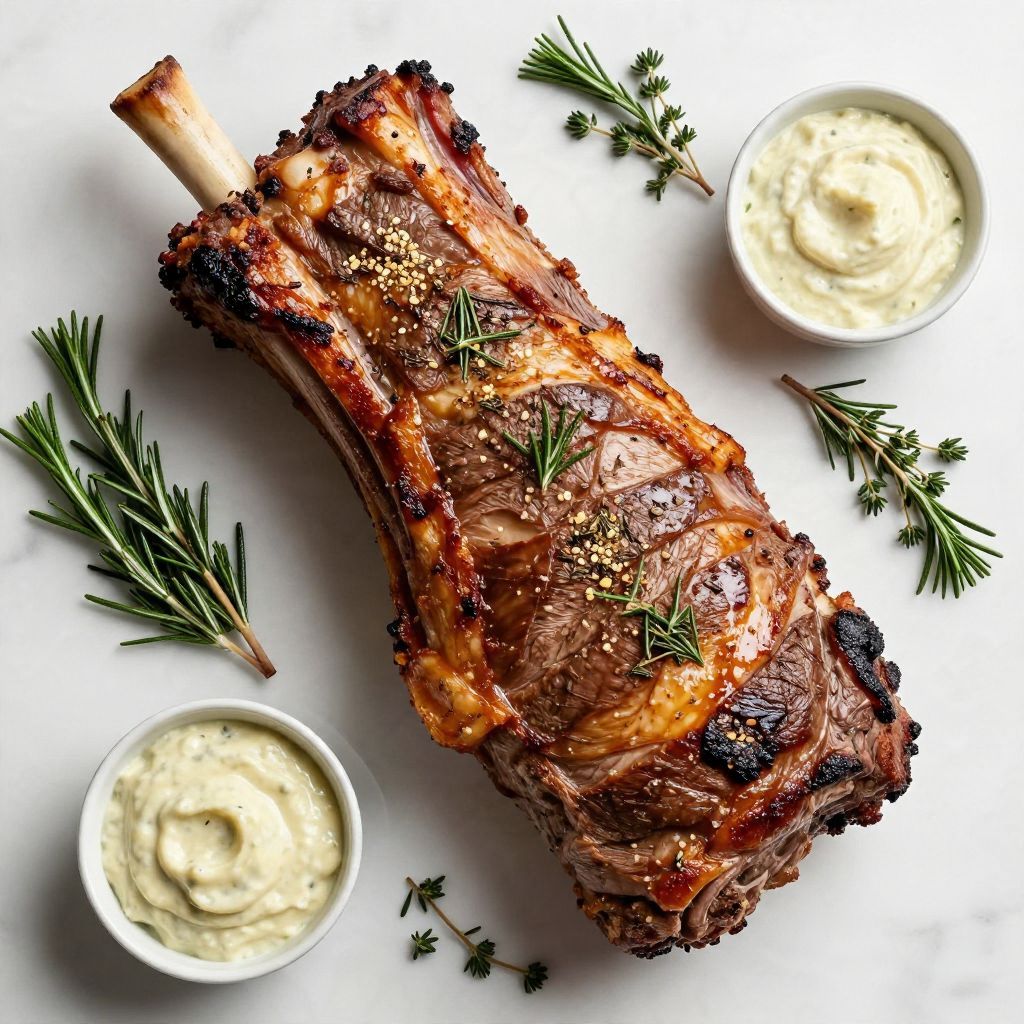
Boneless Prime Rib
Ingredients
Equipment
Method
- Preheat your oven to 450°F (230°C).
- Pat the boneless prime rib dry with paper towels.
- Rub the roast with olive oil, then season with salt, pepper, garlic powder, rosemary, and thyme.
- Place the seasoned roast in a roasting pan, fat side up.
- Roast the prime rib at 450°F (230°C) for 15 minutes.
- Reduce the oven temperature to 325°F (160°C) and continue roasting until the internal temperature reaches 130°F (54°C) for medium-rare.
- Remove the roast from the oven and cover loosely with aluminum foil to rest.
- Let the roast rest for at least 20 minutes before slicing against the grain.