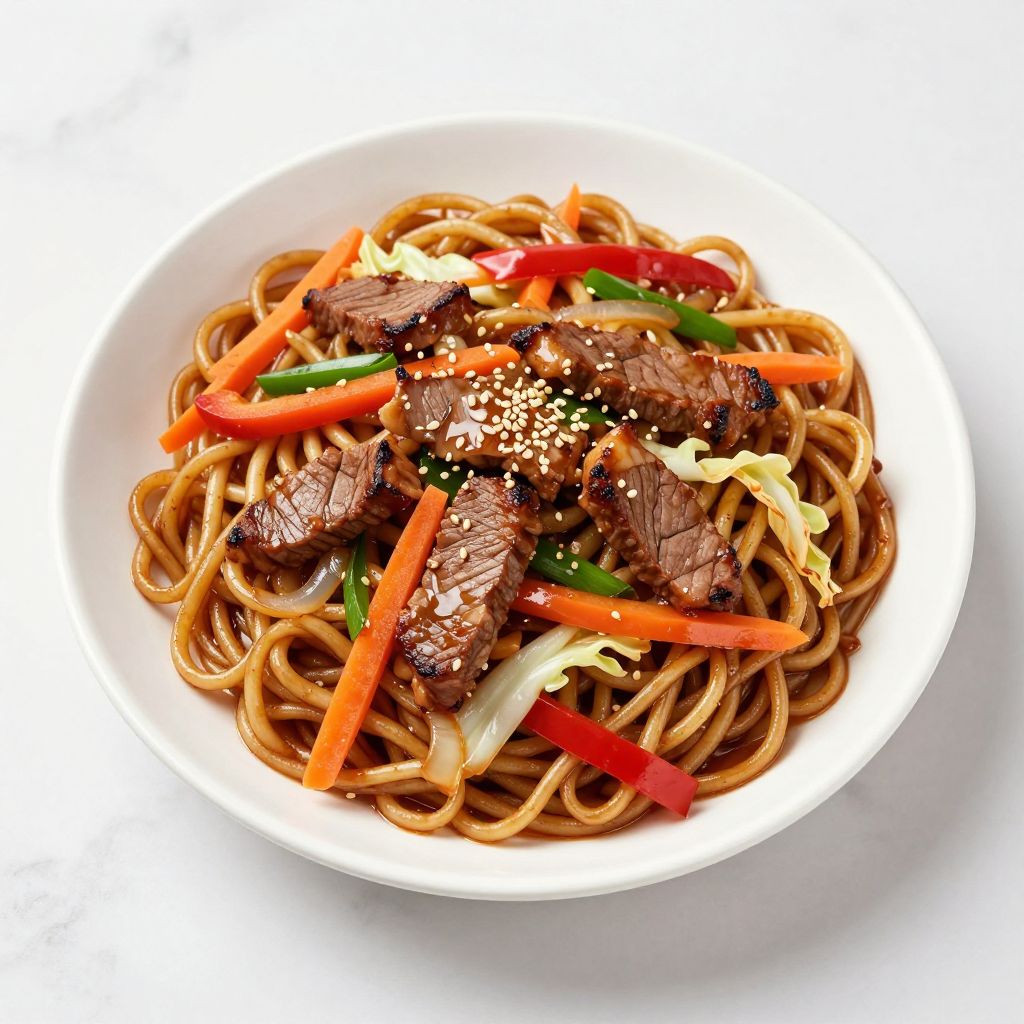
The smell of sizzling beef and garlic hitting a hot wok is one of those cooking moments that makes you feel like a restaurant chef in your own kitchen. Beef Lo Mein brings together tender strips of marinated beef, chewy noodles, and crisp vegetables in a savory sauce that tastes better than takeout.
This recipe delivers that perfect balance of textures and flavors you crave from your favorite Chinese restaurant. The best part is you can have dinner on the table in under 30 minutes with ingredients you probably already have.
Why You’ll Love This Recipe
This beef lo mein checks all the boxes for a weeknight dinner that feels special. It combines speed, flavor, and versatility in one delicious package.
- Ready in just 25 minutes from start to finish, faster than delivery
- Uses simple ingredients available at any grocery store
- Costs a fraction of restaurant prices while tasting just as good
- Lets you control the vegetables, sodium, and spice level
- Makes amazing leftovers that reheat beautifully for lunch the next day
My Experience Making This Recipe
The first time I made this beef lo mein, I was skeptical that it could match the restaurant version I loved. But watching the beef sear in the hot wok and smelling that ginger and garlic bloom changed my mind immediately.
My family devoured it in minutes, and my teenager asked if we could skip takeout permanently. The noodles had that perfect chew, and the beef stayed tender despite the high heat.
I have made this at least twenty times since then, tweaking the vegetables based on what I have in the fridge. It has become my go-to recipe when I need something satisfying fast.
Recipe Overview
- Recipe Name: Beef Lo Mein
- Servings: 4
- Prep Time: 15 minutes
- Cook Time: 10 minutes
- Total Time: 25 minutes
- Course: Main Dish
- Cuisine: Chinese-American
- Calories per Serving: 485
Equipment You Will Need
- Large wok or 12-inch skillet with high sides
- Large pot for boiling noodles
- Sharp knife and cutting board
- Mixing bowls (one medium, one small)
- Measuring cups and spoons
- Tongs or wooden spatula
- Colander for draining noodles
Ingredients for Beef Lo Mein
For the Beef and Marinade
- 1 pound flank steak, thinly sliced against the grain
- 2 tablespoons soy sauce
- 1 tablespoon cornstarch
- 1 teaspoon sesame oil
For the Noodles
- 12 ounces lo mein noodles or fresh Chinese egg noodles
- 1 tablespoon vegetable oil (to toss with cooked noodles)
For the Sauce
- 3 tablespoons soy sauce
- 2 tablespoons oyster sauce
- 1 tablespoon hoisin sauce
- 1 teaspoon sugar
- 1 teaspoon sesame oil
- 2 tablespoons water
For the Stir-Fry
- 3 tablespoons vegetable oil, divided
- 3 cloves garlic, minced
- 1 tablespoon fresh ginger, minced
- 1 medium onion, sliced
- 2 cups cabbage, shredded
- 1 large carrot, julienned
- 1 red bell pepper, sliced
- 3 green onions, cut into 2-inch pieces
Ingredient Notes and Substitutions
- Flank steak: This cut stays tender when sliced thin and cooks quickly at high heat. You can substitute sirloin, skirt steak, or even thinly sliced chicken breast.
- Lo mein noodles: These thick, round noodles have the perfect chewy texture for this dish. Substitute dried spaghetti cooked al dente or fresh udon noodles if needed.
- Oyster sauce: This adds a rich, savory depth that defines the sauce. Use hoisin sauce mixed with a bit of soy sauce if you cannot find oyster sauce, though the flavor will be slightly sweeter.
- Cornstarch: This tenderizes the beef and creates a protective coating that keeps it juicy. Substitute potato starch or arrowroot powder in equal amounts.
- Sesame oil: Just a small amount adds that distinctive nutty aroma. Skip it if you must, but the dish will lack some depth.
- Fresh ginger: This brings brightness and heat that balances the savory sauce. Use 1 teaspoon of ground ginger if fresh is unavailable, but add it with the sauce instead of the aromatics.
How to Make Beef Lo Mein
Step 1: Marinate the Beef
Slice the flank steak against the grain into thin strips about 1/4-inch thick. In a medium bowl, combine the beef with 2 tablespoons soy sauce, 1 tablespoon cornstarch, and 1 teaspoon sesame oil.
Mix thoroughly and let it sit for at least 10 minutes while you prep the other ingredients. This marinade tenderizes the meat and creates a velvety coating that prevents the beef from drying out during the high-heat cooking.
Step 2: Prepare the Sauce
In a small bowl, whisk together 3 tablespoons soy sauce, 2 tablespoons oyster sauce, 1 tablespoon hoisin sauce, 1 teaspoon sugar, 1 teaspoon sesame oil, and 2 tablespoons water. Set this aside within easy reach of your stove.
Mixing the sauce beforehand keeps you from scrambling during the fast-paced stir-fry process. The sugar balances the saltiness and helps the sauce coat the noodles evenly.
Step 3: Cook the Noodles
Bring a large pot of water to a rolling boil and cook the lo mein noodles according to package directions, usually 3 to 4 minutes for fresh noodles. Drain them in a colander and immediately toss with 1 tablespoon vegetable oil to prevent sticking.
Slightly undercook the noodles by about 1 minute since they will finish cooking in the wok with the sauce. This prevents them from becoming mushy in the final dish.
Step 4: Sear the Beef
Heat your wok or large skillet over high heat until it just begins to smoke. Add 1 tablespoon of vegetable oil and swirl to coat the surface.
Add the marinated beef in a single layer and let it sear without stirring for 1 to 2 minutes until browned on one side. Flip the pieces and cook for another minute until just cooked through, then transfer to a clean plate.
Searing at high heat creates that slightly charred flavor and keeps the beef tender. Overcrowding the pan will steam the meat instead of searing it, so cook in batches if your pan is not large enough.
Step 5: Cook the Aromatics
Add another tablespoon of oil to the hot wok. Toss in the minced garlic and ginger, stirring constantly for about 15 seconds until fragrant but not burned.
These aromatics form the flavor foundation of your lo mein. Burning them even slightly creates bitterness, so keep them moving and work fast.
Step 6: Stir-Fry the Vegetables
Add the sliced onion to the wok and stir-fry for 1 minute until it starts to soften. Add the cabbage, carrot, and bell pepper, and continue stir-frying for 2 to 3 minutes until the vegetables are crisp-tender.
Cooking the vegetables in stages based on density means everything finishes at the same time. The vegetables should retain some crunch for textural contrast against the tender noodles.
Step 7: Combine Everything
Return the cooked beef to the wok along with any accumulated juices. Add the cooked noodles and pour the prepared sauce over everything.
Use tongs to toss everything together vigorously for 1 to 2 minutes until the noodles are evenly coated and heated through. The noodles will absorb the sauce and pick up flavor from the beef and vegetables.
Step 8: Finish and Serve
Add the green onion pieces and toss for a final 30 seconds. Taste and adjust seasoning if needed, adding more soy sauce for saltiness or a splash of sesame oil for aroma.
Transfer to serving plates immediately while everything is hot and glossy. Lo mein tastes best when served right away, with the noodles still slightly chewy and the vegetables crisp.
Pro Tip: The secret to restaurant-quality lo mein is cooking over the highest heat your stove can manage and working quickly. If your burner is not very powerful, cook the ingredients in smaller batches so the temperature stays high enough to get that characteristic wok flavor instead of steaming everything.
Tips for the Best Beef Lo Mein
- Slice the beef when it is partially frozen for paper-thin, even slices that cook in seconds. Pop it in the freezer for 20 minutes before slicing.
- Prep all your ingredients before you start cooking because stir-frying happens fast. Once that wok heats up, you will not have time to chop anything.
- Rinse cooked noodles briefly under cold water if they are too sticky, then toss with oil. This stops the cooking and makes them easier to separate in the wok.
- Let the beef sear undisturbed for the first minute to develop a flavorful crust. Constantly stirring prevents browning and makes the meat gray and steamed instead of caramelized.
- Use a wok if you have one because the sloped sides make tossing easier and the material distributes heat perfectly. A large skillet works fine, but avoid nonstick since it cannot handle the high heat needed for proper stir-frying.
- Add a splash of the noodle cooking water if the dish seems dry. The starchy water helps the sauce cling to the noodles better than plain water.
Common Mistakes to Avoid
- Overcooking the noodles makes them mushy and unable to absorb the sauce properly. They should be just tender with a slight chew remaining.
- Using low or medium heat produces steamed, gray meat and soggy vegetables instead of the seared, caramelized flavors you want. Stir-frying requires high heat to work correctly.
- Skipping the cornstarch in the beef marinade results in dry, tough meat. That thin coating is what keeps the beef juicy during the intense heat.
- Adding the sauce too early causes it to evaporate and burn instead of coating the noodles. Wait until everything else is cooked before pouring it in.
- Crowding the wok with too much food at once lowers the temperature and creates steam instead of a sear. Cook in batches if needed to maintain high heat.
Serving Suggestions
Beef lo mein works beautifully as a complete one-dish meal, but a few simple sides can round out your Chinese feast. Keep them light since the lo mein is already hearty and filling.
- Serve with crispy egg rolls or spring rolls for textural contrast
- Pair with hot and sour soup or egg drop soup as a starter
- Add a side of steamed or stir-fried bok choy for extra greens
- Offer chili oil, sriracha, or chili garlic sauce on the side for heat lovers
- Include steamed edamame sprinkled with sea salt as a protein-rich appetizer
Variations to Try
- Swap the beef for shrimp, peeling and deveining 1 pound of large shrimp and cooking them for just 2 minutes until pink. The lighter flavor lets the vegetables shine more prominently.
- Make it vegetarian by using extra-firm tofu cut into cubes and pan-fried until crispy, then adding more mushrooms and broccoli. The tofu absorbs the sauce beautifully and provides satisfying protein.
- Add spice with 1 to 2 teaspoons of chili garlic sauce or a sliced Thai chili pepper mixed into the sauce. This creates a spicy lo mein that wakes up your taste buds.
- Try a mushroom-forward version by adding shiitake, cremini, and oyster mushrooms for earthy depth. The variety of mushroom textures makes every bite interesting.
- Make it Thai-inspired by substituting fish sauce for soy sauce and adding Thai basil at the end. The flavor profile shifts to something brighter and more herbaceous.
Dietary Adaptations
- Gluten-Free: Use tamari instead of soy sauce, gluten-free hoisin and oyster sauces, and rice noodles instead of wheat-based lo mein noodles. The texture will be slightly different but still delicious.
- Dairy-Free: This recipe is naturally dairy-free as written, so no modifications needed. Just verify your store-bought sauces do not contain any hidden dairy ingredients.
- Low-Carb: Replace the noodles with spiralized zucchini or shirataki noodles and reduce the sugar in the sauce. You lose the traditional chewy texture, but the flavors remain intact.
- Vegan: Use firm tofu or tempeh instead of beef, substitute mushroom-based stir-fry sauce for oyster sauce, and verify your hoisin sauce contains no animal products. The umami from mushrooms mimics the meatiness surprisingly well.
Storage and Reheating
Refrigerator
Store leftover beef lo mein in an airtight container in the refrigerator for up to 3 days. Let it cool to room temperature before sealing to prevent excess moisture buildup.
- Separate any uneaten portion within 2 hours of cooking to maintain food safety
- The noodles may absorb more sauce as they sit, making them less glossy but still tasty
Freezer
Freezing is possible but not ideal since the noodles can become mushy and the vegetables lose their crisp texture. If you must freeze, use within 1 month for best quality.
- Freeze in individual portions in freezer-safe containers
- Thaw overnight in the refrigerator before reheating
- Accept that the texture will soften considerably after freezing
Reheating
The best reheating method is in a hot skillet or wok with a splash of water or broth. Microwave reheating works but can make the noodles gummy.
- Heat a wok or skillet over medium-high with 1 tablespoon of oil
- Add the lo mein and 2 tablespoons of water, tossing frequently for 3 to 4 minutes
- Microwave option: heat on 50% power in 1-minute intervals, stirring between each
Nutrition Information
| Nutrient | Amount |
|---|---|
| Calories | 485 |
| Total Fat | 18g |
| Saturated Fat | 4g |
| Carbohydrates | 52g |
| Fiber | 4g |
| Sugar | 7g |
| Protein | 28g |
| Sodium | 1240mg |
| Cholesterol | 65mg |
Nutritional values are approximate and will vary based on specific ingredients used and portion sizes. Use low-sodium soy sauce to reduce the sodium content significantly.
Frequently Asked Questions
Can I use dried spaghetti instead of lo mein noodles?
Yes, spaghetti works as a substitute if you cannot find lo mein noodles. Cook it al dente and toss with a bit of oil after draining to prevent clumping.
How do I keep the beef tender and not chewy?
Slice the beef very thin against the grain and marinate it with cornstarch, which creates a protective coating. Cook it quickly over high heat for no more than 2 to 3 minutes total.
Can I make this ahead for
Beef Lo Mein
Tender strips of marinated beef, chewy noodles, and crisp vegetables in a savory sauce that tastes better than takeout. Ready in just 25 minutes with that perfect balance of textures and flavors you crave from your favorite Chinese restaurant.
- Large wok or 12-inch skillet with high sides
- Large pot for boiling noodles
- Sharp knife and cutting board
- Mixing bowls (one medium, one small)
- Measuring cups and spoons
- Tongs or wooden spatula
- Colander for draining noodles
For the Beef and Marinade
- 1 pound flank steak (thinly sliced against the grain)
- 2 tablespoons soy sauce
- 1 tablespoon cornstarch
- 1 teaspoon sesame oil
For the Noodles
- 12 ounces lo mein noodles or fresh Chinese egg noodles
- 1 tablespoon vegetable oil (to toss with cooked noodles)
For the Sauce
- 3 tablespoons soy sauce
- 2 tablespoons oyster sauce
- 1 tablespoon hoisin sauce
- 1 teaspoon sugar
- 1 teaspoon sesame oil
- 2 tablespoons water
For the Stir-Fry
- 3 tablespoons vegetable oil (divided)
- 3 cloves garlic (minced)
- 1 tablespoon fresh ginger (minced)
- 1 medium onion (sliced)
- 2 cups cabbage (shredded)
- 1 large carrot (julienned)
- 1 red bell pepper (sliced)
- 3 green onions (cut into 2-inch pieces)
- Slice the flank steak against the grain into thin strips about 1/4-inch thick. In a medium bowl, combine the beef with 2 tablespoons soy sauce, 1 tablespoon cornstarch, and 1 teaspoon sesame oil. Mix thoroughly and let it sit for at least 10 minutes while you prep the other ingredients.
- In a small bowl, whisk together 3 tablespoons soy sauce, 2 tablespoons oyster sauce, 1 tablespoon hoisin sauce, 1 teaspoon sugar, 1 teaspoon sesame oil, and 2 tablespoons water. Set this aside within easy reach of your stove.
- Bring a large pot of water to a rolling boil and cook the lo mein noodles according to package directions, usually 3 to 4 minutes for fresh noodles. Drain them in a colander and immediately toss with 1 tablespoon vegetable oil to prevent sticking.
- Heat your wok or large skillet over high heat until it just begins to smoke. Add 1 tablespoon of vegetable oil and swirl to coat the surface.
- Add the marinated beef in a single layer and let it sear without stirring for 1 to 2 minutes until browned on one side. Flip the pieces and cook for another minute until just cooked through, then transfer to a clean plate.
- Add another tablespoon of oil to the hot wok. Toss in the minced garlic and ginger, stirring constantly for about 15 seconds until fragrant but not burned.
- Add the sliced onion to the wok and stir-fry for 1 minute until it starts to soften. Add the cabbage, carrot, and bell pepper, and continue stir-frying for 2 to 3 minutes until the vegetables are crisp-tender.
- Return the cooked beef to the wok along with any accumulated juices. Add the cooked noodles and pour the prepared sauce over everything. Use tongs to toss everything together vigorously for 1 to 2 minutes until the noodles are evenly coated and heated through.
- Add the green onion pieces and toss for a final 30 seconds. Taste and adjust seasoning if needed, adding more soy sauce for saltiness or a splash of sesame oil for aroma. Transfer to serving plates immediately while everything is hot and glossy.
The secret to restaurant-quality lo mein is cooking over the highest heat your stove can manage and working quickly. Slice the beef when it is partially frozen for paper-thin, even slices. Prep all your ingredients before you start cooking because stir-frying happens fast. Store leftover beef lo mein in an airtight container in the refrigerator for up to 3 days. Reheat in a hot skillet or wok with a splash of water or broth for best results.