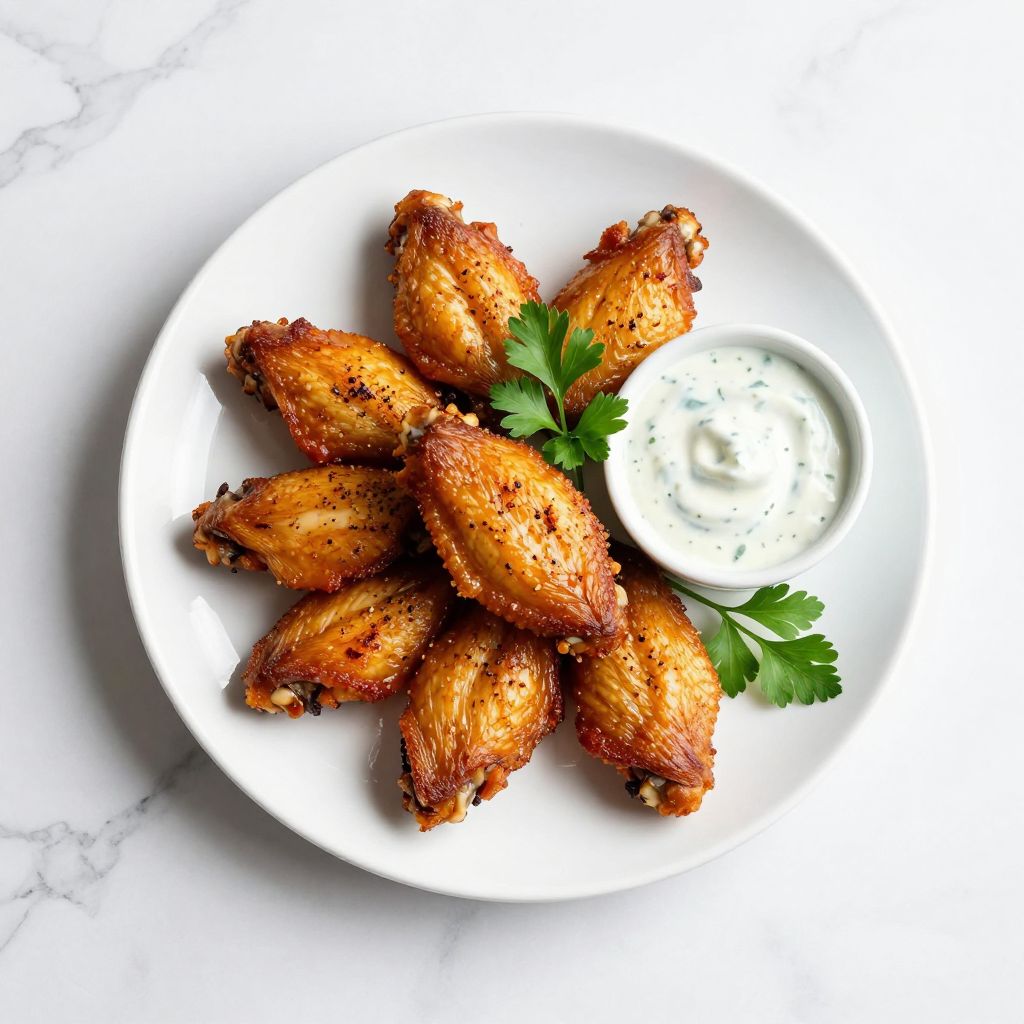
Baked chicken wings deliver all the crispy, golden perfection of fried wings without the mess and extra calories. This recipe transforms simple chicken wings into restaurant-quality appetizers that work beautifully for game day, parties, or whenever you need crowd-pleasing finger food that actually impresses.
The secret lies in a two-step cooking method that renders the fat and crisps the skin to crackling perfection. You’ll get wings that rival any sports bar, all from your own oven.
Why You’ll Love This Recipe
These wings prove you don’t need a deep fryer to achieve seriously crispy skin. The technique is straightforward and the results speak for themselves.
- Crispier than most fried wings with a fraction of the oil and cleanup
- Healthier cooking method that cuts calories without sacrificing texture or flavor
- Versatile base for any sauce or seasoning you love
- Hands-off baking time means you can prep other dishes while they cook
- Makes enough to feed a hungry crowd without frying batch after batch
My Experience Making This Recipe
I tried countless wing recipes before landing on this method, and honestly, I haven’t looked back. The first time I pulled these from the oven, the skin had this gorgeous mahogany color and an audible crunch that made everyone at my Super Bowl party stop mid-conversation.
What surprised me most was how the rendered fat pooled in the pan while the wings themselves stayed incredibly crispy on the rack above. My brother, who swears by his deep fryer, admitted these were better than his usual method.
The aroma that fills your kitchen while these bake is absolutely intoxicating. You’ll catch notes of savory, roasted chicken fat mingling with whatever spices you’ve chosen, and trust me, your neighbors will get jealous.
Recipe Overview
- Recipe Name: Baked Chicken Wings
- Servings: 6
- Prep Time: 15 minutes
- Cook Time: 50 minutes
- Total Time: 65 minutes
- Course: Appetizer
- Cuisine: American
- Calories per Serving: 385
Equipment You Will Need
- Large rimmed baking sheet
- Wire cooling rack that fits inside the baking sheet
- Paper towels
- Large mixing bowl
- Kitchen shears or sharp knife
- Tongs
- Measuring spoons
- Aluminum foil (optional, for easier cleanup)
Ingredients for Baked Chicken Wings
- 3 pounds chicken wings, separated into drumettes and flats, tips discarded
- 1 tablespoon baking powder (not baking soda)
- 1 teaspoon salt
- 1/2 teaspoon black pepper
- 1/2 teaspoon garlic powder
- 1/2 teaspoon onion powder
- 1/4 teaspoon smoked paprika
- Cooking spray or 1 tablespoon neutral oil
Ingredient Notes and Substitutions
- Baking powder: This raises the pH of the skin, helping it crisp up faster and stay crunchier. Do not substitute baking soda, which will give the wings a metallic taste and requires different measurements.
- Salt: Draws moisture from the skin, which is key to achieving crispiness. You can use kosher salt, but reduce the amount slightly as it’s less dense than table salt.
- Garlic powder and onion powder: These add savory depth without burning like fresh aromatics would. Granulated versions work fine, but avoid garlic salt or onion salt as they’ll make the wings too salty.
- Smoked paprika: Adds subtle smokiness and color to the wings. Regular paprika or cayenne pepper work as substitutes, though cayenne adds heat instead of smoke.
- Chicken wings: Look for wings that are already separated if you want to save prep time. Whole wings work fine, but you’ll need to cut them yourself at the joints.
How to Make Baked Chicken Wings
Step 1: Prepare the Wings
Pat the chicken wings completely dry with multiple layers of paper towels, pressing firmly to remove as much surface moisture as possible. Any moisture left on the skin will steam during baking, preventing that crispy texture you’re after.
Step 2: Season the Wings
Combine the baking powder, salt, black pepper, garlic powder, onion powder, and smoked paprika in a large mixing bowl. Add the dried wings and toss thoroughly until every piece is evenly coated with the seasoning mixture, making sure no wet spots remain visible.
Step 3: Set Up Your Baking Station
Line a rimmed baking sheet with aluminum foil if desired for easier cleanup, then place a wire rack on top and lightly coat it with cooking spray. The rack allows hot air to circulate around all sides of the wings, which is critical for even crisping.
Step 4: Arrange the Wings
Place the seasoned wings on the wire rack in a single layer, leaving space between each piece so they don’t touch. Crowding the wings causes them to steam instead of roast, which ruins the texture you’ve worked to create.
Step 5: Start Baking at Lower Temperature
Preheat your oven to 250 degrees Fahrenheit and bake the wings for 30 minutes. This low temperature gently renders the fat from under the skin without browning it too quickly, setting you up for maximum crispiness in the next stage.
Step 6: Increase Heat for Crisping
Increase the oven temperature to 425 degrees Fahrenheit and continue baking for 20 minutes more. The higher heat crisps and browns the skin beautifully while keeping the meat inside juicy and tender.
Step 7: Flip and Finish
Use tongs to flip each wing over, then bake for an additional 10 to 15 minutes until the skin is deep golden brown and crackling crisp. The wings should have an audible crunch when you tap them with the tongs.
Step 8: Rest and Serve
Remove the wings from the oven and let them rest on the rack for 3 to 5 minutes before serving. This brief rest allows the skin to firm up even more and prevents you from burning your mouth on molten chicken fat.
Pro Tip: For next-level crispiness, refrigerate the seasoned wings uncovered on the rack for 8 to 24 hours before baking. This extended drying time removes even more moisture from the skin, creating an impossibly crunchy exterior that puts takeout wings to shame.
Tips for the Best Baked Chicken Wings
- Buy wings that feel dry to the touch rather than wet or slimy, as excess moisture from packaging makes achieving crispiness much harder. If your wings are particularly wet, air-dry them uncovered in the fridge for a few hours before seasoning.
- Don’t skip the wire rack, which allows fat to drip away and air to circulate completely around each wing. Baking directly on the sheet creates soggy, greasy bottoms no matter how long you cook them.
- Use aluminum baking powder, not baking soda, and make absolutely sure your container is labeled correctly. Baking soda will ruin the flavor with a soapy, metallic taste that’s impossible to mask.
- Resist the urge to open the oven door frequently to check on the wings, as this releases heat and extends cooking time. Trust the process and only check when the timer goes off.
- Toss the wings with sauce only after baking if you want to keep them crispy. Adding sauce before baking creates a sticky coating that prevents proper crisping, though it works fine if you prefer a softer texture.
- Space the wings evenly with at least half an inch between each piece, even if it means using two baking sheets. Proper airflow makes the difference between crispy and disappointingly rubbery.
Common Mistakes to Avoid
- Skipping the drying step leaves too much moisture on the skin, which steams the wings instead of crisping them. Even just a few minutes of thorough patting makes a massive difference.
- Using baking soda instead of baking powder creates an unpleasant chemical taste and doesn’t provide the same crisping effect. Always double-check your leavening agents before adding them.
- Overcrowding the pan prevents hot air from circulating properly, leaving you with unevenly cooked wings that are crispy in some spots and flabby in others. Give them room to breathe.
- Starting at too high a temperature browns the outside before the fat renders from underneath the skin, trapping moisture that prevents crispiness. Low and slow first, then hot and fast.
- Adding sauce before baking introduces liquid that prevents the skin from getting crispy, no matter how long you cook them. Toss with sauce after baking or serve it on the side for dipping.
Serving Suggestions
These wings shine as the centerpiece of any casual gathering, but they also pair beautifully with classic sides and dipping sauces. The neutral seasoning makes them incredibly versatile for whatever flavor profile you’re craving.
- Classic buffalo sauce with blue cheese dressing and crisp celery sticks for traditional wing night
- Ranch dressing or garlic aioli for dipping, with carrot sticks and cucumber slices on the side
- Coleslaw and potato wedges for a casual backyard barbecue feel
- Asian-inspired sauces like sweet chili, teriyaki, or Korean gochujang with pickled vegetables
- Honey mustard or barbecue sauce with cornbread and baked beans for a Southern-style spread
Variations to Try
- Buffalo Wings: Toss the baked wings with melted butter mixed with hot sauce in a 1:1 ratio for classic spicy tang. The butter helps the sauce cling to the crispy skin without making it soggy.
- Lemon Pepper Wings: Add 2 tablespoons of lemon zest and 1 tablespoon of coarse black pepper to the seasoning mix before baking. The bright citrus cuts through the richness beautifully.
- Garlic Parmesan Wings: Toss the hot wings with melted butter, minced garlic, and grated Parmesan cheese immediately after baking. The residual heat melts the cheese into an irresistible coating.
- Honey Sriracha Wings: Mix equal parts honey and Sriracha with a squeeze of lime juice, then toss the wings in this sweet-spicy glaze. The honey caramelizes slightly on the hot wings for added complexity.
- Dry Rub Wings: Skip the baking powder and coat the wings heavily in your favorite dry rub blend before baking. They won’t get quite as crispy, but the concentrated spice flavor makes up for it.
Dietary Adaptations
- Gluten-Free: This recipe is naturally gluten-free as long as your baking powder doesn’t contain any gluten-based additives, which is rare but worth checking. Most major brands are safe.
- Dairy-Free: The base recipe contains no dairy, though many traditional wing sauces use butter. Substitute with olive oil or dairy-free butter alternatives in any sauce recipes.
- Keto and Low-Carb: Chicken wings are perfect for keto diets, with zero carbs in the meat and minimal carbs from the baking powder and spices. Skip any sugary sauces and stick with buffalo, ranch, or blue cheese.
- Paleo: Replace the baking powder with additional salt and expect slightly less crispy results, as baking powder contains cornstarch that isn’t paleo-compliant. The flavor will still be excellent.
Storage and Reheating
Refrigerator
Store leftover wings in an airtight container in the refrigerator for up to 4 days. Let them cool completely before storing to prevent condensation from making the skin soggy.
- Place a paper towel in the container to absorb excess moisture
- Store sauced and unsauced wings separately if possible
- Bring to room temperature for 15 minutes before reheating for more even warming
Freezer
Freeze cooked wings for up to 3 months, though the texture won’t be quite as crispy after thawing. Freeze them unsauced for best results.
- Arrange wings in a single layer on a baking sheet and freeze until solid
- Transfer frozen wings to freezer bags, removing as much air as possible
- Thaw overnight in the refrigerator before reheating
Reheating
Reheat wings in a 375-degree oven on a wire rack for 10 to 15 minutes to restore crispiness. Avoid the microwave, which steams the wings and turns the skin rubbery.
- Place wings on a wire rack over a baking sheet, never directly on the pan
- Reheat until the internal temperature reaches 165 degrees Fahrenheit
- For extra crispiness, finish under the broiler for 1 to 2 minutes
Nutrition Information
| Nutrient | Amount |
|---|---|
| Calories | 385 |
| Total Fat | 27g |
| Saturated Fat | 8g |
| Carbohydrates | 1g |
| Fiber | 0g |
| Sugar | 0g |
| Protein | 34g |
| Sodium | 520mg |
| Cholesterol | 125mg |
Nutritional values are estimates based on unsauced wings and may vary depending on the specific size of your chicken wings and any sauces added. These values do not include any dipping sauces or side dishes.
Frequently Asked Questions
Can I use frozen chicken wings for this recipe?
Yes, but thaw them completely in the refrigerator first and then dry them extremely thoroughly. Frozen wings release a lot of water during thawing, so you’ll need to be extra diligent about removing moisture for crispy results.
Why do my wings come out rubbery instead of crispy?
The most common culprits are insufficient drying before seasoning or skipping the wire rack. Make sure you pat the wings bone-dry and always elevate them on a rack so air circulates all around each piece.
Can I make these wings ahead of time?
You can season the wings up to 24 hours in advance and refrigerate them uncovered, which actually improves crispiness. For best results, bake them fresh rather than reheating, but they do reheat reasonably well in the oven on a wire rack.
What’s the difference between baking powder and baking soda for wings?
Baking powder is alkaline and helps break down proteins in the chicken skin, creating a crispier texture without adding any off flavors. Baking soda is much stronger and will give your wings an unpleasant metallic taste if used in the same quantity.
How do I know when the wings are fully cooked?
The wings are done when they reach an internal temperature of 165 degrees Fahrenheit and the skin is golden brown and crispy. You can also check by wiggling a drumette; the meat should feel firm and the skin should have visible browning and crackle when touched.
Can I cook these wings at a single temperature instead of changing it?
You could bake them at 400 degrees for about 45 minutes, but the two-temperature method produces superior results. The low initial temperature renders fat more effectively, while the high finish creates incomparable crispiness.
Do I need to flip the wings during baking?
Flipping once during the final high-heat stage helps both sides get evenly crispy and golden. If you skip flipping, the top side will be perfectly crisp but the bottom may be slightly less so, though still quite good.
Final Thoughts
These baked chicken wings prove you don’t need a vat of hot oil to achieve the crispy, golden perfection everyone craves. The simple technique delivers consistently impressive results that’ll make you the wing champion at every gathering.
Give this recipe a try for your next party or casual dinner, and watch how quickly these wings disappear. Once you master this method, you’ll never go back to less reliable techniques or expensive takeout.
Baked Chicken Wings
Baked chicken wings deliver all the crispy, golden perfection of fried wings without the mess and extra calories. This recipe transforms simple chicken wings into restaurant-quality appetizers that work beautifully for game day, parties, or whenever you need crowd-pleasing finger food that actually impresses.
- Large rimmed baking sheet
- Wire cooling rack that fits inside the baking sheet
- Paper towels
- Large mixing bowl
- Kitchen shears or sharp knife
- Tongs
- Measuring spoons
- Aluminum foil (optional, for easier cleanup)
Main
- 3 pounds chicken wings (separated into drumettes and flats, tips discarded)
- 1 tablespoon baking powder (not baking soda)
- 1 teaspoon salt
- 1/2 teaspoon black pepper
- 1/2 teaspoon garlic powder
- 1/2 teaspoon onion powder
- 1/4 teaspoon smoked paprika
- Cooking spray or 1 tablespoon neutral oil
- Pat the chicken wings completely dry with multiple layers of paper towels, pressing firmly to remove as much surface moisture as possible.
- Combine the baking powder, salt, black pepper, garlic powder, onion powder, and smoked paprika in a large mixing bowl. Add the dried wings and toss thoroughly until every piece is evenly coated with the seasoning mixture.
- Line a rimmed baking sheet with aluminum foil if desired for easier cleanup, then place a wire rack on top and lightly coat it with cooking spray.
- Place the seasoned wings on the wire rack in a single layer, leaving space between each piece so they don’t touch.
- Preheat your oven to 250 degrees Fahrenheit and bake the wings for 30 minutes.
- Increase the oven temperature to 425 degrees Fahrenheit and continue baking for 20 minutes more.
- Use tongs to flip each wing over, then bake for an additional 10 to 15 minutes until the skin is deep golden brown and crackling crisp.
- Remove the wings from the oven and let them rest on the rack for 3 to 5 minutes before serving.
For next-level crispiness, refrigerate the seasoned wings uncovered on the rack for 8 to 24 hours before baking. This extended drying time removes even more moisture from the skin, creating an impossibly crunchy exterior. Do not skip the wire rack, which allows fat to drip away and air to circulate completely around each wing. Toss the wings with sauce only after baking if you want to keep them crispy.