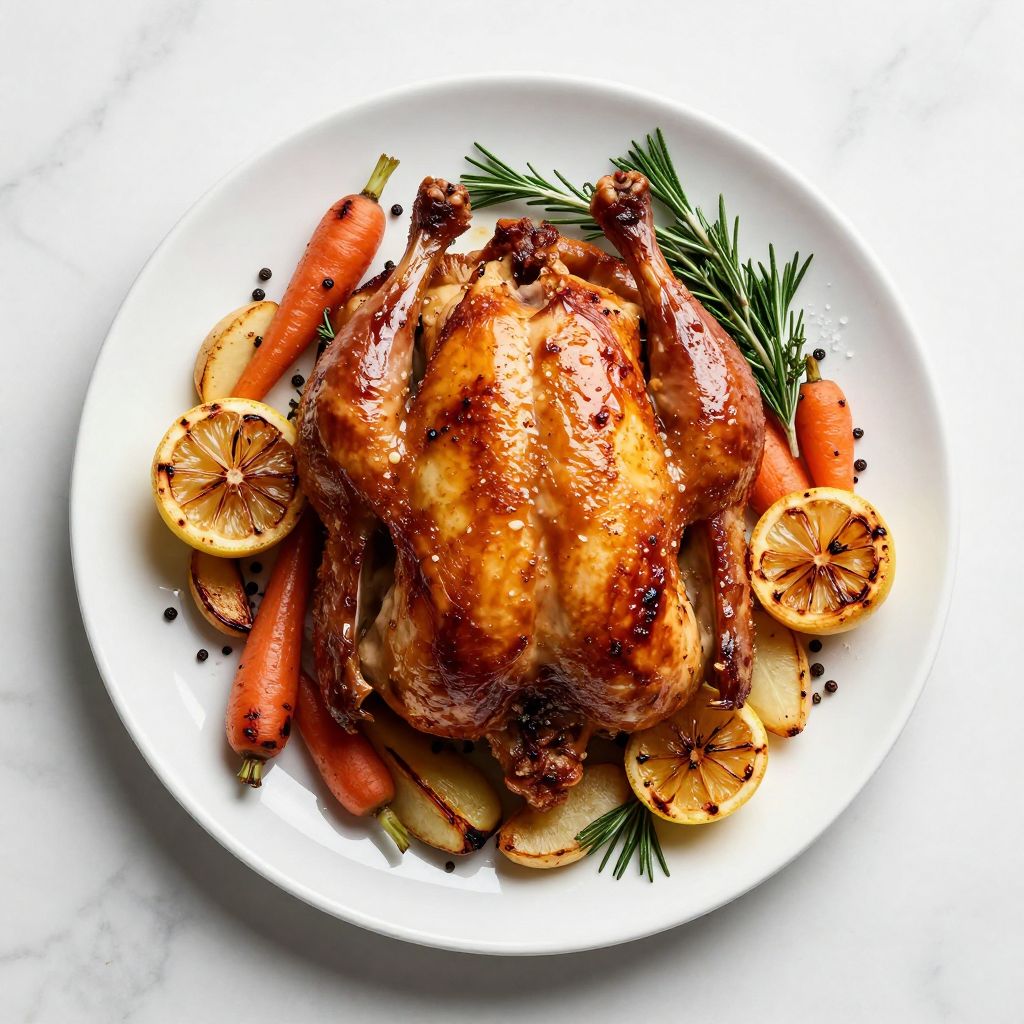
Chicken brine recipe transforms ordinary poultry into the juiciest, most flavorful bird you will ever pull from your oven. A simple solution of salt, sugar, and aromatics does what no amount of basting can accomplish.
Whether you are prepping for a holiday feast or a Sunday roast, this technique delivers restaurant quality results with pantry staples. Let me show you exactly how to do it right.
What Makes This Recipe Worth Your Time
Brining is the single most reliable way to guarantee juicy chicken every time, even if you accidentally overcook it by a few degrees. This method works because science is on your side.
- Moisture retention increases by up to 15 percent compared to unbrined chicken
- Seasoning penetrates deep into the meat rather than sitting on the surface
- Forgiveness factor means overcooked chicken still stays tender and edible
- Cost effective method uses ingredients you already have in your kitchen
- Hands off time lets the brine do all the work while you handle other prep
A Little Background on This Dish
Brining has roots stretching back centuries as a preservation method long before refrigeration existed. Sailors and settlers relied on salt brines to keep meat edible during long journeys and harsh winters.
Modern brining shifted from preservation to flavor enhancement in professional kitchens during the twentieth century. Home cooks caught on in the 1990s when food scientists began publishing accessible explanations of why the technique works so well.
My Experience With This Recipe
I started brining chicken after one too many Thanksgiving turkeys came out dry despite my best efforts. That frustration drove me to understand what was actually happening inside the meat during cooking.
My first attempts used way too much salt, and the results tasted like the ocean had a disagreement with a chicken. It took me three tries to nail the ratio that seasons without overwhelming.
The first time I got the balance right, my kids actually asked for seconds of white meat. The breast was so moist it did not need gravy, which I never thought I would say about poultry.
Before You Start: Key Things to Know
This recipe suits beginners and experienced cooks alike, though you need to plan ahead for the brining time. The biggest challenge is simply remembering to start early enough.
- Difficulty level: Easy, requires no special skills or techniques
- Active time vs passive time: 15 minutes active, 4 to 24 hours passive brining
- Most important equipment: A container large enough to submerge the chicken completely
- Step requiring most attention: Dissolving the salt and sugar completely before adding chicken
Recipe at a Glance
- Recipe Name: Classic Chicken Brine
- Yield: Enough brine for one whole chicken or 4 pounds of chicken pieces
- Prep Time: 15 minutes
- Cook Time: 0 minutes (brining is passive)
- Total Time: 4 to 24 hours including brining
- Resting Time: 30 minutes after removing from brine
- Difficulty: Easy
- Course: Preparation technique
- Cuisine: American
- Calories per Serving: Negligible (brine is discarded)
How to Source the Best Ingredients
The quality of your salt and aromatics directly affects the depth of flavor your chicken absorbs. Cheap dried herbs contribute less than fresh ones, and the type of salt changes everything about your ratios.
- Kosher salt: Look for Diamond Crystal or Morton brands and note that Morton is denser, requiring about 25 percent less by volume
- Fresh herbs: Choose bunches with vibrant color and no wilting or dark spots near the stems
- Garlic: Select firm heads with tight skin and no green sprouts, which indicate bitterness
- Peppercorns: Buy whole black peppercorns that smell pungent when cracked between your fingers
- Bay leaves: Turkish bay leaves offer a milder, sweeter flavor than California varieties
Ingredients for Chicken Brine Recipe
For the Brine
- 1 gallon cold water, divided
- 1 cup kosher salt (Diamond Crystal) or 3/4 cup Morton kosher salt
- 1/2 cup granulated sugar
- 1 tablespoon whole black peppercorns
- 4 bay leaves
- 6 cloves garlic, smashed
- 4 sprigs fresh thyme
- 4 sprigs fresh rosemary
- 1 lemon, halved
- 2 cups ice cubes
For the Chicken
- 1 whole chicken (4 to 5 pounds) or 4 pounds chicken pieces
Smart Substitutions and Swaps
- Kosher salt: Provides the clean flavor and easy dissolution needed for brining. Substitute sea salt at the same ratio or table salt at half the volume, though table salt may leave a slightly harsher taste.
- Granulated sugar: Balances the salt and promotes browning during cooking. Brown sugar adds subtle molasses notes, while honey or maple syrup create distinctly different flavor profiles.
- Fresh thyme: Contributes earthy, slightly floral aromatics to the brine. Dried thyme works at one third the quantity but delivers less complexity.
- Fresh rosemary: Adds piney, resinous depth that pairs naturally with poultry. Dried rosemary substitutes at one third the quantity.
- Lemon: Brightens the brine and helps tenderize slightly. Orange or lime provide different citrus notes, or omit entirely for a more neutral flavor.
- Garlic: Infuses savory depth throughout the meat. Onion or shallot can supplement but should not fully replace garlic.
Tools and Equipment You Will Need
Having everything ready before you start prevents scrambling when you have a raw chicken on your counter. The container size matters more than any other tool for this recipe.
- Large stockpot or brining container (minimum 2 gallon capacity to fully submerge the chicken)
- Measuring cups and spoons
- Long handled spoon for stirring
- Chef’s knife and cutting board
- Large bowl for ice bath (if quick chilling)
- Refrigerator space to hold the brining container
- Wire rack set over a sheet pan (for drying the chicken after brining)
- Paper towels for patting dry
How to Make Chicken Brine Recipe
Read through all the steps before starting and clear adequate refrigerator space for your brining container. Make sure your chicken is fully thawed if previously frozen.
Step 1: Heat Part of the Water
Pour 4 cups of the water into a large stockpot and place it over high heat. Bring the water to a simmer, which should take about 5 minutes.
Heating only part of the water allows the salt and sugar to dissolve quickly while the remaining cold water cools the brine down safely. This approach saves hours of waiting for a full gallon to chill.
Watch for small bubbles forming on the bottom of the pot, indicating the water is hot enough to dissolve the solids efficiently.
Step 2: Dissolve the Salt and Sugar
Add the kosher salt and sugar to the hot water. Stir continuously with a long handled spoon until both dissolve completely, about 2 minutes.
Complete dissolution prevents salt pockets from forming, which would cause uneven seasoning and potentially create overly salty spots on your chicken. The sugar needs full dissolution to function properly during the brining process.
The liquid should look completely clear with no visible granules settling at the bottom. Run your spoon along the pot bottom to check for any remaining crystals.
Step 3: Add the Aromatics
Add the smashed garlic, peppercorns, bay leaves, thyme sprigs, rosemary sprigs, and lemon halves to the hot brine. Stir gently to distribute the aromatics throughout.
Adding aromatics to warm liquid helps release their essential oils immediately, jumpstarting the flavor infusion process. The heat opens up the plant cells and allows more aromatic compounds to enter the brine.
You should smell the herbs and garlic strongly once they hit the warm liquid. Squeeze the lemon halves gently before dropping them in to release some juice.
Step 4: Cool the Brine
Remove the pot from the heat and add the remaining cold water and ice cubes. Stir until the ice melts completely and the brine reaches room temperature or cooler.
Adding chicken to warm brine creates a food safety hazard by keeping the meat in the temperature danger zone too long. The brine must be below 40 degrees Fahrenheit before the chicken goes in.
Touch the outside of the pot to confirm it feels cool to the touch. If you have a thermometer, verify the temperature has dropped below 40 degrees.
Step 5: Prepare the Chicken
Remove any giblets from the chicken cavity and discard or save for another use. Pat the chicken dry with paper towels and inspect for any remaining feathers or debris.
Starting with a dry chicken allows the brine to flow directly into the meat rather than diluting against surface moisture. Removing giblets ensures the brine can circulate inside the cavity.
The chicken surface should feel relatively dry to the touch before it enters the brine. Check the neck cavity as well for any tucked away giblet bags.
Step 6: Submerge the Chicken
Place the chicken in a container large enough to hold it completely submerged. Pour the cooled brine over the chicken until it is fully covered.
Complete submersion ensures every part of the chicken receives equal exposure to the salt solution. Any exposed areas will dry out and fail to absorb the seasoning.
Press down gently on the chicken to release any air trapped in the cavity. The bird should stay beneath the surface of the liquid without floating.
Step 7: Weight the Chicken Down
If the chicken floats, place a heavy plate or sealed bag filled with extra brine on top to keep it submerged. Make sure no parts of the chicken break the surface.
Floating chicken means uneven brining results, with submerged portions becoming perfectly seasoned while exposed portions stay bland. A consistent weight solves this problem.
Check that the plate or bag makes complete contact with the chicken and pushes it at least half an inch below the brine surface.
Step 8: Refrigerate
Cover the container with a lid or plastic wrap and transfer it to the refrigerator. Allow the chicken to brine for a minimum of 4 hours or up to 24 hours for maximum effect.
The salt in the brine needs time to move through the meat via osmosis and diffusion. Four hours provides noticeable improvement while 24 hours delivers full penetration to the center of the breast.
Set a timer or write a note so you do not forget about the chicken. Mark the time you started on a piece of tape attached to the container.
Step 9: Remove and Rinse
Lift the chicken from the brine and rinse it thoroughly under cold running water. Rinse both the exterior and the interior cavity for at least 30 seconds each.
Rinsing removes excess surface salt that would otherwise create an overly salty skin during cooking. The salt already absorbed inside the meat will remain and season from within.
The chicken should no longer feel slippery or slimy after proper rinsing. Run your hands over the entire surface to check for any areas you missed.
Step 10: Dry the Chicken
Pat the chicken completely dry with paper towels, using fresh towels as needed. Place the dried chicken on a wire rack set over a sheet pan.
Dry skin is absolutely critical for achieving crispy, golden brown results during cooking. Any surface moisture will steam instead of browning and create flabby skin.
The skin should feel papery and slightly tacky to the touch when properly dried. No visible moisture should remain anywhere on the surface.
Step 11: Air Dry in Refrigerator
For the crispiest possible skin, return the chicken on its rack to the refrigerator uncovered for 1 to 4 hours. This step is optional but highly recommended.
Refrigerator air is extremely dry and will pull additional moisture from the skin surface. This creates a moisture barrier that promotes exceptional browning and crispness.
The skin should look matte and feel dry to the touch after air drying. Any shiny or wet looking areas indicate the chicken needs more time.
Step 12: Bring to Room Temperature
Remove the chicken from the refrigerator 30 minutes before cooking. Let it rest on the counter to take the chill off while you preheat your oven.
Room temperature chicken cooks more evenly because the center is not fighting against refrigerator cold. This reduces the gradient between outer and inner doneness.
The chicken should no longer feel refrigerator cold when you touch the thickest part of the thigh. It will not reach true room temperature but the initial chill will dissipate.
Pro Tip: Skip any recipes that call for adding salt to the chicken after brining. The meat is already perfectly seasoned throughout, and additional salt will push it into inedible territory.
The Science Behind the Technique
Brining works through two processes: osmosis and diffusion. Initially, the salt draws moisture out of the chicken, but then the salt enters the meat and the water follows it back in, bringing dissolved flavors along.
The salt also denatures the muscle proteins, causing them to unwind and form a looser matrix that holds onto water better during cooking. This is why brined chicken stays juicier even when slightly overcooked.
Chef Note: A 1 percent salt solution by weight represents the minimum concentration for effective brining, while anything above 10 percent creates unpleasantly salty results.
Tips for Getting It Right Every Time
- Measure your salt carefully because different brands have dramatically different densities that will throw off your ratios
- Never brine kosher or preseasoned chicken since these products already contain added salt and will become inedible
- Keep the brine cold throughout the entire process by adding extra ice if your refrigerator struggles to maintain temperature
- Use a non reactive container such as food grade plastic, stainless steel, or glass to avoid off flavors
- Time your brine properly because under 4 hours wastes effort while over 24 hours creates mushy texture
- Discard used brine immediately since it contains raw chicken juices and cannot be safely reused or saved
Mistakes That Will Ruin Your Dish
- Using warm brine creates a food safety hazard that promotes bacterial growth during the brining period
- Brining too long breaks down muscle fibers excessively and creates an unpleasant mealy or mushy texture
- Skipping the rinse leaves excess surface salt that creates an overpoweringly salty crust on the finished chicken
- Not drying the chicken prevents proper browning and leaves you with pale, rubbery, steamed skin
- Using table salt measurements for kosher salt recipes results in chicken that tastes like a salt lick
Make Ahead and Meal Prep Tips
Brining fits perfectly into a meal prep workflow since the passive time requires no attention from you. The key is working backward from your planned cooking time.
- Brine base: Prepare the cooled brine up to 3 days ahead and store it covered in the refrigerator until ready to use
- Brined chicken: Brine and dry the chicken up to 24 hours before cooking for maximum convenience and skin crispness
- Aromatics: Prep the garlic, smash the peppercorns, and portion the herbs up to 2 days ahead in sealed containers
- Multiple chickens: Double or triple the brine recipe to prep several chickens at once for batch cooking
What to Serve With Chicken Brine Recipe
Brined chicken works beautifully as the centerpiece of both casual weeknight meals and special occasion dinners. Its versatility means nearly any side dish complements it well.
- Roasted root vegetables: The caramelized sweetness of carrots, parsnips, and potatoes balances the savory depth of brined chicken
- Simple green salad: Crisp greens with a bright vinaigrette cut through the richness of the chicken
- Creamy mashed potatoes: The classic pairing that catches every drop of the flavorful pan juices
- Sauteed green beans: A quick vegetable side that provides color and freshness without competing for attention
- Crusty bread: Essential for sopping up any juices left on the serving platter
Drink Pairings
A medium bodied white wine like Chardonnay complements brined roast chicken perfectly, especially bottles with subtle oak aging that echo the roasted flavors. The wine’s acidity cuts through the chicken’s richness while its body matches the meat’s substance.
- Wine: Unoaked Chardonnay or Viognier for a rounder white, or Pinot Noir for a light red option
- Beer: Belgian style witbier or a crisp pilsner that refreshes the palate between bites
- Non alcoholic: Sparkling apple cider or a citrus herb infused sparkling water
- Hot drink: Warm apple cider with cinnamon works beautifully with autumn and winter roast chicken dinners
Flavour Variations Worth Trying
- Buttermilk brine: Replace half the water with buttermilk for tangier flavor and exceptionally tender meat. The lactic acid provides additional tenderizing action.
- Asian inspired: Add soy sauce, fresh ginger, star anise, and scallions to the brine. The finished chicken carries subtle umami depth with warm spice notes.
- Herb garden: Use sage, marjoram, and parsley instead of thyme and rosemary. The flavor profile shifts toward a more Mediterranean character.
- Apple cider brine: Substitute apple cider for half the water and add cinnamon sticks. The chicken takes on a subtle sweetness perfect for fall meals.
- Spicy Southwestern: Add dried chiles, cumin seeds, oregano, and lime instead of the original aromatics. The result pairs perfectly with Mexican and Tex Mex sides.
How to Adapt This Recipe for Your Diet
- Gluten free: This recipe is naturally gluten free as written. Verify your salt brand does not contain anti caking agents derived from wheat.
- Dairy free: The basic brine contains no dairy. Avoid buttermilk variation if dairy is a concern.
- Low sodium: Reduce salt to 1/2 cup and increase brining time to 8 hours minimum. Results will be less pronounced but still noticeable.
- Keto and low carb: Omit the sugar entirely or substitute a non caloric sweetener. The brine still functions for moisture retention.
- Whole30 compliant: Use compliant salt and omit sugar. The aromatics provide flavor without prohibited ingredients.
How to Store and Reheat
In the Refrigerator
Store cooked brined chicken in an airtight container for up to 4 days. Keep the meat and bones together if possible to maintain moisture.
- Wrap tightly in plastic wrap before placing in a container to prevent drying
- Store white and dark meat separately if you plan to reheat at different times
In the Freezer
Brined chicken freezes well for up to 3 months when properly wrapped. The brining process actually helps it retain moisture better during freezing and thawing.
- Remove meat from bones before freezing for more efficient storage and faster thawing
- Double wrap in plastic and foil or use freezer bags with excess air removed
Reheating
The best reheating method depends on whether you prioritize speed or crispy skin. Low and slow in the oven produces the best results for whole pieces.
- Oven method: Reheat at 325 degrees for 15 to 20 minutes, covering loosely with foil to prevent drying
- Stovetop method: Slice or shred the meat and warm gently in a skillet with a splash of chicken broth
- Microwave method: Use 50 percent power in 30 second intervals, though expect softer skin and less optimal texture
Cost Breakdown
Making your own brine costs pennies compared to buying preseasoned or brined poultry from specialty stores. The ingredients are pantry staples you likely already own.
| Ingredient | Estimated Cost |
|---|---|
| Kosher salt (1 cup) | $0.30 |
| Granulated sugar (1/2 cup) | $0.15 |
| Peppercorns | $0.10 |
| Bay leaves | $0.10 |
| Garlic (6 cloves) | $0.20 |
| Fresh herbs | $0.75 |
| Lemon | $0.40 |
| Total Per Serving (serves 4 to 6) | $0.35 to $0.50 |
Nutrition Information
| Nutrient | Amount |
|---|---|
| Calories | Negligible |
| Total Fat | 0g |
| Saturated Fat | 0g |
| Trans Fat | 0g |
| Cholesterol | 0mg |
| Sodium | Varies by brining time |
| Total Carbohydrates | 0g |
| Dietary Fiber | 0g |
| Total Sugars | 0g |
| Added Sugars | 0g |
| Protein | 0g |
| Vitamin D | 0mcg |
| Calcium | 0mg |
| Iron | 0mg |
| Potassium | 0mg |
Nutritional values for the brine itself are negligible since it is discarded after use. The sodium content of the finished chicken varies based on brining time and will be reflected in the cooked meat’s nutrition profile.
Frequently Asked Questions
Can I use table salt instead of kosher salt?
Yes, but reduce the amount to about 1/2 cup since table salt is much denser. The flavor may be slightly sharper than with kosher salt.
Can I prepare the brine the night before?
Absolutely, and this is actually a great strategy. Make the brine, cool it completely, and store it covered in the refrigerator until you are ready to add the chicken.
How long does brined chicken last in the refrigerator?
Uncooked brined chicken should be cooked within 24 hours of starting the brine. Cooked brined chicken keeps for up to 4 days refrigerated in an airtight container.
Why did my brined chicken turn out mushy?
Mushy texture usually means you brined too long, likely past 24 hours. The salt breaks down proteins excessively with extended exposure.
How do I double this recipe for two chickens?
Simply double all brine ingredients and use a larger container that fits both birds with room for liquid circulation. Brining time remains the same.
Does brining work for chicken that is already been frozen?
Yes, as long as the chicken is fully thawed first. Never add frozen or partially frozen chicken to brine.
Can I brine just chicken breasts instead of a whole bird?
Boneless breasts only need 30 minutes to 2 hours of brining due to their smaller size. Bone in pieces can go 4 to 8 hours.
My Final Word
A good chicken brine recipe is one of those techniques that makes you look like a better cook than you might feel. The salt does the heavy lifting while you take all the credit.
I have made this brine dozens of times over the years and it has never let me down. Give it a try and see if it becomes as automatic in your kitchen as it has in mine.
If you make this recipe, I would love to hear how it turned out for you. Drop a comment below or tag us on social media with your results.
Classic Chicken Brine
This chicken brine recipe transforms ordinary poultry into the juiciest, most flavorful bird you will ever pull from your oven. A simple solution of salt, sugar, and aromatics delivers restaurant quality results with pantry staples.
- Large stockpot or brining container (minimum 2 gallon capacity)
- Measuring cups and spoons
- Long handled spoon
- Chef’s knife and cutting board
- Wire rack set over a sheet pan
- Paper towels
For the Brine
- 1 gallon cold water (divided)
- 1 cup kosher salt (Diamond Crystal or 3/4 cup Morton kosher salt)
- 1/2 cup granulated sugar
- 1 tablespoon whole black peppercorns
- 4 bay leaves
- 6 cloves garlic (smashed)
- 4 sprigs fresh thyme
- 4 sprigs fresh rosemary
- 1 lemon (halved)
- 2 cups ice cubes
For the Chicken
- 1 whole chicken (4 to 5 pounds or 4 pounds chicken pieces)
- Pour 4 cups of the water into a large stockpot and place it over high heat. Bring the water to a simmer, which should take about 5 minutes.
- Add the kosher salt and sugar to the hot water. Stir continuously with a long handled spoon until both dissolve completely, about 2 minutes.
- Add the smashed garlic, peppercorns, bay leaves, thyme sprigs, rosemary sprigs, and lemon halves to the hot brine. Stir gently to distribute the aromatics throughout.
- Remove the pot from the heat and add the remaining cold water and ice cubes. Stir until the ice melts completely and the brine reaches room temperature or cooler (below 40°F).
- Remove any giblets from the chicken cavity and discard or save for another use. Pat the chicken dry with paper towels.
- Place the chicken in a container large enough to hold it completely submerged. Pour the cooled brine over the chicken until it is fully covered.
- If the chicken floats, place a heavy plate or sealed bag filled with extra brine on top to keep it submerged.
- Cover the container and refrigerate for a minimum of 4 hours or up to 24 hours for maximum effect.
- Lift the chicken from the brine and rinse it thoroughly under cold running water for at least 30 seconds on both exterior and interior cavity.
- Pat the chicken completely dry with paper towels. Place the dried chicken on a wire rack set over a sheet pan.
- For crispiest skin, return the chicken on its rack to the refrigerator uncovered for 1 to 4 hours (optional but recommended).
- Remove the chicken from the refrigerator 30 minutes before cooking to bring to room temperature.
Skip any recipes that call for adding salt to the chicken after brining. The meat is already perfectly seasoned throughout, and additional salt will push it into inedible territory. Never brine kosher or preseasoned chicken since these products already contain added salt. Discard used brine immediately as it contains raw chicken juices and cannot be safely reused.