Ingredients
Equipment
Method
- Remove the ham from refrigeration 30 minutes before cooking to allow it to come closer to room temperature. Place the ham cut-side down on a rack inside your roasting pan, then pour the water or broth into the bottom of the pan. Cover the entire ham tightly with heavy-duty aluminum foil, ensuring no gaps where steam can escape.
- Preheat your oven to 325 degrees Fahrenheit. Place the covered ham in the oven and roast for approximately 10 minutes per pound (about 80 to 100 minutes for an 8 to 10 pound ham). Set a timer for 60 minutes.
- Combine the brown sugar, honey, butter, apple cider vinegar, Dijon mustard, cinnamon, cloves, nutmeg, and black pepper in a medium saucepan. Whisk everything together over medium heat until the butter melts and the sugar dissolves completely. Bring the mixture to a gentle simmer and cook for 3 to 4 minutes, whisking occasionally, until it thickens slightly and becomes glossy.
- After the ham has cooked for about 60 minutes, carefully remove it from the oven and increase the oven temperature to 400 degrees Fahrenheit. Remove the foil and use a basting brush to generously coat the entire surface of the ham with about half of the glaze, making sure to get glaze between the slices where possible.
- Return the uncovered ham to the oven and roast for 15 minutes. Remove it again and apply another generous layer of glaze, using about half of what remains. Return to the oven for another 10 to 15 minutes.
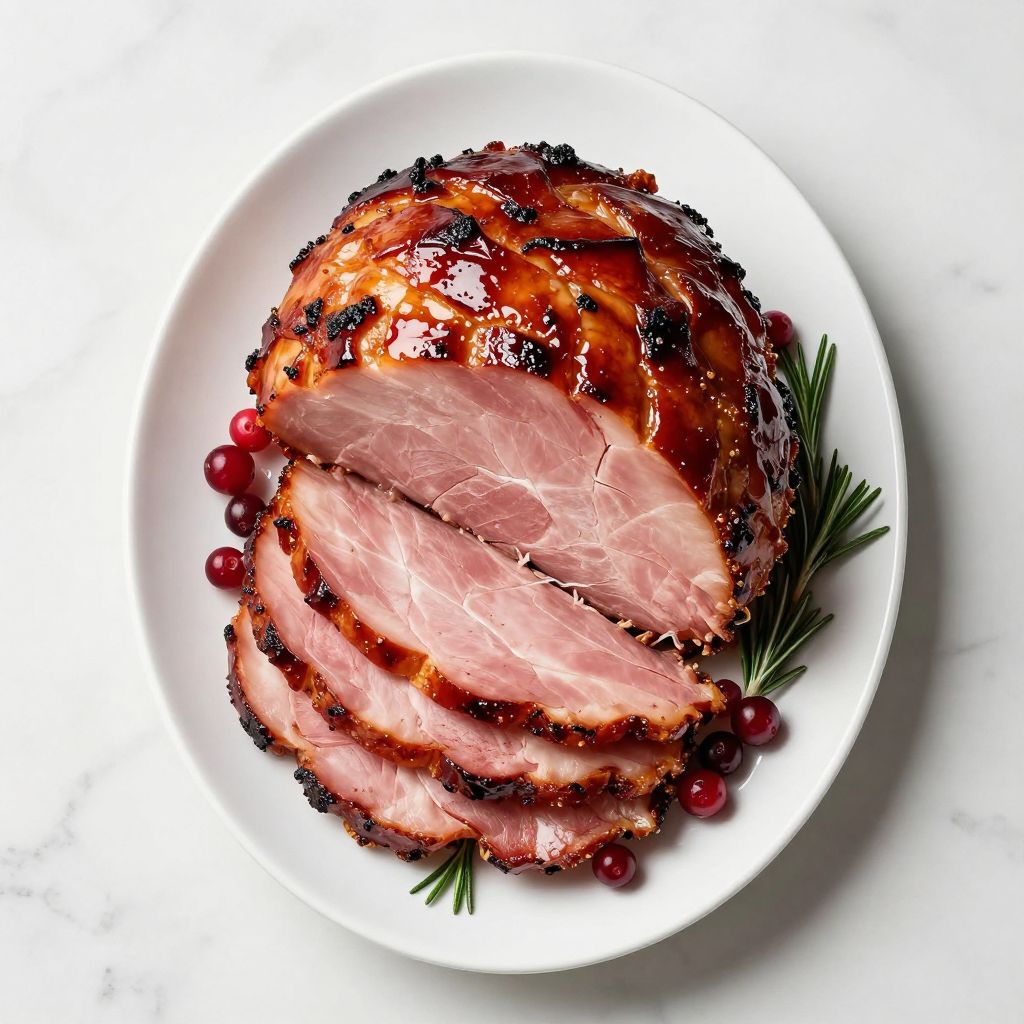
- Apply the remaining glaze to the ham for the final coating. Roast for an additional 5 to 10 minutes, watching carefully to prevent burning. The surface should be deep golden brown and glossy. The internal temperature should reach 140 degrees Fahrenheit when measured with a meat thermometer in the thickest part.
- Remove the ham from the oven and tent it loosely with foil. Let it rest for 10 to 15 minutes before serving.
- Transfer the ham to a serving platter, using the spiral cuts as your guide for easy serving. Drizzle any pan juices over the top. Serve immediately while the glaze is still slightly warm and sticky.
Notes
Choose a ham with minimal tears in the spiral cuts for best results. Save any glaze packet that comes with the ham and use in addition to this homemade version. Place a sheet pan on the rack below to catch drips. If glaze starts getting too dark, tent that area with foil. Let glaze cool 2-3 minutes before applying if it seems too thin for better adhesion.