Ingredients
Equipment
Method
- Crack the egg into a shallow bowl and add the milk, vanilla extract, cinnamon, and a pinch of salt. Whisk everything together with a fork until the mixture is completely smooth and no streaks of egg white remain.
- Place your nonstick skillet over medium heat and let it warm up for about 1 minute. You want the pan hot enough that a drop of water sizzles gently but doesn't immediately evaporate.
- Place one slice of bread into the custard mixture and let it sit for about 10 seconds, then flip it and soak the other side for another 10 seconds. Repeat with the second slice.
- Add the butter to your heated skillet and swirl it around as it melts, coating the entire cooking surface. Let it foam slightly but pull the pan off the heat if it starts to brown.
- Place both soaked bread slices into the buttered skillet and let them cook undisturbed for 2 to 3 minutes. You'll know they're ready to flip when the edges look set and the underside is deep golden brown.
- Use your spatula to carefully flip each slice and cook for another 2 to 3 minutes on the second side. The French toast should feel slightly firm to the touch and show no wet, eggy spots.
- Gently press the center of one slice with your spatula. It should feel set and springy, not squishy or wet.
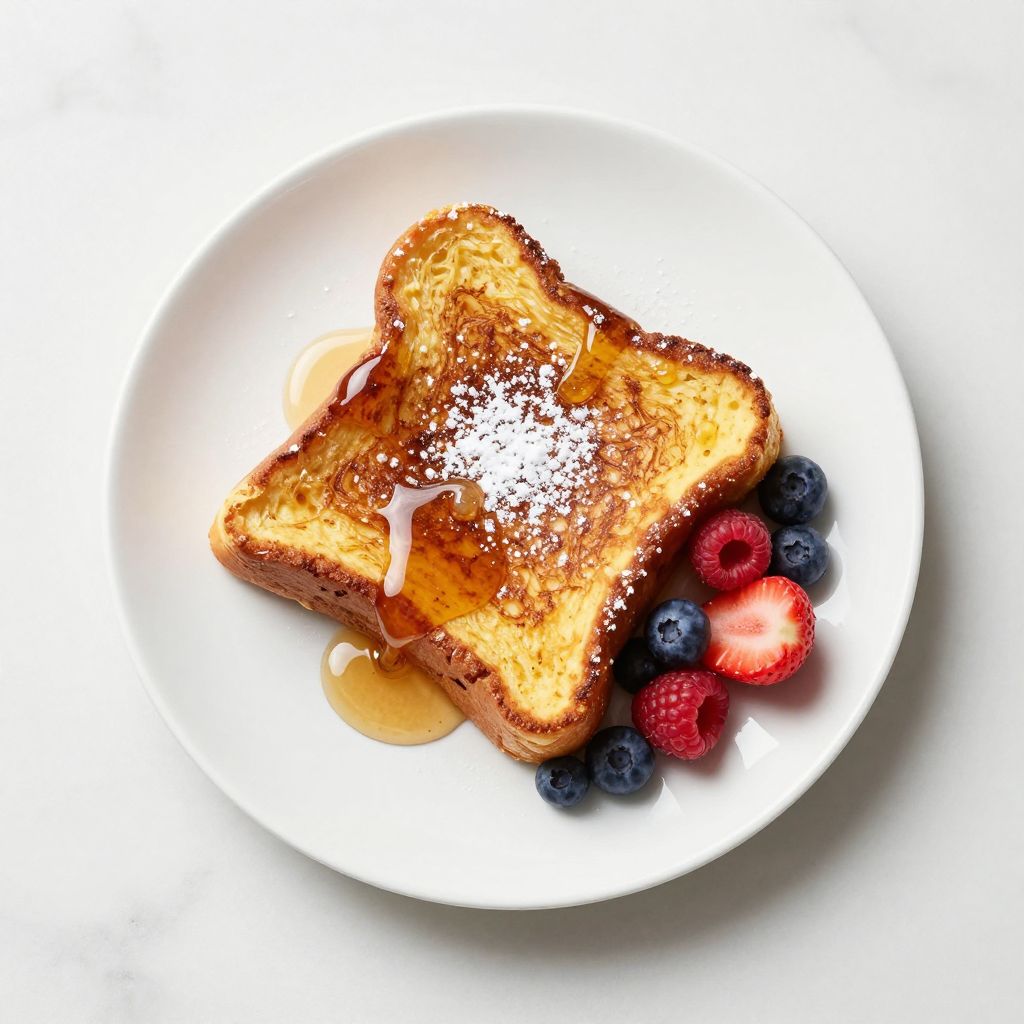
- Transfer your French toast to a plate and top immediately with maple syrup, a dusting of powdered sugar, fresh berries, or whatever toppings make your morning feel special. Serve while still hot for the best texture contrast.
Notes
Use day-old bread instead of fresh. Slightly stale bread absorbs the custard mixture better without falling apart and creates a superior texture with more structure and less sogginess. Don't skip the vanilla extract even though it's a small amount as it provides that signature French toast flavor. Keep your heat at medium rather than high to avoid burning the outside before the custard inside can set.