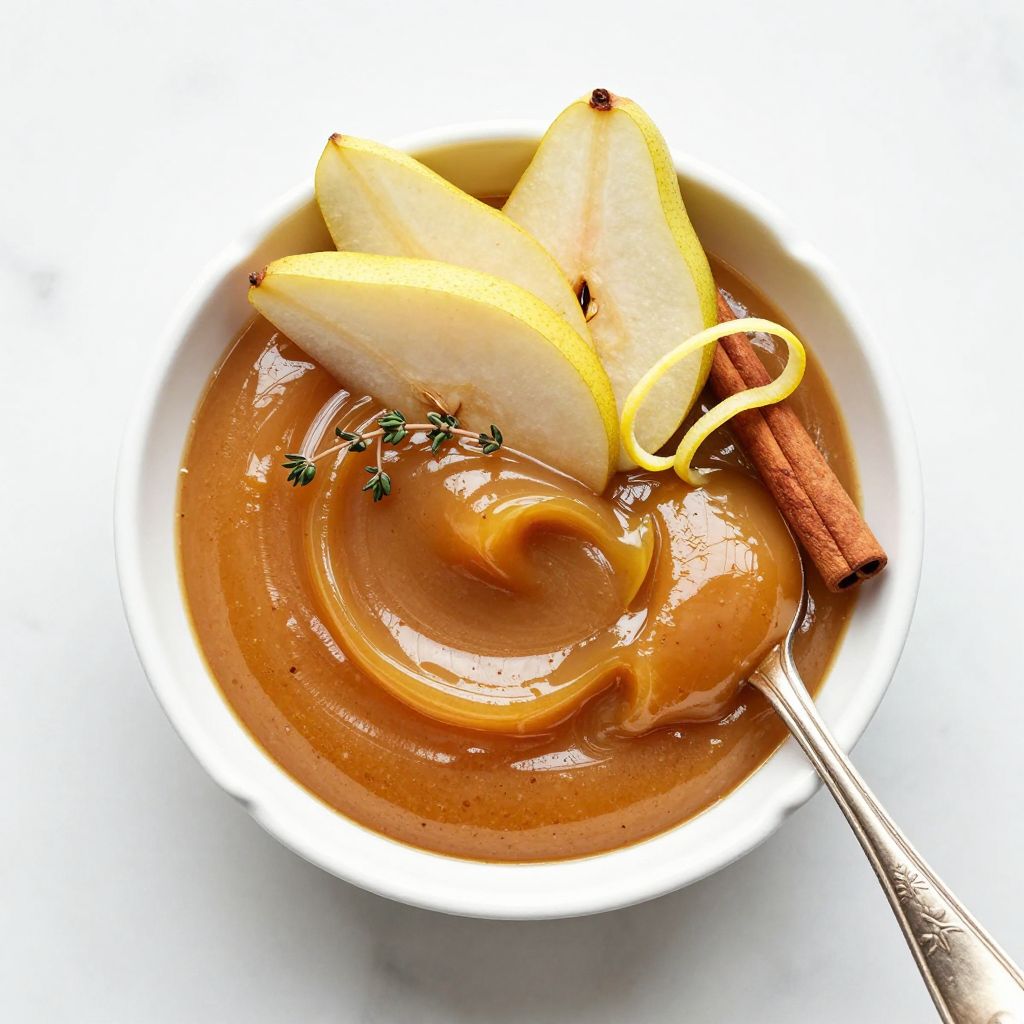
There’s something magical about the smell of pears simmering slowly on the stove, filling your kitchen with a sweet, honeyed warmth that makes you want to stay in there all afternoon.
Pear butter is one of those old-fashioned preserves that feels fancy and homemade but couldn’t be more forgiving to make.
Unlike jam, which relies on pectin and precise timing, pear butter asks only that you cook ripe pears down until they collapse into a silky, spreadable luxury.
The spices warm it without overpowering it, and a touch of lemon keeps everything bright.
You’ll need just a few hours and basic kitchen equipment to transform a bag of pears into something you’ll spread on toast for months to come, gift to friends, or dollop onto yogurt and feel like you’ve done something special.
Why You’ll Love This Recipe
Pear butter rewards patience with minimal effort, making it perfect for home cooks who want an impressive result without fussy technique.
- Simple ingredient list: just pears, sugar, spices, and lemon
- Naturally smooth and velvety texture with no blending required
- Fills your kitchen with an irresistible aroma for hours
- Makes a generous batch for keeping or giving away
- Works as a spread, baking ingredient, or cheese board addition
My Experience Making This Recipe
The first time I made pear butter, I was skeptical that whole pears could actually break down into something spreadable without a food mill or blender.
But hours of low, gentle heat worked absolute magic; the pears softened into a cloudlike puree that strained easily through my sieve.
The kitchen smelled like a pear orchard mixed with cinnamon and vanilla, and my family kept wandering in asking what I was making.
When it finally set and I tasted it on warm bread, I understood why people make this year after year.
It’s foolproof if you just let the heat do the work and don’t rush it.
Recipe Overview
- Recipe Name: Homemade Pear Butter
- Servings: 4 cups (about 32 servings of 2 tablespoons)
- Prep Time: 20 minutes
- Cook Time: 3 hours
- Total Time: 3 hours 20 minutes
- Course: Spread or Condiment
- Cuisine: American Comfort
- Calories per Serving: 35 calories per 2-tablespoon serving
Equipment You Will Need
- Large heavy-bottomed pot or Dutch oven
- Sharp chef’s knife
- Cutting board
- Wooden spoon or heat-resistant spatula
- Fine mesh sieve or food mill
- Measuring cups and spoons
- Instant-read thermometer (optional but helpful)
- Canning jars and lids (if preserving long-term)
- Large bowl for straining
Ingredients for Pear Butter
- 5 pounds fresh pears, peeled, cored, and chopped (about 12 to 14 medium pears)
- 2 cups granulated sugar
- 1/4 cup fresh lemon juice
- 1 teaspoon ground cinnamon
- 1/2 teaspoon ground ginger
- 1/4 teaspoon ground cloves
- 1/4 teaspoon nutmeg
- 1/8 teaspoon fine sea salt
- 1 vanilla bean, split and scraped (or 1 teaspoon vanilla extract added at the end)
Ingredient Notes and Substitutions
- Fresh pears: Ripe but still slightly firm pears work best; overripe ones fall apart too quickly and underripe ones take longer to soften. You can use frozen pears in a pinch, thawing them first and draining excess liquid, though the flavor will be slightly less bright.
- Granulated sugar: Standard white sugar controls the cook time and sets the butter at the right consistency. You can replace it with an equal amount of light brown sugar for deeper caramel notes, though the texture may be slightly softer.
- Lemon juice: Acid brightens the pears and balances sweetness; it also helps with preservation. Lime juice offers a slightly different but pleasant citrus note if that’s what you have.
- Ground cinnamon: Warm spice that complements pears naturally. Omit it entirely for a cleaner pear flavor, or swap it for cardamom for a more exotic twist.
- Vanilla bean: Real vanilla adds floral complexity and silky mouthfeel. Vanilla extract works fine and should be stirred in after cooking to preserve its aroma.
How to Make Pear Butter
Step 1: Prepare Your Pears
Wash your pears under cool water and pat them dry. Peel each pear with a vegetable peeler or knife, then cut them in half lengthwise and scoop out the core and seeds with a small spoon or melon baller.
Chop the pears into rough 1-inch chunks; they’ll break down during cooking anyway, so precision doesn’t matter. You should have about 10 to 12 cups of chopped pears.
Step 2: Combine Pears and Sugar
Pour the chopped pears into your large pot and add the sugar, lemon juice, cinnamon, ginger, cloves, nutmeg, and salt. Stir everything together until the sugar begins to dissolve and coat the pears.
The pears will release liquid as they sit, creating a natural syrup that prevents sticking and burning.
Step 3: Heat Gently to Release Juices
Set the pot over medium heat and bring the mixture to a gentle simmer, stirring occasionally. This usually takes about 15 to 20 minutes, and you’ll see liquid accumulating at the bottom of the pot.
Don’t rush this step; slow and steady heat helps the pears soften evenly without catching on the bottom.
Step 4: Reduce Heat and Simmer Low
Once simmering, reduce the heat to low and add your split vanilla bean (if using the bean rather than extract). Stir the mixture every 10 to 15 minutes to prevent sticking and ensure even cooking.
The pears will gradually break down and become very soft; at this stage, you’re looking at about 1.5 to 2 hours of cooking. The mixture should bubble very gently, almost looking like it’s barely moving.
Step 5: Mash and Check Consistency
After about 2 hours, use a wooden spoon to mash the pears against the side of the pot. They should break down easily into a rough puree without much pressure.
If large chunks remain, continue cooking for another 15 to 20 minutes before mashing again. You want a mostly smooth texture at this point.
Step 6: Strain the Mixture
Set a fine mesh sieve or food mill over a large bowl and carefully pour the pear mixture through it, pressing gently with the back of a spoon to push the soft solids through and leave behind any tough fiber or skin pieces. This step is key to getting that silky, spreadable texture.
You should end up with about 4 to 5 cups of smooth puree. Discard the fibrous bits left in the sieve.
Step 7: Return to Pot and Cook Down
Pour the strained pear puree back into the cleaned pot and return it to low heat. Now you’re cooking down the moisture to reach the right consistency, which usually takes another 45 minutes to 1 hour.
Stir frequently, especially toward the end, to prevent scorching on the bottom. The puree is done when it’s noticeably thicker, clings to a spoon, and doesn’t run off immediately when you tilt the spoon.
Step 8: Test for Doneness and Cool
Drop a small spoonful onto a cold plate and let it cool for a minute; it should wrinkle slightly when you push it with your finger if it’s ready. If it’s still too loose, cook for another 10 to 15 minutes and test again.
Remove from heat, stir in vanilla extract if you’re using it instead of the bean, and let the butter cool in the pot for about 30 minutes before jarring or storing.
Pro Tip: Don’t skip the straining step; it transforms what would be a bumpy puree into pear butter so smooth you’d swear you used a high-powered blender.
Tips for the Best Pear Butter
- Choose ripe pears that smell fragrant; overripe fruit gives thin butter, while underripe pears require extra cooking time and won’t break down as smoothly.
- Use a heavy-bottomed pot to distribute heat evenly and prevent hot spots where the butter might scorch; a Dutch oven or cast-iron pot works wonderfully.
- Stir frequently during the final hour of cooking; pear butter burns easily once it thickens, and constant motion keeps the bottom from darkening.
- If you want deeper, richer flavor, cook the butter a bit longer until it reaches a caramel-brown color; this adds complexity but requires careful attention to avoid burning.
- Sterilize your jars if you’re canning this for long-term storage; improper sterilization can lead to spoilage.
- Keep a damp kitchen towel nearby while cooking; it’s useful for wrapping around the pot handle to prevent burns.
Common Mistakes to Avoid
- Cooking at too high heat causes the bottom to burn and gives the butter a bitter taste; patience and low heat are non-negotiable for smooth results.
- Skipping the sieve step leaves you with a bumpy, textured spread instead of the silky butter you’re after; don’t skip it even if it feels like extra work.
- Undercooking the final reduction leaves butter that’s too loose and won’t set properly on toast; test frequently toward the end.
- Using unripe or watery pears adds liquid that extends cooking time and waters down the flavor; choose sweet, fragrant, ripe pears.
- Not stirring enough during the last hour allows scorching on the bottom, which can ruin the entire batch and leave you with a burnt taste throughout.
Serving Suggestions
Pear butter shines on warm buttered toast for breakfast, but it’s far more versatile than that. Swirl it into yogurt, dollop it onto vanilla ice cream, or spoon it onto a cheese board alongside sharp cheddar and crackers.
- Spread on freshly toasted brioche or sourdough bread with a smear of soft goat cheese
- Stir into plain yogurt for an elegant breakfast parfait layered with granola
- Serve alongside a wedge of sharp Vermont cheddar or aged Gouda on a cheese board
- Swirl into softened cream cheese for a rich fruit dip with apple slices
- Use as a filling between shortbread cookies or on top of a vanilla cheesecake
Variations to Try
- Spiced Pear Butter with Star Anise: Add two whole star anise pods during cooking for a licorice-forward flavor that feels more autumnal and complex.
- Pear and Ginger Butter: Increase the ground ginger to 1 teaspoon and add 2 tablespoons of finely minced fresh ginger during the initial cooking phase for a sharper, more vibrant kick.
- Pear and Cardamom Butter: Replace the cinnamon with 1/2 teaspoon of ground cardamom for an exotic, floral twist that feels special on morning toast.
- Brown Sugar Pear Butter: Swap half the white sugar for light brown sugar and add a pinch of molasses for deeper caramel notes and subtle toffee flavor.
- Pear and Bourbon Butter: Stir in 2 tablespoons of bourbon whiskey after cooking for a sophisticated adult version that’s stunning on vanilla ice cream.
Dietary Adaptations
- Gluten-free: Pear butter is naturally gluten-free as written; just verify that any vanilla extract you use is gluten-free certified.
- Dairy-free: This recipe contains no dairy, so it’s suitable for anyone avoiding milk products; it pairs beautifully with dairy-free butters and plant-based yogurts.
- Vegan: The recipe is already vegan; all ingredients are plant-based, making it perfect for vegan breakfast spreads and baking applications.
- Low-sugar: Replace granulated sugar with a 1:1 erythritol blend or monk fruit sweetener, though cooking time may adjust slightly and you should test for proper set before jarring.
- Keto: Use the low-sugar adaptation above; pear butter made with sugar alternatives keeps most recipes keto-compliant, though portion control matters since pears do contain carbs.
Storage and Reheating
Refrigerator
Pear butter keeps beautifully in the refrigerator for up to three weeks in an airtight glass jar or container. The cool temperature slows any mold growth and keeps the texture firm and spreadable.
- Store in clean glass jars with tight-fitting lids
- Leave about 1/2 inch of headspace to allow for slight expansion
- Check before each use for any mold or off smells
Freezer
Frozen pear butter keeps for up to six months and thaws quickly whenever you need it. Freezing is ideal if you’ve made a large batch and want to preserve it without canning.
- Pour into freezer-safe containers or ice cube trays for portioning
- Leave headspace if using rigid containers
- Label with the date so you remember when you made it
- Thaw in the refrigerator overnight or at room temperature for a few hours
Reheating
Pear butter doesn’t really need reheating unless you’ve frozen it and prefer it at room temperature. If you do want to warm it, use gentle heat to avoid breaking down the texture further.
- Thaw frozen butter in the refrigerator overnight for best results
- If reheating, use very low heat on the stovetop, stirring constantly
- Avoid the microwave, which can create hot spots and dry it out
Nutrition Information
| Nutrient | Amount |
|---|---|
| Calories | 35 |
| Total Fat | 0.1 g |
| Saturated Fat | 0 g |
| Carbohydrates | 9 g |
| Fiber | 1 g |
| Sugar | 7 g |
| Protein | 0.1 g |
| Sodium | 25 mg |
| Cholesterol | 0 mg |
Nutritional values are approximate and based on standard USDA data for medium pears and typical ingredient measurements. Individual results may vary based on exact produce size and specific brands used.
Frequently Asked Questions
Can I Make Pear Butter Without Peeling the Pears?
You can leave skins on, though they’ll remain as tiny flecks in the strained butter, giving it a slightly grainy texture. Peeling takes extra time upfront but yields that smooth, luxurious spread most people expect from pear butter.
How Do I Know When Pear Butter Is Done Cooking?
Use the cold plate test: drop a spoonful onto a chilled plate and wait for it to cool slightly, then push with your finger. If it wrinkles and doesn’t run back together immediately, it’s ready.
Can I Make This in a Slow Cooker?
Yes, slow cookers work beautifully for the first simmering phase; cook on low for 6 to 8 hours, stirring occasionally. You’ll still need to strain and finish cooking the puree on the stovetop for the final reduction.
Why Did My Pear Butter Come Out Grainy or Lumpy?
Graininess usually means you skipped or didn’t thoroughly strain the cooked pears. Make sure you press the soft pear solids through the sieve with the back of a spoon until only dry fiber remains behind.
Is There a Difference Between Pear Butter and Pear Jam?
Pear jam relies on pectin and sets firmer with a jelly-like consistency, while pear butter is cooked longer and stirred more to create a thick, spreadable puree with no added pectin. Butter is silkier and more intense in flavor.
Can I Can This Pear Butter for Shelf Storage?
Yes, pear butter is shelf-stable when properly canned using standard hot-water bath canning methods. Process filled jars for 10 minutes at a rolling boil to ensure safety and seal.
Final Thoughts
Making pear butter at home feels like a small kitchen victory, turning simple fruit and sugar into something that tastes like you spent hours fussing in the kitchen when really you just let
Homemade Pear Butter
Pear butter is one of those old-fashioned preserves that feels fancy and homemade but couldn’t be more forgiving to make. Unlike jam, which relies on pectin and precise timing, pear butter asks only that you cook ripe pears down until they collapse into a silky, spreadable luxury. The spices warm it without overpowering it, and a touch of lemon keeps everything bright.
- Large, heavy-bottomed pot or Dutch oven
- Sharp chef’s knife
- Cutting board
- Wooden spoon or heat-resistant spatula
- Fine mesh sieve or food mill
- Measuring cups and spoons
- Instant-read thermometer (optional)
- Canning jars and lids
- Large bowl for straining
Main
- 5 pounds fresh pears (peeled, cored, and chopped (about 12 to 14 medium pears))
- 2 cups granulated sugar
- 1/4 cup fresh lemon juice
- 1 teaspoon ground cinnamon
- 1/2 teaspoon ground ginger
- 1/4 teaspoon ground cloves
- 1/4 teaspoon nutmeg
- 1/8 teaspoon fine sea salt
- 1 vanilla bean (split and scraped (or 1 teaspoon vanilla extract added at the end))
- Wash your pears under cool water and pat them dry. Peel each pear with a vegetable peeler or knife, then cut them in half lengthwise and scoop out the core and seeds with a small spoon or melon baller. Chop the pears into rough 1-inch chunks. You should have about 10 to 12 cups of chopped pears.
- Pour the chopped pears into your large pot and add the sugar, lemon juice, cinnamon, ginger, cloves, nutmeg, and salt. Stir everything together until the sugar begins to dissolve and coat the pears.
- Set the pot over medium heat and bring the mixture to a gentle simmer, stirring occasionally. This usually takes about 15 to 20 minutes, and you’ll see liquid accumulating at the bottom of the pot.
- Once simmering, reduce the heat to low and add your split vanilla bean (if using the bean rather than extract). Stir the mixture every 10 to 15 minutes to prevent sticking and ensure even cooking. Continue cooking for about 1.5 to 2 hours. The mixture should bubble very gently, and the pears will gradually break down and become very soft.
- After about 2 hours, use a wooden spoon to mash the pears against the side of the pot. They should break down easily into a rough puree without much pressure. If large chunks remain, continue cooking for another 15 to 20 minutes before mashing again.
- Set a fine mesh sieve or food mill over a large bowl and carefully pour the pear mixture through it, pressing gently with the back of a spoon to push the soft solids through and leave behind any tough fiber or skin pieces. You should end up with about 4 to 5 cups of smooth puree. Discard the fibrous bits left in the sieve.
- Pour the strained pear puree back into the cleaned pot and return it to low heat. Cook down the moisture for another 45 minutes to 1 hour, stirring frequently, especially toward the end, to prevent scorching on the bottom. The puree is done when it’s noticeably thicker, clings to a spoon, and doesn’t run off immediately when you tilt the spoon.
- Drop a small spoonful onto a cold plate and let it cool for a minute; it should wrinkle slightly when you push it with your finger if it’s ready. If it’s still too loose, cook for another 10 to 15 minutes and test again. Remove from heat, stir in vanilla extract if you’re using it instead of the bean, and let the butter cool in the pot for about 30 minutes before jarring or storing.
Don’t skip the straining step; it transforms what would be a bumpy puree into pear butter so smooth you’d swear you used a high-powered blender. Pear butter keeps beautifully in the refrigerator for up to three weeks in an airtight glass jar or container. Frozen pear butter keeps for up to six months. For shelf storage, process filled jars for 10 minutes at a rolling boil using standard hot-water bath canning methods.