
Picture this: a chilly evening, and the scent of simmering broth wafts through your home, wrapping you in warmth and comfort. Oden is a Japanese comfort dish that embraces simplicity, featuring a delightful medley of ingredients simmered in a flavorful dashi broth, making it incredibly satisfying and versatile.
This cozy dish is perfect for sharing with family or friends, allowing everyone to customize their bowls with their favorite ingredients. With its rich umami flavor and heartwarming essence, oden is truly a dish worth making, especially when the weather calls for something hearty and comforting.
Why You’ll Love This Recipe
This recipe brings together warmth, flavor, and a sense of community. You’ll enjoy a variety of textures and tastes in each bowl.
- Comforting and warming for cold days.
- Customizable with your favorite ingredients.
- Rich umami flavor from the dashi broth.
- Easy to prepare in one pot.
- A great way to use leftovers or seasonal vegetables.
My Experience Making This Recipe
Making oden has become a cherished ritual in my kitchen. The first time I prepared it, the aroma filled my home, instantly transporting me to a cozy Japanese eatery.
My family gathered around the table, eagerly selecting their favorite ingredients from the bubbling pot, sharing stories and laughter. It was a moment of togetherness that I look forward to every winter.
Recipe Overview
- Recipe Name: Oden
- Servings: 4
- Prep Time: 20 minutes
- Cook Time: 1 hour
- Total Time: 1 hour 20 minutes
- Course: Main Dish
- Cuisine: Japanese
- Calories per Serving: 350
Equipment You Will Need
- Large pot or Dutch oven
- Cutting board
- Sharp knife
- Measuring cups and spoons
- Spoon for stirring
Ingredients for Oden
- 4 cups dashi broth (base for flavor)
- 1/2 cup soy sauce (for seasoning)
- 1 tablespoon mirin (adds sweetness)
- 1 pack of konnyaku (noodle-like texture)
- 4 pieces of daikon radish (adds crunch)
- 4 eggs (protein source)
- 1 block of tofu (adds creaminess)
- 2 pieces of fish cake (adds flavor)
- 1/2 cup of green onions (for garnish)
Ingredient Notes and Substitutions
- Dashi broth: Used for its umami flavor. Substitute with vegetable broth for a vegetarian option.
- Konnayku: Provides a unique texture. You can use noodles as a substitute if you prefer.
- Daikon radish: Adds freshness. Use regular radishes if daikon is unavailable.
- Tofu: Adds creaminess. Substitute with tempeh for a firmer texture.
- Fish cake: Enhances flavor. Vegetarian fish cakes are available for a meat-free version.
How to Make Oden
Step 1: Prepare the Dashi Broth
Start by making the dashi broth. This flavorful base is essential for a rich oden experience.
Step 2: Boil the Eggs
Bring a small pot of water to boil and gently add the eggs. Boiling them for about 7 minutes will yield perfect hard-boiled eggs.
Step 3: Cut the Daikon
Peel and slice the daikon radish into thick rounds. This will allow the radish to absorb the broth flavors while cooking.
Step 4: Prepare the Konnyaku
Cut the konnyaku into bite-sized pieces. This ingredient adds a chewy texture that contrasts beautifully with other components.
Step 5: Combine Ingredients in the Pot
In a large pot, combine the dashi, soy sauce, mirin, daikon, konnyaku, and tofu. This mixture of flavors will create the heart of your oden.
Step 6: Simmer the Mixture
Bring the pot to a simmer over medium heat. Simmer for about 30 minutes, allowing the flavors to meld and the daikon to become tender.
Step 7: Add Fish Cakes and Boiled Eggs
Carefully add the fish cakes and boiled eggs to the pot. Let them simmer for an additional 10 minutes to soak up the broth.
Step 8: Serve and Garnish
Serve the oden hot in bowls, garnished with chopped green onions. This final touch adds brightness and a pop of color.
Pro Tip: Let the oden sit for a while after cooking. The flavors deepen and become even more delicious.
Tips for the Best Oden
- Use homemade dashi for superior flavor; it makes a difference.
- Don’t rush the simmering process; patience is key for flavor.
- Feel free to add seasonal vegetables for variety.
- Adjust the soy sauce to taste for a customized flavor profile.
- Serve with a side of mustard for a spicy kick.
Common Mistakes to Avoid
- Skipping the dashi; it’s crucial for authentic flavor.
- Overcooking the eggs; they should be perfectly hard-boiled, not rubbery.
- Not slicing the daikon thick enough; it needs time to absorb flavor.
- Rushing the simmering; good oden takes time to develop depth.
Serving Suggestions
Oden is best enjoyed with a few side dishes to complement its flavors. Pair it with a light salad or some steamed rice for a fulfilling meal.
- Steamed rice or rice balls
- Pickled vegetables for a tangy contrast
- Japanese-style salad with sesame dressing
- Grilled fish or chicken on the side
Variations to Try
- Add mushrooms for an earthy flavor boost.
- Include mochi for a delightful chewy addition.
- Swap out tofu for chicken for a meatier dish.
- Use different types of fish cakes for varied textures.
- Add some chili pepper for a spicy kick.
Dietary Adaptations
- Gluten-free: Use tamari instead of soy sauce.
- Dairy-free: This recipe is naturally dairy-free, no changes needed.
- Vegan/vegetarian: Substitute fish cakes with plant-based versions.
- Low-carb/keto: Skip the potatoes and focus on protein-rich ingredients.
Storage and Reheating
Refrigerator
Store any leftovers in an airtight container for up to three days.
- Let cool before refrigerating.
- Reheat gently on the stove or microwave.
Freezer
Oden can be frozen for up to one month.
- Use freezer-safe containers.
- Thaw overnight in the fridge before reheating.
Reheating
Reheat on low heat to maintain texture and flavor.
- Add a splash of water if it thickens too much.
- Stir occasionally to heat evenly.
Nutrition Information
| Nutrient | Amount |
|---|---|
| Calories | 350 |
| Total Fat | 12g |
| Saturated Fat | 2g |
| Carbohydrates | 42g |
| Fiber | 5g |
| Sugar | 3g |
| Protein | 18g |
| Sodium | 800mg |
| Cholesterol | 350mg |
This information is based on a standard recipe and may vary based on specific ingredients used.
Frequently Asked Questions
Can I use store-bought dashi?
Yes, store-bought dashi can save time and still offer great flavor.
Can I prepare oden in advance?
Absolutely! Oden tastes even better the next day as the flavors meld.
How do I fix a watery broth?
If your broth is too watery, simmer it longer to reduce and concentrate the flavor.
What if I don’t like fish cakes?
You can easily substitute fish cakes with vegetables or tofu for a flavorful alternative.
Can I make oden vegetarian?
Yes! Simply replace meat ingredients with plant-based options for a delicious vegetarian oden.
Final Thoughts
Making oden is a delightful way to warm up your kitchen and enjoy comforting flavors. I encourage you to gather your favorite ingredients, invite friends or family, and create a cozy evening filled with laughter and delicious food.
Don’t stop here! Explore more delicious dishes like Galbitang or try your hand at a hearty Cholent. Happy cooking!
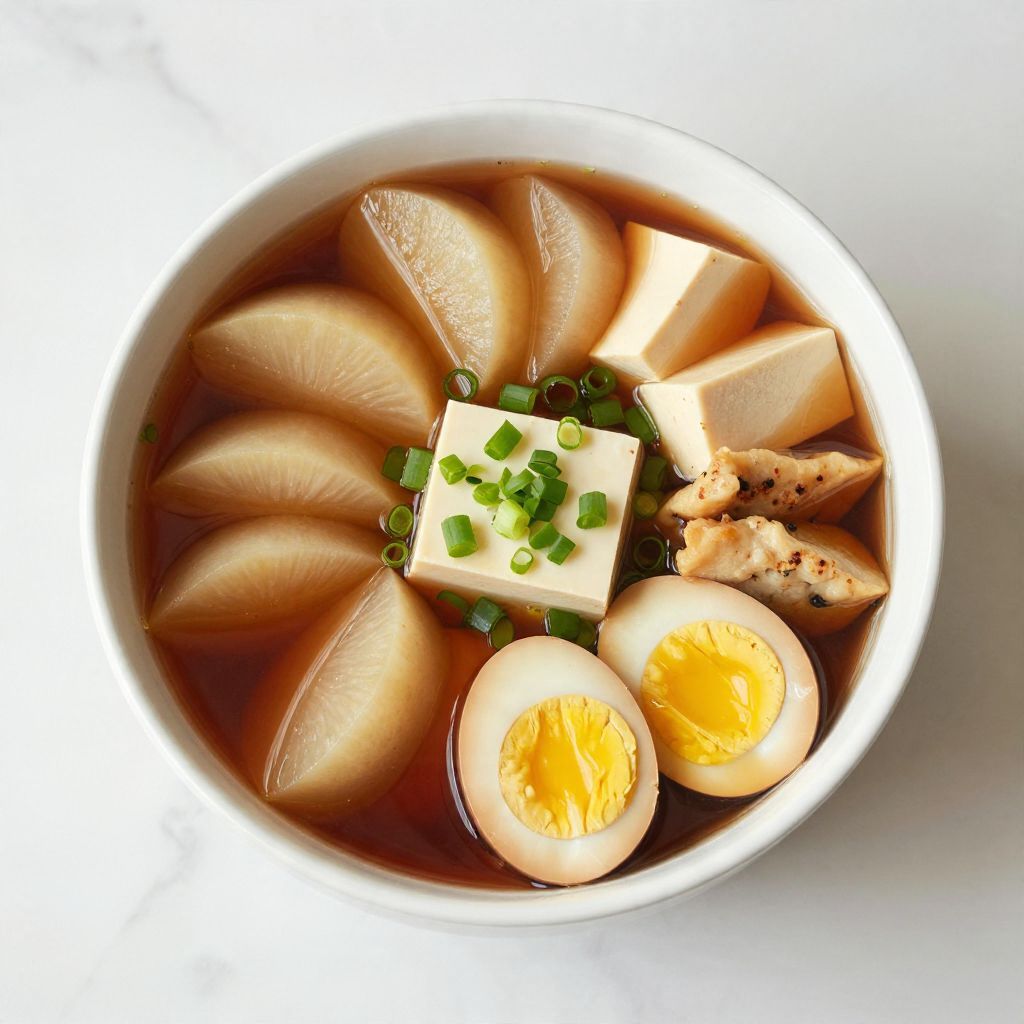
Oden
Ingredients
Equipment
Method
- Start by making the dashi broth.
- Bring a small pot of water to boil and gently add the eggs. Boil for about 7 minutes.
- Peel and slice the daikon radish into thick rounds.
- Cut the konnyaku into bite-sized pieces.
- In a large pot, combine the dashi, soy sauce, mirin, daikon, konnyaku, and tofu.
- Bring the pot to a simmer over medium heat. Simmer for about 30 minutes.
- Carefully add the fish cakes and boiled eggs to the pot. Simmer for an additional 10 minutes.
- Serve the oden hot in bowls, garnished with chopped green onions.