
There’s something magical about the first taste of homemade muscadine jelly; it’s like a burst of summer in every jar. This delightful spread captures the rich, sweet flavor of muscadine grapes, making it a perfect addition to your breakfast table or a unique gift for friends. It’s not just about the taste; it’s also about reliving those sunny afternoons spent harvesting grapes and stirring the pot, creating memories that last as long as the jelly itself. Let’s gather our ingredients and get started on a homemade treat that will make your toast sing!
Why You’ll Love This Recipe
This muscadine jelly is special for a few reasons. It’s not only delicious but also a great way to use those sweet grapes you might find at local farmers’ markets.
- Rich, fruity flavor that brightens up any meal.
- Easy to make with just a few ingredients.
- Perfect for spreading on toast or adding to desserts.
- Can be made in small or large batches.
My Experience Making This Recipe
Each time I make this jelly, I’m transported back to my grandmother’s kitchen, where the air was thick with the scent of bubbling fruit. The first time I tried it, I was surprised at how much better it tasted than store-bought jellies.
Since then, I’ve perfected my technique, and I love sharing jars with friends who can’t believe it’s homemade. It’s a true crowd-pleaser that brings a smile to everyone’s face!
Recipe Overview
- Recipe Name: Muscadine Jelly
- Servings: Approximately 6 cups
- Prep Time: 15 minutes
- Cook Time: 30 minutes
- Total Time: 45 minutes
- Course: Condiment
- Cuisine: Southern
- Calories per Serving: 80
Equipment You Will Need
- Large pot
- Masher or food processor
- Fine mesh strainer or cheesecloth
- Measuring cups and spoons
- Canning jars and lids
- Funnel and ladle
Ingredients for Muscadine Jelly
- 4 cups of muscadine grapes
- 1 cup of water
- 5 cups of granulated sugar
- 1 box (1.75 oz) of fruit pectin (like Sure-Jell)
- 2 tablespoons of lemon juice
Ingredient Notes and Substitutions
- Muscadine grapes: They provide a unique flavor; you can substitute with Concord grapes if needed.
- Granulated sugar: This is necessary for sweetness; honey can be used, but it may alter the texture.
- Fruit pectin: This helps the jelly set; alternatives like agar-agar can be used, but results may vary.
- Lemon juice: This balances the sweetness; vinegar can be used as a substitute for a different flavor profile.
How to Make Muscadine Jelly
Step 1: Prepare the Grapes
Start by rinsing the muscadine grapes thoroughly to remove any dirt or debris. This ensures the jelly is clean and safe to enjoy.
Step 2: Extract Juice
Place the grapes in a large pot with the water and mash them slightly. This helps release their juices, which is essential for the jelly.
Step 3: Boil the Mixture
Bring the mixture to a boil over medium heat, stirring frequently. Boiling helps extract maximum flavor from the grapes.
Step 4: Strain the Juice
After boiling for about 10 minutes, strain the mixture through a fine mesh strainer or cheesecloth into another pot. This separates the juice from the skins and seeds.
Step 5: Measure the Juice
Measure out 4 cups of the extracted juice. Accurate measurements are crucial for the jelly to set properly.
Step 6: Combine Ingredients
Add the lemon juice, sugar, and fruit pectin to the juice in the pot. Stir well to combine everything evenly.
Step 7: Cook the Jelly
Bring the mixture to a rolling boil, stirring constantly. This allows the sugar to dissolve and the jelly to thicken.
Step 8: Jar the Jelly
Once it reaches the desired consistency, pour the hot jelly into sterilized canning jars using a funnel. Seal them tightly and let them cool.
Pro Tip: Make sure to sterilize your jars and lids beforehand to ensure your jelly lasts longer.
Tips for the Best Muscadine Jelly
- Use fresh, ripe muscadine grapes for the best flavor.
- Give the mixture a good stir while boiling to prevent scorching.
- Test for doneness by placing a spoonful on a cold plate; if it sets, it’s ready.
- Label your jars with the date to keep track of freshness.
- For a smoother texture, use a food processor to puree the grapes before boiling.
Common Mistakes to Avoid
- Not measuring the juice correctly can lead to runny jelly.
- Skipping the lemon juice can result in overly sweet jelly.
- Not boiling the mixture long enough may prevent proper setting.
- Using old or damaged jars can spoil your jelly.
Serving Suggestions
This jelly is versatile and pairs well with many dishes. Spread it on toast for breakfast or use it in desserts.
- Serve on warm biscuits or scones.
- Swirl into yogurt or oatmeal for added flavor.
- Use as a glaze for meats like pork or chicken.
- Pair with cheese for a delightful appetizer.
Variations to Try
- Add a touch of vanilla extract for a sweeter taste.
- Mix in spices like cinnamon or nutmeg for warmth.
- Combine with other fruits like blackberries for a mixed berry jelly.
- Try using different citrus juices for a twist on flavor.
Dietary Adaptations
- Gluten-free: This recipe is naturally gluten-free.
- Dairy-free: No dairy products are used, making it suitable for all diets.
- Vegan: The ingredients are plant-based, so it’s vegan-friendly.
- Low-carb/keto: Substitute sugar with a low-carb sweetener for a keto version.
Storage and Reheating
Refrigerator
Store opened jars in the refrigerator for up to three weeks.
- Ensure the lid is sealed tightly.
- Keep in a cool, dark place.
Freezer
For long-term storage, freeze the jelly in airtight containers.
- Leave space at the top of the container for expansion.
- Use within one year for best quality.
Reheating
To enjoy your jelly warm, gently heat it on the stove or in the microwave.
- Stir well to ensure even heating.
- Avoid boiling to preserve texture.
Nutrition Information
| Nutrient | Amount |
|---|---|
| Calories | 80 |
| Total Fat | 0g |
| Saturated Fat | 0g |
| Carbohydrates | 21g |
| Fiber | 0g |
| Sugar | 20g |
| Protein | 0g |
| Sodium | 0mg |
| Cholesterol | 0mg |
This nutrition information is approximate and may vary based on specific ingredients and brands used.
Frequently Asked Questions
Can I use other types of grapes?
Yes, you can substitute muscadine grapes with other grape varieties, but the flavor will differ.
Can I make this jelly ahead of time?
Absolutely! This jelly can be made in advance and stored for several months.
How do I store leftover jelly?
Keep opened jars in the refrigerator for up to three weeks, or freeze for longer storage.
Why is my jelly not setting?
If the jelly doesn’t set, it may be due to not boiling long enough or incorrect measurements of pectin.
Can I make muscadine jelly without pectin?
Yes, but it will require a longer cooking time and may result in a softer jelly.
Final Thoughts
Making your own muscadine jelly is such a rewarding experience, and it brings a taste of summer right to your breakfast table. I encourage you to give it a try and enjoy the sweet, homemade goodness.
If you’re interested in exploring more delicious jelly recipes, check out my other favorites like crab apple jelly or blackberry jelly. Happy canning!
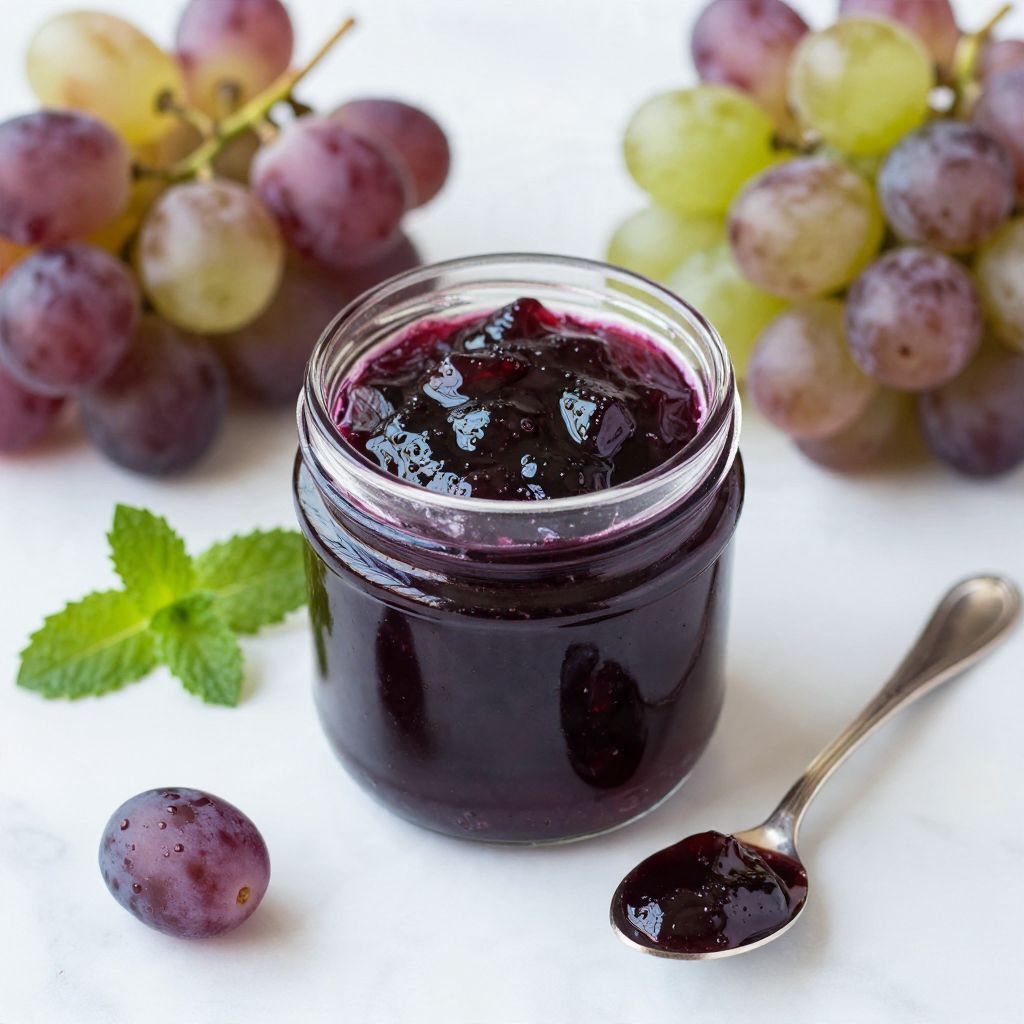
Muscadine Jelly
Ingredients
Equipment
Method
- Start by rinsing the muscadine grapes thoroughly to remove any dirt or debris.
- Place the grapes in a large pot with the water and mash them slightly.
- Bring the mixture to a boil over medium heat, stirring frequently.
- After boiling for about 10 minutes, strain the mixture through a fine mesh strainer or cheesecloth into another pot.
- Measure out 4 cups of the extracted juice.
- Add the lemon juice, sugar, and fruit pectin to the juice in the pot and stir well.
- Bring the mixture to a rolling boil, stirring constantly.
- Once it reaches the desired consistency, pour the hot jelly into sterilized canning jars using a funnel.
- Seal the jars tightly and let them cool.