Ham salad is the unsung hero of leftover holiday ham, turning what might become a sad sandwich filler into something you will actually crave. This creamy, tangy spread comes together in under fifteen minutes and works on everything from crackers to crusty bread.
Once you master the balance of flavors, you will never look at leftover ham the same way again. Let me walk you through how I make it.
What Makes This Recipe Worth Your Time
This ham salad delivers bold flavor with minimal effort, and it transforms ingredients you probably already have into a crowd pleasing spread that keeps for days.
- Zero waste cooking at its finest because you use up every scrap of leftover ham
- Ten minutes of active work from fridge to finished product
- Versatile serving options that work for sandwiches, crackers, lettuce wraps, or stuffed tomatoes
- Make ahead friendly so it actually improves after a day in the refrigerator
- Budget stretching that turns one pound of ham into eight generous servings
A Little Background on This Dish
Ham salad belongs to the proud American tradition of chopped meat salads that emerged in the early twentieth century when home cooks needed practical ways to stretch expensive proteins. It shares DNA with chicken salad and tuna salad but brings a smokier, saltier character to the table.
Southern cooks especially embraced ham salad as a way to honor every bit of the holiday ham. The dish became a church potluck staple and a fixture at ladies’ luncheons across the country, though it deserves a spot in modern kitchens too.
My Experience With This Recipe
I started making ham salad out of pure guilt over the amount of leftover Christmas ham my family was throwing away. The first few batches were honestly pretty bland, just ham and mayo without much personality.
My breakthrough came when I realized I was under seasoning dramatically because I assumed the ham itself would carry the flavor. Turns out ham needs backup, and once I added the right supporting players, the whole thing clicked into place.
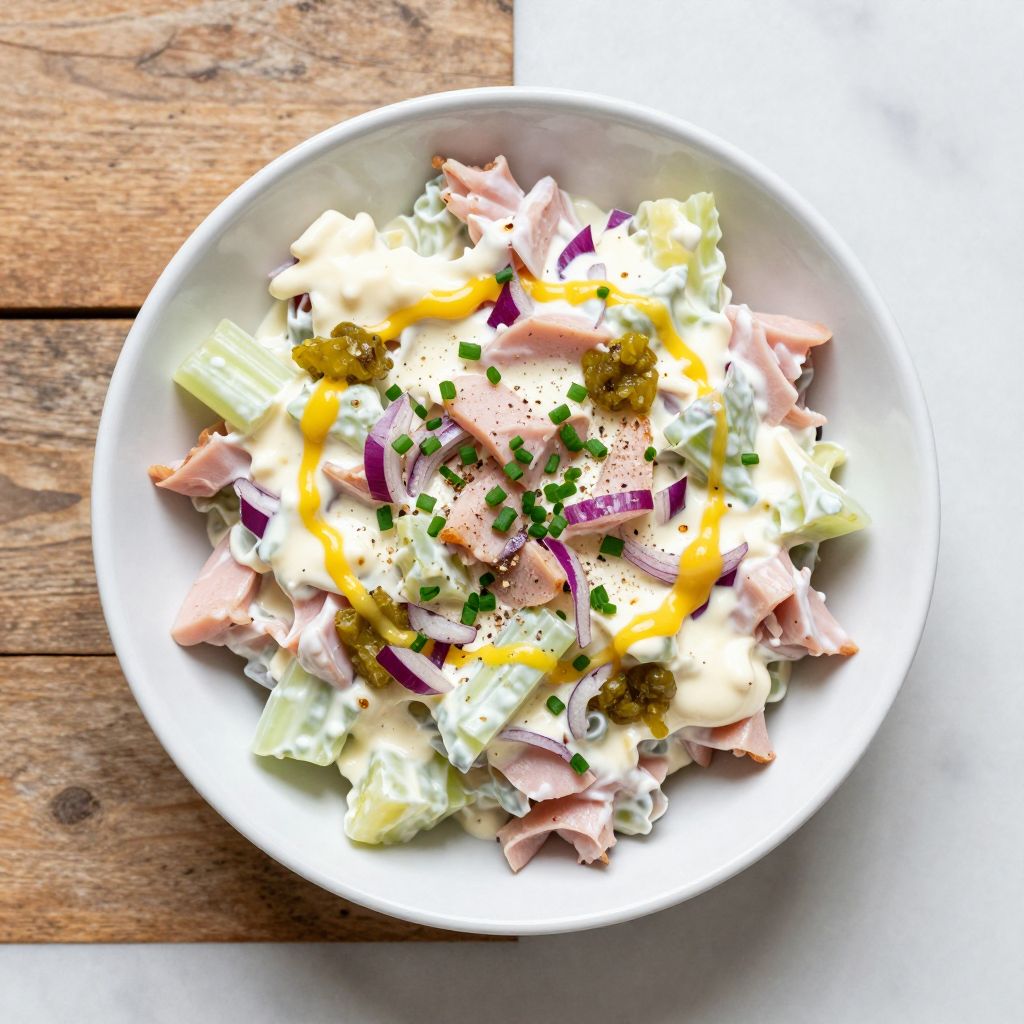
The first time I got it right, my kids demolished an entire bowl before dinner even started, scooping it onto crackers like it was some kind of fancy dip. That batch had a slight tang from the pickles and a kick from the mustard that made you want to keep coming back for more.
Before You Start: Key Things to Know
This recipe suits absolute beginners and takes almost no active attention. The only real challenge is achieving the right texture when you chop or grind the ham.
- Difficulty level: Easy, perfect for first time cooks
- Active time vs passive time: About ten minutes of chopping and mixing with no passive cooking time
- Most important equipment: A food processor or meat grinder for consistent texture
- Step requiring most attention: Processing the ham to the right consistency without turning it into paste
Recipe at a Glance
- Recipe Name: Classic Ham Salad
- Yield: 8 servings (approximately 4 cups)
- Prep Time: 15 minutes
- Cook Time: 0 minutes
- Total Time: 15 minutes
- Resting Time: 1 hour (recommended for flavor melding)
- Difficulty: Easy
- Course: Appetizer, Lunch, Sandwich Filling
- Cuisine: American
- Calories per Serving: 245
How to Source the Best Ingredients
The quality of your ham determines everything about this recipe. Starting with flavorful, properly cured ham makes the difference between memorable and mediocre.
- Ham: Look for bone in spiral cut leftovers or thick cut deli ham with visible marbling and a rosy pink color
- Mayonnaise: Choose a full fat mayo with a tangy flavor profile and avoid anything labeled light or reduced fat
- Dill pickles: Select crisp, refrigerated pickles with a pronounced vinegar punch rather than soft shelf stable varieties
- Dijon mustard: Opt for a smooth French style Dijon with a creamy texture and sharp bite
- Celery: Pick stalks that snap cleanly when bent with fresh leaves still attached
Ingredients for Ham Salad
For the Salad Base
- 1 pound cooked ham, cut into 1 inch chunks
- 1/2 cup mayonnaise
- 2 tablespoons Dijon mustard
- 1/4 cup dill pickles, finely diced
- 2 tablespoons pickle brine from the jar
- 2 stalks celery, finely diced
- 2 tablespoons red onion, minced
- 1 tablespoon fresh chives, finely chopped
- 1/2 teaspoon black pepper, freshly ground
- 1/4 teaspoon garlic powder
- 1/4 teaspoon smoked paprika
Smart Substitutions and Swaps
- Mayonnaise provides the creamy binding that holds everything together and adds richness. Substitute with Greek yogurt for a tangier, lighter version or use avocado mayo for a dairy free option with similar texture.
- Dijon mustard adds heat and complexity that cuts through the richness of the ham. Yellow mustard works in a pinch but delivers a milder, sweeter profile that changes the character.
- Dill pickles contribute acidity and crunch that balance the salty ham. Sweet pickle relish creates a more Southern style salad, or try cornichons for a sharper European twist.
- Celery adds essential crunch and a fresh vegetal note. Substitute finely diced fennel for a subtle anise flavor or water chestnuts for pure crunch without flavor interference.
- Red onion brings sharpness and color contrast. Use shallots for a milder, sweeter allium flavor or skip entirely for a kid friendly version.
Tools and Equipment You Will Need
Having everything ready before you start makes this quick recipe even quicker. Gather these tools and your prep will flow smoothly from start to finish.
- Food processor with metal blade (creates the most consistent texture quickly)
- Sharp chef’s knife (for hand chopping if you prefer more control)
- Large cutting board
- Large mixing bowl
- Rubber spatula (for folding ingredients without deflating texture)
- Measuring cups and spoons
- Airtight storage container
How to Make Ham Salad
Read through all the steps before you begin and have your ingredients measured and ready. The ham should be at refrigerator temperature for easiest processing.
Step 1: Prepare the Ham
Cut the ham into roughly 1 inch chunks, removing any visible bone fragments or gristle. Uniform pieces ensure even processing and consistent texture throughout the finished salad.
Starting with properly sized chunks prevents the processor from overworking some pieces while leaving others too large. You want everything to break down at the same rate.
Look for pieces that are roughly the same size as the top joint of your thumb. If some pieces are dramatically larger, the texture will be uneven.
Step 2: Process the Ham to the Right Texture
Add half the ham chunks to your food processor fitted with the metal blade. Pulse in short bursts, about 5 to 7 pulses of one second each, checking the texture between pulses.
Pulsing rather than running continuously gives you control over the final texture. Running the processor continuously turns ham into a paste that lacks the pleasant chew you want.
Stop when the pieces are roughly the size of small peas with some variation. Transfer to your mixing bowl and repeat with the remaining ham.
Step 3: Dice the Celery Finely
Cut the celery stalks lengthwise into thin strips, then turn and dice crosswise into pieces no larger than a quarter inch. Consistent size ensures every bite contains a bit of crunch.
Fine dicing distributes the celery evenly throughout the salad so you get texture in every forkful. Large pieces create pockets of crunch that feel out of place.
The celery is ready when the pieces look small enough to sit on the surface of a cracker without rolling off.
Step 4: Mince the Red Onion
Cut a small wedge of red onion and mince it as finely as possible, aiming for pieces smaller than the celery. You want the onion flavor distributed throughout without large raw bites.
Mincing the onion releases its juices and aromatics, which will mellow as the salad rests. Too large chunks deliver harsh raw onion hits that overpower the ham.
The onion should almost look paste like when you finish, with no visible distinct pieces.
Step 5: Chop the Pickles
Dice the dill pickles into small pieces, similar in size to your celery dice. Reserve the brine from the jar because you will need it for the dressing.
Pickles add both flavor and acidity, which brightens the overall salad and keeps it from tasting flat. The brine concentrates that acidic punch without adding bulk.
Properly diced pickles should be small enough to cling to the ham pieces rather than falling to the bottom of the bowl.
Step 6: Mix the Dressing Base
In a separate small bowl, whisk together the mayonnaise, Dijon mustard, pickle brine, black pepper, garlic powder, and smoked paprika until completely smooth. Taste and adjust the mustard if you want more kick.
Mixing the dressing separately ensures even distribution of seasonings. Adding dry spices directly to the ham creates pockets of concentrated flavor.
The dressing should taste slightly more assertive than you want the final salad because the ham will absorb and mellow the flavors.
Step 7: Combine the Vegetables with the Ham
Add the diced celery, minced onion, and chopped pickles to the bowl with the processed ham. Toss gently with a rubber spatula to distribute evenly.
Mixing the vegetables with the ham before adding the dressing ensures they get coated individually rather than clumping together. Even distribution means balanced flavor in every bite.
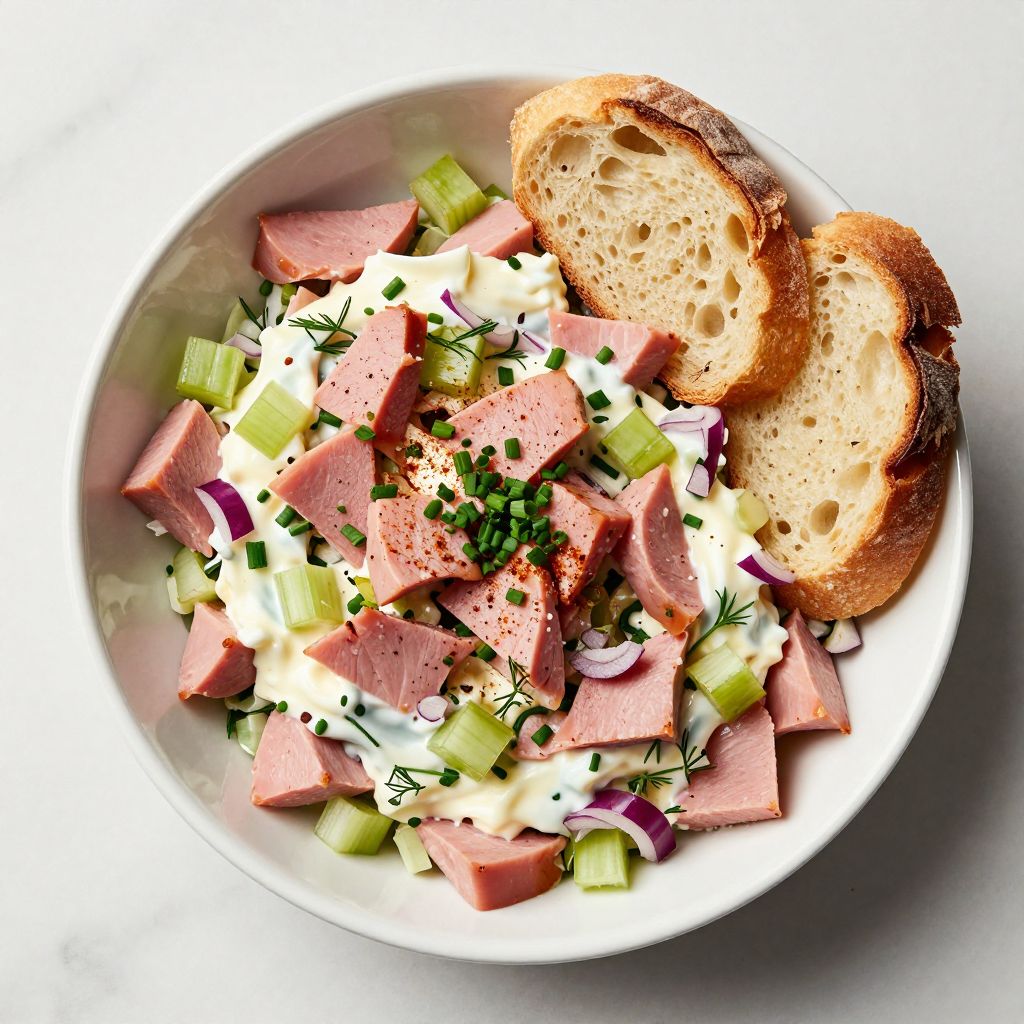
The mixture should look colorful with visible flecks of green and purple throughout the pink ham.
Step 8: Fold in the Dressing
Pour the dressing over the ham and vegetable mixture. Use a rubber spatula to fold everything together using gentle lifting motions rather than stirring.
Folding preserves the texture of the ham and keeps the vegetables from releasing too much liquid. Aggressive stirring breaks down the ingredients and creates a mushy consistency.
Every piece of ham should have a light coating of dressing with no dry spots or pools of mayo at the bottom.
Step 9: Add the Fresh Chives
Sprinkle the chopped chives over the salad and fold gently just two or three times. Adding them last preserves their color and keeps their flavor fresh.
Chives add a subtle onion flavor and bright green color that makes the salad look more appetizing. Overmixing bruises them and releases bitter compounds.
You should see distinct green flecks throughout when the chives are properly incorporated.
Step 10: Taste and Adjust Seasoning
Take a small taste of the salad and evaluate the balance of salt, acid, and creaminess. Add more pickle brine for tang, more mayonnaise for richness, or more pepper for heat.
Ham varies dramatically in saltiness depending on the cure, so you must taste and adjust every batch. What worked last time may not be right this time.
The salad should taste balanced with no single flavor dominating. The ham should be the star with everything else playing support.
Step 11: Chill for Flavor Development
Cover the bowl tightly with plastic wrap pressed directly against the surface of the salad. Refrigerate for at least one hour, or up to overnight for best results.
Resting time allows the flavors to meld and the seasonings to penetrate the ham. Freshly made salad tastes like separate ingredients while rested salad tastes unified.
The salad is ready to serve when a taste reveals integrated flavors rather than distinct components.
Step 12: Final Taste and Serve
After chilling, give the salad a gentle stir and taste once more. The flavors will have mellowed, so you may want to add a splash more pickle brine or a crack of pepper.
Cold temperatures dull flavors, so food often needs a final seasoning adjustment right before serving. Trust your palate and adjust accordingly.
Serve immediately on your chosen vessel, whether crackers, bread, or lettuce cups.
Pro Tip: Process half your ham to a finer texture and leave the other half chunkier, then mix them together. This creates a spread with body that holds together on bread while still having satisfying meaty bites.
The Science Behind the Technique
The magic of ham salad relies on emulsification, where the mayonnaise binds water soluble and fat soluble flavors into a cohesive whole. The lecithin in egg yolk based mayo acts as the bridge between these two worlds.
The resting period allows salt from the ham to draw moisture from the vegetables while the pickle brine’s acidity denatures proteins slightly, creating a more tender texture. This exchange is why day old ham salad always tastes better.
Chef Note: The pickle brine does double duty by adding acid that brightens flavors and providing moisture without diluting the mayonnaise’s emulsion.
Tips for Getting It Right Every Time
- Chill your ham before processing because cold meat holds its shape better and produces cleaner cuts in the food processor.
- Drain excess moisture from the pickles before dicing to prevent the salad from becoming watery after it sits.
- Start with less mayo than you think you need because you can always add more but cannot take it away.
- Season in stages by tasting after mixing, after resting, and before serving to catch changes as flavors develop.
- Use smoked ham when possible because the smokiness adds depth that regular ham lacks.
- Let the salad rest for at least an hour because patience here rewards you with dramatically better flavor.
Mistakes That Will Ruin Your Dish
- Over processing the ham turns your salad into a paste with the texture of baby food that no amount of chunky vegetables can save.
- Using low fat mayonnaise creates a watery, grainy texture that separates in the refrigerator and tastes artificial.
- Skipping the resting time means serving a salad where you taste separate ingredients instead of a harmonious whole.
- Adding salt without tasting can make the salad inedibly salty because cured ham already contains significant sodium.
- Using wet vegetables from inadequate draining dilutes the dressing and creates puddles of liquid at the bottom of your bowl.
Make Ahead and Meal Prep Tips
Ham salad is an ideal make ahead recipe that actually improves with time. I often make a batch on Sunday to use throughout the week for quick lunches.
- Processed ham can be chopped and refrigerated in an airtight container up to two days before mixing, which spreads out the prep work.
- Diced vegetables can be prepped and stored separately for up to three days, ready to fold in when you mix the salad.
- Completed salad keeps well for five days refrigerated, with the flavors improving for the first two days before slowly fading.
- Single serve portions can be packed into small containers for grab and go lunches that require zero morning prep.
What to Serve With Ham Salad
Ham salad works beautifully as the centerpiece of a casual lunch spread or as a component of a larger meal. Its rich, creamy nature pairs best with crisp and acidic accompaniments.
- Buttery crackers provide a neutral, crisp base that lets the ham salad shine without competing flavors.
- Crusty sourdough bread adds tangy complexity and substantial texture for a more filling sandwich.
- Crisp lettuce cups offer a low carb vehicle that adds refreshing crunch and keeps the meal light.
- Quick pickled vegetables cut through the richness and add bright acidity that refreshes the palate between bites.
- Sharp cheddar cheese echoes the savory notes of the ham while adding its own tangy depth to the plate.
Drink Pairings
A crisp, dry Riesling with bright acidity cuts through the richness of the mayonnaise while complementing the sweet smokiness of the ham.
- Wine: Alsatian Riesling or a dry Chenin Blanc with enough acid to balance the creamy dressing
- Beer: A German Pilsner with clean bitterness and light body that cleanses the palate
- Non alcoholic: Sparkling apple cider with its natural sweetness and effervescence
- Hot drink: A light oolong tea with subtle sweetness that does not overpower the savory flavors
Flavour Variations Worth Trying
- Southern Style: Swap dill pickles for sweet pickle relish and add a tablespoon of honey. The result is sweeter and more nostalgic, like something from a church cookbook.
- Spicy Cajun: Add diced jalapeño, a teaspoon of Cajun seasoning, and a dash of hot sauce. This version brings heat that builds with each bite.
- Deli Style: Mix in chopped hard boiled eggs and a splash of yellow mustard. You get extra protein and a flavor reminiscent of classic diner fare.
- Garden Fresh: Add diced bell pepper, shredded carrot, and fresh dill. The vegetables add color and crunch while keeping things lighter.
- Smoky Barbecue: Replace half the mayo with barbecue sauce and add smoked paprika generously. This creates a tangy, smoky spread perfect for summer.
How to Adapt This Recipe for Your Diet
- Gluten free: This recipe is naturally gluten free as written. Serve on gluten free crackers or bread without any modifications to the salad itself.
- Dairy free: Use a vegan mayonnaise made from aquafaba or avocado oil. The texture remains creamy with slightly different flavor notes.
- Vegetarian or vegan: Substitute smoked tofu or chickpeas for the ham, adding extra smoked paprika. The texture differs but the flavor profile stays satisfying.
- Low carb or keto: Serve in lettuce wraps or celery boats instead of bread. Add extra mayonnaise for more fat and skip the pickle brine to reduce trace sugars.
- High protein: Mix in diced hard boiled eggs and serve larger portions. The eggs add protein without significantly changing the character of the dish.
How to Store and Reheat
In the Refrigerator
Store ham salad in an airtight container with the lid pressed down firmly. It keeps well for up to five days with minimal quality loss.
- Press plastic wrap directly against the surface before sealing to prevent oxidation and drying
- Store away from strong smelling foods because the mayo will absorb odors
In the Freezer
Ham salad does not freeze well due to the mayonnaise base, which separates and becomes grainy upon thawing. I recommend making fresh batches rather than freezing.
- If you must freeze, the texture will suffer significantly but the salad remains safe to eat
- Freeze in single serve portions to thaw only what you need
Reheating
Ham salad is meant to be served cold or at room temperature. Heating is not recommended but can work for certain applications.
- Oven: Spread on bread and broil briefly to create a hot ham salad melt, watching carefully to prevent burning
- Stovetop: Not recommended as direct heat breaks the mayo emulsion
- Microwave: Avoid microwaving because the mayo will separate and become oily within seconds
Cost Breakdown
Making ham salad at home costs a fraction of deli prices and lets you control the quality of every ingredient. This recipe stretches leftover ham into multiple meals.
| Ingredient | Estimated Cost |
|---|---|
| Ham (1 pound) | $4.00 |
| Mayonnaise | $0.50 |
| Dijon mustard | $0.25 |
| Dill pickles | $0.30 |
| Celery | $0.25 |
| Red onion | $0.15 |
| Chives and spices | $0.20 |
| Total Per Serving | $0.71 |
Nutrition Information
| Nutrient | Amount |
|---|---|
| Calories | 245 |
| Total Fat | 19g |
| Saturated Fat | 4g |
| Trans Fat | 0g |
| Cholesterol | 52mg |
| Sodium | 890mg |
| Total Carbohydrates | 3g |
| Dietary Fiber | 0g |
| Total Sugars | 2g |
| Added Sugars | 0g |
| Protein | 14g |
| Vitamin D | 0mcg |
| Calcium | 15mg |
| Iron | 1mg |
| Potassium | 220mg |
Nutrition values are estimates based on standard ingredients and may vary depending on specific brands and portion sizes used.
Frequently Asked Questions
Can I use deli ham instead of leftover baked ham?
Thick sliced deli ham works perfectly and is often more convenient. Ask for it sliced at least a quarter inch thick so it holds texture when processed.
How far ahead can I make ham salad?
You can make it up to five days ahead, and it actually tastes better after resting for at least 24 hours. The flavors meld beautifully with time.
How long does ham salad last in the refrigerator?
Properly stored in an airtight container, ham salad stays fresh for five days. Discard if you notice any off odors or separation.
My ham salad is too dry. How do I fix it?
Add more mayonnaise one tablespoon at a time, folding gently until you reach your desired consistency. A splash of pickle brine also adds moisture with extra flavor.
Can I double this recipe for a party?
This recipe doubles perfectly with no adjustments needed. Process the ham in batches to maintain consistent texture throughout.
Why does my ham salad taste flat?
Flat flavor usually means it needs more acid. Add pickle brine a teaspoon at a time, tasting after each addition until the flavors brighten.
Can I serve ham salad warm as a dip?
Mix it with cream cheese and bake at 350 degrees for 20 minutes for a hot ham salad dip. The texture changes completely but it works well for parties.
My Final Word
This ham salad recipe turns humble leftovers into something genuinely craveable. The combination of smoky ham, tangy pickles, and creamy dressing creates a spread that disappears faster than you can make it.
I have made this recipe more times than I can count, tweaking and testing until every element earned its place. Trust the process, especially the resting time, and you will have a reliable recipe that works every single time.
If you give this a try, I would love to hear how it turns out for you. Leave a comment below or tag Recipe Papa on social media with your creation. Your feedback helps me keep improving these recipes for everyone.
Classic Ham Salad
Ingredients
Equipment
Method
- Cut the ham into roughly 1 inch chunks, removing any visible bone fragments or gristle. Uniform pieces ensure even processing and consistent texture throughout the finished salad.
- Add half the ham chunks to your food processor fitted with the metal blade. Pulse in short bursts, about 5 to 7 pulses of one second each, checking the texture between pulses. Stop when the pieces are roughly the size of small peas with some variation. Transfer to your mixing bowl and repeat with the remaining ham.
- Cut the celery stalks lengthwise into thin strips, then turn and dice crosswise into pieces no larger than a quarter inch.
- Cut a small wedge of red onion and mince it as finely as possible, aiming for pieces smaller than the celery.
- Dice the dill pickles into small pieces, similar in size to your celery dice. Reserve the brine from the jar.
- In a separate small bowl, whisk together the mayonnaise, Dijon mustard, pickle brine, black pepper, garlic powder, and smoked paprika until completely smooth.
- Add the diced celery, minced onion, and chopped pickles to the bowl with the processed ham. Toss gently with a rubber spatula to distribute evenly.
- Pour the dressing over the ham and vegetable mixture. Use a rubber spatula to fold everything together using gentle lifting motions rather than stirring.
- Sprinkle the chopped chives over the salad and fold gently just two or three times.
- Taste the salad and adjust seasoning as needed. Add more pickle brine for tang, more mayonnaise for richness, or more pepper for heat.
- Cover the bowl tightly with plastic wrap pressed directly against the surface of the salad. Refrigerate for at least 1 hour for best flavor development.
- After chilling, give the salad a gentle stir and taste once more. Adjust seasoning if needed and serve on crackers, bread, or lettuce cups.