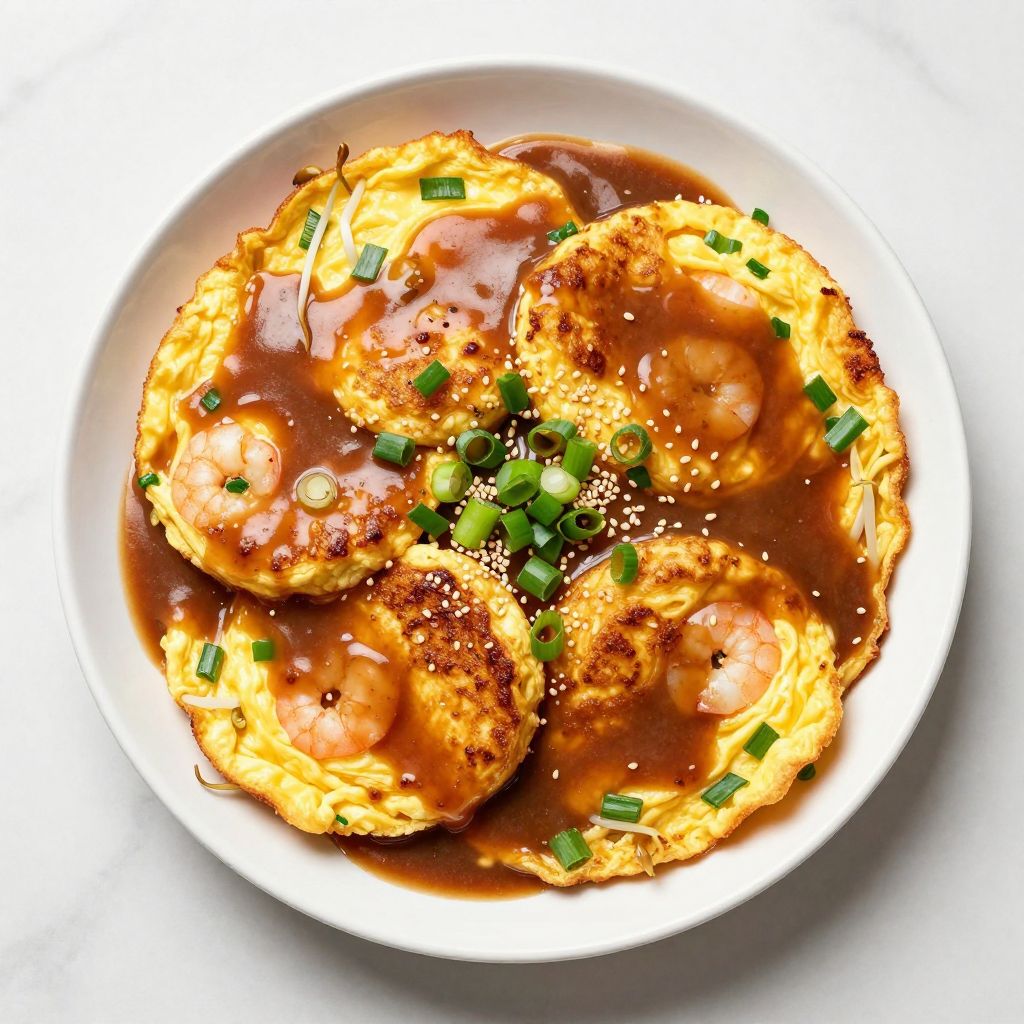
Egg Foo Young transforms humble eggs into golden, savory pancakes that rival any Chinese takeout. This classic Cantonese dish delivers crispy edges, tender centers, and a silky gravy that makes weeknight dinners feel special.
Once you master this recipe, you will wonder why you ever ordered it. Let me show you exactly how to get restaurant results in your own kitchen.
What Makes This Recipe Worth Your Time
This egg foo young delivers the perfect balance of crispy exterior and custardy interior that most home versions miss. The gravy alone is worth the effort.
- Ready in 30 minutes from start to finish with minimal prep work required
- Budget friendly using pantry staples and whatever vegetables you have on hand
- High protein meal with over 20 grams per serving from eggs and optional meat
- Naturally gluten free when made with tamari or coconut aminos instead of soy sauce
- Endlessly customizable with shrimp, pork, chicken, or pure vegetable versions
A Little Background on This Dish
Egg foo young originated in Canton province, where cooks created savory egg pancakes as a way to stretch protein and use up vegetable scraps. The dish traveled to America with Chinese immigrants and became a staple of Cantonese American restaurants by the early 1900s.
The name roughly translates to “lotus egg” or “hibiscus egg,” referencing the flower shape the patties take when fried. American versions typically come smothered in brown gravy, a departure from lighter Cantonese preparations that reflects Western tastes.
My Experience With This Recipe
I started making egg foo young because my kids loved ordering it but the delivery version always arrived soggy. I figured eggs and vegetables could not be that hard to get right.
My first dozen attempts produced flat, rubbery discs that looked nothing like the puffy restaurant version. The breakthrough came when I realized I was cooking them at too low a temperature and not using enough oil to get that crucial crispy edge.
The first time I nailed it, the kitchen smelled like our favorite Chinese restaurant and the patties puffed up golden and beautiful. My youngest asked if we could have them every week, and honestly, we nearly do.
Before You Start: Key Things to Know
This recipe suits confident beginners who can manage multiple pans simultaneously. The biggest challenge is keeping the first patties warm while you fry the rest.
- Difficulty level: Easy to moderate, requiring basic pan frying skills
- Time breakdown: 15 minutes active prep, 15 minutes cooking, no passive time
- Essential equipment: A large nonstick or well seasoned skillet with sloped sides
- Attention point: The gravy requires constant whisking to prevent lumps from forming
Recipe at a Glance
- Recipe Name: Classic Egg Foo Young with Brown Gravy
- Yield: 4 servings (8 patties)
- Prep Time: 15 minutes
- Cook Time: 15 minutes
- Total Time: 30 minutes
- Difficulty: Easy to Moderate
- Course: Main Dish
- Cuisine: Chinese American
- Calories per Serving: 285
How to Source the Best Ingredients
Fresh eggs and crisp vegetables make all the difference between a good egg foo young and a great one. Stale or waterlogged ingredients will leave you with soggy, flat patties.
- Eggs: Choose large eggs with bright orange yolks from pasture raised hens for the richest flavor and best color
- Bean sprouts: Look for firm, white sprouts with no brown tips or slimy coating; avoid canned sprouts entirely
- Green onions: Select bunches with crisp, dark green tops and firm white bulbs with no wilting
- Soy sauce: Use naturally brewed soy sauce rather than hydrolyzed versions for deeper, more complex flavor
Ingredients for Egg Foo Young
For the Patties
- 6 large eggs
- 1 cup fresh bean sprouts, roughly chopped
- 4 green onions, thinly sliced
- 1/2 cup cooked shrimp, chicken, or pork, diced small (optional)
- 1 tablespoon soy sauce
- 1/2 teaspoon sesame oil
- 1/4 teaspoon white pepper
- 3 tablespoons vegetable oil for frying
For the Gravy
- 1 cup chicken broth
- 1 tablespoon soy sauce
- 1 tablespoon oyster sauce
- 1 teaspoon sugar
- 1 tablespoon cornstarch
- 2 tablespoons cold water
Smart Substitutions and Swaps
- Bean sprouts: These add crunch and moisture to the patties; substitute shredded cabbage or water chestnuts for similar texture with different flavor
- Soy sauce: Provides salt and umami depth; use tamari for gluten free or coconut aminos for soy free with slightly sweeter results
- Oyster sauce: Contributes savory richness to the gravy; vegetarian oyster sauce made from mushrooms works identically
- Chicken broth: Forms the gravy base; vegetable broth or mushroom broth substitutes directly for vegetarian versions
- Eggs: No true substitute exists for this dish, but JUST Egg works for vegan versions with softer texture
- Sesame oil: Adds nutty aroma; omit entirely rather than substitute as alternatives change the flavor profile significantly
Tools and Equipment You Will Need
Having everything within reach before you start cooking prevents the scramble that leads to overcooked patties. This dish moves fast once you hit the stove.
- Large nonstick skillet or well seasoned cast iron (10 to 12 inches for proper heat distribution)
- Medium saucepan for the gravy
- Large mixing bowl
- Whisk
- Ladle or 1/4 cup measuring cup (for portioning consistent patties)
- Spatula with thin edge (essential for flipping without breaking)
- Sheet pan with wire rack (keeps finished patties crispy)
- Small bowl for cornstarch slurry
How to Make Egg Foo Young
Read through all the steps before you begin and have your vegetables chopped and measured. Start the gravy first so it stays warm while you fry the patties.
Step 1: Make the Cornstarch Slurry
Combine 1 tablespoon cornstarch with 2 tablespoons cold water in a small bowl. Whisk until completely smooth with no lumps visible.
Making the slurry ahead prevents lumpy gravy because adding dry cornstarch to hot liquid causes instant clumping. The cold water disperses the starch granules evenly.
The mixture should look like thin milk with no visible powder settling at the bottom.
Step 2: Start the Gravy Base
Pour chicken broth into a medium saucepan over medium heat. Add soy sauce, oyster sauce, and sugar, then whisk to combine.
Heating the liquid ingredients together allows the sugar to dissolve and the flavors to meld before thickening. Starting with cold broth gives you more control over the final consistency.
The mixture should come to a gentle simmer with small bubbles around the edges.
Step 3: Thicken the Gravy
Give the cornstarch slurry a quick stir, then pour it into the simmering broth while whisking constantly. Continue whisking for 60 to 90 seconds.
The starch granules need heat and agitation to swell and thicken properly. Constant whisking prevents hot spots where the starch can clump.
The gravy is ready when it coats the back of a spoon and leaves a clear trail when you drag your finger through it. Reduce heat to low and cover.
Step 4: Prep the Vegetables
Roughly chop the bean sprouts into 1 inch pieces. Slice the green onions thinly, keeping the white and green parts separate for now.
Chopping the sprouts creates smaller pockets that distribute evenly through the egg mixture. Uniform sizes ensure even cooking throughout each patty.
Your prepped vegetables should measure about 1 and 1/2 cups total with pieces small enough to stay suspended in the egg.
Step 5: Beat the Eggs
Crack all 6 eggs into a large mixing bowl. Beat vigorously with a whisk for 30 to 45 seconds until the whites and yolks are completely combined.
Thorough beating incorporates air and ensures the mixture cooks evenly. Undermixed eggs will have streaky white patches in the finished patties.
The mixture should be uniform yellow with no visible egg white strands and noticeably lighter in color from the incorporated air.
Step 6: Build the Egg Mixture
Add bean sprouts, sliced green onions, diced protein if using, soy sauce, sesame oil, and white pepper to the beaten eggs. Fold gently with a spatula until evenly distributed.
Gentle folding prevents deflating the air you just beat in. The vegetables should be suspended throughout rather than sinking to the bottom.
Give the bowl a final stir before each ladleful since vegetables tend to settle between pours.
Step 7: Preheat the Skillet
Set your oven to 200 degrees Fahrenheit and place a sheet pan with a wire rack inside. Heat 1 and 1/2 tablespoons vegetable oil in a large skillet over medium high heat.
Proper oil temperature is the secret to crispy edges. Too cool and the eggs absorb the oil; too hot and they burn before cooking through.
The oil is ready when it shimmers and a drop of egg mixture sizzles immediately on contact.
Step 8: Fry the First Batch
Stir the egg mixture, then ladle about 1/4 cup portions into the hot skillet, leaving 2 inches between patties. You should fit 3 to 4 patties per batch.
Crowding the pan drops the temperature and causes steaming instead of frying. The space allows hot oil to flow around each patty for even browning.
The edges should set and turn golden within 60 to 90 seconds while the centers remain slightly wet on top.
Step 9: Flip and Finish
Slide a thin spatula under each patty and flip in one confident motion. Cook the second side for 60 to 75 seconds until golden brown.
A decisive flip prevents breaking. Hesitation causes the patty to fold over on itself and cook unevenly.
The finished patty should be golden brown on both sides with a slightly puffed center that springs back when pressed lightly.
Step 10: Keep Warm and Continue
Transfer finished patties to the wire rack in the warm oven. Add remaining oil to the skillet and repeat the frying process with remaining egg mixture.
The wire rack allows air circulation underneath so the bottoms stay crispy. Stacking directly on a plate creates steam that softens the texture.
Work quickly to keep all patties at similar temperatures for serving.
Step 11: Reheat the Gravy
Return the gravy to medium heat and whisk until hot and smooth. If it has thickened too much while waiting, whisk in 1 to 2 tablespoons of hot water.
Gravy continues to thicken as it sits because the starch molecules bond tighter as they cool. A splash of water loosens the consistency without diluting flavor significantly.
The gravy should pour easily but still coat the back of a spoon.
Step 12: Plate and Serve
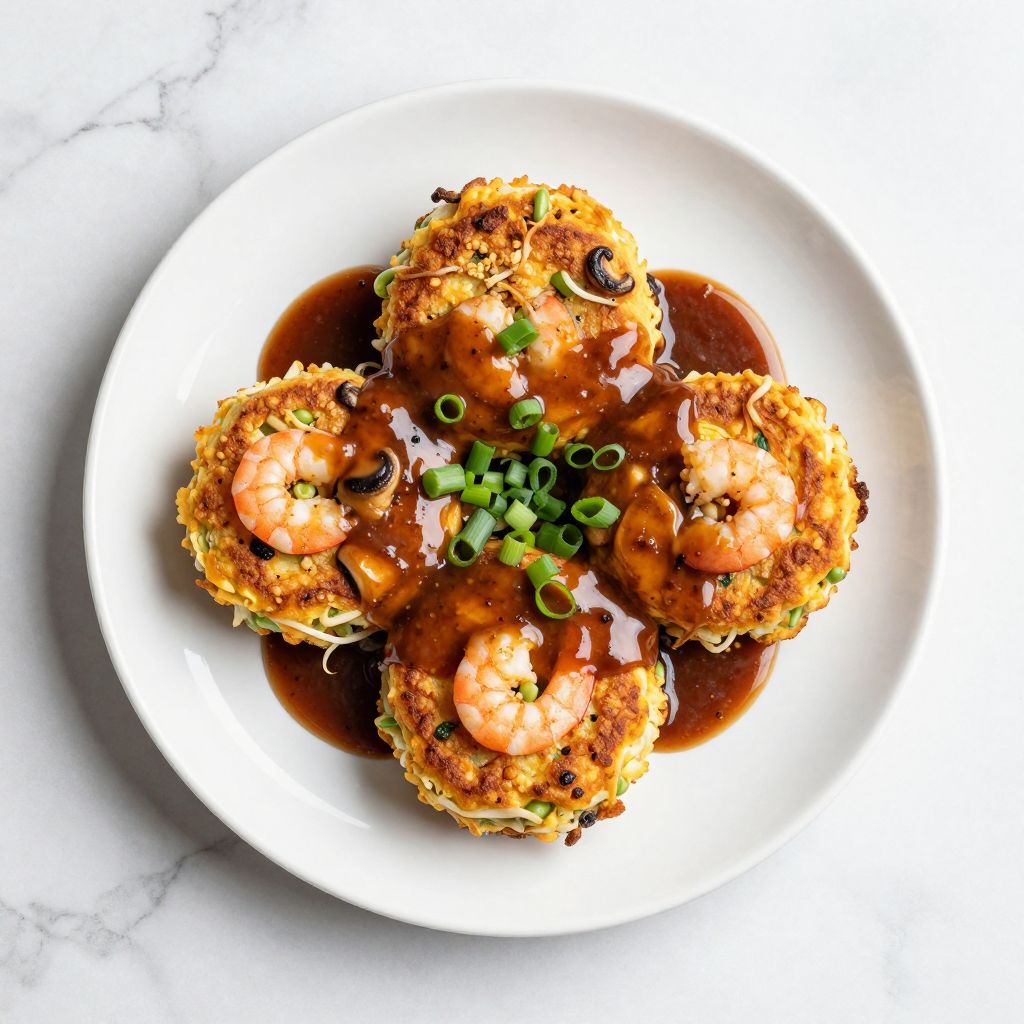
Arrange 2 patties per plate and ladle warm gravy generously over the top. Garnish with additional sliced green onions and a sprinkle of sesame seeds if desired.
Serving immediately matters because the crispy edges soften within minutes under the gravy. The contrast between textures is the best part of this dish.
The gravy should pool around the edges while coating the top of each patty.
Pro Tip: Let the egg mixture sit for 2 minutes after adding vegetables so the salt in the soy sauce draws out a tiny bit of moisture, which helps the patties hold together better during frying.
The Science Behind the Technique
The puffiness of a great egg foo young comes from proteins and trapped air. When eggs hit hot oil, the exterior proteins coagulate rapidly, trapping air bubbles and steam inside.
This is why temperature matters so much. Too low and the eggs set slowly, allowing steam to escape and air to deflate, leaving you with flat, dense patties.
Chef Note: The ideal oil temperature for egg foo young is around 350 degrees Fahrenheit, hot enough to set the proteins quickly but not so hot that the exterior burns before the interior cooks through.
Tips for Getting It Right Every Time
- Stir before every pour because vegetables sink to the bottom and you want even distribution in each patty
- Use a ladle or measuring cup for consistent portions that cook at the same rate
- Do not press down on the patties while cooking or you will squeeze out moisture and deflate them
- Keep oil depth consistent by adding more between batches so every patty gets the same crispy edge
- Make gravy first and keep it warm rather than rushing at the end while patties get cold
- Room temperature eggs cook more evenly and puff better than cold eggs straight from the refrigerator
Mistakes That Will Ruin Your Dish
- Overcrowding the pan drops oil temperature and creates steamed, soggy patties instead of crispy ones
- Using wet vegetables releases excess moisture during cooking, preventing proper browning and causing splatter
- Adding cornstarch directly to hot liquid creates instant lumps that no amount of whisking will fix
- Flipping too early tears the unset top layer and makes patties fall apart
- Skipping the warm oven means cold, soggy first patties by the time the last ones finish
Make Ahead and Meal Prep Tips
Egg foo young works well for meal prep when you store the components separately and assemble just before eating. The patties reheat better than you might expect.
- Gravy: Make up to 3 days ahead and store in an airtight container; thin with water when reheating
- Vegetables: Chop and store in the refrigerator for up to 2 days; pat dry before using
- Cooked patties: Refrigerate for up to 3 days and reheat in a hot skillet to restore crispiness
- Egg mixture: Do not make ahead as the vegetables release moisture and the eggs become watery
What to Serve With Egg Foo Young
This dish works as the star of a weeknight dinner or as part of a larger Chinese style spread. The gravy makes it hearty enough to stand alone with a simple side.
- Steamed jasmine rice: The fluffy grains soak up extra gravy and round out the meal perfectly
- Stir fried bok choy: Adds color and crunch while keeping the Asian flavor profile consistent
- Hot and sour soup: The acidic brightness cuts through the richness of the eggs and gravy
- Crispy wonton strips: Provides textural contrast and makes the plate feel more complete
- Quick pickled cucumbers: The acidity and freshness balance the savory richness of the patties
Drink Pairings
A crisp Riesling with just a touch of sweetness complements the savory gravy and cuts through the richness of the eggs beautifully. The slight sweetness echoes the sugar in the gravy without overwhelming it.
- Wine: Off dry Riesling or Gewürztraminer with floral notes that complement the sesame
- Beer: Light lager or pilsner with clean finish that refreshes the palate between bites
- Non alcoholic: Jasmine tea served warm or iced green tea with no sweetener
- Hot drink: Oolong tea with its toasty notes that echo the browned edges of the patties
Flavour Variations Worth Trying
- Shrimp Egg Foo Young: Add 1/2 cup chopped cooked shrimp to the egg mixture. The sweetness of the shrimp pairs beautifully with the savory gravy.
- Mushroom Lover: Replace bean sprouts with 1 cup sautéed mixed mushrooms. The earthy depth transforms this into a richer, more umami forward dish.
- Char Siu Style: Fold in 1/2 cup diced Chinese barbecue pork. The sweet and savory pork adds another layer of flavor and makes the dish more substantial.
- Crab Rangoon Inspired: Add 4 ounces cream cheese in small cubes to the mixture. The cream cheese creates pockets of richness that melt slightly during cooking.
- Spicy Szechuan: Add 1 teaspoon chili crisp and 1/4 teaspoon Szechuan peppercorn powder. The heat and numbing sensation completely transform the flavor profile.
How to Adapt This Recipe for Your Diet
- Gluten free: Use tamari or coconut aminos instead of soy sauce and verify your oyster sauce is gluten free; texture and flavor remain nearly identical
- Dairy free: This recipe is naturally dairy free as written; no modifications needed
- Vegetarian: Skip the meat option and use vegetable broth with mushroom based oyster sauce; the dish remains hearty and satisfying
- Low carb: Reduce the cornstarch in the gravy to 1/2 tablespoon for thinner sauce; the patties themselves are already very low carb
- High protein: Add diced chicken, shrimp, and extra egg whites for over 35 grams protein per serving
How to Store and Reheat
In the Refrigerator
Store cooled patties in a single layer in an airtight container lined with paper towels. They keep well for up to 3 days.
- Store gravy separately in its own airtight container to prevent soggy patties
- Bring patties to room temperature before reheating for more even results
In the Freezer
Egg foo young freezes reasonably well for up to 2 months though texture suffers slightly. Freeze patties in a single layer before transferring to a freezer bag.
- Flash freeze on a sheet pan first to prevent sticking together
- Freeze gravy separately in ice cube trays for easy portion thawing
Reheating
A hot skillet produces the best results by restoring crispiness to the edges. The microwave works in a pinch but expect softer texture.
- Skillet method: Heat 1/2 tablespoon oil over medium high and fry patties 90 seconds per side until hot and crispy
- Oven method: Bake at 375 degrees for 8 to 10 minutes on a wire rack for hands off reheating
- Microwave method: Heat 60 to 90 seconds on high but accept that edges will be soft; gravy reheats perfectly this way
Cost Breakdown
Making egg foo young at home costs a fraction of takeout prices while giving you control over ingredients and portion sizes. A single restaurant order often costs more than the entire homemade batch.
| Ingredient | Estimated Cost |
|---|---|
| Eggs (6 large) | $1.50 |
| Bean sprouts | $0.75 |
| Green onions | $0.40 |
| Chicken broth | $0.50 |
| Soy sauce and seasonings | $0.35 |
| Vegetable oil | $0.25 |
| Total Per Serving | $0.94 |
Nutrition Information
| Nutrient | Amount |
|---|---|
| Calories | 285 |
| Total Fat | 21g |
| Saturated Fat | 4g |
| Trans Fat | 0g |
| Cholesterol | 372mg |
| Sodium | 680mg |
| Total Carbohydrates | 8g |
| Dietary Fiber | 1g |
| Total Sugars | 3g |
| Added Sugars | 1g |
| Protein | 14g |
| Vitamin D | 2mcg |
| Calcium | 56mg |
| Iron | 2mg |
| Potassium | 210mg |
Nutritional values are estimates based on typical ingredients and portion sizes. Actual values may vary depending on specific brands and measurements used.
Frequently Asked Questions
Can I use canned bean sprouts instead of fresh?
Fresh bean sprouts work far better because canned sprouts have a mushy texture that turns watery when cooked. If fresh sprouts are unavailable, substitute shredded cabbage or diced water chestnuts.
Can I make the egg mixture ahead of time?
The egg mixture should not be made more than 30 minutes ahead because the salt draws moisture from the vegetables, making the mixture watery. Prep your vegetables ahead but combine just before cooking.
How long do leftover patties stay good?
Properly stored patties last 3 days in the refrigerator and up to 2 months in the freezer. Reheat in a skillet to restore crispiness rather than microwaving.
Why are my patties flat instead of puffy?
Flat patties usually result from oil that is not hot enough or eggs that were not beaten thoroughly. Make sure the oil shimmers and sizzles when you add the mixture.
Can I double this recipe for a crowd?
Doubling works well but use two skillets or cook in more batches to avoid crowding. Keep your oven warm and use multiple sheet pans with wire racks.
Do I need to drain the vegetables before adding them?
Yes, pat bean sprouts dry with paper towels before chopping because excess moisture creates steam and prevents proper browning. This step takes 30 seconds and makes a noticeable difference.
Can I bake these instead of frying?
Baked egg foo young works as a healthier alternative but lacks the crispy edges that define the dish. Bake at 400 degrees for 12 to 15 minutes in a greased muffin tin.
My Final Word
A well made egg foo young delivers everything you want from Chinese comfort food. The contrast between crispy edges and tender centers, all covered in that savory gravy, makes this a dish worth mastering.
I tested this recipe more times than my family could count before getting it right. Now it comes together in under 30 minutes and tastes better than delivery ever did.
Give it a try this week and let me know how it turns out. Drop a comment below or tag us on social media with your version.
Classic Egg Foo Young with Brown Gravy
Ingredients
Equipment
Method
- Combine 1 tablespoon cornstarch with 2 tablespoons cold water in a small bowl. Whisk until completely smooth with no lumps visible.
- Pour chicken broth into a medium saucepan over medium heat. Add soy sauce, oyster sauce, and sugar, then whisk to combine. Bring to a gentle simmer.
- Give the cornstarch slurry a quick stir, then pour it into the simmering broth while whisking constantly. Continue whisking for 60 to 90 seconds until the gravy coats the back of a spoon. Reduce heat to low and cover.
- Roughly chop the bean sprouts into 1 inch pieces. Slice the green onions thinly.
- Crack all 6 eggs into a large mixing bowl. Beat vigorously with a whisk for 30 to 45 seconds until the whites and yolks are completely combined and uniform yellow.
- Add bean sprouts, sliced green onions, diced protein if using, soy sauce, sesame oil, and white pepper to the beaten eggs. Fold gently with a spatula until evenly distributed.
- Set your oven to 200 degrees Fahrenheit and place a sheet pan with a wire rack inside. Heat 1 and 1/2 tablespoons vegetable oil in a large skillet over medium high heat until shimmering.
- Stir the egg mixture, then ladle about 1/4 cup portions into the hot skillet, leaving 2 inches between patties. Cook 3 to 4 patties per batch for 60 to 90 seconds until edges are golden and set.
- Slide a thin spatula under each patty and flip in one confident motion. Cook the second side for 60 to 75 seconds until golden brown.
- Transfer finished patties to the wire rack in the warm oven. Add remaining oil to the skillet and repeat the frying process with remaining egg mixture.
- Return the gravy to medium heat and whisk until hot and smooth. If too thick, whisk in 1 to 2 tablespoons of hot water.
- Arrange 2 patties per plate and ladle warm gravy generously over the top. Garnish with additional sliced green onions and sesame seeds if desired. Serve immediately.