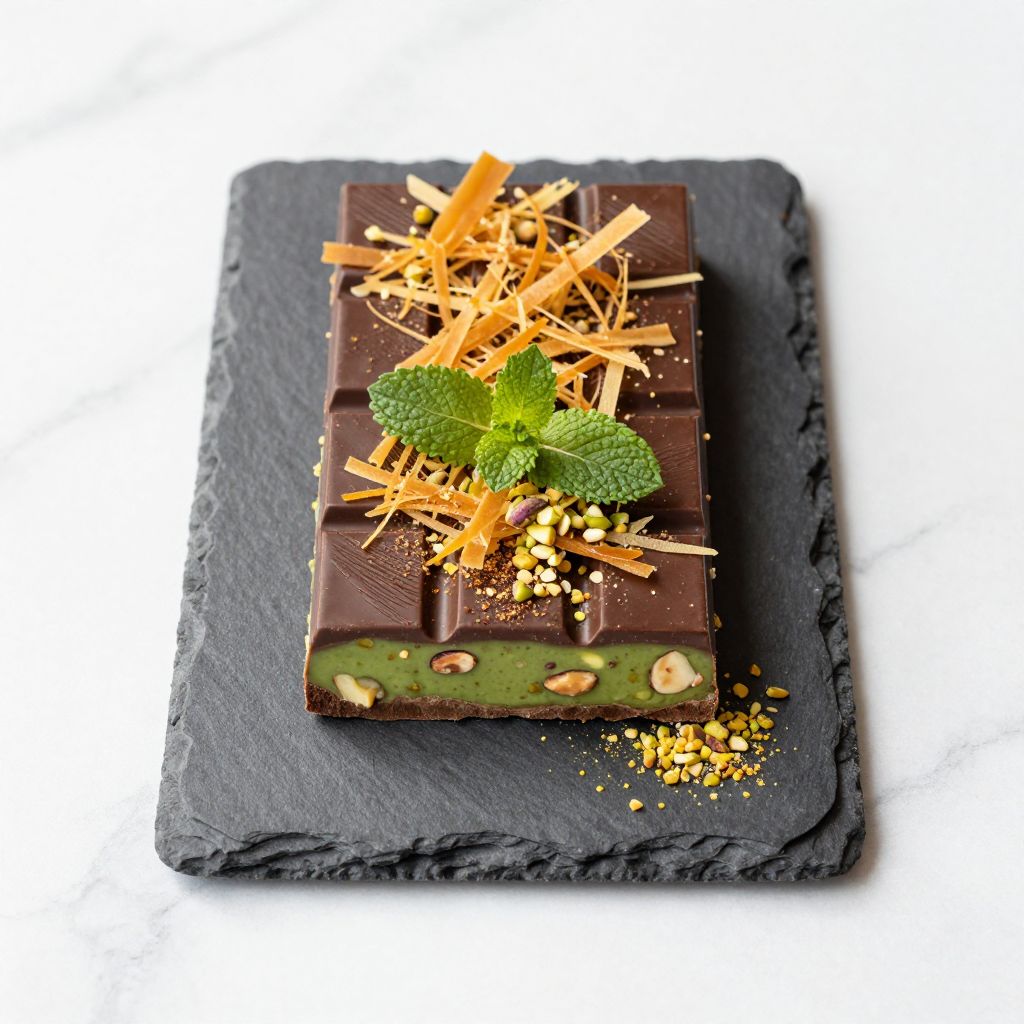
Dubai chocolate takes viral food trends and turns them into something genuinely worth making at home. This pistachio-filled, knafeh-topped chocolate bar combines Middle Eastern flavors with European chocolate craftsmanship in a way that will make you wonder why you ever bought ordinary candy.
The contrast of crunchy shredded phyllo, creamy pistachio butter, and snappy dark chocolate creates a textural experience that store-bought versions simply cannot match. Let me show you exactly how to make it in your own kitchen.
What Makes This Recipe Worth Your Time
This homemade version costs a fraction of the imported bars and tastes fresher than anything shipped halfway around the world. You control the quality of every ingredient.
- Customizable sweetness lets you dial back the sugar if you prefer a more sophisticated, less cloying result
- Fresh pistachio butter made from scratch delivers a vibrant green color and pure nutty flavor impossible to replicate with commercial spreads
- Crispy knafeh texture stays intact because you assemble and eat within days, not months after manufacturing
- No artificial preservatives means cleaner ingredients and a chocolate bar you feel good about sharing
- Impressive presentation makes this the perfect homemade gift that looks like it came from a luxury confectionery
A Little Background on This Dish
Dubai chocolate bars exploded onto social media in 2024 when food influencers discovered FIX Dessert Chocolatier’s pistachio knafeh creation. The combination draws from centuries of Middle Eastern confectionery tradition, where pistachios and shredded phyllo have always been natural partners.
What makes this chocolate special is how it bridges cultures. You get the snap and richness of Belgian-style chocolate wrapped around fillings that taste like a Lebanese dessert shop in every bite.
My Experience With This Recipe
I started making this after my kids watched approximately fifty videos of people breaking these bars open. The ASMR crunch had them obsessed, and at forty dollars per imported bar, I knew I needed to figure it out myself.
My first three attempts were disasters of different varieties. The chocolate seized when I got water in it, the knafeh turned soggy overnight, and my homemade pistachio butter looked more brown than green until I learned to blanch the nuts properly.
The batch I finally nailed came out of the mold with that perfect glossy shine, and when my daughter snapped a piece off, the crunch echoed through the kitchen. That sound alone made all the failed experiments worth it.
Before You Start: Key Things to Know
This recipe suits intermediate home cooks comfortable with tempering chocolate and working with phyllo. The biggest challenge is getting the knafeh crispy enough to survive being enclosed in chocolate without turning soft.
- Difficulty: Intermediate, requiring patience and attention to temperature
- Active time vs passive time: About 45 minutes of hands-on work with 2 hours of chilling and setting
- Most important equipment: A chocolate bar mold or lined baking pan with straight sides
- Step requiring most attention: Tempering the chocolate, which demands precise temperature monitoring
Recipe at a Glance
- Recipe Name: Dubai Chocolate Bar
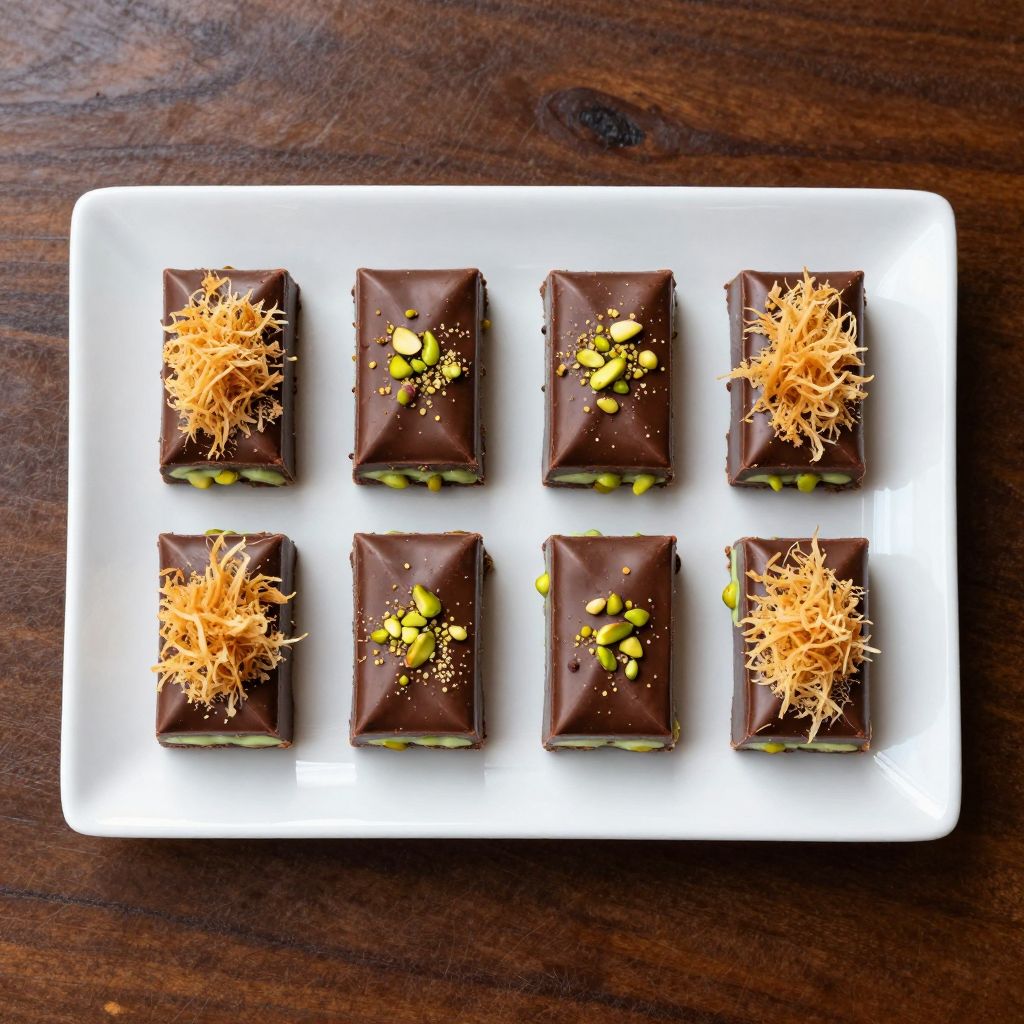
- Yield: 4 large bars or 8 small bars
- Prep Time: 30 minutes
- Cook Time: 15 minutes
- Total Time: 2 hours 45 minutes
- Resting Time: 2 hours for setting
- Difficulty: Intermediate
- Course: Dessert, Confection
- Cuisine: Middle Eastern Fusion
- Calories per Serving: 385
How to Source the Best Ingredients
Ingredient quality determines at least half of your success with this recipe. Cheap chocolate and stale pistachios will produce a mediocre bar no matter how perfect your technique.
- Pistachios: Buy raw, unsalted pistachios with bright green interiors; avoid any with yellow or brown discoloration, which indicates age
- Dark chocolate: Choose couverture chocolate with 60-70% cacao content; look for cocoa butter listed as the fat source, never vegetable oil
- Knafeh dough (kataifi): Find frozen shredded phyllo at Middle Eastern groceries; it should be pliable when thawed, not brittle
- Tahini: Select a brand where the only ingredient is sesame seeds; separation is normal and indicates no stabilizers
Ingredients for Dubai Chocolate
For the Pistachio Butter Filling
- 2 cups raw pistachios, shelled
- 2 tablespoons neutral oil (avocado or grapeseed)
- 3 tablespoons powdered sugar
- 1/4 teaspoon fine sea salt
- 1 tablespoon tahini
For the Crispy Knafeh Layer
- 4 ounces kataifi (shredded phyllo dough), thawed
- 3 tablespoons unsalted butter, melted
- 2 tablespoons granulated sugar
- 1/4 teaspoon ground cardamom
For the Chocolate Shell
- 14 ounces dark couverture chocolate, finely chopped
- 1 tablespoon cocoa butter (optional, for extra snap)
Smart Substitutions and Swaps
- Pistachios: These provide the signature color and flavor, making them nearly irreplaceable. Blanched almonds work structurally but create a completely different product.
- Kataifi: This shredded dough creates the authentic texture. Regular phyllo sheets, hand-shredded into thin strips, approximate the effect but require more butter to crisp properly.
- Dark chocolate: The chocolate shell balances the sweet filling. Milk chocolate works but makes the final product significantly sweeter; reduce filling sugar by half if swapping.
- Tahini: This adds creaminess and helps the pistachio butter blend smoothly. Cashew butter or sunflower seed butter substitute at a 1:1 ratio with minimal flavor change.
- Cocoa butter: This improves chocolate snap and shine. You can omit it entirely; the bars will set slightly softer but still taste excellent.
Tools and Equipment You Will Need
Gathering everything before you start prevents the kind of scrambling that leads to seized chocolate and burnt knafeh. Read this list and set out each item within arm’s reach.
- Food processor with sharp blade (essential for smooth pistachio butter)
- Rimmed baking sheet
- Parchment paper
- Chocolate bar molds or 8×8 inch baking pan (determines final bar shape)
- Double boiler or heatproof bowl over saucepan
- Instant-read thermometer (critical for tempering accuracy)
- Offset spatula
- Rubber spatula
- Sharp knife
How to Make Dubai Chocolate
Read through every step before you begin, and bring your chocolate and butter to room temperature. Your pistachios should be completely dry, and your kataifi should be fully thawed and at room temperature for easy handling.
Step 1: Blanch the Pistachios
Bring a small pot of water to a boil and add the raw pistachios. Boil for exactly 2 minutes, then drain immediately and transfer to a bowl of ice water for 30 seconds.
Blanching loosens the papery skins and preserves the vibrant green color that makes this chocolate visually stunning. Skipping this step produces a dull, brownish filling.
The skins should slip off easily when you pinch each nut between your fingers. If they resist, blanch for another 30 seconds.
Step 2: Dry the Pistachios Completely
Spread the blanched pistachios on a clean kitchen towel and rub gently to remove skins. Transfer to a baking sheet and dry in a 200°F oven for 10 minutes.
Any residual moisture will cause your pistachio butter to seize and turn grainy instead of smooth. The low oven temperature removes water without toasting the nuts.
The pistachios are ready when they feel completely dry to the touch and have no visible moisture on the surface.
Step 3: Process into Pistachio Butter
Add the dried pistachios to your food processor and process continuously for 8 to 10 minutes, scraping down the sides every 2 minutes. The nuts will progress from chopped to flour to clumpy to finally smooth and flowing.
Natural oils release only through extended processing and friction heat. Stopping too early produces a grainy paste that will not spread properly in the chocolate.
You will know it is ready when the butter drips slowly off a spoon in a thick ribbon and tastes completely smooth on your tongue with no grit.
Step 4: Season the Pistachio Butter
Add the oil, powdered sugar, salt, and tahini to the processor with the pistachio butter. Process for another 60 seconds until completely incorporated and glossy.
The tahini adds creaminess and helps the butter stay spreadable at room temperature. The powdered sugar dissolves more smoothly than granulated and prevents any sandy texture.
Taste the butter and adjust salt or sugar to your preference. It should taste like a slightly sweet, intensely nutty spread.
Step 5: Prepare the Knafeh
Pull the thawed kataifi apart into a large bowl, separating any clumps with your fingers until you have loose, wispy strands. Drizzle the melted butter over the strands and toss with your hands until every piece is coated.
Even butter distribution ensures every strand crisps rather than some burning while others stay soft. The strands should feel slightly slick but not dripping.
Properly prepared kataifi looks like a pile of thin golden threads with a subtle sheen from the butter.
Step 6: Toast the Knafeh
Spread the buttered kataifi in a thin layer on a parchment-lined baking sheet. Sprinkle the sugar and cardamom evenly over the top. Bake at 350°F for 10 to 12 minutes, stirring halfway through.
The sugar caramelizes onto the strands, creating a sweet crunch that persists even when surrounded by chocolate. Stirring ensures even browning throughout.
The knafeh is done when it turns deep golden brown and smells nutty and caramelized. Let it cool completely before handling; it crisps as it cools.
Step 7: Begin Tempering the Chocolate
Place two-thirds of your chopped chocolate (about 9 ounces) in a heatproof bowl over barely simmering water. Stir constantly and heat until the chocolate reaches exactly 115°F on your thermometer.
Tempering realigns the cocoa butter crystals so your finished bars snap cleanly and have a glossy sheen. Untempered chocolate sets soft and develops gray streaks called bloom.
Watch for the chocolate to become completely smooth and fluid with no visible pieces remaining.
Step 8: Complete the Tempering Process
Remove the bowl from heat and add the remaining chopped chocolate. Stir continuously until the temperature drops to exactly 82°F, then briefly return to the double boiler and warm to 88-90°F.
The seed chocolate introduces stable crystals that encourage the melted chocolate to set in the correct crystalline structure. The final warming brings it to working temperature without destroying those crystals.
Test by spreading a small amount on parchment; properly tempered chocolate sets firm and shiny within 3 to 5 minutes at room temperature.
Step 9: Coat the Molds
Pour tempered chocolate into your molds, filling each cavity completely. Tilt and rotate to coat all surfaces, then invert over parchment paper and tap firmly to remove excess, leaving a thin shell.
A thin, even shell ensures the filling has room and the chocolate-to-filling ratio stays balanced. Too thick a shell overwhelms the delicate flavors inside.
The coating should be opaque and even with no thin spots where you can see through to the mold.
Step 10: Add the Filling Layers
Spoon a generous layer of pistachio butter into each chocolate shell, spreading to cover the bottom and reach the edges. Press a layer of cooled, crispy knafeh into the pistachio butter, pushing gently so it adheres.
The knafeh layer creates the signature crunch and visual appeal when the bar is broken open. Pressing it into the pistachio butter locks it in place and prevents air pockets.
Fill each mold to about 3/4 full, leaving room for the chocolate top layer.
Step 11: Seal with Chocolate
Pour tempered chocolate over the filling to cover completely, tapping the mold gently on the counter to settle the chocolate and release air bubbles. Use an offset spatula to scrape the surface flat and level.
A clean, flat bottom (which becomes the top when unmolded) gives your bars a professional appearance. Air bubbles create weak spots and unsightly holes.
The surface should be smooth and level with the mold edges, with no filling visible through the chocolate.
Step 12: Set and Unmold
Refrigerate the filled molds for 20 minutes to set the chocolate, then transfer to room temperature for 10 minutes before unmolding. Flex the mold gently and invert; the bars should release with a light tap.
The brief refrigeration speeds setting without making the chocolate too cold, which can cause condensation and dull the finish. Room temperature rest prevents cracking during unmolding.
Properly set bars release cleanly with a satisfying snap, showing glossy surfaces with no cloudiness or fingerprints.
Pro Tip: Store finished bars at cool room temperature (65-68°F) rather than in the refrigerator; cold storage dulls the chocolate’s shine and can cause the knafeh to absorb moisture and turn soft.
The Science Behind the Technique
Tempering works by controlling which type of cocoa butter crystals form as chocolate solidifies. Cocoa butter can crystallize in six different forms, but only Form V produces the glossy appearance and clean snap we want.
When you heat chocolate to 115°F, you melt all existing crystals. Adding seed chocolate and cooling to 82°F encourages Form V crystals to form, then gently warming to 88-90°F melts any unstable crystals while preserving the stable ones.
Chef Note: If your chocolate sets with gray streaks or a soft, waxy texture, it fell out of temper; re-melt and try again, as the chocolate itself is not ruined.
Tips for Getting It Right Every Time
- Work quickly once your chocolate is tempered because you have about 20 minutes before it begins to thicken and lose its fluidity
- Keep water away from your chocolate at all costs; even a single drop causes the entire batch to seize into a grainy, unusable mass
- Cool the knafeh completely before adding it to the molds; warm strands will melt the chocolate shell and create a messy interior
- Use quality molds made from polycarbonate rather than silicone for bars with sharper edges and better release
- Tap out air bubbles aggressively after each layer; trapped air creates holes that weaken the structure and look unprofessional
- Store at room temperature in an airtight container; refrigeration causes condensation and texture problems
Mistakes That Will Ruin Your Dish
- Overheating the chocolate beyond 120°F burns it irreversibly, creating a thick, grainy texture that cannot be fixed
- Using wet pistachios for the butter causes it to seize and turn into an oily, separated mess rather than smooth paste
- Adding filling while chocolate is too warm melts the shell and allows filling to seep through, creating greasy spots on the surface
- Underbaking the knafeh leaves it chewy rather than crispy, and it turns completely soft within hours inside the chocolate
- Unmolding while too cold causes chocolate to crack and shatter rather than releasing cleanly from the mold
Make Ahead and Meal Prep Tips
This recipe benefits significantly from component prep, allowing you to spread the work across multiple days. The assembly itself moves quickly once everything is ready.
- Pistachio butter: Make up to 2 weeks ahead and store in an airtight jar at room temperature; stir before using if oil separates
- Toasted knafeh: Prepare up to 3 days ahead and store in an airtight container at room temperature; re-crisp in a 300°F oven for 3 minutes if it softens
- Chocolate shells: Coat molds up to 24 hours ahead and store in a cool, dry place; fill just before serving for maximum crispness
- Completed bars: Best within 1 week of assembly; the knafeh slowly absorbs moisture from the filling over time
What to Serve With Dubai Chocolate
These bars work beautifully as a standalone dessert after a Middle Eastern meal or as part of a dessert spread for a dinner party. The rich filling and chocolate pair perfectly with cleansing, bright flavors.
- Turkish coffee: The bitter, cardamom-spiced brew cuts through the sweetness and echoes the cardamom in the knafeh
- Fresh berries: Raspberries or pomegranate seeds add tartness that balances the nutty richness
- Vanilla ice cream: A small scoop alongside a broken bar creates a temperature contrast that highlights both elements
- Rose water whipped cream: The floral note connects to Middle Eastern dessert traditions without overpowering the pistachio
- Sliced fresh figs: Their honeyed sweetness and jammy texture complement the crunchy, nutty bar perfectly
Drink Pairings
A small glass of aged tawny port matches this chocolate beautifully, with its caramelized nuttiness mirroring the pistachio and its subtle sweetness complementing the dark chocolate. The combination feels decadent without being overwhelming.
- Wine: Banyuls or other oxidized dessert wines with nutty, dried fruit notes that echo the filling
- Beer: Imperial stout with chocolate and coffee notes that complement rather than compete with the bar
- Non-alcoholic: Pomegranate juice diluted with sparkling water, providing tartness and refreshment
- Hot drink: Cardamom-spiced milk, served warm, creating a comforting pairing on cool evenings
Flavour Variations Worth Trying
- Rose Pistachio: Add 1/2 teaspoon rose water to the pistachio butter and garnish with dried rose petals. The floral note transforms the bar into something more distinctly Middle Eastern.
- Orange Blossom: Replace cardamom with orange blossom water in the knafeh and add orange zest to the pistachio butter. The citrus brightness lifts the richness considerably.
- Milk Chocolate Version: Use milk couverture instead of dark and reduce the powdered sugar in the filling by half. The result is sweeter and more appealing to those who find dark chocolate bitter.
- Hazelnut Hybrid: Replace half the pistachios with toasted hazelnuts for a filling reminiscent of gianduja. The flavor profile shifts toward Italian confectionery traditions.
- Spiced Version: Add cinnamon, nutmeg, and a pinch of black pepper to the knafeh before baking. The warm spices create a bar that feels perfect for autumn and winter.
How to Adapt This Recipe for Your Diet
- Gluten-free: Verify your kataifi is made from gluten-free flour or substitute with toasted shredded coconut for a different but still crunchy texture
- Dairy-free: Use dairy-free dark chocolate and replace butter with coconut oil in the knafeh; the coconut flavor complements the pistachios well
- Vegan: Combine the dairy-free adaptations above; most quality dark chocolate is naturally vegan, but always check labels
- Low-carb/Keto: Use sugar-free chocolate sweetened with erythritol, replace powdered sugar with allulose, and reduce the knafeh layer significantly or omit it
- High-protein: Add a scoop of unflavored protein powder to the pistachio butter, adjusting oil slightly if needed to maintain spreadable consistency
How to Store and Reheat
In the Refrigerator
Store bars in an airtight container with parchment between layers to prevent sticking. They keep well for up to 2 weeks refrigerated, though the knafeh texture softens slightly over time.
- Bring to room temperature for 15 minutes before eating for the best flavor and snap
- Keep away from strong-smelling foods, as chocolate absorbs odors easily
In the Freezer
These bars freeze exceptionally well for up to 3 months without significant quality loss. The chocolate maintains its temper through freezing if wrapped properly.
- Wrap individual bars tightly in plastic wrap, then place in a freezer bag with excess air removed
- Thaw overnight in the refrigerator before bringing to room temperature for serving
Reheating
These bars are meant to be served at cool room temperature and do not require reheating. Warming the chocolate causes bloom and softens the knafeh.
- Oven: Not recommended; heat damages the tempered chocolate finish
- Stovetop: Not applicable for this recipe
- Microwave: Avoid entirely; even brief heating melts the chocolate unevenly and destroys the texture
Cost Breakdown
Making these bars at home costs roughly one-fifth of what imported Dubai chocolate bars sell for online. The initial investment in quality ingredients produces multiple batches worth of results.
| Ingredient | Estimated Cost |
|---|---|
| Raw pistachios (2 cups) | $8.00 |
| Dark couverture chocolate (14 oz) | $7.00 |
| Kataifi (4 oz) | $2.50 |
| Butter and tahini | $1.50 |
| Sugar and seasonings | $0.50 |
| Total Per Serving (8 bars) | $2.44 |
Nutrition Information
| Nutrient | Amount |
|---|---|
| Calories | 385 |
| Total Fat | 28g |
| Saturated Fat | 10g |
| Trans Fat | 0g |
| Cholesterol | 12mg |
| Sodium | 85mg |
| Total Carbohydrates | 29g |
| Dietary Fiber | 4g |
| Total Sugars | 18g |
| Added Sugars | 14g |
| Protein | 8g |
| Vitamin D | 0mcg |
| Calcium | 45mg |
| Iron | 3mg |
| Potassium | 280mg |
Values are estimates based on standard ingredients and may vary depending on specific brands and portion sizes used.
Your Questions Answered
Can I use pre-made pistachio butter instead of making my own?
You can, but check the ingredients carefully. Many commercial pistachio butters contain fillers or other nuts that dilute the flavor and alter the color.
Can I prepare the components the day before and assemble the next morning?
Absolutely, and I actually recommend it. The pistachio butter and toasted knafeh both hold beautifully overnight, making assembly day much less stressful.
How long do the finished bars stay fresh?
At room temperature in an airtight container, they stay perfect for about 5 days. Refrigeration extends this to 2 weeks, though the knafeh loses some crunch.
My chocolate came out of the mold with white streaks. What went wrong?
Those streaks indicate the chocolate fell out of temper, either from overheating or temperature fluctuations during setting. The bars are still safe to eat; they just lack the proper snap and shine.
How do I double this recipe?
Double all ingredients proportionally, but temper the chocolate in two batches rather than one large batch. Maintaining proper temperatures becomes difficult with larger volumes.
Why did my knafeh turn soggy inside the chocolate?
The knafeh either was not baked long enough initially or the bars were stored somewhere too humid. Always bake until deeply golden and store in a cool, dry environment.
Can I use white chocolate instead of dark?
White chocolate works but requires different tempering temperatures: heat to 105°F, cool to 79°F, then warm to 84°F. The sweeter flavor pairs nicely with the pistachio filling.
My Final Word
That first crack when you break into a homemade Dubai chocolate bar, with the knafeh shattering and the pistachio butter peeking through, makes every minute of effort worthwhile. The flavors and textures in each bite prove that viral trends sometimes deserve the hype.
I tested this recipe enough times to fill a notebook with temperature notes and timing adjustments, and what you have here is the version that works reliably every time. Make it your own by trying the variations, adjusting sweetness levels, or adding your favorite Middle Eastern flavors.
When you make this, I want to hear about it. Drop a comment below with your results, or tag us on social media so we can see your creations. There is nothing better than seeing these recipes come to life in kitchens everywhere.
Dubai Chocolate Bar
Ingredients
Equipment
Method
- Bring a small pot of water to a boil and add the raw pistachios. Boil for exactly 2 minutes, then drain immediately and transfer to a bowl of ice water for 30 seconds. Pinch each nut to remove the papery skins.
- Spread the blanched pistachios on a clean kitchen towel and rub gently to remove remaining skins. Transfer to a baking sheet and dry in a 200°F (93°C) oven for 10 minutes until completely dry.
- Add the dried pistachios to your food processor and process continuously for 8 to 10 minutes, scraping down the sides every 2 minutes, until smooth and flowing.
- Add the oil, powdered sugar, salt, and tahini to the processor with the pistachio butter. Process for another 60 seconds until completely incorporated and glossy. Set aside.
- Pull the thawed kataifi apart into a large bowl, separating any clumps with your fingers. Drizzle the melted butter over the strands and toss with your hands until every piece is coated.
- Spread the buttered kataifi in a thin layer on a parchment-lined baking sheet. Sprinkle the sugar and cardamom evenly over the top. Bake at 350°F (175°C) for 10 to 12 minutes, stirring halfway through, until deep golden brown. Let cool completely.
- Place two-thirds of your chopped chocolate (about 9 ounces) in a heatproof bowl over barely simmering water. Stir constantly and heat until the chocolate reaches exactly 115°F (46°C).
- Remove the bowl from heat and add the remaining chopped chocolate. Stir continuously until the temperature drops to exactly 82°F (28°C), then briefly return to the double boiler and warm to 88-90°F (31-32°C).
- Pour tempered chocolate into your molds, filling each cavity completely. Tilt and rotate to coat all surfaces, then invert over parchment paper and tap firmly to remove excess, leaving a thin shell.
- Spoon a generous layer of pistachio butter into each chocolate shell, spreading to cover the bottom and reach the edges. Press a layer of cooled, crispy knafeh into the pistachio butter, pushing gently so it adheres. Fill each mold to about 3/4 full.
- Pour tempered chocolate over the filling to cover completely, tapping the mold gently on the counter to release air bubbles. Use an offset spatula to scrape the surface flat and level.
- Refrigerate the filled molds for 20 minutes to set the chocolate, then transfer to room temperature for 10 minutes before unmolding. Flex the mold gently and invert; the bars should release with a light tap.