
Picture this: a cozy Sunday afternoon, the aroma of a slow-roasting bone-in pork shoulder wafting through your home, teasing your taste buds with every passing moment. This recipe is a cherished tradition in many households, known for its incredible flavor and fall-apart tenderness. The beauty of this dish lies in its crispy exterior and juicy interior, making it a perfect centerpiece for family gatherings or a comforting weeknight meal. Let’s dive into how you can achieve this culinary delight right in your oven.
Why You’ll Love This Recipe
This bone-in pork shoulder roast is not just dinner; it’s an experience.
- Bold and savory flavors that everyone will crave.
- Simple, hands-off cooking that frees up your time.
- Perfect for leftovers, whether in sandwiches or tacos.
- Can easily feed a crowd or provide meals for the week.
My Experience Making This Recipe
When I first made this dish, my kitchen felt like a warm embrace. The sound of the skin crackling in the oven was music to my ears, and the rich scent filled every corner of my home.
As I pulled the roast from the oven, I couldn’t help but feel a sense of accomplishment. My family gathered around the table, eagerly awaiting the first taste, and their delighted reactions made every moment spent preparing it worthwhile.
Recipe Overview
- Recipe Name: Bone-In Pork Shoulder Roast
- Servings: 6-8
- Prep Time: 15 minutes
- Cook Time: 4 hours
- Total Time: 4 hours 15 minutes
- Course: Main Dish
- Cuisine: American
- Calories per Serving: 350
Equipment You Will Need
- Oven-safe roasting pan
- Meat thermometer
- Sharp knife
- Cutting board
- Aluminum foil
Ingredients for Bone-In Pork Shoulder Roast
- 4-5 pounds bone-in pork shoulder
- 3 tablespoons olive oil
- 2 tablespoons salt
- 1 tablespoon black pepper
- 1 tablespoon garlic powder
- 1 tablespoon onion powder
- 1 tablespoon smoked paprika
- 1 cup chicken broth
Ingredient Notes and Substitutions
- Pork shoulder: This cut is preferred for its fat content, which keeps the meat juicy. You can substitute with pork butt if needed.
- Olive oil: Used for browning and flavor. Avocado oil is a great alternative.
- Salt: Enhances flavor; kosher salt is recommended for better seasoning. Sea salt works too.
- Smoked paprika: Adds depth and smokiness. Regular paprika can be used for a milder flavor.
How to Make Bone-In Pork Shoulder Roast
Step 1: Preheat Your Oven
Set your oven to 300°F (150°C) to ensure low and slow cooking, which is ideal for tenderizing the meat.
Step 2: Prepare the Pork Shoulder
Pat the pork shoulder dry with paper towels. This step helps the seasoning stick and promotes a crispy exterior.
Step 3: Season Generously
Rub the pork with olive oil, salt, pepper, garlic powder, onion powder, and smoked paprika. Make sure to cover all sides for even flavor.
Step 4: Sear the Roast (Optional)
If you like, sear the pork in a hot skillet for a few minutes on each side. This enhances the flavor with a beautiful crust, but it can be skipped if pressed for time.
Step 5: Place in Roasting Pan
Transfer the seasoned pork shoulder to a roasting pan. Pour the chicken broth into the pan to keep the meat moist while cooking.
Step 6: Roast Low and Slow
Cover the roast loosely with aluminum foil and place it in the oven. Roast for about 4 hours, or until the internal temperature reaches 195°F (90°C).
Step 7: Let it Rest
Once cooked, remove the pork from the oven and let it rest for at least 30 minutes. This allows the juices to redistribute, ensuring a juicy bite.
Step 8: Shred and Serve
Use two forks to shred the meat into bite-sized pieces. Serve it with your favorite sides or in sandwiches for a hearty meal.
Pro Tip: For an extra crispy skin, uncover the roast for the last 30 minutes of cooking.
Tips for the Best Bone-In Pork Shoulder Roast
- Choose a well-marbled pork shoulder for optimal flavor and moisture.
- Let the meat come to room temperature before cooking for more even cooking.
- Use a meat thermometer to avoid overcooking; aim for the perfect internal temperature.
- Experiment with different spices to customize the flavor to your liking.
- Save the cooking liquid for making gravy or adding flavor to side dishes.
Common Mistakes to Avoid
- Not seasoning enough: Under-seasoned meat can lead to blandness.
- Cooking at too high a temperature: This can result in tough meat instead of tender.
- Skipping the rest period: Not letting the roast rest will result in dry meat.
- Using a too-small pan: A cramped pan can trap moisture, preventing a good roast.
Serving Suggestions
This roast pairs beautifully with various sides, making it a versatile choice for meals.
- Roasted vegetables for a healthy option.
- Mashed potatoes for classic comfort.
- Coleslaw for a crunchy contrast.
- Fresh bread for soaking up juices.
Variations to Try
- Add herbs like rosemary or thyme for an aromatic twist.
- Incorporate citrus by adding orange or lemon zest for freshness.
- Use a dry rub of your favorite barbecue spices for a smoky flavor.
- Try a sweet glaze with honey or brown sugar for caramelization.
Dietary Adaptations
- Gluten-free: This recipe is naturally gluten-free as it uses no flour.
- Dairy-free: The ingredients contain no dairy, making it suitable for those with lactose intolerance.
- Low-carb/Keto: With no added sugars or carbs, this dish fits well into a keto diet.
Storage and Reheating
Refrigerator
Store leftover pork shoulder in an airtight container in the refrigerator.
- Keep for up to 4 days.
- Make sure to cool it completely before sealing.
Freezer
If you want to save some for later, freeze the cooked pork shoulder.
- Wrap tightly in plastic wrap and foil.
- Store for up to 3 months.
Reheating
Reheat in the oven or microwave for best results.
- Oven: Cover with foil and heat at 300°F until warm.
- Microwave: Use a low setting to avoid drying out the meat.
Nutrition Information
| Nutrient | Amount |
|---|---|
| Calories | 350 |
| Total Fat | 22g |
| Saturated Fat | 8g |
| Carbohydrates | 0g |
| Fiber | 0g |
| Sugar | 0g |
| Protein | 30g |
| Sodium | 900mg |
| Cholesterol | 110mg |
This information is based on an average serving size. Actual values may vary based on preparation methods and specific ingredients used.
Frequently Asked Questions
Can I use a boneless pork shoulder instead?
Yes, you can, but the bone adds flavor and moisture, so the dish may be slightly less rich.
Can I make this roast ahead of time?
Absolutely! You can prepare it a day in advance and reheat it before serving.
How do I know when the pork is done?
Use a meat thermometer; the internal temperature should reach 195°F for optimal tenderness.
What if I don’t have chicken broth?
You can substitute with vegetable broth or even water, but broth adds more flavor.
Can I add vegetables to the roasting pan?
Yes, root vegetables like carrots and potatoes can be added for a complete meal.
Final Thoughts
Making a bone-in pork shoulder roast is a rewarding experience that fills your home with warmth and delicious smells. I encourage you to give this recipe a try; you won’t be disappointed.
If you’re looking for more culinary inspiration, check out this Boston Butt Recipe or these Party Ribs. Happy cooking!
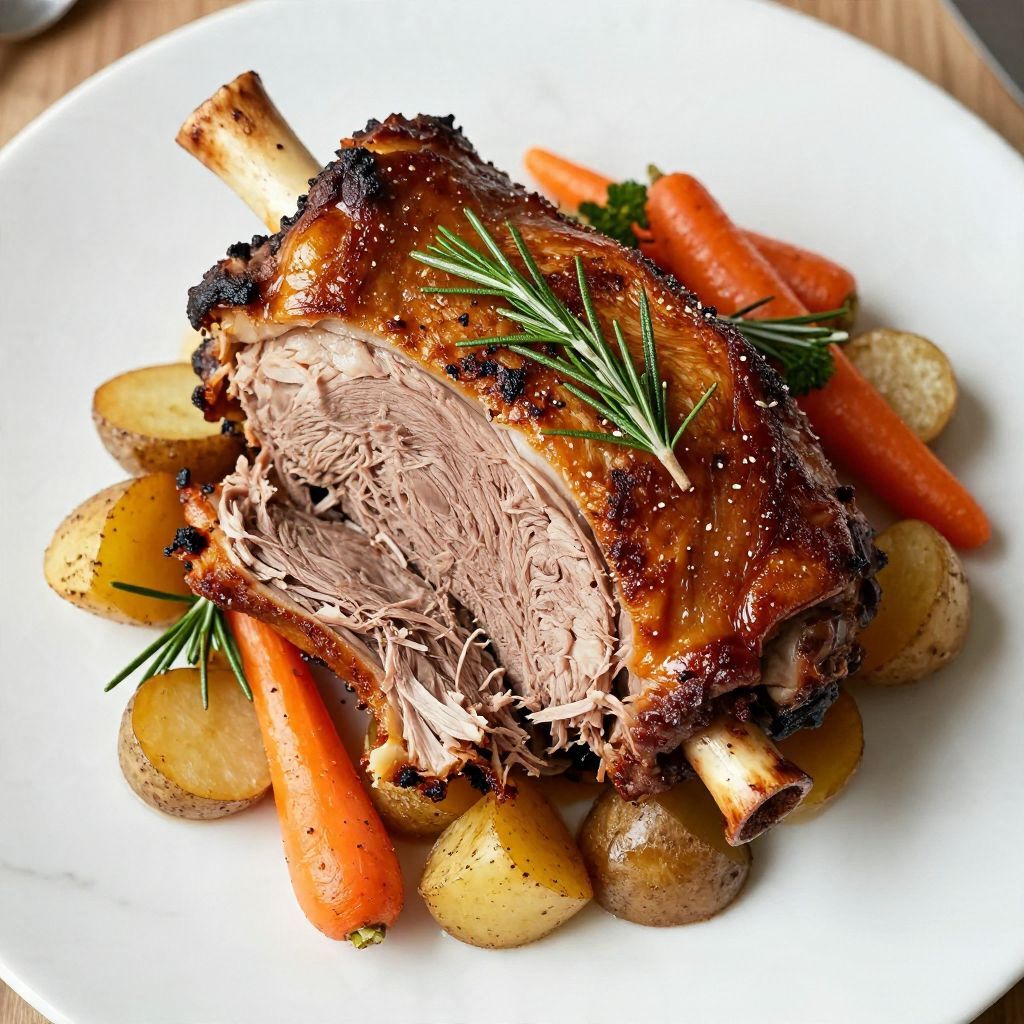
Bone-In Pork Shoulder Roast
Ingredients
Equipment
Method
- Preheat your oven to 300°F (150°C).
- Pat the pork shoulder dry with paper towels.
- Rub the pork with olive oil, salt, pepper, garlic powder, onion powder, and smoked paprika, covering all sides.
- Transfer the seasoned pork shoulder to a roasting pan and pour the chicken broth into the pan.
- Cover the roast loosely with aluminum foil and place it in the oven.
- Roast for about 4 hours, or until the internal temperature reaches 195°F (90°C).
- Once cooked, remove the pork from the oven and let it rest for at least 30 minutes.
- Use two forks to shred the meat into bite-sized pieces.