
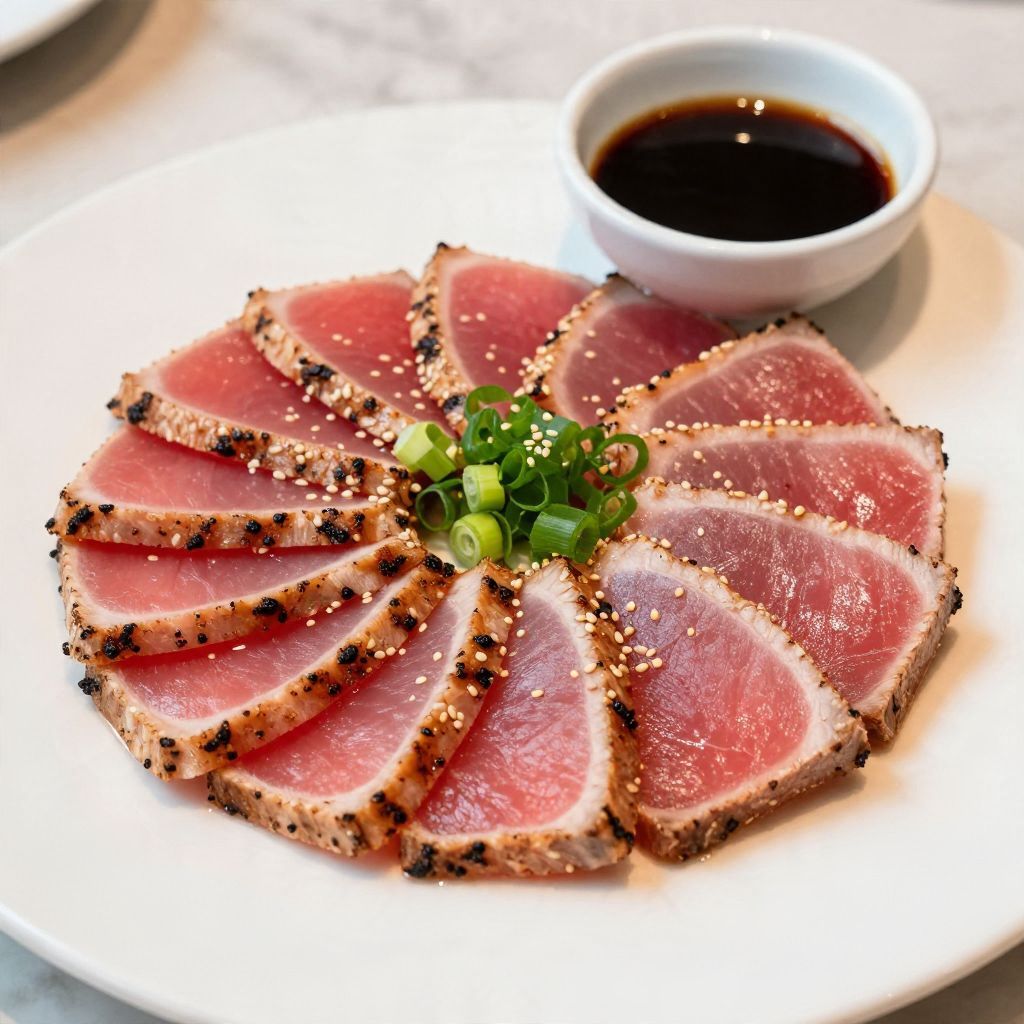
Picture this: a crisp, fresh evening where the sun is setting, and you’re savoring the delicate flavors of a perfectly seared tuna tataki. This dish is a celebration of simplicity and elegance, bringing the taste of a high-end restaurant right to your kitchen. With its tender, barely cooked center and a light, savory sauce, tuna tataki offers an impressive way to enjoy seafood that is both refreshing and satisfying. Its exquisite texture and bold flavors make it a wonderful choice for a light dinner or an appetizer that will wow your guests. Let’s dive into the details of creating this culinary delight.
Why You’ll Love This Recipe
This tuna tataki recipe is not just about great taste; it brings a few extra perks to your table.
- Quick to prepare, perfect for busy weeknights.
- Light and healthy, making it an ideal choice for a nutritious meal.
- Versatile, as it pairs beautifully with a variety of sides.
- Impressive presentation for entertaining guests.
- Rich in omega-3 fatty acids, making it a heart-healthy option.
My Experience Making This Recipe
The first time I made tuna tataki, I was amazed at how quickly it came together. The moment I sliced into the tender tuna, the bright pink center was a sight to behold, and the aroma was enticing.
When my friends tasted it, their eyes lit up in surprise. They couldn’t believe how simple it was to achieve such gourmet results at home.
Recipe Overview
- Recipe Name: Tuna Tataki
- Servings: 4
- Prep Time: 15 minutes
- Cook Time: 5 minutes
- Total Time: 20 minutes
- Course: Appetizer or Main
- Cuisine: Japanese
- Calories per Serving: 200
Equipment You Will Need
- Sharp knife
- Cutting board
- Cast iron skillet or non-stick pan
- Meat thermometer (optional)
- Small bowl for sauce
Ingredients for Tuna Tataki
- 1 lb fresh sushi-grade tuna
- 2 tbsp vegetable oil
- 1 tbsp sesame oil
- 2 tbsp soy sauce
- 1 tbsp rice vinegar
- 1 tsp ginger, grated
- 1 tsp garlic, minced
- 1 tbsp sesame seeds
- Green onions, sliced (for garnish)
Ingredient Notes and Substitutions
- Fresh sushi-grade tuna: Used for its tender texture; avoid fish that isn’t labeled sushi-grade. A good substitute would be salmon.
- Vegetable oil: Used for searing; can be swapped with grapeseed oil for a neutral flavor.
- Soy sauce: Adds umami; a gluten-free version can be used for a dietary preference.
- Sesame oil: Provides nutty flavor; can be replaced with olive oil if necessary.
- Rice vinegar: Offers a mild tang; apple cider vinegar is a decent alternative.
How to Make Tuna Tataki
Step 1: Prepare the Tuna
Start with a beautiful piece of sushi-grade tuna. Ensure there are no sinews; this will help with the texture and presentation.
Step 2: Make the Marinade
In a small bowl, whisk together soy sauce, rice vinegar, ginger, and garlic. This marinade will infuse the tuna with flavor.
Step 3: Marinate the Tuna
Place the tuna in the marinade for about 10 minutes. This allows the flavors to penetrate the fish without overpowering it.
Step 4: Heat the Pan
While the tuna marinates, heat your skillet over high heat and add vegetable oil. A hot pan is crucial for achieving that perfect sear.
Step 5: Sear the Tuna
Once the oil is shimmering, carefully place the marinated tuna in the pan. Sear for about 1-2 minutes on each side, just until a crust forms.
Step 6: Check for Doneness
Use a meat thermometer to check for doneness if you prefer. Aim for a center temperature of about 115°F for the best texture.
Step 7: Rest and Chill
Remove the tuna from the pan and let it rest for a few minutes. This cooling period will help the juices redistribute.
Step 8: Slice and Serve
Using a sharp knife, slice the tuna into thin pieces. Serve it chilled or at room temperature, garnished with sesame seeds and green onions.
Pro Tip: For the best results, always use the freshest tuna available; the quality directly impacts the taste.
Tips for the Best Tuna Tataki
- Always use sushi-grade tuna for safety and taste.
- Do not over-marinate, as it can overpower the delicate flavor.
- Ensure your pan is hot enough to create a good sear.
- Slice against the grain for tender pieces.
- Experiment with toppings like avocado or wasabi for extra flavor.
Common Mistakes to Avoid
- Overcooking the tuna will lead to a dry texture, so keep an eye on the time.
- Using non-sushi-grade tuna can result in food safety issues; always check the label.
- Not letting the tuna rest can cause juices to escape, leading to a dry bite.
- Skipping the marinade will miss out on the depth of flavor.
Serving Suggestions
Pairing your tuna tataki can elevate the dish further. Here are some great ideas.
- Serve with a side of avocado salad.
- Pair with a light miso soup for a complete meal.
- Try alongside pickled vegetables for a tangy contrast.
- Serve with a bed of sushi rice for a heartier option.
Variations to Try
- Try a spicy tuna tataki by adding sriracha to the marinade.
- Substitute the soy sauce with tamari for a gluten-free version.
- Add a citrus twist using yuzu juice in place of rice vinegar.
- Incorporate different seeds like poppy seeds for a unique crunch.
Dietary Adaptations
- Gluten-free: Use tamari instead of soy sauce.
- Dairy-free: This recipe is naturally dairy-free.
- Vegan/Vegetarian: Replace tuna with grilled tofu for a similar texture.
- Low-carb/Keto: This dish is low in carbs, making it perfect for keto diets.
Storage and Reheating
Refrigerator
Store any leftovers in an airtight container in the fridge.
- Keep for up to 2 days for optimal freshness.
- Enjoy cold or at room temperature for best flavor.
Freezer
Freezing is not recommended as it can alter the texture of the fish.
- Fresh tuna should be consumed immediately for the best experience.
Reheating
If you must reheat, do so gently in a skillet over low heat.
- Avoid microwaving to prevent drying out the fish.
Nutrition Information
| Nutrient | Amount |
|---|---|
| Calories | 200 |
| Total Fat | 10g |
| Saturated Fat | 1.5g |
| Carbohydrates | 5g |
| Fiber | 0g |
| Sugar | 1g |
| Protein | 30g |
| Sodium | 800mg |
| Cholesterol | 50mg |
This nutritional information is an estimate and can vary based on ingredient brands and preparation methods.
Frequently Asked Questions
Can I use frozen tuna for tataki?
It is best to use fresh sushi-grade tuna, but if using frozen, ensure it has been thawed properly and is still high quality.
How can I make this ahead of time?
Marinate the tuna in advance and sear just before serving to maintain freshness.
Can I store leftovers?
Yes, store leftovers in an airtight container in the fridge for up to 2 days.
Why is my tuna overcooked?
Overcooking can happen if the pan is too hot or if the tuna is left in the pan too long. Keep a close watch on it.
What can I serve with tuna tataki?
It pairs well with salads, sushi rice, or even pickled vegetables for a refreshing contrast.
Final Thoughts
This tuna tataki is a delightful dish that brings restaurant-quality flavors into your home. With just a few ingredients and quick steps, you can impress anyone at your table.
So, gather your fresh tuna and give this recipe a try. For more great seafood recipes, check out my seared ahi tuna recipe and for a casual meal, try my tuna burger recipe!
Tuna Tataki
Ingredients
Equipment
Method
- Start with a beautiful piece of sushi-grade tuna, ensuring there are no sinews.
- In a small bowl, whisk together soy sauce, rice vinegar, ginger, and garlic.
- Place the tuna in the marinade for about 10 minutes.
- Heat your skillet over high heat and add vegetable oil.
- Once the oil is shimmering, carefully place the marinated tuna in the pan.
- Sear for about 1-2 minutes on each side.
- Use a meat thermometer to check for a center temperature of about 115°F.
- Remove the tuna and let it rest for a few minutes.
- Using a sharp knife, slice the tuna into thin pieces.
- Serve it chilled or at room temperature, garnished with sesame seeds and green onions.