
Imagine stepping into a sun-drenched garden, the fragrant aroma of fresh basil wrapping around you like a warm hug. Making your own basil salt is not just a fun kitchen project; it’s an easy way to elevate your dishes with a burst of flavor that’s fresh and vibrant. This recipe is special because it combines the earthy notes of basil with the crunch of sea salt, creating a seasoning that adds depth to everything from grilled vegetables to pasta. Plus, it’s versatile enough to sprinkle on almost any dish for that extra zing. Let’s gather our ingredients and start this aromatic adventure!
Why You’ll Love This Recipe
This basil salt is a must-have for anyone who loves to cook or experiment in the kitchen. You’ll find it quickly becomes a staple.
- Quick and easy to make.
- Perfect for gifting to friends and family.
- Enhances the flavor of a variety of dishes.
- Uses fresh and natural ingredients.
- Long-lasting and versatile seasoning.
My Experience Making This Recipe
The first time I made basil salt, it was a sunny afternoon, and I had an abundance of fresh basil from my garden. The vibrant green color and aromatic scent filled my kitchen, instantly lifting my spirits.
When I tasted my first sprinkle on roasted tomatoes, I was hooked. It was like a burst of summer on my tongue, and I knew I had to share this simple delight with everyone I knew.
Recipe Overview
- Recipe Name: Basil Salt
- Servings: About 1 cup
- Prep Time: 10 minutes
- Cook Time: 0 minutes
- Total Time: 10 minutes
- Course: Condiment
- Cuisine: Mediterranean
- Calories per Serving: 0 (salt has no calories)
Equipment You Will Need
- Food processor or mortar and pestle
- Measuring cups
- Spatula
- Glass jar for storage
Ingredients for Basil Salt
- 1 cup fresh basil leaves, packed
- 1 cup coarse sea salt
Ingredient Notes and Substitutions
- Fresh basil: This herb is the star of the show, providing a fragrant flavor. If fresh basil isn’t available, you can use dried basil, but the flavor will be less vibrant.
- Coarse sea salt: It adds texture and flavor to the salt. You can substitute with kosher salt if necessary, but the texture will differ slightly.
How to Make Basil Salt
Step 1: Gather Your Ingredients
Start by gathering your fresh basil leaves and coarse sea salt. Fresh ingredients yield the best results, so choose vibrant, green basil.
Step 2: Prepare the Basil
Wash the basil leaves thoroughly to remove any dirt or insects. Pat them dry with a clean towel to avoid adding moisture to the salt.
Step 3: Measure the Ingredients
Measure out one cup of packed basil leaves and one cup of coarse sea salt. Proper measurements ensure balanced flavor.
Step 4: Combine Ingredients in Food Processor
Add the basil leaves and sea salt to your food processor. This combination allows the flavors to meld smoothly.
Step 5: Process Until Fine
Pulse the mixture until the basil is finely chopped and well combined with the salt. The goal is to create a consistent texture, but don’t over-process it into a paste.
Step 6: Transfer to a Jar
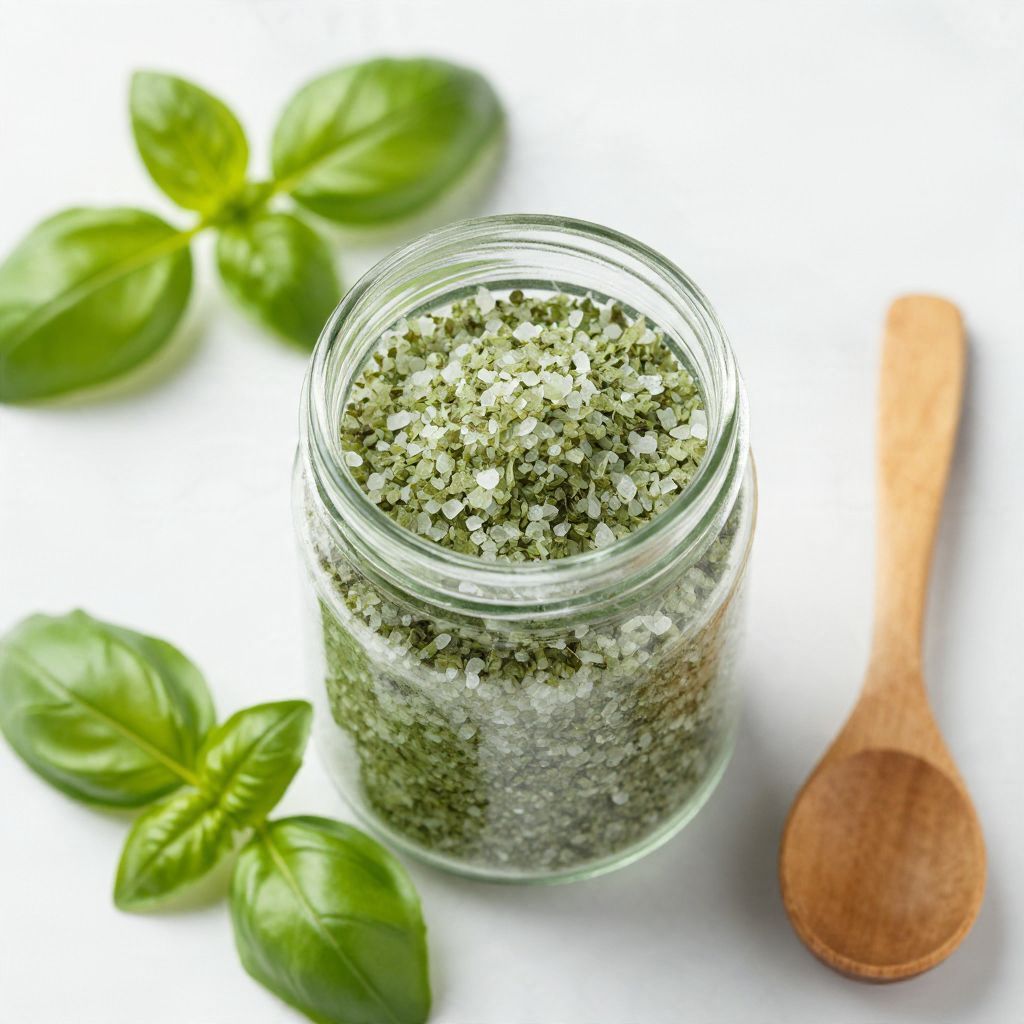
Use a spatula to scrape the basil salt into a clean glass jar. This step keeps your workspace tidy and ensures you get every bit of flavor.
Step 7: Store the Basil Salt
Seal the jar tightly and store it in a cool, dark place. Proper storage helps maintain the flavor and freshness for several months.
Step 8: Enjoy Your Creation!
Now that your basil salt is ready, sprinkle it on your favorite dishes. It enhances everything from salads to meats.
Pro Tip: For an even more intense flavor, let your basil salt sit for a few days before using it. This allows the flavors to deepen.
Tips for the Best Basil Salt
- Use only fresh basil for the best flavor.
- Experiment with different salts, such as Himalayan or smoked salt, for unique tastes.
- Consider adding garlic or lemon zest for extra flavor complexity.
- Make sure your jar is completely dry to avoid clumping.
- Label the jar with the date to keep track of freshness.
Common Mistakes to Avoid
- Using wilted basil: This results in a less vibrant flavor.
- Adding too much moisture: Moisture can cause clumping and spoilage.
- Not sealing the jar properly: This can lead to loss of aroma and flavor.
- Over-processing the mixture: This can turn it into a paste instead of a salt.
Serving Suggestions
This basil salt is incredibly versatile and can be used in many ways. Try it on grilled chicken, mixed into pasta, or sprinkled over fresh tomatoes.
- Roasted vegetables
- Grilled fish
- Fresh salads
- Homemade pizza
Variations to Try
- Add garlic for a savory twist that complements meats well.
- Mix in lemon zest for a bright, citrusy flavor that enhances seafood.
- Incorporate chili flakes for a spicy kick that brings excitement to any dish.
- Add a touch of rosemary for an herbal complexity.
Dietary Adaptations
- Gluten-free: This recipe is naturally gluten-free, so enjoy without worry.
- Dairy-free: No dairy is involved; it’s a perfect option for those avoiding dairy.
- Vegan: Completely plant-based, making it suitable for all diets.
- Low-carb/keto: With no carbohydrates, it fits well into a low-carb lifestyle.
Storage and Reheating
Refrigerator
Store your basil salt in a cool, dark place. It does not require refrigeration.
- Keep it in an airtight container.
- Label with the date for freshness tracking.
Freezer
Freezing is not recommended as it may alter the salt’s texture and flavor.
- Store in a cool place instead.
Reheating
No reheating is necessary, as this seasoning is added directly to dishes. Just sprinkle it as needed.
- Use it fresh for the best flavor impact.
Nutrition Information
| Nutrient | Amount |
|---|---|
| Calories | 0 |
| Total Fat | 0g |
| Saturated Fat | 0g |
| Carbohydrates | 0g |
| Fiber | 0g |
| Sugar | 0g |
| Protein | 0g |
| Sodium | 0mg |
| Cholesterol | 0mg |
This recipe is primarily salt, so traditional nutritional values like calories and fat do not apply.
Frequently Asked Questions
Can I use dried basil instead of fresh?
Dried basil can be used, but the flavor won’t be as vibrant or fresh.
How long does basil salt last?
When stored properly, basil salt can last for several months without losing flavor.
Can I make this ahead of time?
Absolutely! Basil salt can be made in advance and stored for future use.
What if my basil salt clumps?
Clumping can occur if moisture gets in; make sure to keep it in a completely dry jar.
Can I mix different herbs into the salt?
Mixing herbs can create unique flavors; just be sure the herbs are dry to avoid moisture issues.
Final Thoughts
Making your own basil salt is an easy way to add a fresh twist to your cooking. With just a couple of ingredients and a few minutes, you can create something truly delightful.
So go ahead, give this recipe a try, and elevate your dishes to new heights. And while you’re here, why not check out my homemade chili seasoning or my flavorful poultry seasoning? You’ll find plenty of ways to spice up your kitchen adventures!
Basil Salt
Ingredients
Equipment
Method
- Gather your fresh basil leaves and coarse sea salt.
- Wash the basil leaves thoroughly and pat them dry.
- Measure out one cup of packed basil leaves and one cup of coarse sea salt.
- Add the basil leaves and sea salt to your food processor.
- Pulse the mixture until the basil is finely chopped and combined with the salt.
- Use a spatula to scrape the basil salt into a clean glass jar.
- Seal the jar tightly and store it in a cool, dark place.
- Sprinkle basil salt on your favorite dishes to enhance flavor.