
The moment you taste the perfect blend of spicy, sweet, and savory in a dish, you know you’ve discovered something special. Making your own Kung Pao Sauce at home is a game changer — it’s quick, packed with flavor, and adds a delightful kick to any meal.
This sauce is not just versatile; it can transform stir-fries, marinades, and even dressings. The balance of ingredients creates a rich and complex flavor profile that will have everyone eagerly coming back for more.
Why You’ll Love This Recipe
Crafting your own Kung Pao Sauce is a delightful experience that brings a taste of authentic Chinese cuisine to your kitchen.
- Quick to prepare with simple ingredients.
- Customizable heat level to suit your taste.
- Perfect for a variety of dishes, from chicken to tofu.
- Offers a homemade touch that store-bought sauces can’t match.
My Experience Making This Recipe
When I first made this sauce, my kitchen was filled with the enticing aromas of garlic and ginger dancing together. It was a moment of pure joy, knowing that I could recreate a restaurant favorite right at home.
The first bite of my stir-fry, coated in this rich sauce, was a revelation. Friends and family couldn’t believe it was homemade, and I felt like a culinary wizard for the evening.
Recipe Overview
- Recipe Name: Kung Pao Sauce
- Servings: About 1 cup
- Prep Time: 10 minutes
- Cook Time: 5 minutes
- Total Time: 15 minutes
- Course: Sauce
- Cuisine: Chinese
- Calories per Serving: 100
Equipment You Will Need
- Measuring cups and spoons
- Mixing bowl
- Whisk or fork
- Small saucepan
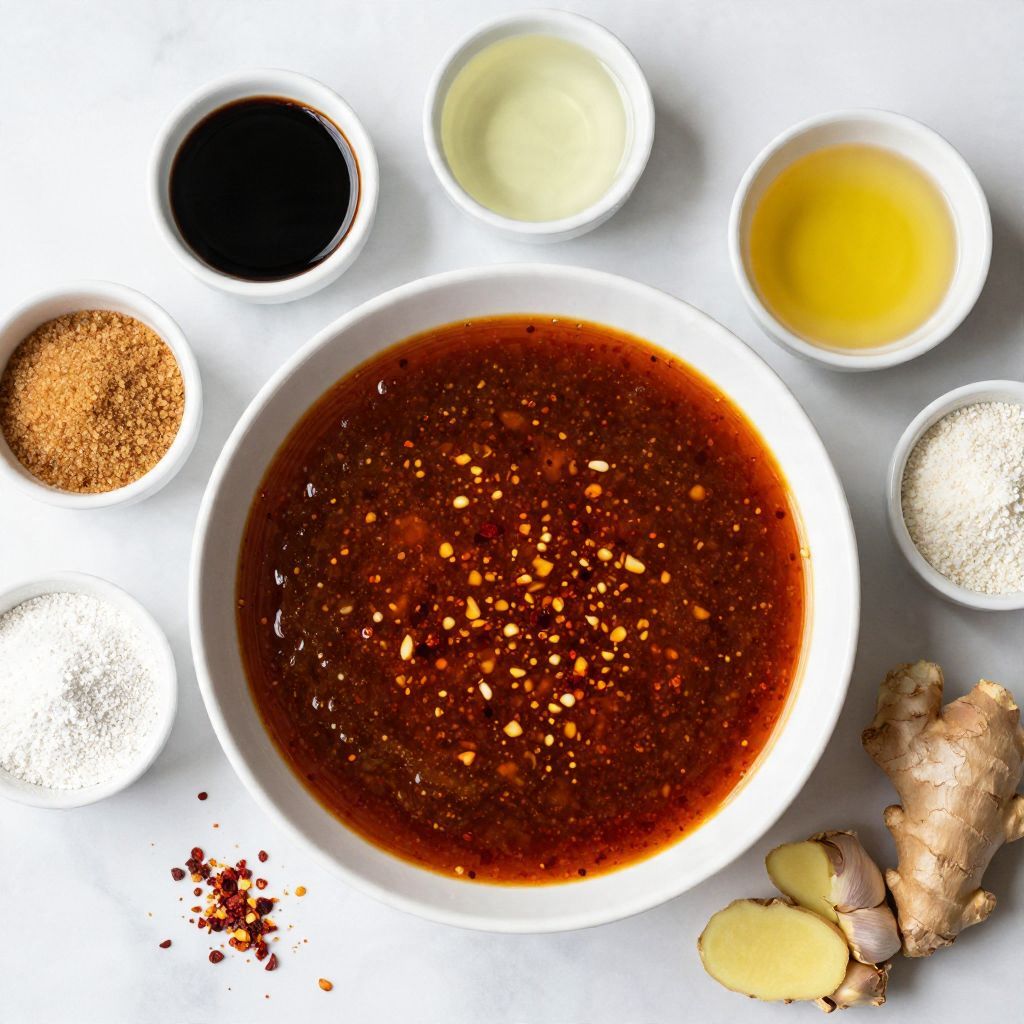
Ingredients for Kung Pao Sauce
- 1/2 cup soy sauce
- 1/4 cup rice vinegar
- 2 tablespoons brown sugar
- 1 tablespoon sesame oil
- 2 teaspoons cornstarch
- 2 teaspoons water
- 2 cloves garlic, minced
- 1 teaspoon fresh ginger, grated
- 1 teaspoon crushed red pepper flakes (adjust to taste)
Ingredient Notes and Substitutions
- Soy sauce: Provides the salty base; use tamari for gluten-free.
- Rice vinegar: Adds acidity; apple cider vinegar can work in a pinch.
- Brown sugar: Balances flavors; white sugar can be substituted.
- Sesame oil: Gives a nutty aroma; olive oil will change the flavor slightly.
How to Make Kung Pao Sauce
Step 1: Combine the Ingredients
In a mixing bowl, whisk together the soy sauce, rice vinegar, brown sugar, and sesame oil. This creates the flavorful base of your sauce.
Step 2: Prepare the Thickening Agent
In a separate small bowl, mix the cornstarch with water until smooth. This will help thicken your sauce for that perfect consistency.
Step 3: Add Aromatics
Stir in the minced garlic and grated ginger into the sauce mixture. These ingredients add depth and warmth to the flavor profile.
Step 4: Incorporate Heat
Add the crushed red pepper flakes to the sauce. Adjust the amount depending on how spicy you want your sauce to be.
Step 5: Heat the Sauce
Pour the combined mixture into a small saucepan over medium heat. Heating it allows the flavors to meld beautifully and activate the ingredients.
Step 6: Thicken the Sauce
Once the sauce begins to simmer, add the cornstarch mixture. Stir constantly until the sauce thickens, usually about 1-2 minutes.
Step 7: Taste and Adjust
Give the sauce a taste and adjust seasoning if necessary. You may want to add more sugar for sweetness or more red pepper for heat.
Step 8: Cool and Store
Remove the saucepan from heat and let the sauce cool. Store it in an airtight container in the fridge for up to two weeks.
Pro Tip: For an extra layer of flavor, consider adding toasted peanuts or cashews just before serving.
Tips for the Best Kung Pao Sauce
- Use fresh garlic and ginger for the best flavor.
- Adjust the sweetness and heat to your preference — taste as you go.
- Let the sauce sit for at least 30 minutes before using for deeper flavors.
- Pair it with stir-fried veggies and protein for a complete dish.
- Store leftovers in a glass jar for easy access.
Common Mistakes to Avoid
- Not tasting the sauce before serving can lead to unbalanced flavors.
- Using old spices or ingredients can dull the sauce’s vibrancy.
- Skipping the cornstarch mix will result in a watery sauce.
- Overheating the sauce can burn the garlic, leading to bitterness.
Serving Suggestions
This Kung Pao Sauce pairs wonderfully with various dishes, making it a versatile addition to your cooking routine.
- Stir-fried chicken or tofu
- Drizzled over steamed vegetables
- As a dipping sauce for spring rolls
- Mixed into fried rice for a flavor boost
Variations to Try
- Add chopped bell peppers for extra crunch and sweetness.
- Incorporate hoisin sauce for a richer flavor.
- Swap in sriracha for a different kind of heat.
- Experiment with honey instead of brown sugar for a floral note.
Dietary Adaptations
- Gluten-free: Use tamari instead of soy sauce.
- Dairy-free: This recipe is naturally dairy-free.
- Vegan: All ingredients are plant-based.
- Low-carb/keto: Substitute brown sugar with erythritol or another sweetener.
Storage and Reheating
Refrigerator
Store the sauce in an airtight container in the fridge.
- It will last up to two weeks.
Freezer
Freeze the sauce in ice cube trays for easy portioning.
- Transfer to a zip-top bag once frozen.
- Use within three months for best quality.
Reheating
Reheat on the stove over low heat, stirring to combine. Avoid boiling to prevent separation.
- Microwave in short bursts if needed.
Nutrition Information
| Nutrient | Amount |
|---|---|
| Calories | 100 |
| Total Fat | 2g |
| Saturated Fat | 0g |
| Carbohydrates | 18g |
| Fiber | 0g |
| Sugar | 13g |
| Protein | 2g |
| Sodium | 850mg |
| Cholesterol | 0mg |
Nutrition values are estimates and can vary based on specific ingredients used.
Frequently Asked Questions
Can I make this sauce ahead of time?
Yes, this sauce can be made in advance and stored in the fridge for up to two weeks.
What can I substitute for soy sauce?
Tamari is a great gluten-free alternative to soy sauce.
How can I thicken the sauce if it is too thin?
Add a bit more cornstarch mixed with water and simmer until thickened.
Is this sauce spicy?
The spice level can be adjusted based on the amount of crushed red pepper flakes you add.
How do I store leftovers?
Store leftovers in an airtight container in the refrigerator for up to two weeks.
Final Thoughts
This homemade Kung Pao Sauce is a delightful addition to your cooking arsenal. With its bold flavors and versatility, you’ll find yourself reaching for it time and again.
Give this recipe a try, and don’t forget to explore more delicious options like Hot Honey Recipe and Gochujang Sauce Recipe for even more culinary inspiration!
Kung Pao Sauce
Ingredients
Equipment
Method
- In a mixing bowl, whisk together the soy sauce, rice vinegar, brown sugar, and sesame oil.
- In a separate small bowl, mix the cornstarch with water until smooth.
- Stir in the minced garlic and grated ginger into the sauce mixture.
- Add the crushed red pepper flakes to the sauce.
- Pour the combined mixture into a small saucepan over medium heat.
- Once the sauce begins to simmer, add the cornstarch mixture and stir constantly until the sauce thickens, about 1-2 minutes.
- Taste the sauce and adjust the seasoning if necessary.
- Remove the saucepan from heat and let the sauce cool.