
Picture this: tender cabbage leaves wrapped snugly around a savory filling, simmering gently in a rich tomato sauce. That’s the essence of halupki, a beloved dish that brings warmth and comfort to any table. This recipe is special because it combines simple ingredients into a hearty meal that feels like a big hug. The balance of flavors from the beef, rice, and spices, beautifully melded with the tangy sauce, creates a dish that is both satisfying and nostalgic. Let’s jump into the ingredients and get cooking!
Why You’ll Love This Recipe
You’ll adore this halupki recipe for its heartwarming taste and ease of preparation.
- Comforting and filling, perfect for family dinners.
- Rich in flavor with a delightful balance of ingredients.
- Can be made ahead and reheats beautifully.
- Versatile with options to customize the filling.
- Great for meal prep and feeds a crowd.
My Experience Making This Recipe
Every time I make halupki, I’m reminded of my grandmother’s kitchen, filled with the aromas of her cooking. The moment I unwrap that first cabbage leaf, I feel the warmth of family traditions and the joy of sharing food with loved ones.
When I served this dish recently, my family couldn’t stop raving about the flavors. Each bite transported them back to memories of cozy dinners and laughter around the table.
Recipe Overview
- Recipe Name: Halupki
- Servings: 6-8
- Prep Time: 30 minutes
- Cook Time: 1 hour
- Total Time: 1 hour 30 minutes
- Course: Main Course
- Cuisine: Eastern European
- Calories per Serving: 350
Equipment You Will Need
- Large pot for blanching cabbage
- Skillet for sautéing
- Mixing bowl
- Casserole dish
- Aluminum foil
Ingredients for Halupki
- 1 large head of green cabbage
- 1 pound ground beef
- 1 cup cooked rice
- 1 small onion, finely chopped
- 1 can (15 oz) tomato sauce
- 1 can (15 oz) diced tomatoes
- 1 teaspoon salt
- 1/2 teaspoon black pepper
- 1 tablespoon paprika
- 1 tablespoon sugar
- 1 teaspoon dried thyme
- 1 tablespoon lemon juice
- 1 clove garlic, minced
Ingredient Notes and Substitutions
- Ground beef: Adds rich flavor and texture. You can substitute with ground turkey or chicken for a lighter option.
- Cabbage: The vessel for our filling. Savoy cabbage can be used for a milder flavor.
- Rice: Provides bulk and absorbs flavors. Quinoa works well as a gluten-free alternative.
- Tomato sauce: Forms the base of the sauce. You can use homemade sauce for a fresher taste.
- Onion and garlic: Enhance the overall flavor. Shallots can be used in place of onions for a sweeter taste.
How to Make Halupki
Step 1: Prepare the Cabbage
Begin by bringing a large pot of water to a boil. Carefully remove the core of the cabbage and blanch the leaves for about 2-3 minutes until they soften.
Step 2: Make the Filling
In a mixing bowl, combine the ground beef, cooked rice, chopped onion, salt, pepper, paprika, sugar, thyme, garlic, and lemon juice. Mixing these ingredients well ensures a flavorful filling that holds together.
Step 3: Assemble the Halupki
Take a softened cabbage leaf and place a generous scoop of the filling at the base. Roll the leaf tightly around the filling, tucking in the sides as you go to prevent any spillage.
Step 4: Prepare the Sauce
In a skillet, combine the tomato sauce and diced tomatoes over medium heat. This mixture will create a rich base that will infuse the halupki with flavor.
Step 5: Layer the Casserole
Spread a thin layer of the sauce on the bottom of a casserole dish. This prevents sticking and adds flavor to the bottom layer of halupki.
Step 6: Arrange the Halupki
Place the rolled halupki in the casserole dish seam-side down. Pour the remaining sauce over the rolls, making sure they are well coated for maximum flavor.
Step 7: Cover and Bake
Cover the casserole dish tightly with aluminum foil. Bake in a preheated oven at 350°F (175°C) for about 1 hour, allowing the flavors to meld beautifully.
Step 8: Serve and Enjoy
Once done, let the halupki rest for a few minutes before serving. This allows the flavors to settle and makes for easier serving.
Pro Tip: Make extra halupki and freeze them for a quick meal later; they reheat wonderfully.
Tips for the Best Halupki
- Use fresh cabbage for the best flavor and texture.
- Don’t overfill the leaves; you want them to roll easily.
- Experiment with spices in the filling for a unique twist.
- Let them sit for a few minutes after baking for easier serving.
- Pair with a dollop of sour cream for extra creaminess.
Common Mistakes to Avoid
- Overcooking the cabbage leaves can make them too fragile to roll.
- Not seasoning the filling well can lead to bland halupki.
- Skipping the resting time after baking can cause them to fall apart.
- Using cold rice can affect the texture; ensure it’s cooked and cooled.
Serving Suggestions
Halupki are delicious on their own but can be elevated with a few sides.
- Serve with crusty bread to soak up the sauce.
- A simple green salad adds a refreshing contrast.
- Pair with roasted vegetables for a colorful plate.
- A dollop of sour cream or Greek yogurt enhances the flavor.
Variations to Try
- Substitute ground beef with sausage for a spicier kick.
- Add chopped mushrooms to the filling for extra umami.
- Incorporate shredded carrots for added sweetness and crunch.
- Use quinoa instead of rice for a gluten-free option.
Dietary Adaptations
- Gluten-free: Use rice and ensure all other ingredients are gluten-free.
- Dairy-free: Skip any cheese and use dairy-free alternatives if desired.
- Vegan/Vegetarian: Substitute the meat with lentils or plant-based meat alternatives.
- Low-carb/Keto: Use cauliflower rice instead of regular rice.
Storage and Reheating
Refrigerator
Store leftovers in an airtight container in the fridge.
- Consume within 3-4 days for best quality.
Freezer
Halupki freeze well for later enjoyment.
- Wrap tightly in foil or place in freezer-safe containers.
- Use within 2-3 months for optimal flavor.
Reheating
Reheat in the oven or microwave until heated through.
- If frozen, thaw overnight in the fridge before reheating.
Nutrition Information
| Nutrient | Amount |
|---|---|
| Calories | 350 |
| Total Fat | 20g |
| Saturated Fat | 8g |
| Carbohydrates | 30g |
| Fiber | 3g |
| Sugar | 4g |
| Protein | 15g |
| Sodium | 500mg |
| Cholesterol | 60mg |
This nutritional information is an estimate and may vary based on specific ingredients used.
Frequently Asked Questions
Can I make halupki ahead of time?
Yes, you can prepare them a day in advance and refrigerate before baking.
What can I use instead of rice?
Quinoa or cauliflower rice can be used as substitutes for a different flavor and texture.
How do I store leftover halupki?
Store leftovers in an airtight container in the fridge for up to four days.
Why are my halupki falling apart?
This can happen if the cabbage leaves are overcooked or if the filling isn’t mixed well enough.
Can halupki be frozen?
Absolutely! They freeze well and can be reheated later for a quick meal.
Final Thoughts
Making halupki is a delightful experience that brings a taste of home to your kitchen. I encourage you to try this recipe and enjoy the delicious flavors with family and friends.
For more delicious recipes, check out my take on stuffed grape leaves or explore a comforting boiled cabbage recipe. Happy cooking!
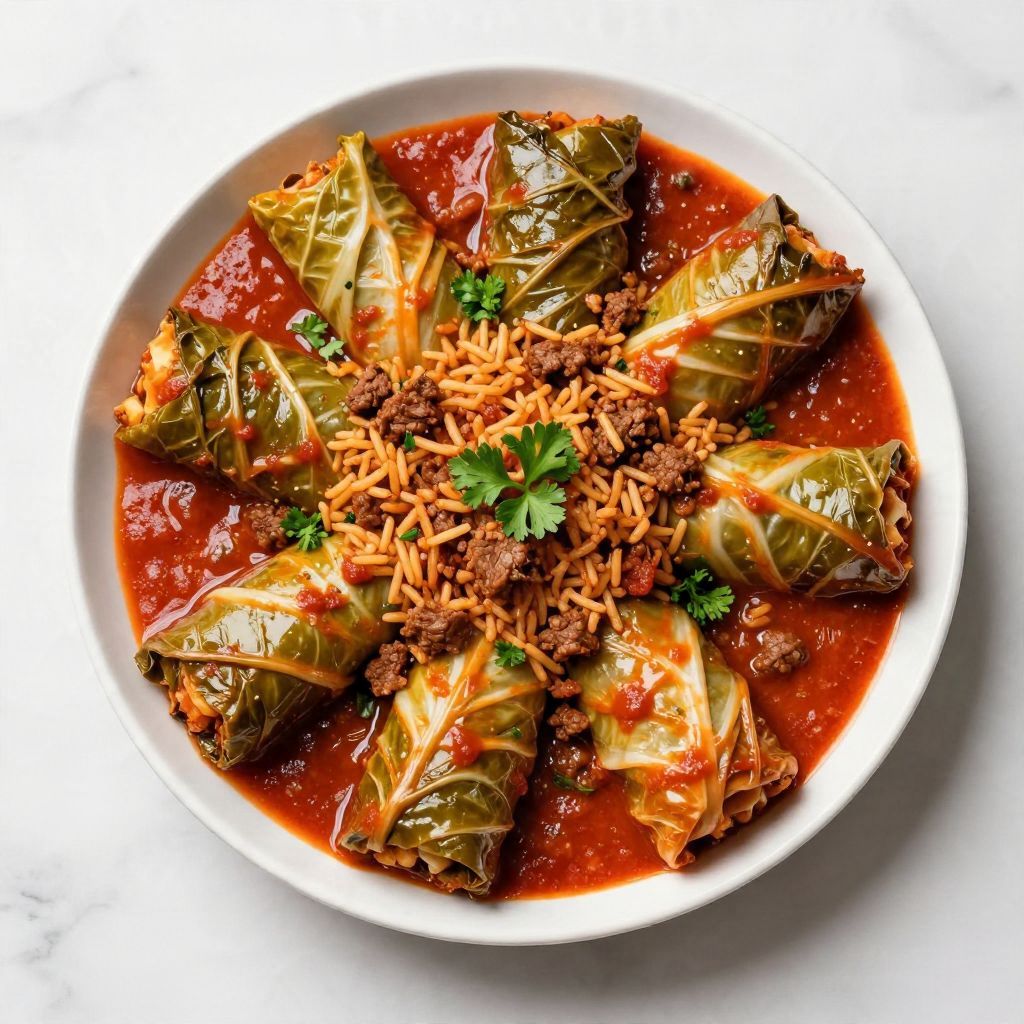
Halupki
Ingredients
Equipment
Method
- Bring a large pot of water to a boil. Remove the core of the cabbage and blanch the leaves for about 2-3 minutes until they soften.
- In a mixing bowl, combine ground beef, cooked rice, chopped onion, salt, pepper, paprika, sugar, thyme, garlic, and lemon juice. Mix well.
- Take a softened cabbage leaf and place a scoop of the filling at the base. Roll the leaf tightly around the filling.
- In a skillet, combine the tomato sauce and diced tomatoes over medium heat.
- Spread a thin layer of the sauce on the bottom of a casserole dish.
- Arrange the rolled halupki in the casserole dish seam-side down and pour the remaining sauce over the rolls.
- Cover the casserole dish tightly with aluminum foil and bake in a preheated oven at 350°F (175°C) for about 1 hour.
- Let the halupki rest for a few minutes before serving.