
As the aroma of simmering beef fills the kitchen, it’s hard not to feel a wave of nostalgia wash over you. Galbitang, or Korean short rib soup, is a comforting dish that brings warmth and joy, perfect for chilly nights or gathering with family.
This recipe shines with its tender beef, rich broth, and subtle hints of garlic and green onion. With its delightful flavors and heartiness, it’s a must-try for any home cook looking to impress.
Why You’ll Love This Recipe
Galbitang is a standout dish for so many reasons.
- Rich and savory broth that warms the soul.
- Tender beef short ribs that practically fall off the bone.
- Simple ingredients that create an unforgettable flavor.
- Perfect for meal prep and easy to reheat.
- A true crowd-pleaser for family dinners and gatherings.
My Experience Making This Recipe
Every time I make galbitang, I am transported back to my childhood, sitting around the table with my family. The way the flavors meld together while it simmers is simply magical.
When I served it recently, my friends couldn’t get enough, asking for seconds and thirds. This dish has a way of bringing people together, and the satisfying slurp of noodles adds to the experience.
Recipe Overview
- Recipe Name: Galbitang
- Servings: 4
- Prep Time: 20 minutes
- Cook Time: 2 hours
- Total Time: 2 hours 20 minutes
- Course: Main
- Cuisine: Korean
- Calories per Serving: 450
Equipment You Will Need
- Large pot or Dutch oven
- Cutting board
- Sharp knife
- Measuring cups and spoons
- Slotted spoon
Ingredients for Galbitang
- 2 pounds beef short ribs
- 10 cups water
- 1 onion, quartered
- 4 cloves garlic, minced
- 2 green onions, chopped
- 1 tablespoon soy sauce
- 1 teaspoon sesame oil
- Salt to taste
- Black pepper to taste
- Optional: cooked rice for serving
Ingredient Notes and Substitutions
- Beef short ribs: This cut is ideal for its tenderness and flavor. You can substitute with beef shank if short ribs are unavailable.
- Onion: Adds sweetness and depth to the broth. Yellow or white onions work best, but leeks can be used for a milder flavor.
- Garlic: A must for enhancing the flavor of the soup. If you prefer a milder taste, reduce the amount to 2 cloves.
- Green onions: Used as a garnish and for aroma. Chives can be a lighter alternative.
How to Make Galbitang
Step 1: Prepare the Short Ribs
Start by soaking the short ribs in cold water for about 30 minutes. This helps remove excess blood and impurities, resulting in a clearer broth.
Step 2: Boil the Ribs
In a large pot, bring 10 cups of water to a boil. Add the soaked ribs and boil for about 5 minutes to further cleanse them.
Step 3: Rinse the Ribs
Once boiled, remove the ribs and rinse them under cold water. This step is crucial for achieving a clean-tasting broth free from scum.
Step 4: Make the Broth
In the same pot, add the cleaned ribs back in with 10 cups of fresh water, the quartered onion, and minced garlic. Bring it to a boil again, then reduce to a simmer.
Step 5: Simmer
Let the soup simmer for about 2 hours, or until the meat is tender. This slow cooking allows the flavors to develop beautifully.
Step 6: Season the Broth
After 2 hours, add the soy sauce, sesame oil, salt, and black pepper. Taste and adjust the seasoning to your liking.
Step 7: Add Green Onions
Stir in the chopped green onions and let simmer for an additional 5 minutes. This adds a fresh aroma and flavor right before serving.
Step 8: Serve and Enjoy
Serve the galbitang hot, ideally with a side of cooked rice. Encourage guests to mix the rice into the soup for an enjoyable texture.
Pro Tip: For an even richer flavor, let the soup sit for a few hours before serving; the flavors deepen as it cools.
Tips for the Best Galbitang
- Use high-quality beef short ribs for maximum flavor.
- Don’t rush the simmering process; low and slow is key.
- Adjust the seasoning gradually to find your perfect balance.
- Consider adding radish for extra depth and flavor.
- Serve with a side of kimchi for a traditional touch.
Common Mistakes to Avoid
- Skipping the soaking step can lead to a cloudy broth.
- Not rinsing the ribs after boiling can affect the soup’s taste.
- Using high heat can make the meat tough.
- Over-seasoning early can overpower the natural flavors.
Serving Suggestions
Galbitang is delicious on its own, but pairing it with sides enhances the experience.
- Steamed rice is a classic accompaniment.
- Kimchi adds a spicy kick.
- Korean pickled vegetables provide a nice crunch.
- Serve with a light salad for freshness.
Variations to Try
- Add potatoes for a heartier soup.
- Incorporate mushrooms for an earthy flavor boost.
- Try a spicy version by adding gochugaru (Korean red pepper flakes).
- Use a mix of meats, like brisket and short ribs, for depth.
Dietary Adaptations
- Gluten-free: Use tamari instead of soy sauce.
- Dairy-free: This recipe is naturally dairy-free.
- Vegan/vegetarian: Substitute short ribs with mushrooms or tofu and use vegetable broth.
- Low-carb/keto: Skip the rice and serve with low-carb vegetables instead.
Storage and Reheating
Refrigerator
Store leftover galbitang in an airtight container in the refrigerator for up to 3 days.
- Let it cool completely before sealing.
- Reheat on the stove over low heat.
Freezer
You can freeze galbitang for up to 3 months in a freezer-safe container.
- Leave space for expansion as it freezes.
- Thaw in the refrigerator overnight before reheating.
Reheating
Reheat gently on the stovetop or in the microwave until hot throughout.
- Stir occasionally to heat evenly.
- Add a splash of water if it seems too thick.
Nutrition Information
| Nutrient | Amount |
|---|---|
| Calories | 450 |
| Total Fat | 30g |
| Saturated Fat | 12g |
| Carbohydrates | 5g |
| Fiber | 0g |
| Sugar | 1g |
| Protein | 38g |
| Sodium | 700mg |
| Cholesterol | 100mg |
This nutrition information is approximate and may vary based on specific ingredients and portion sizes.
Frequently Asked Questions
Can I make galbitang ahead of time?
Absolutely! It can be made ahead and tastes even better the next day as the flavors develop.
What can I substitute for short ribs?
You can use beef shank or brisket, but the texture and flavor will differ slightly.
How do I store galbitang?
Store in an airtight container in the refrigerator for up to 3 days or freeze for up to 3 months.
Why is my broth cloudy?
Cloudiness often comes from impurities in the meat. Rinsing the ribs before cooking helps prevent this.
Can I add vegetables to galbitang?
Yes! Adding radish or carrots can enhance the flavor and provide extra nutrition.
Final Thoughts
Making galbitang is a rewarding experience that fills your home with delicious aromas. I encourage you to try this recipe and share it with loved ones for a true taste of comfort.
For more culinary inspiration, check out these exciting recipes: Hot Pot Recipe and Clear Soup Recipe.
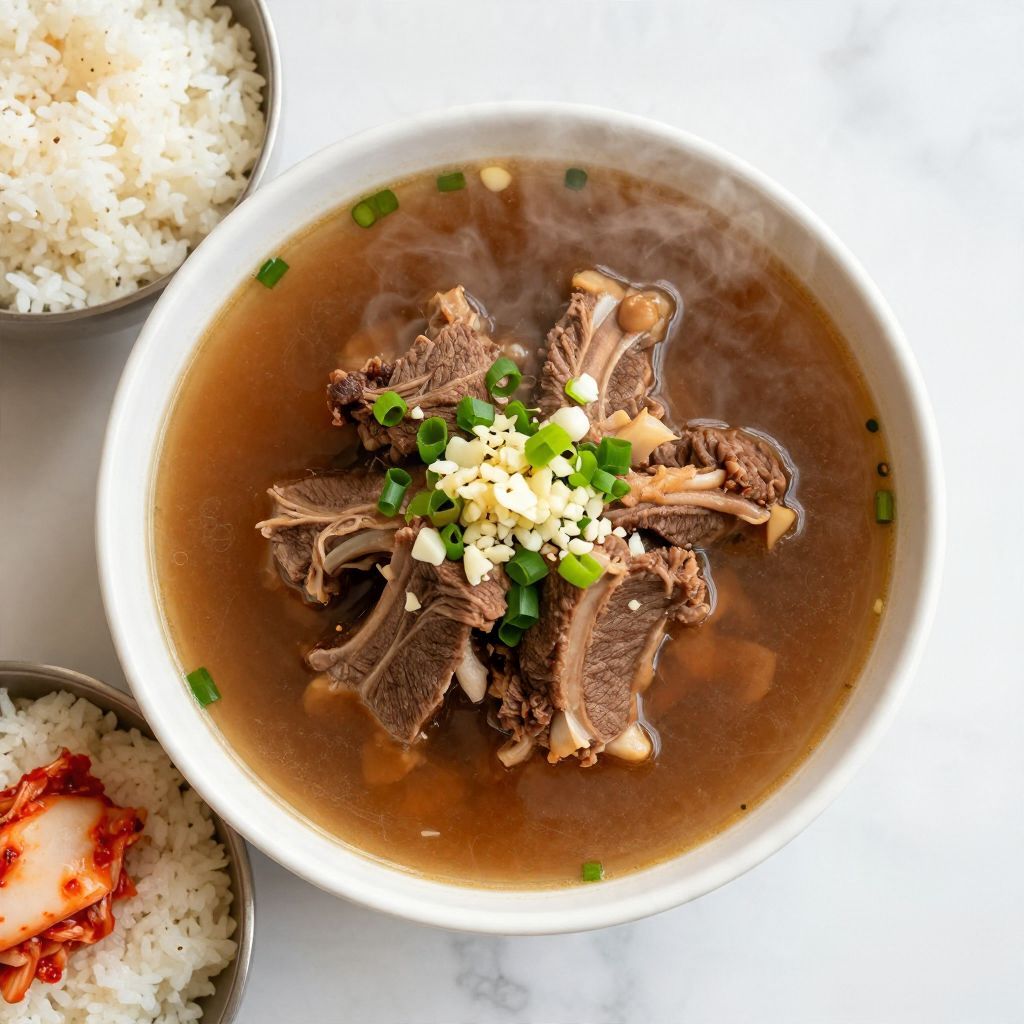
Galbitang
Ingredients
Equipment
Method
- Soak the short ribs in cold water for about 30 minutes to remove excess blood and impurities.
- In a large pot, bring 10 cups of water to a boil.
- Add the soaked ribs and boil for about 5 minutes to cleanse them.
- Remove the ribs and rinse them under cold water.
- In the same pot, add the cleaned ribs back in with 10 cups of fresh water, the quartered onion, and minced garlic.
- Bring it to a boil again, then reduce to a simmer.
- Let the soup simmer for about 2 hours or until the meat is tender.
- Add the soy sauce, sesame oil, salt, and black pepper after 2 hours, and adjust the seasoning to taste.
- Stir in the chopped green onions and let simmer for an additional 5 minutes.
- Serve the galbitang hot, ideally with a side of cooked rice.