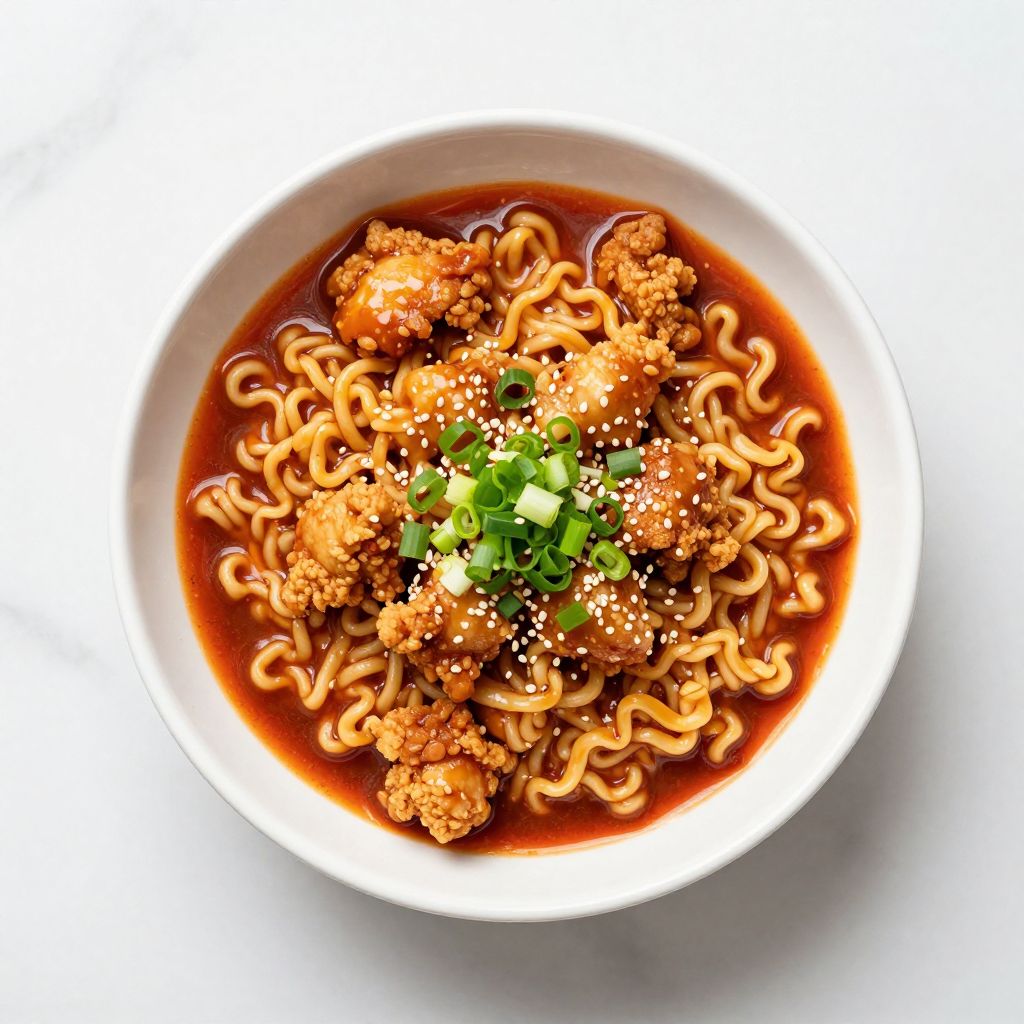
The first time I slurped a bowl of buldak ramen, my mouth caught fire in the best way possible, and I immediately understood why this Korean spicy chicken ramen has taken over food culture worldwide. This isn’t just another noodle dish; it’s a fiery, umami-packed experience that combines crispy chicken, chewy ramen noodles, and a sauce so addictively spicy it’ll have you reaching for water and going back for more in equal measure.
Buldak ramen delivers restaurant-quality heat and flavor in under 30 minutes, making it perfect for weeknight dinners when you crave something bold and satisfying. The beauty of this recipe lies in its simplicity: a few quality ingredients come together to create something that tastes like you’ve been cooking all day.
Why You’ll Love This Recipe
This dish hits every craving at once: spicy, savory, chewy, and crispy textures dancing together on one plate.
- Ready in under 30 minutes from start to finish
- Customizable heat level so you control the spice
- Uses affordable pantry staples with maximum flavor impact
- Feeds one hungry person or easily scales to serve a crowd
- Naturally gluten-free adaptable with simple swaps
My Experience Making This Recipe
I first made buldak ramen on a random Tuesday night when I wanted something spicy enough to shake me awake after a long day. The aroma hit my kitchen within minutes, filling every corner with gochujang and garlic that had my roommate asking what was cooking before I’d even finished the first step.
What surprised me most was how the crispy chicken pieces stayed crunchy even when the noodles absorbed all that fiery sauce. Each bite brought different textures and temperatures together, creating a complex eating experience that felt far more sophisticated than the simple ingredient list suggested.
When I served it to friends, they devoured their bowls in record time, asking for the recipe before they’d even finished chewing. That’s when I knew this wasn’t just a recipe I’d make occasionally; it became a weekly staple in my rotation.
Recipe Overview
- Recipe Name: Spicy Buldak Ramen
- Servings: 2
- Prep Time: 10 minutes
- Cook Time: 15 minutes
- Total Time: 25 minutes
- Course: Main Dish
- Cuisine: Korean
- Calories per Serving: 620
Equipment You Will Need
- Large skillet or wok
- Pot for boiling noodles
- Cutting board
- Chef’s knife
- Wooden spoon or spatula
- Measuring spoons and cups
- Small bowl for mixing sauce
- Tongs or pasta fork
- Shallow bowls for serving
Ingredients for Buldak Ramen
- 8 ounces boneless, skinless chicken breast
- 2 packages instant ramen noodles (about 6 ounces total)
- 3 tablespoons gochujang (Korean red chili paste)
- 2 tablespoons honey or brown sugar
- 2 tablespoons soy sauce
- 3 cloves garlic, minced
- 1 tablespoon sesame oil
- 1 teaspoon gochugaru
- 2 cups chicken broth or water
- 2 green onions, sliced
- 1 tablespoon white sesame seeds
- Pinch of salt and black pepper
Ingredient Notes and Substitutions
- Gochujang brings authentic Korean heat and fermented depth to the sauce. Swap with sriracha or red chili flakes if needed, though the flavor profile shifts from rich to sharp.
- Chicken breast cooks quickly and stays tender when sliced thin. Thighs work too but require a few extra minutes and will be fattier.
- Instant ramen noodles absorb sauce beautifully and provide that signature chewy texture. Fresh or dried egg noodles work as substitutes but won’t deliver the same result.
- Honey balances the heat with subtle sweetness and helps create a glossy sauce. Sugar works identically if you prefer.
- Sesame oil adds nutty richness and authentic Korean flavor. Never skip this; it transforms the entire dish.
- Gochugaru provides additional spice and floral heat notes. Red chili flakes offer similar heat but less complexity.
How to Make Buldak Ramen
Step 1: Prepare Your Chicken
Slice your chicken breast horizontally into thin, even pieces about 1/4 inch thick. Thin slices cook rapidly and absorb the sauce better than thick chunks, plus they crisp up nicely on the outside.
Step 2: Mix Your Sauce
Whisk together gochujang, honey, soy sauce, minced garlic, sesame oil, and gochugaru in a small bowl until fully combined. This spice mixture is your flavor foundation, so make sure there are no lumps of gochujang hiding in the corners.
Step 3: Heat Your Skillet
Set a large skillet or wok over medium-high heat and let it get genuinely hot before adding any oil. A properly heated pan sears the chicken quickly, creating crispy edges while keeping the inside juicy.
Step 4: Cook the Chicken
Add the chicken pieces to your hot skillet without crowding the pan; work in batches if needed. Let each piece sit undisturbed for 2 to 3 minutes before flipping, which allows a golden crust to form and locks in moisture.
Step 5: Coat with Sauce
Pour your prepared sauce over the cooked chicken and stir constantly for about 2 minutes until everything is evenly coated and the sauce starts to caramelize slightly. Watch for the sauce to darken and bubble at the edges; that’s when you know the flavors are concentrating.
Step 6: Boil Your Noodles
Bring a large pot of salted water to a rolling boil and add both packages of ramen noodles. Cook according to package directions, usually about 3 minutes, stirring occasionally so they don’t stick together.
Step 7: Combine Noodles and Sauce
Drain the noodles and add them directly to your skillet with the chicken and sauce. Toss everything together over medium heat for about 1 minute, ensuring every noodle gets coated in that spicy, glossy sauce.
Step 8: Build Your Bowls
Divide the buldak ramen between shallow bowls and pour the extra sauce from the skillet over top. Garnish with sliced green onions and white sesame seeds for color, texture, and a finishing flavor boost.
Pro Tip: Cook your noodles just until tender but still slightly firm; they’ll continue absorbing sauce in the skillet and soften further as you eat, so don’t overcook them at the pot stage.
Tips for the Best Buldak Ramen
- Don’t skip the sesame oil; it creates an essential nutty undertone that makes this dish taste authentically Korean and significantly more complex than it would without it.
- Pat your chicken dry before cooking to encourage browning and crispiness instead of steaming in its own moisture.
- Taste your sauce before adding it to the chicken and adjust heat levels then; it’s far easier than trying to fix it at the end.
- Use good quality gochujang from a Korean market if possible; mass-market versions sometimes taste thin and one-dimensional by comparison.
- Keep your ingredients prepped before you start cooking since everything moves fast once heat is applied.
- If your sauce seems too thick after adding noodles, add a splash of broth or water to loosen it up and coat everything evenly.
Common Mistakes to Avoid
- Overcrowding the skillet when cooking chicken causes steaming instead of searing, resulting in pale, rubbery meat without texture.
- Using pre-cooked ramen that’s been sitting in the sauce too long turns it mushy and unpleasant within minutes.
- Skipping the minced garlic in the sauce makes the dish taste one-dimensional and loses the depth that makes buldak special.
- Cooking chicken on too low heat means it never develops a crispy exterior and absorbs more oil than necessary.
- Adding cold ingredients to hot sauce can cause the sauce to seize up and become clumpy instead of glossy and coating.
Serving Suggestions
Buldak ramen works as a complete meal on its own, but a few simple additions transform it into something even more special and restaurant-worthy. Consider adding vegetables, proteins, or cooling elements to balance the heat.
- Serve with a soft-boiled egg sliced in half and nestled on top for richness and protein
- Top with fresh cucumber slices or kimchi for cooling crunch and tangy contrast
- Add a handful of crispy nori strips and extra white sesame seeds for visual appeal and umami depth
- Pair with a cold beer or sparkling lemonade to cut through the spice and cleanse your palate
- Serve alongside steamed bok choy or sauteed spinach to add vegetables and balance the meal
Variations to Try
- Seafood Buldak Ramen: Replace chicken with large shrimp or scallops, reducing cook time to 2 to 3 minutes; seafood absorbs the sauce flavors differently and creates a lighter, more delicate dish.
- Creamy Buldak Ramen: Stir in 1/4 cup heavy cream or coconut milk after cooking the noodles to mellow the heat while adding richness; this variation appeals to those who want the flavor without maximum spice.
- Vegetable-Packed Version: Add diced bell peppers, mushrooms, and carrots to the skillet during the chicken cooking stage; vegetables soften in the sauce and absorb all the spicy flavors.
- Meat Lovers Buldak Ramen: Mix bacon bits or diced ham into the sauce along with the chicken for extra depth and smokiness that complements the heat beautifully.
- Garlic Butter Buldak Ramen: Add 2 tablespoons of butter and extra minced garlic to the sauce for a richer, more buttery character that softens the spice slightly.
Dietary Adaptations
- Gluten-Free: Use gluten-free ramen noodles and tamari instead of soy sauce; the flavor and texture remain nearly identical with these straightforward swaps.
- Dairy-Free: This recipe is naturally dairy-free as written, making it perfect for those with lactose sensitivity or vegan diets requiring no animal products.
- Vegan: Replace chicken with extra-firm tofu pressed and cubed or use plant-based chicken alternatives that hold up well to high heat and sauce absorption.
- Low-Carb/Keto: Swap instant ramen for shirataki noodles or zucchini noodles to drastically reduce carbohydrates while maintaining the spicy sauce experience.
Storage and Reheating
Refrigerator
Store leftover buldak ramen in an airtight container for up to 3 days, though the noodles gradually soften as they absorb more sauce. The flavors actually deepen overnight, so day-two servings often taste even better.
- Keep noodles and sauce together in the same container for best flavor retention
- Separate toppings like green onions and sesame seeds and add them fresh after reheating
Freezer
Freezing cooked buldak ramen works but with caveats; the noodles become softer when thawed and the sauce separates slightly. This works better if you freeze the components separately.
- Freeze the spicy chicken and sauce in one container and noodles separately for up to 2 months
- Thaw overnight in the refrigerator before reheating rather than using quick thaw methods
Reheating
Reheat buldak ramen gently over medium heat in a skillet rather than microwaving, which can create hot spots and dry out the noodles. Add a splash of water or broth to loosen the sauce and restore its glossy coating.
- Heat for 3 to 5 minutes stirring frequently until steaming throughout
- Add fresh toppings after reheating to restore crispness and visual appeal
Nutrition Information
| Nutrient | Amount |
|---|---|
| Calories | 620 |
| Total Fat | 18g |
| Saturated Fat | 5g |
| Carbohydrates | 72g |
| Fiber | 2g |
| Sugar | 8g |
| Protein | 38g |
| Sodium | 1840mg |
| Cholesterol | 85mg |
These values are approximate and calculated per serving for a 2-serving recipe; actual nutrition varies based on specific brands and any additions you make. The sodium content reflects instant ramen noodles, which are naturally high in salt, so adjust if using low-sodium varieties.
Frequently Asked Questions
Can I make buldak ramen without gochujang?
You can use sriracha or sambal oelek as a replacement, though the flavor becomes sharper and less fermented. The dish loses some of its authentic Korean character, but it remains delicious and spicy.
How spicy is this dish really?
The heat level sits in the medium to hot range; most people find it challenging but not unbearable. Reduce gochujang and gochugaru by half if you prefer milder spice, or add extra if you’re a heat seeker.
Can I prep this ahead of time?
Mix your sauce the morning of and store it in the refrigerator, and slice your chicken in advance. Cook everything fresh when you’re ready to eat for the best texture and flavor.
Why did my noodles turn mushy?
Overcooking in the pot or leaving them in the hot sauce too long causes this; cook noodles just until tender at the pot stage and don’t let them sit in the skillet sauce for more than a minute before serving. Fresh noodles continue cooking from residual heat even after you remove them from the stove.
Can I use chicken thighs instead of breast?
Absolutely; thighs are fattier and more forgiving but need 2 to 3 extra minutes of cooking time. The extra fat creates richer sauce and juicier meat, though the dish becomes slightly higher in calories.
What’s the best way to control the heat level?
Adjust gochujang and gochugaru amounts before mixing your sauce; start with less and taste as you go. You can always add more heat, but removing it is impossible once everything is cooked together.
Final Thoughts
Buldak ramen proves that incredible food doesn’t require complicated techniques or an endless ingredient list. This recipe delivers restaurant-quality spice and flavor in the time it takes to order takeout, and honestly tastes better because you made it yourself.
Grab your ingredients this week and dive into a bowl of fiery, satisfying noodles that’ll have you coming back repeatedly. Your taste buds will thank you, and your kitchen will smell amazing in the process.
Spicy Buldak Ramen
A fiery, umami-packed Korean spicy chicken ramen with crispy chicken, chewy noodles, and an addictively spicy sauce, ready in under 30 minutes.
- Large skillet or wok
- Pot for boiling noodles
- Cutting board
- Chef’s knife
- Wooden spoon or spatula
- Measuring spoons and cups
- Small bowl for mixing sauce
- Tongs or pasta fork
- Shallow bowls for serving
Main
- 8 oz 225 g boneless, skinless chicken breast, thinly sliced
- 2 packages (6 oz/170 g instant ramen noodles)
- 3 tbsp 60 g gochujang (Korean red chili paste)
- 2 tbsp 40 g honey or brown sugar
- 2 tbsp 30 ml soy sauce
- 3 cloves garlic (minced)
- 1 tbsp 15 ml sesame oil
- 1 tsp 2 g gochugaru
- 2 cups 480 ml chicken broth or water
- 2 green onions (sliced)
- 1 tbsp 9 g white sesame seeds
- Pinch of salt and black pepper
- Slice the chicken breast into 1/4-inch thick pieces for quick, even cooking.
- In a small bowl, whisk together gochujang, honey, soy sauce, minced garlic, sesame oil, and gochugaru until smooth.
- Heat a large skillet or wok over medium-high heat (about 375°F/190°C) until hot.
- Add the chicken to the hot skillet and cook undisturbed for 2 to 3 minutes per side until golden brown and crisp.
- Pour the prepared sauce over the chicken and stir constantly for 2 minutes until the sauce thickens and begins to caramelize.
- Meanwhile, bring a pot of salted water to a rolling boil and cook the ramen noodles for 3 minutes, stirring occasionally.
- Drain the noodles and transfer them to the skillet with the chicken and sauce. Toss over medium heat for 1 minute to coat evenly.
- Divide the buldak ramen between bowls, garnish with sliced green onions and white sesame seeds, and serve immediately.
Store leftovers in an airtight container in the refrigerator for up to 3 days. Reheat gently in a skillet with a splash of broth to restore sauce consistency.