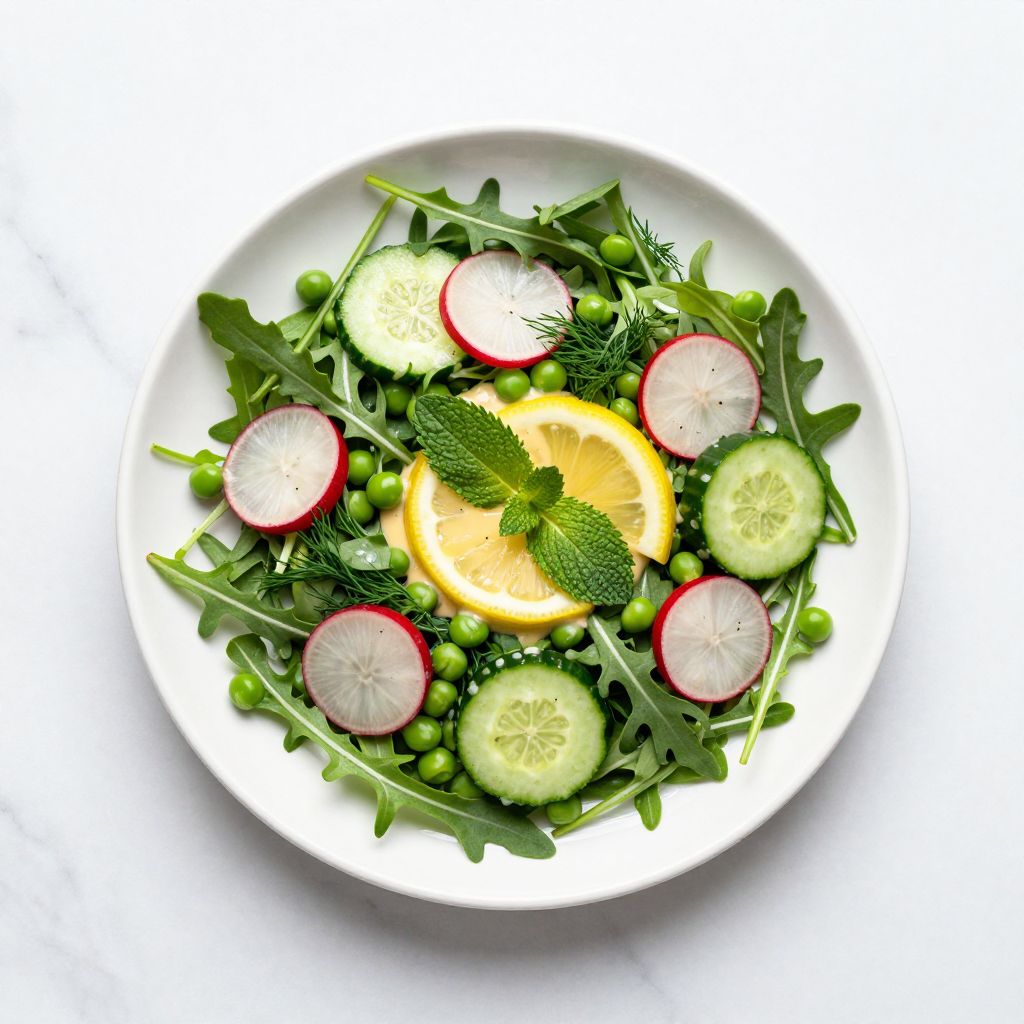
There’s nothing quite like that first bite of a spring salad when the weather turns warm and the farmers market overflows with tender greens and fresh herbs. A spring salad celebrates everything that makes this season feel alive: crisp vegetables, delicate lettuces, bright vinaigrettes, and the promise of lighter eating after months of heavier fare.
This recipe delivers maximum flavor with minimal fuss, pairing peppery arugula with cool cucumbers, sweet radishes, and a tangy lemon dressing that wakes up your taste buds. It’s the kind of dish that works as a standalone lunch, a dinner side, or even a base you can build on with your favorite proteins and additions.
Why You’ll Love This Recipe
This salad hits all the marks for spring cooking: it comes together in under 15 minutes, uses affordable ingredients you can find year-round, and tastes like you spent way more effort than you actually did.
- Ready in 15 minutes with zero cooking required
- Light, refreshing, and naturally vegetarian
- Packed with fresh herbs and crunchy textures that keep things interesting
- Easily doubles or triples for meal prep or entertaining
- Works with any vegetables you have on hand
My Experience Making This Recipe
I first made this salad on an impulse when I had a handful of greens, a lemon, and about ten minutes before dinner needed to be on the table. The combination of peppery arugula with the brightness of fresh herbs and lemon completely won me over.
What surprised me most was how the simple vinaigrette brought everything together without any heavy cream or complicated ingredients. My kids, who normally push greens around their plates, actually asked for seconds.
Now I make it at least twice a week during spring and early summer, sometimes adding grilled chicken, crumbled feta, or toasted nuts depending on what we’re serving alongside it. It’s become my go-to when I want something that feels fresh and intentional without the fuss.
Recipe Overview
- Recipe Name: Spring Salad with Lemon Vinaigrette
- Servings: 4
- Prep Time: 12 minutes
- Cook Time: 0 minutes
- Total Time: 12 minutes
- Course: Side Dish or Light Lunch
- Cuisine: Mediterranean-Inspired
- Calories per Serving: 145
Equipment You Will Need
- Large mixing bowl
- Cutting board
- Sharp chef’s knife
- Small bowl or jar for dressing
- Whisk or fork
- Vegetable peeler (optional)
- Salad spinner (optional but helpful)
Ingredients for Spring Salad
- 5 cups fresh arugula or mixed spring greens
- 1 cucumber, thinly sliced
- 4 radishes, thinly sliced
- 1/2 cup fresh peas (shelled or thawed frozen)
- 1/4 cup fresh mint leaves
- 1/4 cup fresh dill
- 2 tablespoons shallots, finely minced
- 3 tablespoons extra virgin olive oil
- 2 tablespoons fresh lemon juice
- 1 tablespoon Dijon mustard
- 1/2 teaspoon kosher salt
- 1/4 teaspoon black pepper
Ingredient Notes and Substitutions
- Arugula: The peppery bite of arugula is what gives this salad its character and spring personality. If you dislike the peppery kick, swap in spinach or butter lettuce for a milder base.
- Fresh peas: Spring peas are sweet and tender, but frozen peas work just as well and need no cooking. In winter, swap them for blanched asparagus pieces or thinly sliced fennel.
- Fresh herbs: Mint and dill are my top picks, but parsley, chives, or tarragon all work beautifully here. Use whatever fresh herbs you have growing or available, adjusting amounts to your taste.
- Lemon juice: Fresh lemon juice is non-negotiable for brightness; bottled juice tastes flat by comparison. If you’re out of lemons, white wine vinegar or fresh lime juice can pinch-hit.
- Shallots: Shallots add a gentle onion flavor without the harsh bite of raw garlic. Red onion or minced garlic will work if that’s what you have, though use less garlic.
How to Make Spring Salad
Step 1: Wash and Dry Your Greens
Rinse your arugula or spring greens under cold water and spin them dry in a salad spinner or pat them with paper towels. Wet greens dilute your dressing and prevent it from coating the leaves evenly.
Step 2: Prepare Your Vegetables
Slice your cucumber into thin rounds or half-moons, then thinly slice your radishes. Keep these vegetables separate for now so you can control how much of each goes into your salad.
Step 3: Mince Your Shallots
Cut a shallot in half lengthwise, place the flat side down, and slice it thinly, then mince finely. Minced shallots distribute throughout the dressing better than chunks and distribute flavor evenly.
Step 4: Make the Vinaigrette
In a small bowl, whisk together the lemon juice, Dijon mustard, minced shallots, salt, and pepper. Let this mixture sit for one minute so the shallots soften and the flavors begin melding together.
Step 5: Emulsify the Dressing
While whisking constantly, slowly drizzle in the olive oil until the dressing comes together and becomes slightly creamy. This gradual incorporation helps the oil and lemon juice emulsify, creating a silky dressing rather than a separated, oily one.
Step 6: Assemble Your Salad Base
Place your dried greens in a large mixing bowl and add the sliced cucumber, radishes, and peas. Toss gently so all the vegetables distribute evenly without bruising the delicate greens.
Step 7: Tear and Add Your Herbs
Tear the fresh mint leaves into bite-sized pieces and roughly chop the dill so you get flecks of both throughout. Don’t chop the herbs too finely or they’ll bruise and turn dark; coarse pieces stay bright and fresh-looking.
Step 8: Dress and Toss
Pour the vinaigrette over the salad and toss gently but thoroughly, using tongs or two serving spoons to coat every leaf. Taste a bite and adjust the seasoning with extra salt, pepper, or lemon juice if needed.
Step 9: Serve Immediately
Transfer the salad to a platter or individual plates right away so the greens stay crisp and don’t wilt from the dressing. Wilted salad is sad salad, and you deserve better.
Pro Tip: Don’t dress your salad more than 10 minutes before serving; the acid in the lemon will begin to soften the greens and they’ll lose their appealing crunch.
Tips for the Best Spring Salad
- Use the freshest greens you can find; browse the farmers market or check the back of the lettuce bin at the grocery store for the crispest options. Old, sad greens can’t be rescued by any amount of dressing.
- Slice vegetables consistently so they cook and soften evenly as they sit with the dressing. A mandoline helps here if you have one, but a sharp knife and patience work perfectly fine.
- Make your dressing a few hours ahead if you’re entertaining; the flavors deepen as the shallots infuse the vinaigrette. Keep it in a jar in the fridge and whisk again before serving.
- Add tender vegetables at the last minute if you’re making salad ahead for meal prep; keep the dressing separate so you can toss everything together just before eating.
- Don’t skip the Dijon mustard; it helps emulsify the dressing and adds a subtle depth that makes people ask what your secret ingredient is.
- Taste your dressing before it goes on the salad and adjust for balance; it should make your mouth pucker slightly from the lemon, not make you wince.
Common Mistakes to Avoid
- Using wet greens: Excess water on leaves dilutes your dressing and makes everything taste flat. Spin or pat your greens completely dry before they go into the bowl.
- Dressing too far in advance: Even 20 minutes in the fridge will cause delicate spring greens to wilt and lose their appealing texture. Dress right before serving for the best results.
- Skipping the emulsification step: Whisking in the oil slowly rather than dumping it all in at once creates a creamy, cohesive dressing that clings to leaves instead of pooling at the bottom of the bowl.
- Using bottled lemon juice: Fresh juice tastes incomparably brighter and more alive than the bottled version. One fresh lemon takes 30 seconds to juice and makes all the difference.
- Overloading the salad with add-ins: Sometimes less is more; too many textures and flavors compete with the delicate freshness of the spring vegetables. Stick to four or five components and let them shine.
Serving Suggestions
This spring salad shines on its own as a light lunch, but it also plays beautifully with other spring and early summer dishes. Serve it alongside grilled chicken, roasted fish, or fresh mozzarella for a more substantial meal.
- Pair with grilled lemon chicken and crusty bread for a complete dinner that feels special but takes under 30 minutes
- Top with crumbled feta cheese and toasted pine nuts for a heartier vegetarian lunch
- Serve alongside roasted salmon or trout for an elegant dinner that celebrates springtime ingredients
- Add shredded rotisserie chicken and crispy chickpeas to transform it into a filling grain-free lunch bowl
- Toss with cooked farro or quinoa and fresh mozzarella for a satisfying spring grain salad
Variations to Try
- With Strawberries and Balsamic: Add thinly sliced fresh strawberries and swap the lemon vinaigrette for a balsamic version; the sweet berries and tangy balsamic create a spring salad that tastes like dessert but is perfectly healthy.
- With Asparagus and Almonds: Blanch and chill asparagus spears, add them to your base greens, and top with toasted sliced almonds for a nuttier, more substantial salad with a pleasant crunch.
- With Goat Cheese and Walnuts: Crumble warm goat cheese over the greens and add toasted walnuts; the warmth of the cheese will slightly soften the greens and add richness that balances the bright vinaigrette.
- With Spring Onions and Peas Only: Strip this down to just tender spring onions, fresh peas, and greens for an even lighter, more delicate version that tastes like pure spring.
- With Roasted Vegetables: Toss in lightly roasted baby carrots, beets, or fennel for a more filling salad that works as a side to heavier mains like beef or pork.
Dietary Adaptations
- Gluten-free: This recipe is naturally gluten-free; simply verify that your Dijon mustard is gluten-free (most are, but check the label). No modifications needed to the base recipe.
- Dairy-free: The base salad contains no dairy, so it’s already dairy-free; skip any cheese toppings and enjoy it as-is. Add dairy-free proteins like grilled tofu or nuts if you want more substance.
- Vegan: This salad is naturally vegan with the ingredients listed; use maple syrup instead of honey if any vinaigrette variation calls for it. Add chickpeas, tofu, or nuts for plant-based protein.
- Low-carb/Keto: Skip the peas (they’re slightly higher in carbs) and load up on cucumber, radishes, and additional greens instead. The salad remains very low-carb and fits perfectly into a keto meal plan.
Storage and Reheating
Refrigerator
Store undressed greens, vegetables, and dressing in separate containers so you can assemble fresh salad whenever you want. The greens will stay crisp for up to three days if you keep them dry.
- Keep greens in an airtight container lined with paper towels to absorb excess moisture
- Store sliced vegetables in separate containers so flavors don’t mingle and they maintain their individual textures
- Keep the dressing in a jar; it lasts up to five days in the refrigerator
Freezer
Freezing a fresh green salad isn’t practical since greens become mushy when thawed. Your best bet is to store components separately and freeze nothing except leftover dressing (though freezing vinaigrette isn’t recommended).
- Don’t freeze dressed salads or fresh greens
- Pre-chopped vegetables can be frozen, though they’ll have a softer texture when thawed
Reheating
This salad is meant to be served cold and doesn’t require reheating. Simply assemble it fresh from your stored components whenever you’re ready to eat.
- If you’ve already dressed the salad and it’s been sitting, refresh it with fresh greens and a tiny drizzle of additional dressing
- Let cold ingredients come up to cool room temperature for about five minutes before serving for better flavor expression
Nutrition Information
| Nutrient | Amount |
|---|---|
| Calories | 145 |
| Total Fat | 11g |
| Saturated Fat | 1.5g |
| Carbohydrates | 10g |
| Fiber | 2g |
| Sugar | 3g |
| Protein | 4g |
| Sodium | 310mg |
| Cholesterol | 0mg |
These values are estimates based on standard ingredient sizes and USDA nutrition data. Actual nutrition will vary depending on specific brands and quantities used, so use this as a guide rather than a definitive source.
Frequently Asked Questions
Can I Make This Salad Ahead of Time?
Yes, but keep the dressing separate and don’t dress the greens more than 10 minutes before serving. Store all components in separate containers in the refrigerator and assemble fresh when you’re ready to eat.
What Can I Use Instead of Arugula?
Spinach, butter lettuce, romaine, or any mixed spring greens work beautifully. Choose whatever is freshest at your market, though you’ll lose some of the peppery flavor that makes arugula special.
Can I Add Protein to This Salad?
Absolutely; grilled chicken, roasted salmon, crumbled feta, hard-boiled eggs, or toasted chickpeas all complement this salad perfectly. Add your protein choice on top just before serving for the best presentation.
How Do I Keep the Greens from Wilting?
Make sure your greens are completely dry before storing, dress the salad no more than 10 minutes before serving, and don’t over-toss with the dressing. The key is getting the greens dry and dressing at the last minute.
Can I Use Bottled Vinaigrette Instead?
You can, but this fresh vinaigrette takes five minutes to make and tastes infinitely better than bottled versions. Since speed isn’t the goal here, invest the few extra minutes for a salad that actually tastes like spring.
What’s the Best Way to Store Fresh Herbs?
Place herbs with stems in a glass of water and cover loosely with a plastic bag in the refrigerator; they’ll stay fresh for up to two weeks. Chop them only when you’re ready to use them to preserve their bright color and flavor.
Can I Use Frozen Peas?
Yes, frozen peas work great and don’t need cooking; simply thaw them and use as-is. Fresh peas are lovely when available, but frozen actually locks in more nutrients and costs less, so don’t hesitate to use them year-round.
Final Thoughts
A great spring salad doesn’t need to be complicated; it just needs fresh ingredients, a properly emulsified dressing, and the good sense to serve it before the greens have a chance to wilt. This recipe delivers exactly that, and it’s flexible enough to evolve with whatever looks best at your market this week.
Make this salad as written first so you understand how the components work together, then start swapping in your favorite vegetables and proteins. You’ll quickly see why this simple formula becomes a kitchen workhorse during the warmer months.
Spring Salad with Lemon Vinaigrette
A fresh, Mediterranean-inspired spring salad made with arugula, cucumber, radishes, peas, mint, and dill, tossed in a bright lemon Dijon vinaigrette. Ready in 12 minutes with no cooking required.
- Large mixing bowl
- Cutting board
- Sharp chef’s knife
- Small bowl or jar for dressing
- Whisk or fork
- Vegetable peeler (optional)
- Salad spinner (optional but helpful)
Salad
- 5 cups fresh arugula or mixed spring greens
- 1 cucumber (thinly sliced)
- 4 radishes (thinly sliced)
- 1/2 cup fresh peas (shelled or thawed frozen)
- 1/4 cup fresh mint leaves
- 1/4 cup fresh dill
- 2 tablespoons shallots (finely minced)
Lemon Vinaigrette
- 3 tablespoons extra virgin olive oil
- 2 tablespoons fresh lemon juice
- 1 tablespoon Dijon mustard
- 1/2 teaspoon kosher salt
- 1/4 teaspoon black pepper
- Rinse the arugula or spring greens under cold water and dry them thoroughly in a salad spinner or with paper towels.
- Slice the cucumber into thin rounds or half-moons and thinly slice the radishes.
- Finely mince the shallots.
- In a small bowl, whisk together the lemon juice, Dijon mustard, minced shallots, kosher salt, and black pepper. Let sit for 1 minute.
- While whisking constantly, slowly drizzle in the olive oil until the dressing emulsifies and looks slightly creamy.
- Place the dried greens in a large mixing bowl and add the cucumber, radishes, and peas. Toss gently to combine.
- Tear the mint leaves into bite-sized pieces and roughly chop the dill, then add both herbs to the bowl.
- Pour the vinaigrette over the salad and toss gently but thoroughly until everything is evenly coated.
- Taste and adjust with more salt, pepper, or lemon juice if needed, then serve immediately.
Do not dress the salad more than 10 minutes before serving to keep the greens crisp. For variations, add feta, nuts, grilled chicken, or swap the greens as desired.