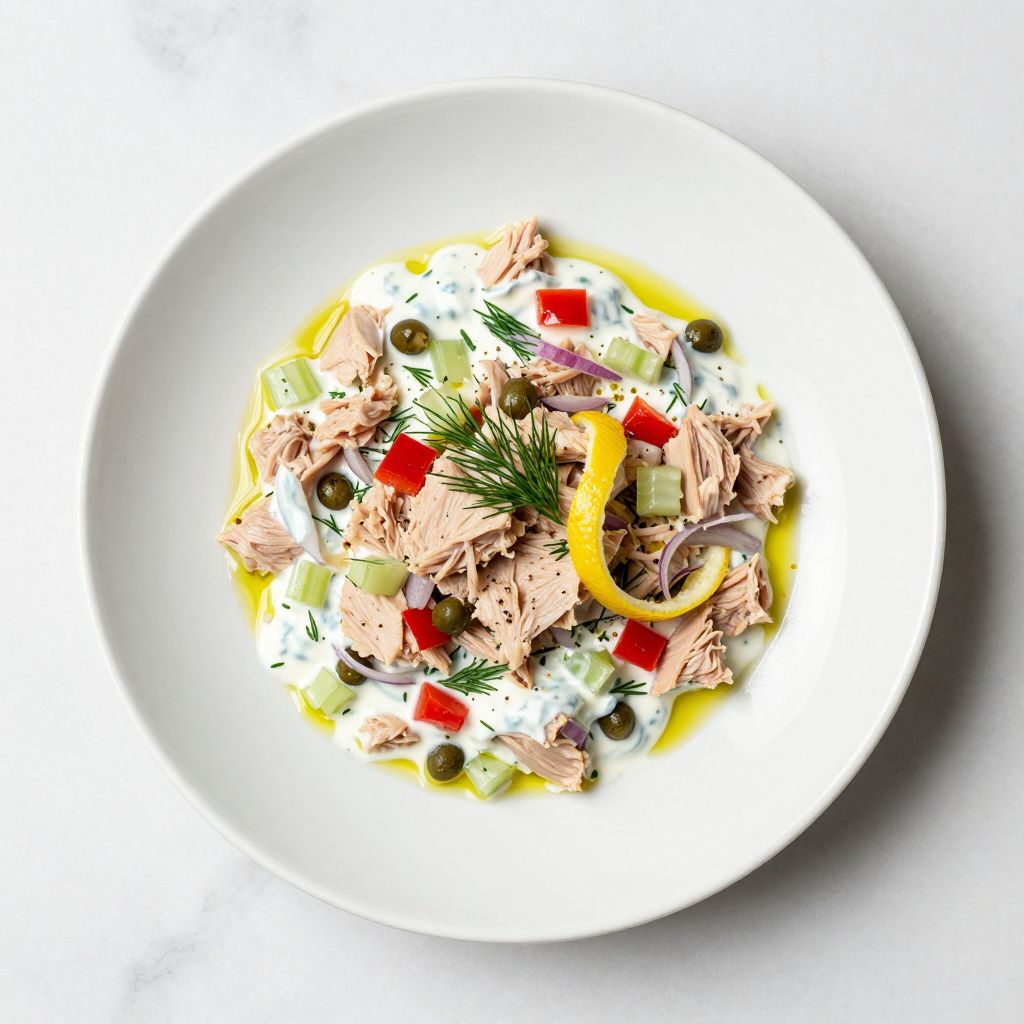
There’s something deeply satisfying about opening a can of tuna and knowing you’re moments away from a meal that tastes restaurant-quality yet requires minimal effort. Healthy tuna salad strikes that rare balance between nutritious and genuinely delicious, making it one of those recipes that works just as well for a quick lunch as it does for impressing guests.
This version ditches the mayo-heavy approach in favor of a creamy, flavorful salad that celebrates the tuna itself rather than masking it. You’ll appreciate how fast it comes together, how it adapts to whatever vegetables you have on hand, and how it keeps you satisfied for hours thanks to the protein and healthy fats at work here.
Why You’ll Love This Recipe
This tuna salad delivers restaurant-quality flavor without the kitchen stress or ingredient list that reads like a chemistry experiment. Here’s what makes it stand out:
- Ready in under 10 minutes from pantry to plate
- Packed with lean protein and omega-3 fatty acids for sustained energy
- Uses Greek yogurt and a touch of olive oil for richness without excess calories
- Completely customizable based on your pantry and preferences
- Works as a sandwich filling, grain bowl topper, or standalone salad
My Experience Making This Recipe
I stumbled onto this healthier version when I realized my old go-to tuna salad left me feeling sluggish an hour later. Swapping out most of the mayo for Greek yogurt was the game changer, and I loved how the salad became creamier without feeling heavy.
The first time I served it to my family, my teenager actually asked for seconds, which rarely happens with anything remotely healthy. The crunch from fresh celery and red onion, the brightness of fresh dill, and that subtle tang from the yogurt all work together in a way that feels both comforting and refined.
Now I make a batch twice a week because it’s my fallback lunch when I’m too busy to cook anything elaborate. It tastes even better the next day as the flavors meld together, so I’m always happy to have extras in the fridge.
Recipe Overview
- Recipe Name: Healthy Tuna Salad
- Servings: 4
- Prep Time: 10 minutes
- Cook Time: 0 minutes
- Total Time: 10 minutes
- Course: Lunch, Light Dinner
- Cuisine: American
- Calories per Serving: 185
Equipment You Will Need
- Large mixing bowl
- Wooden spoon or rubber spatula
- Measuring cups and spoons
- Can opener
- Cutting board
- Chef’s knife
- Colander or fine mesh strainer
Ingredients for Healthy Tuna Salad
- 2 cans (5 ounces each) chunk light tuna in water, drained and flaked
- 3/4 cup non-fat Greek yogurt
- 1 tablespoon extra virgin olive oil
- 2 tablespoons freshly squeezed lemon juice
- 1/2 cup diced celery
- 1/4 cup diced red onion
- 1/4 cup diced red bell pepper
- 2 tablespoons fresh dill, finely chopped
- 1 tablespoon Dijon mustard
- Sea salt to taste
- Freshly ground black pepper to taste
- Optional: 1 tablespoon capers, drained
Ingredient Notes and Substitutions
- Tuna: Chunk light tuna is lower in mercury than albacore and provides lean protein with omega-3 fats. You can swap canned salmon for a richer flavor and higher omega-3 content, though this raises the calorie count slightly.
- Greek yogurt: This replaces most of the traditional mayo and adds protein while keeping the salad creamy. If you don’t have Greek yogurt, use half mayo and half plain yogurt, though the result will be slightly higher in calories.
- Lemon juice: Fresh juice brightens the salad and provides acidity that balances the richness. Bottled lemon juice works in a pinch, but fresh always tastes more vibrant.
- Fresh dill: This herb adds a subtle anise flavor that complements tuna beautifully. Parsley or tarragon both work as substitutes with different flavor profiles.
- Dijon mustard: A small amount adds depth and tanginess without overpowering the other flavors. Yellow mustard is milder if you prefer less sharpness.
How to Make Healthy Tuna Salad
Step 1: Drain and Prepare the Tuna
Place the drained tuna in a large mixing bowl and gently break it apart with your spoon, leaving some chunks intact for texture. Don’t over-mix at this stage; you want a mixture with some structure rather than a mushy paste.
Step 2: Combine the Creamy Base
Add the Greek yogurt, olive oil, lemon juice, and Dijon mustard to the tuna. Stir gently until the ingredients are well combined and the tuna takes on a creamy coating.
Step 3: Prepare Your Vegetables
While your base comes together, dice your celery, red onion, and red bell pepper into small, uniform pieces. Uniform sizes mean each bite gets a balanced mix of textures and flavors.
Step 4: Add the Vegetables
Fold the diced celery, red onion, and red bell pepper into the tuna mixture. The vegetables add crunch, sweetness, and visual appeal without adding significant calories.
Step 5: Incorporate the Fresh Herbs
Stir in the fresh dill along with the optional capers if you’re using them. Fresh herbs brighten the entire salad and should go in near the end so they stay vibrant and don’t get crushed.
Step 6: Season to Taste
Add sea salt and freshly ground black pepper, tasting as you go. Remember that the tuna and mustard already contain some salt, so go slowly to avoid over-seasoning.
Step 7: Chill Before Serving
Cover the bowl and refrigerate for at least 30 minutes before serving, though you can eat it immediately if you’re in a hurry. Chilling allows the flavors to meld and makes the salad more refreshing.
Step 8: Taste and Adjust
Before serving, give the salad a quick stir and taste it again. You may want to add a squeeze of extra lemon juice or a pinch more salt, depending on how it’s developed in the fridge.
Pro Tip: Make your tuna salad the night before and store it in an airtight container; the flavors deepen overnight, and you’ll have a grab-and-go lunch ready for the busiest mornings.
Tips for the Best Healthy Tuna Salad
- Drain your tuna thoroughly by squeezing the can or pressing it against the colander with the back of a spoon. Excess water dilutes the flavors and makes the salad watery.
- Use freshly squeezed lemon juice rather than bottled for a brighter, cleaner taste that actually affects how the entire salad tastes. A fresh lemon takes 30 seconds to juice and makes a noticeable difference.
- Dice your vegetables into smaller pieces than you might expect; tiny pieces distribute throughout the salad so every bite feels balanced. Large chunks mean some bites are mostly tuna while others are mostly vegetable.
- Taste as you season rather than adding all the salt and pepper at once. The Greek yogurt and mustard contribute saltiness you might not account for initially.
- Store your tuna salad in an airtight glass container to keep it fresher longer and prevent the smell from permeating your refrigerator. Plastic containers retain odors more stubbornly than glass.
Common Mistakes to Avoid
- Using canned tuna that’s packed in oil without draining it first; this adds 50+ calories per serving and makes the salad greasy instead of creamy.
- Adding too much mayo or yogurt, which obscures the tuna flavor and creates a heavy, dense mixture instead of a light, balanced salad.
- Skipping the lemon juice in favor of vinegar or just salt; the brightness of lemon is what lifts all the other flavors and prevents the salad from tasting flat.
- Cutting vegetables into large chunks that don’t integrate well with the tuna; tiny, uniform pieces create a cohesive salad where every bite tastes the same.
- Leaving the salad at room temperature for more than 30 minutes before serving; the Greek yogurt base can separate slightly and the vegetables start to release water.
Serving Suggestions
This tuna salad is remarkably versatile and tastes great in multiple contexts depending on your mood and what you have on hand. Here are some of my favorite ways to serve it:
- Stuffed in whole grain bread with crisp lettuce and sliced tomato for a classic sandwich that feels both healthy and satisfying
- Spooned over mixed greens with cherry tomatoes, cucumber, and a drizzle of extra olive oil for a light, protein-packed salad
- Served on top of a warm grain bowl with quinoa, roasted vegetables, and avocado for a more substantial meal
- Stuffed into bell pepper halves and served chilled as an elegant appetizer or side dish for dinner parties
- Rolled in lettuce wraps for a low-carb option that’s crisp and refreshing
Variations to Try
- Mediterranean Version: Add sun-dried tomatoes, kalamata olives, and oregano instead of dill for a brighter, more herbaceous take that feels like a vacation in a bowl.
- Spicy Kick: Stir in a pinch of cayenne pepper and swap the dill for cilantro, then add a touch of sriracha for heat without overpowering the tuna.
- Avocado Tuna Salad: Replace half the Greek yogurt with mashed avocado for a richer, more luxurious texture, though this does raise the calorie count.
- Asian-Inspired: Use rice vinegar instead of lemon juice, add ginger and sesame oil, and top with sesame seeds and scallions for an entirely different flavor direction.
- Pickle Lovers: Add diced dill pickle, a tablespoon of pickle juice, and a splash of mustard for a tangy, bold version that tastes almost like a deconstructed sandwich.
Dietary Adaptations
- Gluten-Free: This recipe is naturally gluten-free as written; just serve it on gluten-free bread or with gluten-free crackers if you want something to hold it with.
- Dairy-Free: Replace Greek yogurt with a dairy-free yogurt alternative or use half olive oil and half mashed avocado for creaminess without the dairy.
- Vegan/Vegetarian: This recipe doesn’t adapt well to plant-based eating since tuna is the star ingredient, but you could make a similar salad with white beans or chickpeas as your protein base.
- Low-Carb/Keto: This salad is already quite low in carbohydrates; serve it in lettuce wraps or over greens instead of bread to keep carbs under 5 grams per serving.
Storage and Reheating
Refrigerator
Store your tuna salad in an airtight container on a shelf rather than the door where temperature fluctuates. It keeps well for 3 to 4 days, though the vegetables soften slightly over time.
- Use an airtight glass container to prevent the smell from spreading to other foods
- Keep it toward the back of the fridge where it stays coldest
- If the salad looks a bit dry after a day, stir in an extra tablespoon of yogurt
Freezer
Freezing isn’t recommended since the vegetables and yogurt base don’t hold up well to freezing and thawing. The texture becomes mushy and the salad separates.
- If you must freeze, remove and discard the vegetables first, keeping only the tuna and creamy base
- Thaw in the refrigerator overnight and remix with fresh vegetables before serving
Reheating
This is a cold salad and shouldn’t be heated, but if you want to warm it slightly for any reason, stir it gently and let it sit at room temperature for 15 minutes. Heating will cause the yogurt to separate and the tuna to become dry.
- Never microwave this salad as the heat will ruin the texture and cause separation
- If it’s cold from the fridge and you prefer it less cold, simply leave it on the counter for 10 to 15 minutes before eating
Nutrition Information
| Nutrient | Amount |
|---|---|
| Calories | 185 |
| Total Fat | 6g |
| Saturated Fat | 1g |
| Carbohydrates | 3g |
| Fiber | 0.5g |
| Sugar | 1g |
| Protein | 32g |
| Sodium | 420mg |
| Cholesterol | 45mg |
These values are approximate and based on USDA nutrient databases for the ingredients listed. Variations in brands and specific products may slightly affect the final numbers.
Frequently Asked Questions
Can I Make This Salad Without Greek Yogurt?
Yes, you can use half mayonnaise and half regular plain yogurt to approximate the texture and flavor. Your salad will have a higher fat content and calorie count, but it’ll still taste delicious.
How Long Does This Keep in the Refrigerator?
Healthy tuna salad stays fresh for 3 to 4 days when stored in an airtight container. The vegetables soften over time, so it tastes best within the first two days.
Can I Prep This Ahead for the Week?
You can make the tuna mixture without the vegetables, which keeps for 4 days. Add fresh vegetables the morning of serving so they stay crisp and flavorful.
What If I Don’t Like Dill or Don’t Have Any?
Fresh parsley, tarragon, or chives all work beautifully as substitutes with different flavor profiles. You can even skip the herbs entirely and the salad still tastes great, though it loses some brightness.
Is This Recipe High in Sodium?
The sodium comes primarily from the canned tuna, which has about 300mg per can. If you’re watching your sodium intake, you can buy low-sodium canned tuna to reduce this amount significantly.
Can I Use Fresh Tuna Instead of Canned?
Fresh tuna works beautifully if you cook and flake it yourself, though this raises your prep time from 10 minutes to 20 minutes. The flavor is richer and fresher tasting if you have access to quality fresh tuna at your market.
Final Thoughts
This healthy tuna salad proves that nutritious food doesn’t require complicated techniques or obscure ingredients. It comes together faster than most people can make lunch, yet tastes polished enough to serve guests or bring to a potluck without apology.
Make a batch this week and keep it in your fridge for those days when you need something quick, satisfying, and genuinely nourishing. You’ll find yourself reaching for it again and again, tweaking it based on what’s in your vegetable drawer and what sounds good that day.
Healthy Tuna Salad
A light and nutritious tuna salad that uses Greek yogurt instead of heavy mayo for a creamy texture without excess calories. Packed with protein, omega-3s, and fresh vegetables, this quick recipe is ready in under 10 minutes and works perfectly as a sandwich filling, grain bowl topper, or standalone salad.
- Large mixing bowl
- Wooden spoon or rubber spatula
- Measuring cups and spoons
- Can opener
- Cutting board
- Chef’s knife
- Colander or fine-mesh strainer
Main
- 2 cans (5 ounces each chunk light tuna in water, drained and flaked)
- 3/4 cup non-fat Greek yogurt
- 1 tablespoon extra virgin olive oil
- 2 tablespoons freshly squeezed lemon juice
- 1/2 cup diced celery
- 1/4 cup diced red onion
- 1/4 cup diced red bell pepper
- 2 tablespoons fresh dill (finely chopped)
- 1 tablespoon Dijon mustard
- Sea salt to taste
- Freshly ground black pepper to taste
- 1 tablespoon capers (drained (optional))
- Place the drained tuna in a large mixing bowl and gently break it apart with your spoon, leaving some chunks intact for texture. Don’t over-mix at this stage.
- Add the Greek yogurt, olive oil, lemon juice, and Dijon mustard to the tuna. Stir gently until the ingredients are well combined and the tuna takes on a creamy coating.
- Dice your celery, red onion, and red bell pepper into small, uniform pieces.
- Fold the diced celery, red onion, and red bell pepper into the tuna mixture.
- Stir in the fresh dill along with the optional capers if using.
- Add sea salt and freshly ground black pepper, tasting as you go to avoid over-seasoning.
- Cover the bowl and refrigerate for at least 30 minutes before serving to allow the flavors to meld, though you can eat it immediately if you’re in a hurry.
- Before serving, give the salad a quick stir and taste again. Add extra lemon juice or salt if needed.
Store in an airtight glass container in the refrigerator for 3-4 days. The salad tastes even better the next day as the flavors develop. Drain tuna thoroughly to prevent a watery salad. For best results, use freshly squeezed lemon juice and dice vegetables into small, uniform pieces for balanced bites.