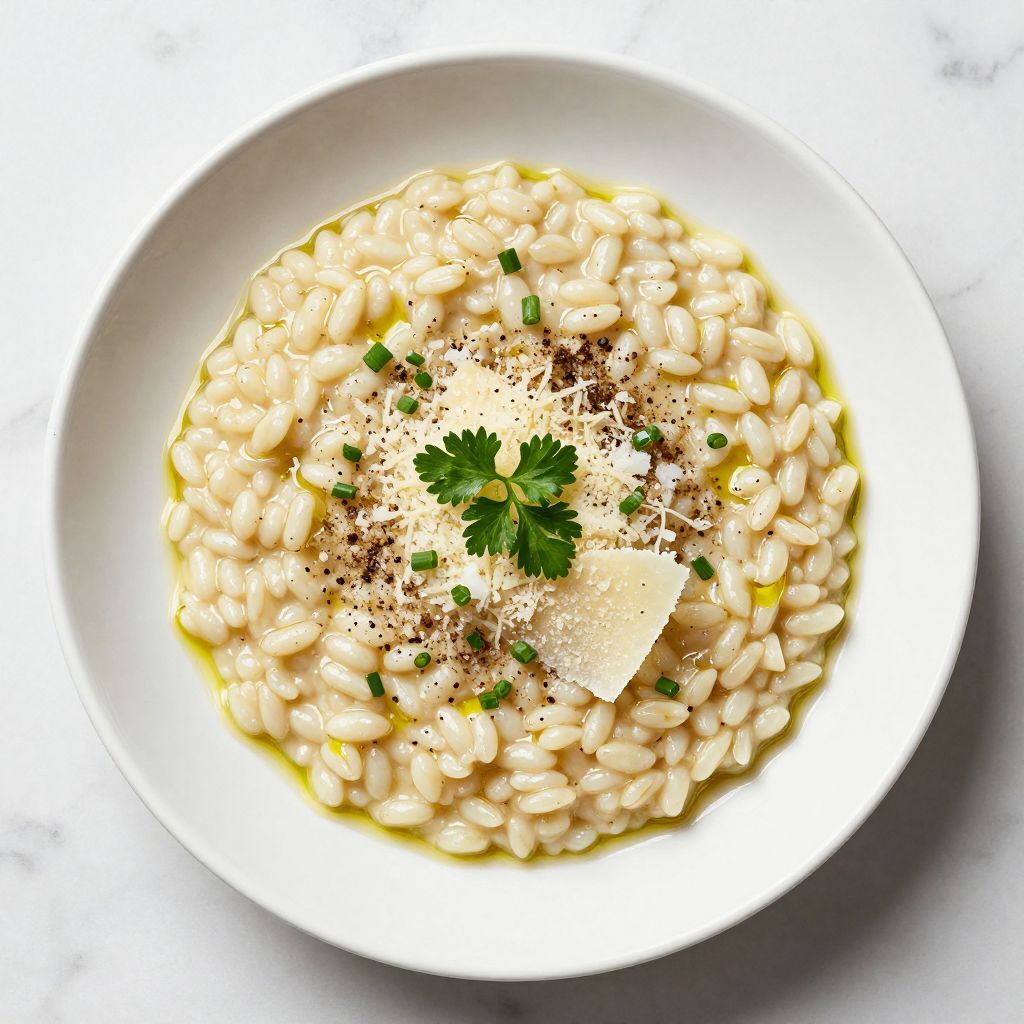
There’s something almost meditative about watching risotto come together, grain by grain, as you stir cream and butter into short, plump Arborio rice until it transforms into something silky and luxurious.
Creamy Arborio Risotto is one of those dishes that looks far more complicated than it actually is, and that’s exactly why home cooks fall in love with it. The magic lies in three things: the right rice, patient stirring, and good stock that you add gradually to coax out the rice’s natural starch. Once you master the basic technique, you’ll find yourself making it for weeknight dinners and special occasions alike because it’s elegant enough to impress yet simple enough to pull off on a Tuesday night.
Why You’ll Love This Recipe
This risotto delivers restaurant-quality results in your own kitchen while remaining surprisingly forgiving and adaptable. You control the flavors, the texture, and the final outcome.
- Silky, creamy texture without any cream in the base recipe
- Comes together in under 30 minutes from start to finish
- Naturally gluten-free and vegetarian-friendly
- Serves as a blank canvas for endless flavor combinations
- Impresses dinner guests and tastes homemade, not fussy
My Experience Making This Recipe
I first learned to make risotto from an Italian neighbor who made it look absolutely effortless, as if she wasn’t doing much of anything except standing at the stove with a wooden spoon. When I tried it myself, I realized the ease came from understanding what was actually happening: the constant low heat, the gradual addition of warm stock, and the steady stirring that releases the starch from the rice and creates that signature creamy texture.
The first time I nailed it, I felt oddly proud of something that seems so simple in hindsight. Now I make it regularly, and my family requests it for birthdays instead of cake-based sides because they love it that much.
The sensory experience alone makes it worth the effort: the aroma of toasted rice, the gentle bubbling sound as stock reduces, and that final moment when you stir in butter and cheese and watch it all come together into something glossy and cohesive. Once you’ve made it a few times, you’ll trust the process and stop second-guessing yourself.
Recipe Overview
- Recipe Name: Creamy Arborio Risotto
- Servings: 4 servings
- Prep Time: 10 minutes
- Cook Time: 20 minutes
- Total Time: 30 minutes
- Course: Main Course or Side Dish
- Cuisine: Italian
- Calories per Serving: 385 calories
Equipment You Will Need
- Large, heavy-bottomed saucepan or shallow pot
- Wooden spoon for stirring
- Small saucepan for keeping stock warm
- Ladle for adding stock incrementally
- Measuring cups and spoons
- Cheese grater or microplane
- Cutting board and knife
Ingredients for Creamy Arborio Risotto
- Arborio rice, 1.5 cups (300 grams)
- Vegetable or chicken stock, 4 cups, kept warm
- White wine (dry), 0.5 cup
- Yellow onion, 1 medium, finely diced
- Butter, 3 tablespoons, divided
- Olive oil, 1 tablespoon
- Parmesan cheese, 0.5 cup grated
- Salt, to taste
- Black pepper, to taste
Ingredient Notes and Substitutions
- Arborio rice: This short-grain rice releases starch as it cooks, creating creaminess without added cream. Carnaroli rice works as a substitute with slightly firmer texture, though the final dish may be less creamy.
- Stock (vegetable or chicken): Warm stock helps the rice cook evenly and prevents temperature drops that interrupt the process. Beef stock or seafood stock can replace it for different flavor profiles, though vegetable is most versatile.
- White wine: The acidity and alcohol add depth and help soften the rice grains. Dry vermouth or additional stock can substitute if you prefer to avoid alcohol, though the flavor will be slightly less complex.
- Butter: Added at the beginning and end, it coats the rice grains and enriches the finished dish. Olive oil cannot fully replace it for texture, but you can use half butter and half good olive oil if needed.
- Parmesan cheese: This adds saltiness and umami to finish the dish. Pecorino Romano is sharper and works well, or use Grana Padano for a milder alternative.
How to Make Creamy Arborio Risotto
Step 1: Prepare Your Mise en Place
Dice your onion finely so it releases its sweetness evenly throughout the risotto, and measure out all your ingredients before you start cooking. This matters because once you begin cooking, you’ll be standing at the stove and won’t want to stop to chop or measure anything.
Step 2: Heat the Stock
Pour your vegetable or chicken stock into a small saucepan and bring it to a gentle simmer over medium heat. Keeping the stock warm ensures that when you add it to the rice, the cooking temperature stays consistent and the rice grains cook evenly rather than shocking from the temperature drop.
Step 3: Toast the Rice in Butter and Oil
Heat 1 tablespoon of butter and 1 tablespoon of olive oil in a large, heavy-bottomed saucepan over medium heat. Once the butter foams, add your finely diced onion and stir constantly for about 1 to 2 minutes until it becomes translucent and fragrant.
Step 4: Add the Rice and Toast It
Pour in the Arborio rice and stir it constantly for about 2 minutes, coating each grain in the butter and oil mixture. You’ll hear a gentle clicking sound as the rice toasts, and this step is crucial because it seals the outer layer of each grain and helps them stay separate while still releasing starch gradually.
Step 5: Add the Wine
Pour in the dry white wine and stir continuously until the liquid is completely absorbed by the rice, which takes about 1 minute. The wine adds acidity that balances the richness and helps begin the cooking process of the rice grains.
Step 6: Add Stock Gradually and Stir Constantly
Add about 1 ladle of warm stock (roughly 0.75 cup) to the rice and stir constantly, adjusting the heat to maintain a gentle simmer. When the liquid is mostly absorbed and you can see the spoon creating a slight path through the rice, add the next ladle of stock and continue stirring.
Step 7: Continue the Process for 18 to 20 Minutes
Keep adding stock one ladle at a time, stirring frequently, for about 18 to 20 minutes total until the rice is creamy and tender but still has a slight firmness when you bite into each grain. This gradual process releases the starch from the rice and creates the signature creamy texture without any cream.
Step 8: Finish with Butter and Cheese
When the rice is nearly cooked but still slightly liquid, remove the pan from heat and stir in the remaining 2 tablespoons of butter and the grated Parmesan cheese. The residual heat will cook off any excess moisture and meld the butter and cheese into a glossy, creamy sauce.
Step 9: Season and Serve
Taste the risotto and adjust salt and pepper as needed, remembering that the Parmesan adds saltiness. Serve immediately into warm bowls while the risotto is still creamy and steaming hot.
Pro Tip: Never walk away from risotto once you’ve started cooking it; constant stirring is the single most important factor in achieving that silky, creamy texture that makes it special.
Tips for the Best Creamy Arborio Risotto
- Keep your stock warm and simmering, not hot, so each addition gently heats the rice rather than cooking it unevenly.
- Stir frequently but not obsessively; you’re looking for almost constant motion without aggressive scraping that breaks down the grains.
- Taste the rice at around 18 minutes because risotto can go from perfectly al dente to mushy quickly if you’re not paying attention.
- Add stock just until the rice looks slightly wet but not soupy; it will continue to absorb liquid as it sits even after you remove it from heat.
- Use a heavy-bottomed pan that distributes heat evenly, which prevents scorching on the bottom and ensures uniform cooking throughout.
- Finish with cold butter (not melted) to create an emulsion that makes the risotto creamy and glossy rather than oily.
Common Mistakes to Avoid
- Using cold stock or adding it all at once causes the cooking temperature to drop or the rice to cook unevenly, resulting in mushy or undercooked grains mixed together.
- Not stirring enough allows the rice to stick to the bottom of the pan and cook unevenly, and prevents the starch release that creates creaminess.
- Overcooking the rice past al dente breaks down the grains and produces a porridge-like texture instead of individual creamy grains.
- Skipping the wine adds nothing wrong nutritionally but removes the acidity that balances the richness and adds complexity to the flavor.
- Using the wrong type of rice like long-grain white rice won’t release enough starch and you’ll end up with a watery, separate texture no matter how much you stir.
Serving Suggestions
Risotto stands beautifully on its own but also pairs well with simple proteins and fresh vegetables that let the risotto shine. Serve it warm in shallow bowls and top with extra Parmesan and fresh cracked pepper.
- Pan-seared scallops or shrimp for an elegant protein
- Roasted asparagus or mushrooms for earthy flavors
- Fresh arugula or spinach stirred in at the end for brightness
- Crispy pancetta or prosciutto for smoky richness
- A simple green salad with lemon vinaigrette to cut through the creaminess
Variations to Try
- Mushroom Risotto: Saute sliced mushrooms in butter before adding the onion, and use mushroom stock instead of vegetable stock for a deeper, earthier flavor that pairs beautifully with the creamy rice.
- Saffron Risotto (Risotto Milanese): Dissolve a pinch of saffron threads in warm stock before adding it, which turns the risotto golden yellow and adds a subtle floral, slightly bitter note that’s classic and stunning.
- Seafood Risotto: Use seafood stock, add white wine instead of red, and stir in cooked shrimp, clams, or mussels in the last 2 minutes of cooking for a light, briny variation.
- Butternut Squash Risotto: Roast diced butternut squash beforehand and fold it in during the last few minutes of cooking, adding sage to complement the sweet, nutty flavors.
- Beet and Goat Cheese Risotto: Add roasted, diced beets and crumbled goat cheese near the end of cooking for a beautiful pink color and tangy creaminess that feels special and unexpected.
Dietary Adaptations
- Gluten-Free: Arborio rice is naturally gluten-free, so just confirm your stock is gluten-free and avoid any additives; the recipe works perfectly as written without modification.
- Dairy-Free: Replace butter with olive oil and omit the Parmesan cheese, though the risotto will be less creamy and rich; stir in nutritional yeast for umami depth if desired.
- Vegan: Use vegetable stock, replace butter with coconut oil or olive oil, and use nutritional yeast instead of Parmesan for a plant-based version that’s still creamy and flavorful.
- Low-Carb or Keto: Cauliflower rice can substitute for Arborio rice though the texture and creaminess will differ significantly, and you’ll need to adjust liquid amounts since cauliflower releases more water.
Storage and Reheating
Refrigerator
Store leftover risotto in an airtight container for up to 3 days. Risotto continues to absorb liquid as it cools, so it will be thicker when cold.
- Cool the risotto completely before transferring to a container
- Store separate from other foods to prevent cross-contamination
Freezer
Risotto freezes well for up to 2 months in an airtight container, though the texture becomes slightly grainier after thawing. Plan for 24 hours in the refrigerator to thaw before reheating.
- Portion into individual servings for easier reheating
- Label containers with the date so you use older portions first
Reheating
Reheat gently over low heat on the stovetop with a splash of warm stock or water, stirring frequently to restore creaminess. The risotto will need 5 to 10 minutes on the stove to warm through and become creamy again.
- Add stock gradually so you don’t oversaturate the risotto
- Stir in a small pat of butter when reheating to restore richness and creaminess
- Microwave works in a pinch but stir frequently and add liquid to prevent drying out
Nutrition Information
| Nutrient | Amount |
|---|---|
| Calories | 385 |
| Total Fat | 14 grams |
| Saturated Fat | 7 grams |
| Carbohydrates | 52 grams |
| Fiber | 1 gram |
| Sugar | 1 gram |
| Protein | 9 grams |
| Sodium | 720 milligrams |
| Cholesterol | 28 milligrams |
These values are estimates and vary based on the specific products and brands you use, the amount of stock you add, and any variations or substitutions you make to the recipe.
Frequently Asked Questions
Can I make risotto ahead of time?
You can cook risotto about halfway through, spread it on a baking sheet to cool, and finish cooking it later by reheating with additional stock. However, risotto is best when made fresh and served immediately, so plan your timing accordingly if you want the best texture and flavor.
Why is my risotto mushy or gluey?
Overcooked rice or too much liquid causes mushiness, and overstirring can break down the grains and release too much starch. Taste the rice at 18 minutes, remove it from heat when it’s still slightly firm, and stir gently but regularly rather than constantly.
Can I use long-grain rice instead of Arborio?
Long-grain rice won’t release enough starch and will result in a soupy, separated texture instead of creamy, cohesive risotto. Always use short-grain varieties like Arborio, Carnaroli, or Vialone Nano for the proper technique to work.
What if I don’t have white wine?
You can use dry vermouth, additional stock, or even a splash of lemon juice to replace the wine without dramatically changing the result. The wine adds complexity and acidity, so your risotto may taste slightly less deep without it, but it will still be delicious.
How do I know when the risotto is done?
The rice grains should be tender and creamy but still have a slight firmness when you bite them (this firmness is called al dente). The risotto should move slightly on the plate but hold its shape, not spread like soup and not sit stiffly in a mound.
Can I use store-bought broth from a carton?
Store-bought broth works fine and saves time, though homemade stock has more depth of flavor. Use low-sodium versions so you can control the saltiness, and warm it before adding to avoid temperature drops that affect cooking.
What’s the difference between risotto and paella?
Risotto uses constant stirring to release starch and create creaminess, while paella uses a wider pan and minimal stirring to develop a crispy rice layer on the bottom called the socarrat. Both use short-grain rice but achieve very different textures and techniques.
Final Thoughts
Mastering risotto changes how you cook because you realize that simple ingredients and proper technique create restaurant-quality results at home. The first time you nail it, you’ll understand why people request it again and again.
Make this risotto this week and discover why it’s been a staple of Italian cooking for centuries, then branch out into variations once you’re confident with the basic technique. Your dinner guests will be genuinely impressed, and you’ll be amazed at how something this delicious comes together in under 30 minutes.
Creamy Arborio Risotto

This restaurant-quality risotto delivers silky, creamy texture without any cream, coming together in under 30 minutes. The magic lies in patient stirring and gradually adding warm stock to coax out the rice’s natural starch, creating an elegant dish that’s surprisingly simple to master.
- Large heavy-bottomed saucepan or shallow pot
- Wooden spoon
- Small saucepan for keeping stock warm
- Ladle
- Measuring cups and spoons
- Cheese grater or microplane
- Cutting board and knife
Main
- 1.5 cups 300 grams Arborio rice
- 4 cups vegetable or chicken stock (kept warm)
- 0.5 cup dry white wine
- 1 medium yellow onion (finely diced)
- 3 tablespoons butter (divided)
- 1 tablespoon olive oil
- 0.5 cup grated Parmesan cheese
- Salt (to taste)
- Black pepper (to taste)
- Dice the onion finely and measure out all ingredients before starting to cook.
- Pour the vegetable or chicken stock into a small saucepan and bring to a gentle simmer over medium heat. Keep warm throughout cooking.
- Heat 1 tablespoon butter and 1 tablespoon olive oil in a large, heavy-bottomed saucepan over medium heat. Once the butter foams, add the finely diced onion and stir constantly for 1 to 2 minutes until translucent and fragrant.
- Pour in the Arborio rice and stir constantly for about 2 minutes, coating each grain in the butter and oil mixture, until the rice is lightly toasted.
- Pour in the dry white wine and stir continuously until the liquid is completely absorbed by the rice, about 1 minute.
- Add about 1 ladle of warm stock (roughly 0.75 cup) to the rice and stir constantly, maintaining a gentle simmer. When the liquid is mostly absorbed and you can see the spoon creating a path through the rice, add the next ladle of stock.
- Continue adding stock one ladle at a time, stirring frequently, for 18 to 20 minutes total until the rice is creamy and tender but still has a slight firmness when you bite into each grain.
- When the rice is nearly cooked but still slightly liquid, remove the pan from heat and stir in the remaining 2 tablespoons of butter and the grated Parmesan cheese until glossy and creamy.
- Taste the risotto and adjust salt and pepper as needed. Serve immediately into warm bowls while still creamy and steaming hot.
Never walk away from risotto once you’ve started cooking it; constant stirring is the most important factor in achieving silky, creamy texture. Keep stock warm throughout cooking to maintain consistent temperature. The rice should be al dente with a slight firmness when done. Best served immediately, though leftovers can be stored in an airtight container for up to 3 days in the refrigerator or 2 months in the freezer. Reheat gently with additional warm stock to restore creaminess.