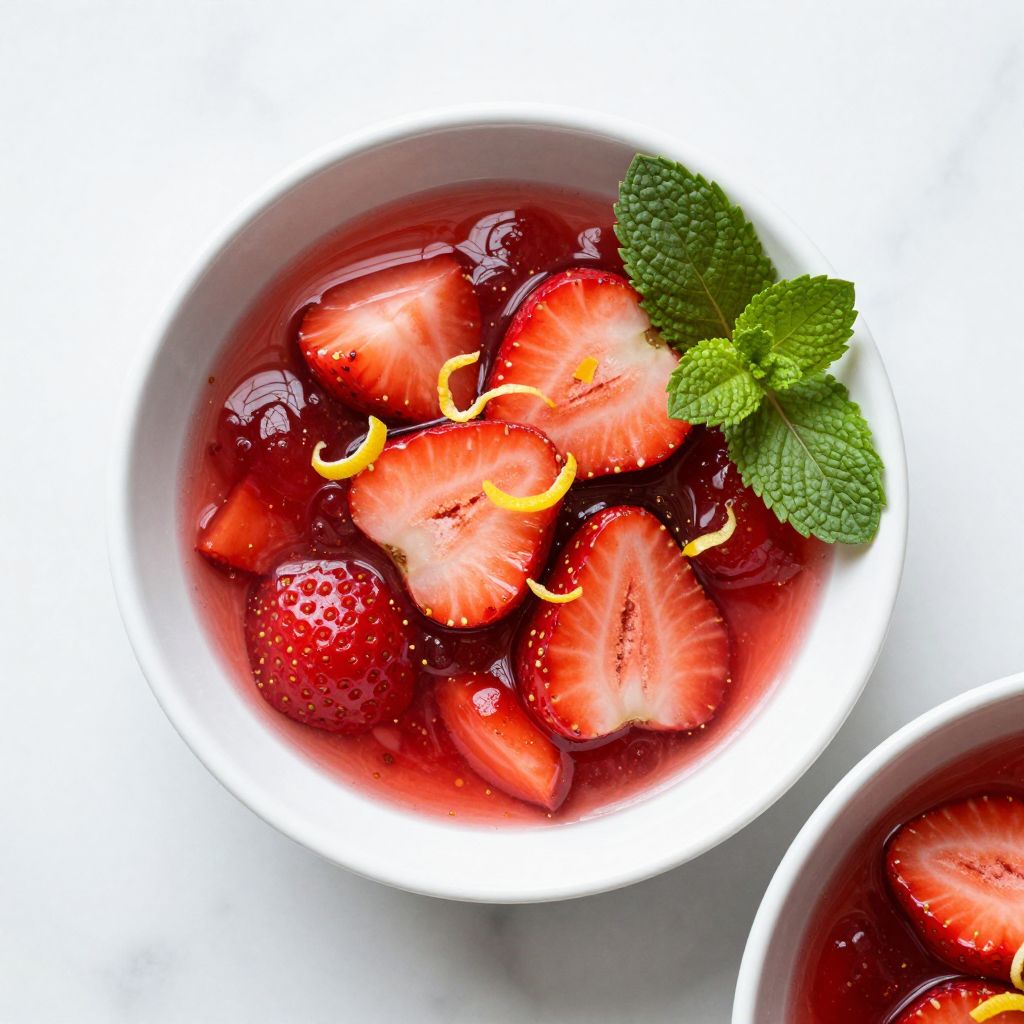
There’s something almost magical about the moment when fresh strawberries break down into glossy, ruby-red compote on the stovetop, filling your kitchen with sweet steam and promise. Strawberry compote is one of those deceptively simple recipes that tastes like you spent hours fussing, when really it’s just strawberries, sugar, and a little patience working together.
This recipe delivers jammy sweetness without the complexity of full jam-making, no special equipment or pectin needed. It’s versatile enough to top pancakes at breakfast, swirl into yogurt for an afternoon snack, or crown a cheesecake at dinner.
Why You’ll Love This Recipe
This compote strikes the perfect balance between quick enough for a weeknight and impressive enough for company. It tastes homemade because it actually is, and the flavor beats anything from a jar.
- Ready in about 20 minutes from start to finish
- Uses just 3 simple ingredients: strawberries, sugar, and lemon juice
- No pectin, thermometer, or special canning knowledge required
- Keeps for 2 weeks in the fridge and freezes beautifully for months
- Works on everything from toast to ice cream to roasted meats
My Experience Making This Recipe
I first made this on a Sunday afternoon when my farmers market haul included two pounds of slightly soft strawberries that needed rescuing. Twenty minutes later, my kitchen smelled like a berry farm, and I had enough compote to last through the week.
What surprised me most was how quickly it came together and how the texture stayed jammy rather than runny. The tartness from the lemon cuts through the sweetness perfectly, making it taste balanced rather than cloying.
I’ve since made it with everything from peak-season berries to frozen strawberries on a snowy February afternoon, and it works every single time. My partner now requests it by name, which feels like the highest compliment a home cook can receive.
Recipe Overview
- Recipe Name: Strawberry Compote
- Servings: Makes about 2 cups
- Prep Time: 10 minutes
- Cook Time: 15 minutes
- Total Time: 25 minutes
- Course: Condiment or Topping
- Cuisine: French-inspired
- Calories per Serving: 45 calories per 2-tablespoon serving
Equipment You Will Need
- Large stainless steel or non-reactive saucepan
- Wooden spoon or heat-resistant silicone spatula
- Sharp knife for hulling and chopping strawberries
- Cutting board
- Measuring cups and spoons
- Small clean glass jars for storage
- Slotted spoon for skimming foam (optional but helpful)
Ingredients for Strawberry Compote
- 2 pounds fresh strawberries, hulled and halved (about 5 cups)
- 1 cup granulated sugar
- 3 tablespoons fresh lemon juice
- Pinch of salt
Ingredient Notes and Substitutions
- Fresh strawberries provide natural pectin and bright flavor, essential to the compote’s texture and taste. If using frozen strawberries, thaw them first and reduce the sugar to 3/4 cup since frozen berries are often picked when sweeter.
- Granulated sugar sweetens and helps the compote set as it cools. Honey or maple syrup can replace it 1:1, though the flavor will shift slightly and the set may be softer.
- Fresh lemon juice adds brightness and prevents the compote from tasting one-dimensional sweet. Bottled lemon juice works in a pinch, though fresh always tastes cleaner.
- A pinch of salt amplifies the strawberry flavor and balances sweetness without tasting salty. You can skip it, but don’t.
How to Make Strawberry Compote
Step 1: Prepare Your Strawberries
Hull your strawberries by removing the green leafy tops and any white core underneath using a sharp knife or hulling tool. Cut each strawberry in half to ensure they cook evenly and break down quickly in the pan.
Step 2: Combine Strawberries and Sugar
Pour the halved strawberries into a large saucepan and add the granulated sugar and salt. Stir everything together so the sugar coats the strawberries, then let the mixture sit for 5 minutes, which allows the strawberries to release their juices and the sugar to start dissolving.
Step 3: Start Cooking Over Medium Heat
Place the saucepan over medium heat and bring the strawberry mixture to a gentle simmer, stirring occasionally. You’ll notice the strawberries releasing more liquid and the sugar completely dissolving after about 3 to 4 minutes of gentle heat.
Step 4: Add Lemon Juice
Stir in the fresh lemon juice once the mixture reaches a simmer. The lemon juice prevents the compote from tasting cloyingly sweet and helps preserve its bright strawberry flavor.
Step 5: Simmer and Skim the Foam
Let the mixture bubble gently for about 8 to 10 minutes, stirring occasionally with a wooden spoon. You’ll notice white foam rising to the surface; skim this off with a slotted spoon and discard it, since this foam can make the finished compote look less clear and pretty.
Step 6: Test for Doneness
Drop a small spoonful of compote onto a chilled plate and let it cool for 30 seconds, then push it gently with your finger. If it wrinkles slightly and holds its shape, it’s ready; if it’s still very runny, cook for another 2 to 3 minutes and test again.
Step 7: Crush the Berries to Your Liking
Using a wooden spoon, gently press some of the strawberry pieces against the side of the pan to release more juice and create a chunky-jammy texture. Don’t crush everything into a smooth puree unless that’s your preference; a little texture is lovely.
Step 8: Cool Slightly and Jar
Remove the pan from heat and let the compote cool for 5 minutes, which allows any residual cooking to finish. Pour the warm compote into clean glass jars, seal loosely while warm, then refrigerate once fully cooled.
Pro Tip: Don’t overcook your compote chasing a jam-like set; strawberry compote should be thicker than syrup but looser than traditional jam, and it thickens more as it cools, so remove it from heat just before it looks done.
Tips for the Best Strawberry Compote
- Use strawberries that are ripe but not mushy, since the fruit quality directly affects the final flavor. Farmers market berries often taste better than supermarket ones picked too early.
- Don’t skip the hulling step; any green parts taste bitter and ruin the bright, sweet flavor you’re after.
- Stir occasionally while cooking to prevent sticking and ensure even cooking, but avoid constant stirring, which can break down the berries too aggressively.
- A heavy-bottomed stainless steel saucepan heats more evenly than a thin pan and prevents scorching on the bottom.
- Taste the finished compote before jarring and adjust the lemon juice or sugar if needed; some batches of berries need a little more brightness or sweetness.
- Cool the compote completely before tasting it at full strength, since warm compote always tastes thinner and less flavorful than the finished cold version.
Common Mistakes to Avoid
- Overcooking causes the compote to taste too jammy and lose its fresh strawberry flavor, turning it dark and muddy rather than bright ruby red. Stop as soon as it passes the plate test.
- Using overripe or mushy strawberries makes a compote that tastes fermented or off, so choose berries with some firmness.
- Forgetting the lemon juice results in a one-dimensional sweet compote that tastes flat and boring by the second spoonful. The acidity is non-negotiable.
- Crowding the pan with too many berries at once makes them steam rather than cook properly, so if you’re doubling the recipe, use a larger pan or work in batches.
- Not removing the foam allows sediment to cloud the compote, making it look less appealing even though it tastes the same.
Serving Suggestions
Strawberry compote belongs on more than just toast, though toast is certainly an excellent place to start. Think beyond breakfast and use it to add brightness and texture to both sweet and savory dishes.
- Swirled into plain yogurt or Greek yogurt for an instant fancy breakfast bowl
- Spooned over vanilla ice cream, cheesecake, or pound cake for an elegant dessert
- Layered into parfaits with whipped cream and granola for brunch
- Topped onto roasted duck or pork for a sweet and tart glaze
- Mixed into oatmeal or smoothie bowls for added flavor and nutrition
Variations to Try
- Strawberry-Basil Compote: Add 4 to 5 fresh basil leaves during cooking, then remove before serving for a herbaceous twist that pairs beautifully with vanilla ice cream.
- Strawberry-Balsamic Compote: Replace 1 tablespoon of lemon juice with aged balsamic vinegar for deeper, more complex flavor that works especially well with duck or cheese.
- Strawberry-Vanilla Compote: Scrape the seeds from half a vanilla bean and add them with the lemon juice for a more luxurious, dessert-focused version.
- Strawberry-Rhubarb Compote: Replace 1 pound of strawberries with 1 pound of chopped fresh rhubarb for a more tart, sophisticated flavor that needs an extra 2 tablespoons of sugar.
- Strawberry-Black Pepper Compote: Add 1/4 teaspoon of freshly cracked black pepper for subtle heat that makes the strawberry flavor pop and adds intrigue.
Dietary Adaptations
- Gluten-free: This recipe is naturally gluten-free, so no adaptation needed; just verify your sugar is certified gluten-free if that matters for your kitchen.
- Dairy-free: The compote contains no dairy and works perfectly alongside dairy-free yogurts, ice creams, and plant-based baked goods.
- Vegan and Vegetarian: Strawberry compote is fully vegan and vegetarian as written, making it suitable for any plant-based diet.
- Low-carb and Keto: Replace the sugar with erythritol or monk fruit sweetener at a 1:1 ratio, though the texture may be slightly thinner and less glossy than the traditional version.
Storage and Reheating
Refrigerator
Store cooled compote in clean glass jars with tight-fitting lids and refrigerate for up to 2 weeks. The compote will thicken slightly more as it cools, which is normal and desirable.
- Always use a clean spoon when removing compote to prevent introducing bacteria
- If any mold appears on top, discard the entire jar rather than trying to salvage it
Freezer
Freeze compote in glass jars leaving 1/2 inch of headspace to allow for expansion, or use ice cube trays for portioned freezing. Frozen compote keeps for up to 6 months.
- Thaw overnight in the refrigerator before using
- Frozen-then-thawed compote may be slightly looser than fresh, which actually works better for swirling into yogurt
Reheating
Compote is delicious served straight from the jar at room temperature or chilled, but you can warm it gently if preferred. Transfer to a small saucepan and heat over low heat with a splash of water if it seems too thick, stirring frequently until warm.
- Never boil reheated compote, which damages the flavor and can cause it to break down further
- Warming compote takes only 3 to 4 minutes, so watch it carefully
Nutrition Information
| Nutrient | Amount |
|---|---|
| Calories | 45 |
| Total Fat | 0g |
| Saturated Fat | 0g |
| Carbohydrates | 11g |
| Fiber | 0.5g |
| Sugar | 10g |
| Protein | 0g |
| Sodium | 15mg |
| Cholesterol | 0mg |
Nutrition information is calculated per 2-tablespoon serving based on standard ingredients and assumes no substitutions. Actual values may vary slightly based on specific strawberry variety, sugar type, and brand variations.
Frequently Asked Questions
Can I make this with frozen strawberries?
Yes, frozen strawberries work beautifully and often taste just as good as fresh, especially if they were picked at peak ripeness. Thaw them completely first and reduce the sugar to 3/4 cup since frozen berries are typically sweeter.
How do I know when the compote is done cooking?
The plate test is your best guide: drop a small spoonful onto a chilled plate, let it cool for 30 seconds, then push gently with your finger. If it wrinkles and holds its shape, it’s ready; if it runs back together, cook for 2 to 3 more minutes and test again.
Can I make a bigger batch and can it in jars?
You can definitely double or triple this recipe using the same method, but proper canning with a water bath requires specific sterilization steps beyond this recipe’s scope. For safety, I recommend refrigerating or freezing rather than shelf-storing unless you follow a tested canning procedure.
Why is my compote too runny?
Runny compote usually means it hasn’t cooked long enough or the strawberries were very watery. Cook it a few minutes longer next time, or next time remove any excess liquid after the fruit releases its juices but before cooking.
What’s the difference between compote and jam?
Compote has a thinner, saucier texture with visible fruit pieces and less added sugar, while jam is thicker, more spreadable, and cooked longer until the fruit breaks down almost completely. Compote is quicker to make and tastes fresher.
Can I add pectin to make it thicker like jam?
You can, though it changes the recipe entirely and requires dissolving powdered pectin in liquid first. I prefer the natural texture of compote without pectin, but if you love thicker results, follow the pectin package instructions and reduce the sugar accordingly.
Final Thoughts
Strawberry compote proves that the best recipes don’t need long ingredient lists or complicated techniques to taste absolutely delicious. Three ingredients and 20 minutes are all you need to create something that tastes homemade, impressive, and genuinely better than anything you’ll buy in a store.
Make a batch this weekend and taste it spread on warm toast with butter, swirled into Greek yogurt, or spooned over ice cream. Once you realize how simple and rewarding this recipe is, you’ll find yourself making it again and again throughout strawberry season.
Strawberry Compote

This strawberry compote is a deceptively simple recipe that delivers jammy sweetness without the complexity of full jam-making. Ready in about 20 minutes with just 3 simple ingredients, it requires no pectin, thermometer, or special canning knowledge. Perfect for topping pancakes, swirling into yogurt, or crowning a cheesecake.
- Large stainless steel or non-reactive saucepan
- Wooden spoon or heat-resistant silicone spatula
- Sharp knife for hulling and chopping strawberries
- Cutting board
- Measuring cups and spoons
- Small clean glass jars for storage
- Slotted spoon for skimming foam (optional)
Main
- 2 pounds fresh strawberries (hulled and halved (about 5 cups))
- 1 cup granulated sugar
- 3 tablespoons fresh lemon juice
- Pinch of salt
- Hull your strawberries by removing the green leafy tops and any white core underneath using a sharp knife or hulling tool. Cut each strawberry in half to ensure they cook evenly and break down quickly in the pan.
- Pour the halved strawberries into a large saucepan and add the granulated sugar and salt. Stir everything together so the sugar coats the strawberries, then let the mixture sit for 5 minutes, which allows the strawberries to release their juices and the sugar to start dissolving.
- Place the saucepan over medium heat and bring the strawberry mixture to a gentle simmer, stirring occasionally. You’ll notice the strawberries releasing more liquid and the sugar completely dissolving after about 3 to 4 minutes of gentle heat.
- Stir in the fresh lemon juice once the mixture reaches a simmer. The lemon juice prevents the compote from tasting cloyingly sweet and helps preserve its bright strawberry flavor.
- Let the mixture bubble gently for about 8 to 10 minutes, stirring occasionally with a wooden spoon. You’ll notice white foam rising to the surface; skim this off with a slotted spoon and discard it, since this foam can make the finished compote look less clear and pretty.
- Drop a small spoonful of compote onto a chilled plate and let it cool for 30 seconds, then push it gently with your finger. If it wrinkles slightly and holds its shape, it’s ready; if it’s still very runny, cook for another 2 to 3 minutes and test again.
- Using a wooden spoon, gently press some of the strawberry pieces against the side of the pan to release more juice and create a chunky-jammy texture. Don’t crush everything into a smooth puree unless that’s your preference; a little texture is lovely.
- Remove the pan from heat and let the compote cool for 5 minutes, which allows any residual cooking to finish. Pour the warm compote into clean glass jars, seal loosely while warm, then refrigerate once fully cooled.
Don’t overcook your compote chasing a jam-like set; strawberry compote should be thicker than syrup but looser than traditional jam, and it thickens more as it cools, so remove it from heat just before it looks done. Store cooled compote in clean glass jars with tight-fitting lids and refrigerate for up to 2 weeks. Freeze in glass jars leaving 1/2 inch of headspace for up to 6 months. If using frozen strawberries, thaw them first and reduce the sugar to 3/4 cup since frozen berries are often picked when sweeter.