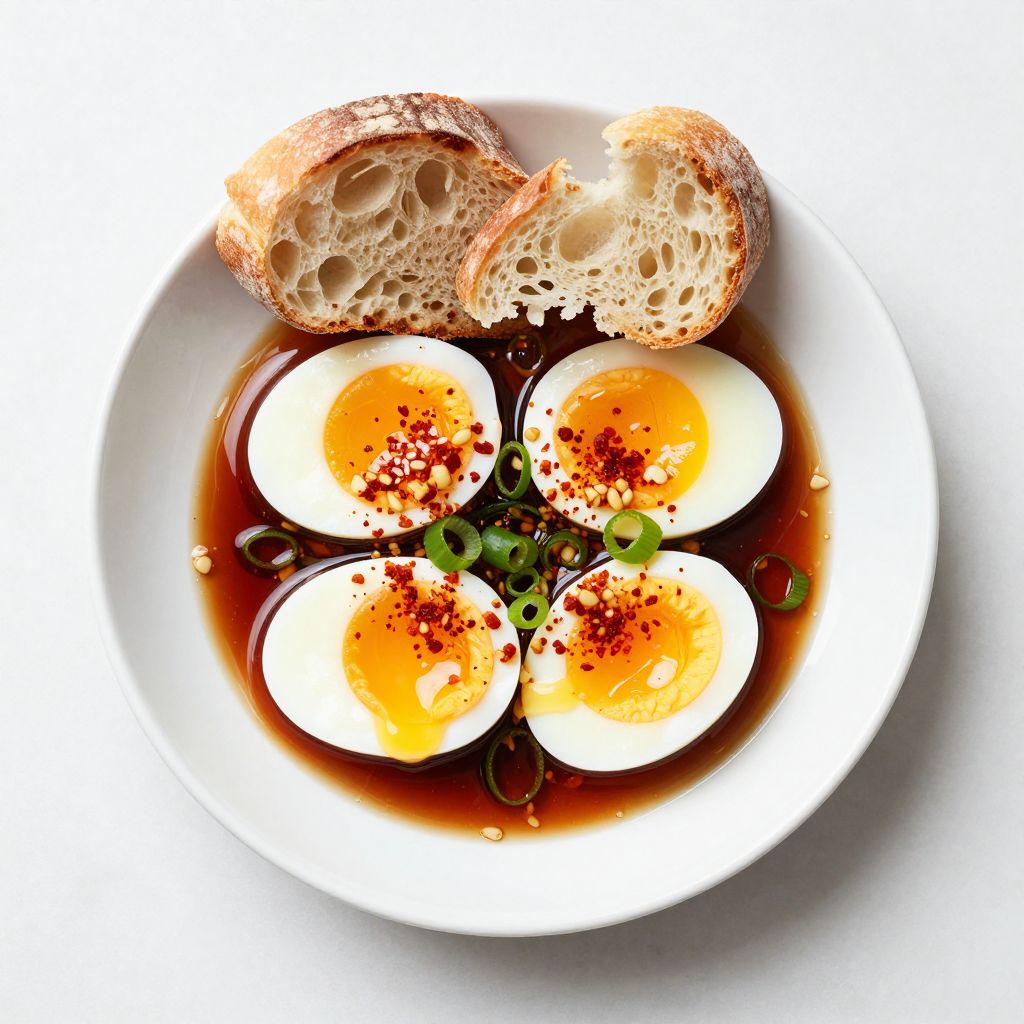
Picture this: golden egg yolks swimming in a pool of spicy, garlicky, umami-rich oil, begging you to scoop them up with crusty bread.
Mayak eggs are a Korean-inspired dish that sounds fancy but tastes like pure comfort.
These aren’t your everyday scrambled eggs.
What makes them special is the addictive sauce: a combination of soy sauce, sesame oil, gochugaru (Korean red chili flakes), and garlic that transforms simple soft-boiled eggs into something you’ll crave at midnight.
The yolks stay creamy and runny, catching every bit of that savory, slightly spicy oil.
Best part? You can have these ready in about 15 minutes, making them perfect for breakfast, a snack, or even a casual appetizer.
Why You’ll Love This Recipe
This dish hits every note: quick, impressive, and genuinely delicious.
- Soft, creamy yolks that act as a natural sauce for bread or rice
- Bold, complex flavors from just five pantry staples
- Ready in under 15 minutes with minimal cleanup
- Works as breakfast, snack, appetizer, or side dish
- Naturally gluten-free and vegetarian with minimal modifications
My Experience Making This Recipe
I first tried mayak eggs at a Korean restaurant in Brooklyn, and I was hooked instantly.
The runny yolk mixed with that garlicky, spicy oil was pure genius, so I knew I had to recreate it at home.
My first attempt was clunky: I overcooked the eggs and made the sauce way too salty.
But after a few tries, I nailed the timing and proportions.
Now, this is my go-to recipe when I want something that feels restaurant-quality but doesn’t require leaving my kitchen.
My friends always ask for the recipe after tasting them, and honestly, I love how simple it is to share.
Recipe Overview
- Recipe Name: Mayak Eggs
- Servings: 2
- Prep Time: 5 minutes
- Cook Time: 8 minutes
- Total Time: 13 minutes
- Course: Breakfast, Appetizer, Snack
- Cuisine: Korean-Inspired
- Calories per Serving: 285
Equipment You Will Need
- Small saucepan
- Small bowl for mixing sauce
- Slotted spoon
- Whisk or fork
- Spoon for serving
- Small serving dish or bowl
Ingredients for Mayak Eggs
- 4 large eggs
- 3 tablespoons soy sauce
- 2 tablespoons sesame oil
- 1 tablespoon gochugaru (Korean red chili flakes)
- 3 cloves garlic, minced
- 1 teaspoon rice vinegar
- Pinch of salt
- Crusty bread or rice for serving
- Sliced green onions for garnish (optional)
Ingredient Notes and Substitutions
- Soy sauce adds saltiness and umami depth that anchors the entire dish. If you need low-sodium, use tamari soy sauce in equal amounts, though the flavor will be slightly less intense.
- Sesame oil provides the nutty, toasted backbone of the sauce and shouldn’t be skipped. If you absolutely must substitute, toasted sesame oil from a bottle is your only real option, used in the same proportion.
- Gochugaru brings the signature heat and slight sweetness Korean food is known for. Red pepper flakes work as a backup but deliver more pure heat and less complexity, so use 1 teaspoon instead of 1 tablespoon.
- Garlic adds pungency and aromatics that make this dish crave-worthy. You can swap fresh garlic for 1 teaspoon of garlic powder, though the sauce will lack the chunky texture and fresher bite.
- Rice vinegar adds a touch of brightness to balance the richness. Regular white vinegar works fine as a substitute in the same amount, though it will taste slightly sharper.
How to Make Mayak Eggs
Step 1: Bring Water to a Boil
Fill a small saucepan with water and bring it to a rolling boil over high heat, using enough water to cover the eggs by about an inch.
Boiling water is essential because it ensures even cooking and helps you achieve that creamy, runny yolk while setting just the whites.
Step 2: Carefully Lower the Eggs Into the Water
Using a spoon, gently lower all four eggs into the boiling water.
This slow descent prevents them from cracking and keeps the shells intact for easy peeling later.
Step 3: Set the Timer for 6 to 7 Minutes
Once all eggs are submerged, set a timer for exactly 6 to 7 minutes depending on how runny you want the yolk.
Six minutes gives you a very soft, nearly liquid yolk, while 7 minutes creates a yolk that’s creamy but holds its shape slightly better when you cut into it.
Step 4: Prepare an Ice Bath
While the eggs cook, fill a small bowl with ice and cold water.
This ice bath stops the cooking process immediately when the eggs are done, preventing that gray-green ring around the yolk that happens with overcooking.
Step 5: Transfer Eggs to the Ice Bath
When the timer goes off, use a slotted spoon to transfer all eggs directly into the ice bath.
Let them sit for at least one minute so the interior stops cooking, then gently crack and peel them under cool running water, starting at the wider end where the air pocket makes separation easier.
Step 6: Make the Sauce in a Small Bowl
In a small bowl, whisk together soy sauce, sesame oil, gochugaru, minced garlic, and rice vinegar until well combined.
The mixture should look slightly thick and oil-based rather than watery, creating a coating that clings to the egg whites and soaks into the yolk.
Step 7: Arrange the Peeled Eggs in a Serving Dish
Place the four peeled, soft-boiled eggs in a small serving bowl or on a shallow plate, arranging them so they’re close but not crowded.
Leaving a tiny bit of space between them makes it easier to coat each one evenly with sauce.
Step 8: Pour the Sauce Over the Eggs
Pour the prepared sauce over the eggs, making sure to distribute the garlic pieces and chili flakes evenly.
Use a spoon to gently coat any uncovered areas, then let the dish sit for at least 5 minutes so the flavors can meld and the eggs absorb the sauce.
Step 9: Serve Immediately
Serve the mayak eggs warm or at room temperature with crusty bread, rice, or crackers for scooping up both egg and sauce.
The runny yolk acts as a natural sauce, so don’t skip the bread or you’ll miss out on the best part.
Pro Tip: The magic is in the timing: 6 to 7 minutes gives you that perfectly runny yolk, and the ice bath stops it dead so you don’t end up with a hard-boiled disappointment.
Tips for the Best Mayak Eggs
- Use room-temperature eggs if possible, as they cook more evenly than cold eggs straight from the fridge. If you only have cold eggs, add 30 seconds to your boiling time.
- Don’t skip the ice bath, as it’s the difference between a creamy yolk and a rubbery one. Even 60 seconds in cold water makes a huge difference.
- Make the sauce while the eggs cook so everything is ready at the same time. A warm sauce on warm eggs tastes better than cold sauce on cooled eggs.
- Taste the sauce before serving and adjust soy sauce or gochugaru to your preference. Some people like it hotter, others more savory.
- Don’t peel the eggs too far in advance or they can dry out slightly. Peel them no more than 5 minutes before serving.
- Nestle the peeled eggs gently in the sauce rather than pouring sauce over them from a height, which can break the delicate whites.
Common Mistakes to Avoid
- Skipping the ice bath results in overcooked, gray-ringed yolks that taste sulfurous and lose their creamy texture. The ice bath takes 60 seconds but transforms the result.
- Using old eggs makes them harder to peel cleanly because the membrane sticks to the white. Fresh eggs peel more smoothly, so check your carton date.
- Cooking for too long destroys the whole point of the dish, which is that luscious runny yolk. Stick to 6 to 7 minutes exactly.
- Making the sauce too salty overshadows the other flavors and makes the dish one-note. Start with the amounts listed and taste before adjusting.
- Letting the sauce sit at room temperature for more than an hour can cause the sesame oil to separate and the garlic to lose potency. Serve fresh for best results.
Serving Suggestions
These eggs work with almost anything, from breakfast spreads to casual dinners.
- Serve alongside warm steamed rice as a simple breakfast or lunch bowl
- Pair with crispy sourdough toast or crusty baguette for sauce dipping
- Add to a Korean bibimbap bowl with vegetables and sesame seeds
- Serve as an appetizer before a larger Korean meal alongside kimchi and banchan sides
- Enjoy with roasted vegetables and a fresh salad for a light lunch
Variations to Try
- Spicy Butter Mayak Eggs: Add 1 tablespoon of unsalted butter to the sauce for richness and a European twist that mellows the heat slightly while adding indulgence.
- Mayak Eggs with Crispy Shallots: Top the finished eggs with fried shallots and a drizzle of their crispy oil for crunch and caramelized sweetness that complements the spice.
- Honey Glazed Mayak Eggs: Stir 1 teaspoon of honey into the sauce to add subtle sweetness that balances the heat and makes the dish feel slightly more dessert-like.
- Garlic Chili Mayak Eggs: Double the garlic to 6 cloves and add 1 teaspoon of chili oil instead of sesame oil for a more aggressively spicy, modern version.
- Umami Bomb Mayak Eggs: Add 1 teaspoon of miso paste and 1 teaspoon of fish sauce to the sauce for deeper, more savory complexity that approaches restaurant-level depth.
Dietary Adaptations
- Gluten-Free: All ingredients in this recipe are naturally gluten-free, but verify your soy sauce is certified tamari, as some soy sauces contain wheat.
- Dairy-Free: This recipe contains no dairy, making it naturally suitable for dairy-free diets without any modifications needed.
- Vegan/Vegetarian: Swap the eggs for firm tofu blocks pan-fried until golden on all sides, though the texture will be less creamy and more substantial.
- Low-Carb/Keto: This recipe is naturally low-carb with roughly 4 grams of carbs per serving, making it ideal for keto diets as-is.
Storage and Reheating
Refrigerator
Store mayak eggs in an airtight container, keeping the eggs and sauce together.
- Lasts up to 2 days in the refrigerator
- Flavor intensifies slightly as it sits, which some people prefer
- The yolk will firm up but won’t become completely hard
Freezer
Freezing these eggs isn’t recommended because the yolk texture changes dramatically when thawed.
- The creamy yolk becomes grainy and rubbery
- Best eaten fresh or within 2 days of making
Reheating
Reheat gently to avoid overcooking the yolk further.
- Transfer to a bowl and warm in the microwave for 30 to 45 seconds at 50% power
- Alternatively, let them come to room temperature naturally and serve cold, which actually tastes great
- Don’t use high heat or you’ll cook the yolk solid
Nutrition Information
| Nutrient | Amount |
|---|---|
| Calories | 285 |
| Total Fat | 22g |
| Saturated Fat | 5g |
| Carbohydrates | 4g |
| Fiber | 0g |
| Sugar | 2g |
| Protein | 13g |
| Sodium | 890mg |
| Cholesterol | 180mg |
Nutrition values are approximate and based on two servings using standard ingredient sizes.
Frequently Asked Questions
Can I make the sauce ahead of time?
Yes, you can make the sauce up to 24 hours in advance and store it in an airtight container in the refrigerator.
Just warm it briefly before pouring it over the eggs so you get that warm-on-warm combination that tastes best.
What’s the difference between soft-boiled and poached eggs for this recipe?
Soft-boiled eggs keep the shell intact and are easier to handle, making them ideal for beginners.
Poached eggs are more delicate and harder to peel, so soft-boiled is the way to go here.
Why does the yolk sometimes break when I crack the egg?
This usually happens from cooking too long or not using an ice bath immediately after cooking.
Follow the 6 to 7 minute timing strictly and ice the eggs right away, and you’ll avoid this issue.
Can I use regular red pepper flakes instead of gochugaru?
Yes, but use only 1 teaspoon instead of 1 tablespoon because regular red pepper flakes are much hotter and lack gochugaru’s subtle sweetness.
The flavor will be sharper and less complex, but still tasty.
How many servings does this recipe make?
The recipe as written serves 2 people as a main dish or appetizer, with 2 eggs per person.
You can easily scale it up by doubling or tripling the recipe if you need to feed more people.
Is this recipe actually Korean or just inspired by Korean flavors?
Mayak eggs are a modern Korean creation that became trendy at Korean restaurants in recent years.
It’s absolutely authentic in its approach and uses traditional Korean ingredients like gochugaru and sesame oil in a contemporary way.
Final Thoughts
Mayak eggs prove that the best dishes don’t need a ton of ingredients or complicated techniques to taste incredible.
With just five basic pantry items and 15 minutes, you can create something that tastes like you spent hours in the kitchen.
The soft yolk mixed with spicy, garlicky oil is addictive, and honestly, once you make these once, you’ll find yourself craving them on regular rotation.
Give this recipe a try, and I promise your friends will be asking for the recipe the moment they taste it.
Mayak Eggs
Golden soft-boiled eggs swimming in a pool of spicy, garlicky, umami-rich sauce made with soy sauce, sesame oil, gochugaru, and garlic. These Korean-inspired eggs are ready in 15 minutes and perfect for breakfast, snacks, or appetizers.
- Small saucepan
- Small bowl for mixing sauce
- Slotted spoon
- Whisk or fork
- Spoon for serving
- Small serving dish or bowl
Main
- 4 large eggs
- 3 tablespoons soy sauce
- 2 tablespoons sesame oil
- 1 tablespoon gochugaru (Korean red chili flakes)
- 3 cloves garlic (minced)
- 1 teaspoon rice vinegar
- Pinch of salt
- Crusty bread or rice for serving
- Sliced green onions for garnish (optional)
- Fill a small saucepan with water and bring it to a rolling boil over high heat, using enough water to cover the eggs by about an inch.
- Using a spoon, gently lower all four eggs into the boiling water.
- Set a timer for exactly 6 to 7 minutes depending on how runny you want the yolk. Six minutes gives you a very soft, nearly liquid yolk, while 7 minutes creates a yolk that’s creamy but holds its shape slightly better.
- While the eggs cook, fill a small bowl with ice and cold water to prepare an ice bath.
- When the timer goes off, use a slotted spoon to transfer all eggs directly into the ice bath. Let them sit for at least one minute.
- Gently crack and peel the eggs under cool running water, starting at the wider end where the air pocket makes separation easier.
- In a small bowl, whisk together soy sauce, sesame oil, gochugaru, minced garlic, and rice vinegar until well combined.
- Place the four peeled, soft-boiled eggs in a small serving bowl or on a shallow plate, arranging them so they’re close but not crowded.
- Pour the prepared sauce over the eggs, making sure to distribute the garlic pieces and chili flakes evenly. Use a spoon to gently coat any uncovered areas.
- Let the dish sit for at least 5 minutes so the flavors can meld and the eggs absorb the sauce.
- Serve the mayak eggs warm or at room temperature with crusty bread, rice, or crackers for scooping up both egg and sauce.
The magic is in the timing: 6 to 7 minutes gives you that perfectly runny yolk, and the ice bath stops it dead so you don’t end up with a hard-boiled disappointment. Use room-temperature eggs if possible for more even cooking. Don’t skip the ice bath as it’s the difference between a creamy yolk and a rubbery one. Store in an airtight container in the refrigerator for up to 2 days. Not recommended for freezing.