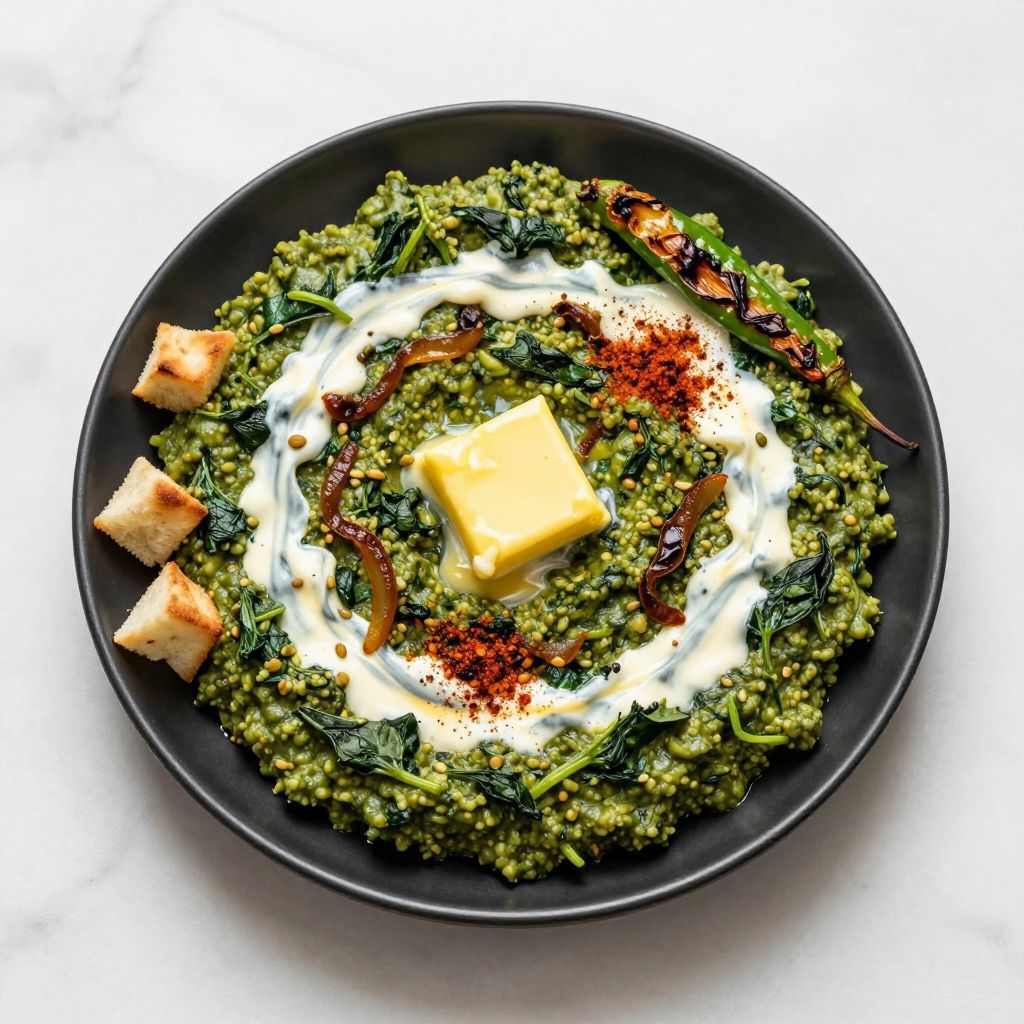
The first time you taste properly made saag, with its velvety greens clinging to warm naan and that perfect balance of spice and cream, you understand why this dish has survived centuries in Indian kitchens. This isn’t the watery, bitter spinach mush you might have encountered at mediocre buffets. We’re making the real thing here, where mustard greens, spinach, and aromatics transform into something so comforting you’ll crave it on cold evenings and busy weeknights alike.
What makes this version special is how we layer flavors through proper technique, not shortcuts. You’ll learn to coax sweetness from onions, bloom whole spices in ghee, and create that signature silky texture without relying on excessive cream.
Why You’ll Love This Recipe
This saag strikes that rare balance between authentic flavor and practical weeknight cooking. The method is forgiving enough for beginners but delivers results that taste like you’ve been making it for years.
- Rich, complex flavor from a blend of greens instead of spinach alone
- Naturally packed with iron, vitamins, and fiber while tasting indulgent
- Comes together in under an hour with mostly pantry staples
- Tastes even better the next day, making it perfect for meal prep
- Works beautifully with paneer, chicken, or as a standalone vegetarian main
My Experience Making This Recipe
I’ll admit my first attempt at saag was a disaster fueled by impatience and a refusal to actually blanch the greens properly. The result was bitter, watery, and frankly embarrassing to serve. But once I learned to treat the greens with respect and build the spice base correctly, everything changed.
Now the smell of cumin seeds crackling in hot ghee instantly transports me back to a tiny restaurant in Delhi where I first tasted saag that made me rethink everything. The owner watched me devour two servings and simply nodded, as if to say, “Yes, now you understand.” I’ve been chasing that same depth of flavor ever since.
When I finally nailed this version, my partner, who claims to hate “green sludge,” went back for thirds. The key turned out to be the mustard greens for bite, the ginger-garlic ratio for warmth, and knowing exactly when to stop blending so you get a rustic texture instead of baby food.
Recipe Overview
- Recipe Name: Saag
- Servings: 6
- Prep Time: 20 minutes
- Cook Time: 35 minutes
- Total Time: 55 minutes
- Course: Main Course, Side Dish
- Cuisine: Indian, Punjabi
- Calories per Serving: 185
Equipment You Will Need
- Large pot or Dutch oven for blanching greens
- Heavy-bottomed skillet or kadai for the base
- Blender or immersion blender
- Fine mesh strainer or colander
- Sharp knife and cutting board
- Wooden spoon or spatula
- Measuring spoons and cups
- Large bowl of ice water
Ingredients for Saag
For the Greens
- Spinach: 1 pound fresh, washed and roughly chopped
- Mustard greens: 8 ounces, washed and roughly chopped
- Fenugreek leaves (methi): 1/2 cup fresh or 2 tablespoons dried
- Water: 8 cups for blanching
- Salt: 1 tablespoon for blanching water
For the Base
- Ghee or oil: 3 tablespoons
- Cumin seeds: 1 teaspoon
- Onion: 1 large, finely chopped
- Ginger: 2 tablespoons freshly grated
- Garlic: 6 cloves, minced
- Green chilies: 2, slit lengthwise
- Tomato: 1 medium, finely chopped
For the Spices
- Ground coriander: 1 teaspoon
- Ground turmeric: 1/2 teaspoon
- Garam masala: 1 teaspoon
- Kashmiri red chili powder: 1/2 teaspoon (adjust to taste)
- Salt: 1 teaspoon, or to taste
For Finishing
- Heavy cream or yogurt: 1/4 cup
- Butter: 1 tablespoon
- Cornmeal (makki ka atta): 1 tablespoon, optional for authentic texture
Ingredient Notes and Substitutions
- Mustard greens: These add the signature bitter-peppery bite that defines authentic saag. Substitute with kale or collard greens if you can’t find them, though the flavor will be milder.
- Fenugreek leaves: They provide an earthy, slightly bitter complexity that rounds out the dish. Dried kasuri methi works fine and is easier to find; skip entirely if unavailable rather than substituting.
- Ghee: It adds nutty richness and is traditional, but neutral oil or vegan butter works for a dairy-free version. The flavor will be cleaner but less complex.
- Cornmeal: This thickens the saag and adds authentic rustic texture favored in Punjab. Leave it out for a smoother, lighter consistency or use chickpea flour as an alternative.
- Heavy cream: It mellows the greens and adds luxurious body. Greek yogurt works well for tang, or use coconut cream for a vegan option with slightly sweet undertones.
- Green chilies: Fresh serrano or Thai chilies provide the best heat and flavor. Substitute with 1/2 teaspoon cayenne pepper if fresh chilies aren’t available, but you’ll miss the brightness.
How to Make Saag
Step 1: Prepare and Blanch the Greens
Bring 8 cups of water to a rolling boil in your large pot and add 1 tablespoon of salt. Add all the greens (spinach, mustard greens, and fenugreek) and blanch for exactly 3 minutes, stirring once halfway through. Blanching softens the greens while preserving their vibrant color and helps remove some of the bitterness from mustard greens.
Step 2: Shock and Drain the Greens
Immediately drain the greens in your colander and plunge them into a large bowl of ice water to stop the cooking process. After 2 minutes, drain thoroughly and squeeze out as much excess water as possible using your hands or by pressing against the colander. Removing excess water prevents your saag from becoming watery and diluted.
Step 3: Puree the Greens
Transfer the drained greens to your blender and pulse into a coarse puree, adding just 2 to 3 tablespoons of water if needed to help the blades move. Don’t over-blend; you want a rustic, slightly chunky texture, not a smooth puree. This texture gives the saag character and prevents it from feeling like baby food.
Step 4: Build the Aromatic Base
Heat the ghee in your heavy-bottomed skillet over medium heat until shimmering. Add cumin seeds and let them sizzle for 30 seconds until fragrant and darkened slightly. Toss in the chopped onion and cook for 8 to 10 minutes, stirring occasionally, until deeply golden brown. Properly caramelized onions create the sweet, complex foundation that makes saag taste like it simmered for hours.
Step 5: Add Aromatics and Tomatoes
Stir in the grated ginger, minced garlic, and slit green chilies, cooking for 2 minutes until the raw smell disappears and the mixture smells sweet and pungent. Add the chopped tomato and cook for 4 to 5 minutes until it breaks down completely and the oil begins to separate from the mixture. This oil separation signals that the base is properly cooked and ready for spices.
Step 6: Bloom the Spices
Add the ground coriander, turmeric, garam masala, and Kashmiri chili powder to the aromatic base. Stir constantly for 1 minute to toast the spices in the oil. Blooming spices in hot fat unlocks their essential oils and creates depth that raw spices simply can’t match.
Step 7: Combine and Simmer
Add the pureed greens to the spiced base along with 1 teaspoon of salt. Stir everything together thoroughly, then reduce heat to medium-low and let it simmer uncovered for 12 to 15 minutes, stirring every few minutes. If using cornmeal for texture, sprinkle it in after 5 minutes of simmering and stir well to prevent lumps. This simmering time allows the flavors to marry and the saag to thicken to a luscious, spoonable consistency.
Step 8: Finish with Richness
Stir in the cream or yogurt and the tablespoon of butter, mixing until fully incorporated. Let it cook for 2 more minutes to heat through. Taste and adjust salt if needed. The cream smooths out any remaining bitterness and adds a silky richness that makes the dish feel indulgent.
Pro Tip: Make saag a day ahead if possible. The flavors deepen and meld overnight in the refrigerator, and the texture somehow becomes even more luxurious after resting. Reheat gently with a splash of water or cream to restore the perfect consistency.
Tips for the Best Saag
- Don’t skip the mustard greens if you want authentic flavor. Spinach alone makes palak, not saag, and you’ll miss that characteristic slight bitterness and complexity.
- Squeeze the blanched greens thoroughly but don’t rinse them after shocking. That green water contains flavor and nutrients you want to keep.
- Caramelize your onions properly; golden brown, not pale and raw. This step alone accounts for half the depth of flavor in your final dish.
- Keep the heat at medium-low during the final simmer. High heat can cause the cream to split and creates a grainy texture instead of silky smoothness.
- Add cream or yogurt off the heat or on very low heat while stirring constantly. Dairy curdles easily when shocked with high temperatures.
- Taste your saag before serving and adjust with a pinch of sugar if it’s too bitter, or a squeeze of lemon juice if it tastes flat. Small tweaks make a big difference.
Common Mistakes to Avoid
- Over-pureeing the greens into a completely smooth paste eliminates texture and makes the dish one-dimensional. Aim for rustic and slightly chunky.
- Adding cream too early causes it to split and separate during the long simmer, creating an oily, curdled appearance instead of creamy lusciousness.
- Using only spinach instead of a greens blend results in a sweet, mild dish that lacks the complex, slightly bitter backbone of true saag.
- Not blanching the greens before pureeing leaves them tough and bitter, and they never fully break down no matter how long you simmer.
- Rushing the onion caramelization step leaves your base pale and raw-tasting, which no amount of spices can fix later.
Serving Suggestions
Saag shines brightest with warm, pillowy bread to scoop up every last bit of that creamy, spiced goodness. The contrast between the rich greens and starchy carbs is what makes this combination so satisfying and traditional.
- Serve with butter-brushed naan or tandoori roti for the classic Punjabi experience
- Pair with makki ki roti (cornmeal flatbread) and a dollop of white butter for the most authentic presentation
- Spoon over steaming basmati rice with a side of raita to cool the heat
- Add cubes of paneer or grilled chicken in the last few minutes of cooking for a complete protein-packed meal
- Serve alongside dal makhani and jeera rice for a proper North Indian thali spread
Variations to Try
- Saag Paneer: Add 8 ounces of cubed paneer in the last 5 minutes of cooking for the restaurant favorite. The mild cheese soaks up the spiced greens beautifully and adds satisfying protein and texture.
- Saag Chicken: Stir in 1 pound of cooked, diced chicken breast or thighs after the greens have simmered. This turns the dish into a hearty main course with added richness from the meat.
- Vegan Saag: Skip the dairy entirely and use coconut milk or cashew cream instead, finishing with extra squeeze of lemon for brightness. The result is lighter but still creamy with a subtle tropical note.
- Sarson ka Saag: Increase mustard greens to 1 pound and reduce spinach to 8 ounces, then finish with a tempering of extra ghee and red chili flakes. This Punjab winter classic has a more pronounced bitter, peppery flavor.
- Bengali Style: Add 1 teaspoon of panch phoron (Bengali five-spice) instead of cumin seeds and finish with mustard oil instead of ghee. The result is sharper, more pungent, and distinctly different from the Punjabi version.
Dietary Adaptations
- Gluten-Free: This recipe is naturally gluten-free as long as you skip the optional cornmeal or use certified gluten-free cornmeal. Serve with rice or gluten-free flatbreads instead of naan.
- Dairy-Free: Replace ghee with coconut oil or vegetable oil and use full-fat coconut milk instead of cream. You’ll lose some nutty richness but gain a subtle sweetness that works surprisingly well with the spices.
- Vegan: Follow the dairy-free adaptations above and skip the butter at the end or use vegan butter. The dish remains hearty and satisfying with only minimal flavor compromise.
- Low-Carb/Keto: This saag is already quite low in carbs at about 8g per serving; skip the cornmeal and serve with cauliflower rice or low-carb flatbreads. The cream and ghee make it naturally keto-friendly and satiating.
Storage and Reheating
Refrigerator
Store cooled saag in an airtight container in the refrigerator for up to 5 days. The flavors actually improve over the first 2 days as everything melds together.
- Let the saag cool completely before covering to prevent condensation and excess moisture
- Store in glass containers to prevent staining and preserve flavor better than plastic
- Keep a thin layer of ghee or oil on top to prevent oxidation and discoloration
Freezer
Saag freezes beautifully for up to 3 months, making it perfect for batch cooking. The texture remains remarkably similar after thawing.
- Portion into individual servings in freezer-safe containers or bags for easy defrosting
- Leave 1 inch of headspace in containers since the saag will expand slightly when frozen
- Label with the date and thaw overnight in the refrigerator before reheating
Reheating
Gentle reheating preserves the creamy texture and prevents the cream from separating. Never microwave on high power or you’ll end up with a curdled mess.
- Reheat on the stovetop over low heat, stirring frequently and adding 2 to 3 tablespoons of water or cream to restore consistency
- Microwave on 50% power in 1-minute intervals, stirring between each, until heated through
- Add a small knob of butter when reheating to refresh the richness and bring back the glossy sheen
Nutrition Information
| Nutrient | Amount |
|---|---|
| Calories | 185 |
| Total Fat | 13g |
| Saturated Fat | 7g |
| Carbohydrates | 12g |
| Fiber | 4g |
| Sugar | 3g |
| Protein | 6g |
| Sodium | 580mg |
| Cholesterol | 30mg |
Nutritional values are approximate and will vary based on specific ingredients used and portion sizes. Saag is notably high in vitamins A, C, and K, plus iron and calcium from the greens
Saag

Authentic Punjabi saag with velvety greens, perfect balance of spice and cream, made with mustard greens, spinach, and aromatics. This comforting dish features properly layered flavors and a signature silky texture without excessive cream.
- Large pot or Dutch oven for blanching greens
- Heavy-bottomed skillet or kadai for the base
- Blender or immersion blender
- Fine mesh strainer or colander
- Sharp knife and cutting board
- Wooden spoon or spatula
- Measuring spoons and cups
- Large bowl of ice water
For the Greens
- 1 pound fresh spinach (washed and roughly chopped)
- 8 ounces mustard greens (washed and roughly chopped)
- 1/2 cup fresh fenugreek leaves (methi or 2 tablespoons dried)
- 8 cups water for blanching
- 1 tablespoon salt for blanching water
For the Base
- 3 tablespoons ghee or oil
- 1 teaspoon cumin seeds
- 1 large onion (finely chopped)
- 2 tablespoons freshly grated ginger
- 6 cloves garlic (minced)
- 2 green chilies (slit lengthwise)
- 1 medium tomato (finely chopped)
For the Spices
- 1 teaspoon ground coriander
- 1/2 teaspoon ground turmeric
- 1 teaspoon garam masala
- 1/2 teaspoon Kashmiri red chili powder (adjust to taste)
- 1 teaspoon salt (or to taste)
For Finishing
- 1/4 cup heavy cream or yogurt
- 1 tablespoon butter
- 1 tablespoon cornmeal (makki ka atta, optional for authentic texture)
- Bring 8 cups of water to a rolling boil in your large pot and add 1 tablespoon of salt. Add all the greens (spinach, mustard greens, and fenugreek) and blanch for exactly 3 minutes, stirring once halfway through.
- Immediately drain the greens in your colander and plunge them into a large bowl of ice water to stop the cooking process. After 2 minutes, drain thoroughly and squeeze out as much excess water as possible using your hands or by pressing against the colander.
- Transfer the drained greens to your blender and pulse into a coarse puree, adding just 2 to 3 tablespoons of water if needed to help the blades move. Don’t over-blend; you want a rustic, slightly chunky texture.
- Heat the ghee in your heavy-bottomed skillet over medium heat until shimmering. Add cumin seeds and let them sizzle for 30 seconds until fragrant and darkened slightly. Toss in the chopped onion and cook for 8 to 10 minutes, stirring occasionally, until deeply golden brown.
- Stir in the grated ginger, minced garlic, and slit green chilies, cooking for 2 minutes until the raw smell disappears. Add the chopped tomato and cook for 4 to 5 minutes until it breaks down completely and the oil begins to separate from the mixture.
- Add the ground coriander, turmeric, garam masala, and Kashmiri chili powder to the aromatic base. Stir constantly for 1 minute to toast the spices in the oil.
- Add the pureed greens to the spiced base along with 1 teaspoon of salt. Stir everything together thoroughly, then reduce heat to medium-low and let it simmer uncovered for 12 to 15 minutes, stirring every few minutes. If using cornmeal for texture, sprinkle it in after 5 minutes of simmering and stir well to prevent lumps.
- Stir in the cream or yogurt and the tablespoon of butter, mixing until fully incorporated. Let it cook for 2 more minutes to heat through. Taste and adjust salt if needed.
Saag tastes even better the next day as flavors deepen and meld overnight. Reheat gently with a splash of water or cream to restore the perfect consistency. Store in refrigerator for up to 5 days or freeze for up to 3 months. Don’t skip the mustard greens for authentic flavor. Properly caramelize onions for depth of flavor. Add cream off heat or on very low heat to prevent curdling.