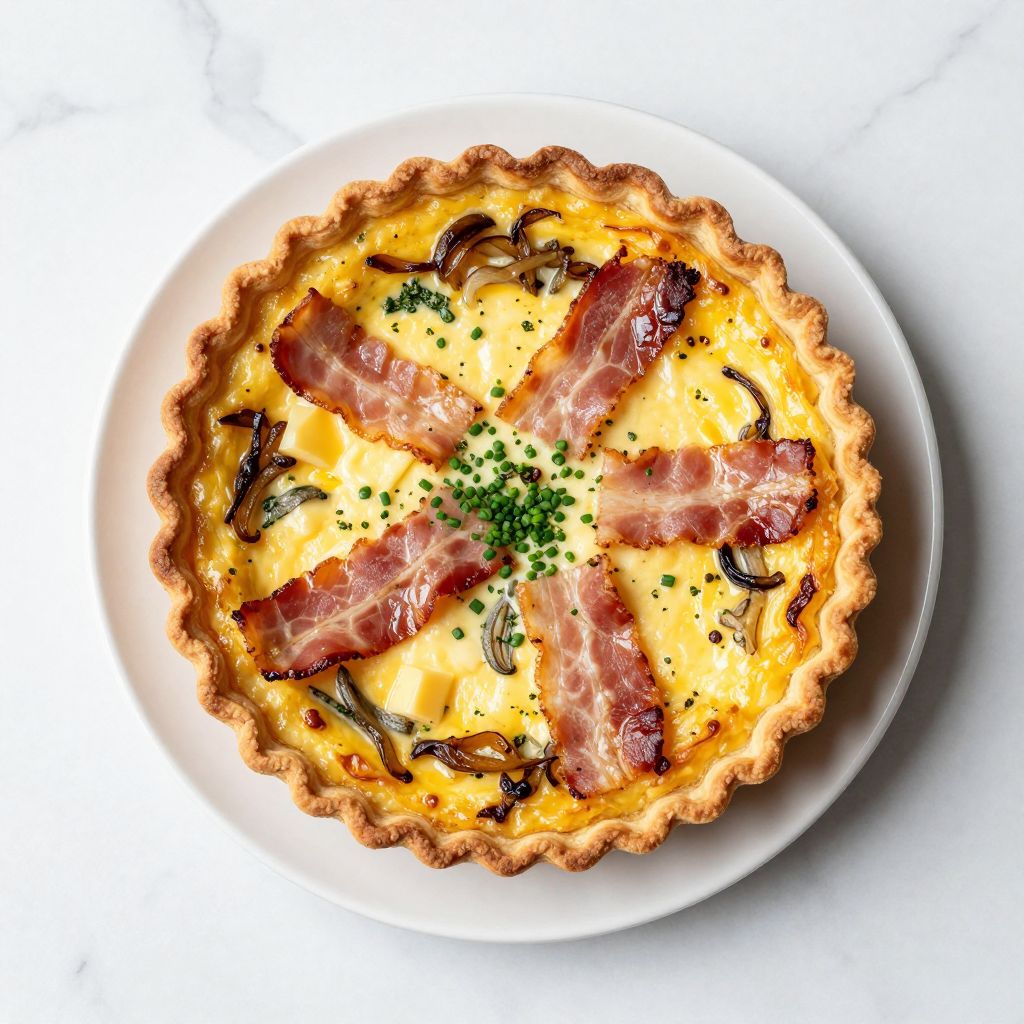
The difference between a sad, soggy quiche and one that makes people ask for seconds often comes down to the crust. A proper quiche crust should shatter delicately under your fork, hold its shape without leaking, and taste buttery enough to eat on its own.
This recipe delivers that perfect balance of flakiness and structure every time. The technique is straightforward, and the ingredients are pantry staples you likely already have.
What makes this crust special is the method: cold butter, minimal handling, and a short rest period that relaxes the gluten without requiring hours of chilling. You’ll end up with a golden, crisp base that supports any filling you throw at it.
Why You’ll Love This Recipe
This quiche crust works for beginners and experienced bakers alike. It forgives small mistakes while still delivering professional results.
- Comes together in 10 minutes with just 5 ingredients
- Holds up beautifully against custard fillings without getting soggy
- Flaky texture that tastes homemade, not store-bought
- Adaptable for sweet or savory quiches
- Can be made ahead and frozen for up to 3 months
My Experience Making This Recipe
I’ve made this crust at least two dozen times, and it has never failed me. The first time I tested it, I was skeptical that such a simple process could produce something so tender, but the butter pockets created those perfect flaky layers I’d been chasing.
My family noticed immediately when I switched from store-bought crusts to this homemade version. They started requesting quiche for weekend breakfasts instead of just tolerating it.
The smell of butter toasting in the oven as the crust blind-bakes is worth the effort alone. That golden edge, slightly darker where it meets the pan, signals you’ve done it right.
Recipe Overview
- Recipe Name: Quiche Crust
- Servings: 8 slices (one 9-inch crust)
- Prep Time: 10 minutes
- Cook Time: 15 minutes (for blind baking)
- Total Time: 55 minutes (includes 30 minutes chilling)
- Course: Breakfast, Brunch, Main Course
- Cuisine: French
- Calories per Serving: 185 kcal
Equipment You Will Need
- 9-inch pie pan or tart pan
- Food processor or pastry cutter
- Rolling pin
- Plastic wrap
- Parchment paper
- Pie weights or dried beans
- Mixing bowls
- Fork for docking the dough
Ingredients for Quiche Crust
- 1 1/4 cups all-purpose flour, plus extra for dusting
- 1/2 teaspoon salt
- 1/2 cup unsalted butter, cold and cubed into 1/2-inch pieces
- 3 to 4 tablespoons ice water
- 1 teaspoon white vinegar (optional, for extra tenderness)
Ingredient Notes and Substitutions
- All-purpose flour: Provides structure and creates the base for flakiness. You can substitute with a 1:1 gluten-free flour blend, but the texture will be slightly more crumbly.
- Unsalted butter: Creates steam pockets that make the crust flaky and adds rich flavor. Salted butter works if you reduce the added salt to 1/4 teaspoon.
- Ice water: Keeps the butter cold so it doesn’t melt into the flour too quickly. Room temperature water will make the dough tough and dense.
- Salt: Enhances flavor and strengthens the gluten structure. Omit if using salted butter, or the crust may taste too salty.
- White vinegar: Adds tenderness by slightly inhibiting gluten development. Lemon juice works equally well, or skip it entirely without major consequences.
How to Make Quiche Crust
Step 1: Prepare Your Ingredients
Cut the cold butter into 1/2-inch cubes and return it to the refrigerator until needed. Fill a small bowl with ice water and set it aside.
Keeping the butter as cold as possible prevents it from blending completely into the flour, which creates those flaky layers you want. Room temperature butter makes a dense, cookie-like crust instead.
Step 2: Combine the Dry Ingredients
Add the flour and salt to your food processor and pulse 2 to 3 times to mix. If mixing by hand, whisk them together in a large bowl.
Even distribution of salt prevents some bites from tasting bland while others taste too salty. This quick step takes five seconds but matters for consistent flavor.
Step 3: Cut in the Butter
Add the cold butter cubes to the flour mixture. Pulse 10 to 12 times in the food processor until the mixture resembles coarse crumbs with some pea-sized butter pieces remaining.
Those visible butter chunks are what create flakiness when they melt and release steam during baking. If you overmix, the butter incorporates too fully and you lose that layered texture.
Step 4: Add the Liquid
Drizzle 3 tablespoons of ice water (and vinegar if using) over the flour mixture. Pulse 5 to 6 times until the dough just begins to clump together but still looks shaggy.
The dough should hold together when you squeeze a handful, but it shouldn’t form a smooth ball yet. Add the fourth tablespoon of water only if the mixture feels dry and won’t hold together.
Step 5: Form and Chill the Dough
Turn the shaggy dough out onto a clean surface and gather it into a ball with your hands. Flatten it into a 1-inch thick disk, wrap tightly in plastic wrap, and refrigerate for 30 minutes.
Chilling relaxes the gluten strands that developed during mixing, which prevents shrinking when you bake the crust. The short rest also firms up the butter so the dough rolls out more easily.
Step 6: Roll Out the Dough
Lightly flour your work surface and rolling pin. Roll the chilled dough from the center outward, rotating it a quarter turn after every few rolls, until you have an 11-inch circle about 1/8-inch thick.
Rotating prevents sticking and ensures even thickness throughout. An uneven crust bakes unevenly, with thin spots burning while thick spots stay pale and undercooked.
Step 7: Transfer to the Pan
Gently roll the dough around your rolling pin, then unroll it over your 9-inch pie pan. Press it gently into the bottom and up the sides without stretching.
Stretching creates tension that causes dramatic shrinking during baking. If the dough tears, patch it by pressing scraps into the gap with slightly damp fingers.
Step 8: Trim and Crimp the Edges
Trim any overhang to 1/2 inch beyond the pan rim using kitchen shears or a knife. Fold the overhang under itself and crimp decoratively with your fingers or press with fork tines.
The crimped edge isn’t just decorative; it creates a thicker barrier that holds up better against wet fillings. A thin, uncrimped edge often collapses or burns.
Step 9: Dock and Chill Again
Prick the bottom of the crust all over with a fork, spacing the holes about 1 inch apart. Refrigerate the entire pan for 15 minutes before blind baking.
Docking releases steam that would otherwise create large bubbles in the crust. The second chill firms everything up so the shaped crust holds its form in the hot oven.
Step 10: Blind Bake the Crust
Preheat your oven to 375°F. Line the chilled crust with parchment paper and fill with pie weights or dried beans, spreading them evenly to the edges.
The weights prevent the bottom from puffing up and the sides from slumping down. Skipping this step often results in a misshapen crust that won’t hold filling properly.
Step 11: Bake and Cool
Bake for 15 minutes with the weights, then carefully remove the parchment and weights. Return the crust to the oven for 5 more minutes if using a wet filling, or 10 to 12 minutes for a fully baked crust.
The initial bake sets the structure, while the second bake dries out the bottom so it stays crisp under custard. A pale, underbaked bottom turns soggy as soon as you add filling.
Pro Tip: Freeze your shaped, unbaked crust for 10 minutes right before blind baking. This extra-cold start helps the butter create maximum steam for superior flakiness and reduces shrinkage by 30 percent.
Tips for the Best Quiche Crust
- Use European-style butter with higher fat content (82% or more) for richer flavor and flakier layers. The extra butterfat creates better steam pockets.
- Avoid overworking the dough once liquid is added, as this develops gluten and creates a tough, chewy texture instead of tender flakiness.
- Roll the dough between two sheets of parchment paper if it’s too sticky or your kitchen is warm. This prevents adding excess flour that toughens the crust.
- Brush the blind-baked crust with a thin layer of beaten egg white and return it to the oven for 2 minutes. This creates a waterproof seal against soggy bottoms.
- Let the fully baked crust cool for 10 minutes before adding hot filling, which prevents the bottom from steaming and losing its crispness.
- Taste your dough scraps after baking to check seasoning. If they seem bland, increase the salt by 1/4 teaspoon next time.
Common Mistakes to Avoid
- Using warm butter causes it to blend into the flour completely, eliminating the layered structure that creates flakiness and resulting in a dense, crumbly crust.
- Adding too much water makes the dough sticky and develops excess gluten, producing a tough, breadlike texture that’s hard to roll out.
- Skipping the chilling time allows gluten to stay tense and butter to stay soft, leading to dramatic shrinkage when the crust hits the hot oven.
- Stretching the dough to fit the pan creates tension that snaps back during baking, leaving you with a crust that’s pulled away from the sides.
- Baking without weights lets the bottom puff up into a dome and the sides to slump down, creating an unusable shape that won’t hold filling properly.
Serving Suggestions
This crust pairs beautifully with both classic and creative quiche fillings. It’s sturdy enough for heavy ingredient combinations but delicate enough not to overpower subtle flavors.
- Fill with a classic Lorraine mixture of bacon, Gruyere, and caramelized onions for a traditional French breakfast
- Try a Mediterranean combination of spinach, feta, sun-dried tomatoes, and fresh dill
- Go vegetarian with roasted mushrooms, thyme, goat cheese, and a touch of truffle oil
- Make a seafood version with smoked salmon, cream cheese, capers, and fresh dill
- Serve slices with a simple mixed green salad dressed in lemon vinaigrette to cut the richness
Variations to Try
- Whole Wheat Crust: Replace half the all-purpose flour with whole wheat flour for a nuttier, earthier flavor that pairs well with vegetable-heavy fillings. Add an extra tablespoon of water since whole wheat absorbs more liquid.
- Herb-Infused Crust: Mix 1 tablespoon of finely chopped fresh herbs (thyme, rosemary, or chives) into the flour before adding butter. This adds aromatic complexity without overwhelming the filling.
- Parmesan Crust: Add 1/4 cup finely grated Parmesan to the flour mixture for a savory, umami-rich base that complements meat and vegetable fillings beautifully.
- Sweet Crust: Add 2 tablespoons of sugar and reduce salt to 1/4 teaspoon for dessert quiches or custard tarts. The slight sweetness balances fruit or chocolate fillings perfectly.
- Cornmeal Crust: Replace 1/4 cup of flour with fine cornmeal for subtle sweetness and pleasant texture. This works especially well with Southwestern-inspired quiche fillings.
Dietary Adaptations
- Gluten-Free: Use a 1:1 gluten-free baking flour blend in place of all-purpose flour and add 1/2 teaspoon xanthan gum if your blend doesn’t include it. The crust will be slightly more fragile but still delicious.
- Dairy-Free: Replace butter with cold coconut oil or vegan butter sticks, keeping them well-chilled. The flavor will be less rich, but the texture remains flaky and tender.
- Vegan: Use vegan butter and brush with plant-based milk instead of egg white for sealing. The crust works perfectly for tofu-based quiche fillings.
- Low-Carb/Keto: Replace flour with a combination of almond flour and coconut flour (1 cup almond flour plus 1/4 cup coconut flour). Add 1 egg to bind since these flours don’t form gluten, and expect a more crumbly texture.
Storage and Reheating
Refrigerator
Store unbaked dough wrapped tightly in plastic wrap for up to 3 days. Baked crusts keep covered loosely with foil at room temperature for 1 day or refrigerated for up to 3 days.
- Let refrigerated dough sit at room temperature for 5 minutes before rolling to prevent cracking
- Refresh a baked crust by warming it in a 300°F oven for 5 minutes before filling
Freezer
Freeze unbaked dough disks wrapped in plastic wrap and then in foil for up to 3 months. Shaped, unbaked crusts in their pans can be frozen for 2 months if wrapped well.
- Thaw dough disks overnight in the refrigerator before rolling out
- Bake frozen shaped crusts directly from the freezer, adding 5 extra minutes to the blind-baking time
- Label frozen dough with the date to track freshness
Reheating
Reheat filled quiche slices in a 325°F oven for 15 to 20 minutes until warmed through. Microwaving makes the crust soggy and rubbery.
- Place slices on a baking sheet, not directly on the oven rack, to catch any drips
- Cover loosely with foil if the top browns too quickly before the center heats through
Nutrition Information
| Nutrient | Amount |
|---|---|
| Calories | 185 kcal |
| Total Fat | 12g |
| Saturated Fat | 7g |
| Carbohydrates | 16g |
| Fiber | 1g |
| Sugar | 0g |
| Protein | 2g |
| Sodium | 145mg |
| Cholesterol | 30mg |
Nutritional values are estimates based on one slice of crust only, without filling. Actual values vary depending on specific brands used and any modifications made to the recipe.
Frequently Asked Questions
Can I make this crust without a food processor?
Absolutely, use a pastry cutter or two forks to cut the cold butter into the flour until it resembles coarse crumbs. It takes a few extra minutes but produces identical results.
Why does my crust shrink so much during baking?
Shrinking happens when gluten develops too much from overworking or when you skip chilling the dough. Make sure to rest the dough twice, once after mixing and once after shaping, and avoid stretching it when fitting it into the pan.
Can I prebake this crust a day ahead?
Yes, blind-bake the crust completely, let it cool, and store it loosely covered at room temperature. Fill and bake your quiche the next day, reducing the final baking time by 5 to 10 minutes since the crust is already cooked.
What if my dough is too crumbly to roll out?
Add ice water one teaspoon at a time, mixing gently after each addition until the dough holds together when squeezed. Too little water is easier to fix than too much, so add
Quiche Crust

A proper quiche crust that shatters delicately under your fork, holds its shape without leaking, and tastes buttery enough to eat on its own. This recipe delivers the perfect balance of flakiness and structure every time with cold butter, minimal handling, and a short rest period.
- 9-inch pie pan or tart pan
- Food processor or pastry cutter
- Rolling pin
- Plastic wrap
- Parchment paper
- Pie weights or dried beans
- Mixing bowls
- Fork for docking the dough
Main
- 1 1/4 cups all-purpose flour (plus extra for dusting)
- 1/2 teaspoon salt
- 1/2 cup unsalted butter (cold and cubed into 1/2-inch pieces)
- 3 to 4 tablespoons ice water
- 1 teaspoon white vinegar (optional, for extra tenderness)
- Cut the cold butter into 1/2-inch cubes and return it to the refrigerator until needed. Fill a small bowl with ice water and set it aside.
- Add the flour and salt to your food processor and pulse 2 to 3 times to mix. If mixing by hand, whisk them together in a large bowl.
- Add the cold butter cubes to the flour mixture. Pulse 10 to 12 times in the food processor until the mixture resembles coarse crumbs with some pea-sized butter pieces remaining.
- Drizzle 3 tablespoons of ice water (and vinegar if using) over the flour mixture. Pulse 5 to 6 times until the dough just begins to clump together but still looks shaggy. Add the fourth tablespoon of water only if the mixture feels dry and won’t hold together.
- Turn the shaggy dough out onto a clean surface and gather it into a ball with your hands. Flatten it into a 1-inch thick disk, wrap tightly in plastic wrap, and refrigerate for 30 minutes.
- Lightly flour your work surface and rolling pin. Roll the chilled dough from the center outward, rotating it a quarter turn after every few rolls, until you have an 11-inch circle about 1/8-inch thick.
- Gently roll the dough around your rolling pin, then unroll it over your 9-inch pie pan. Press it gently into the bottom and up the sides without stretching.
- Trim any overhang to 1/2 inch beyond the pan rim using kitchen shears or a knife. Fold the overhang under itself and crimp decoratively with your fingers or press with fork tines.
- Prick the bottom of the crust all over with a fork, spacing the holes about 1 inch apart. Refrigerate the entire pan for 15 minutes before blind baking.
- Preheat your oven to 375°F. Line the chilled crust with parchment paper and fill with pie weights or dried beans, spreading them evenly to the edges.
- Bake for 15 minutes with the weights, then carefully remove the parchment and weights. Return the crust to the oven for 5 more minutes if using a wet filling, or 10 to 12 minutes for a fully baked crust.
Freeze your shaped, unbaked crust for 10 minutes right before blind baking for extra flakiness and reduced shrinkage. The dough can be made ahead and refrigerated for up to 3 days or frozen for up to 3 months. Brush the blind-baked crust with beaten egg white and bake for 2 more minutes to create a waterproof seal against soggy bottoms.