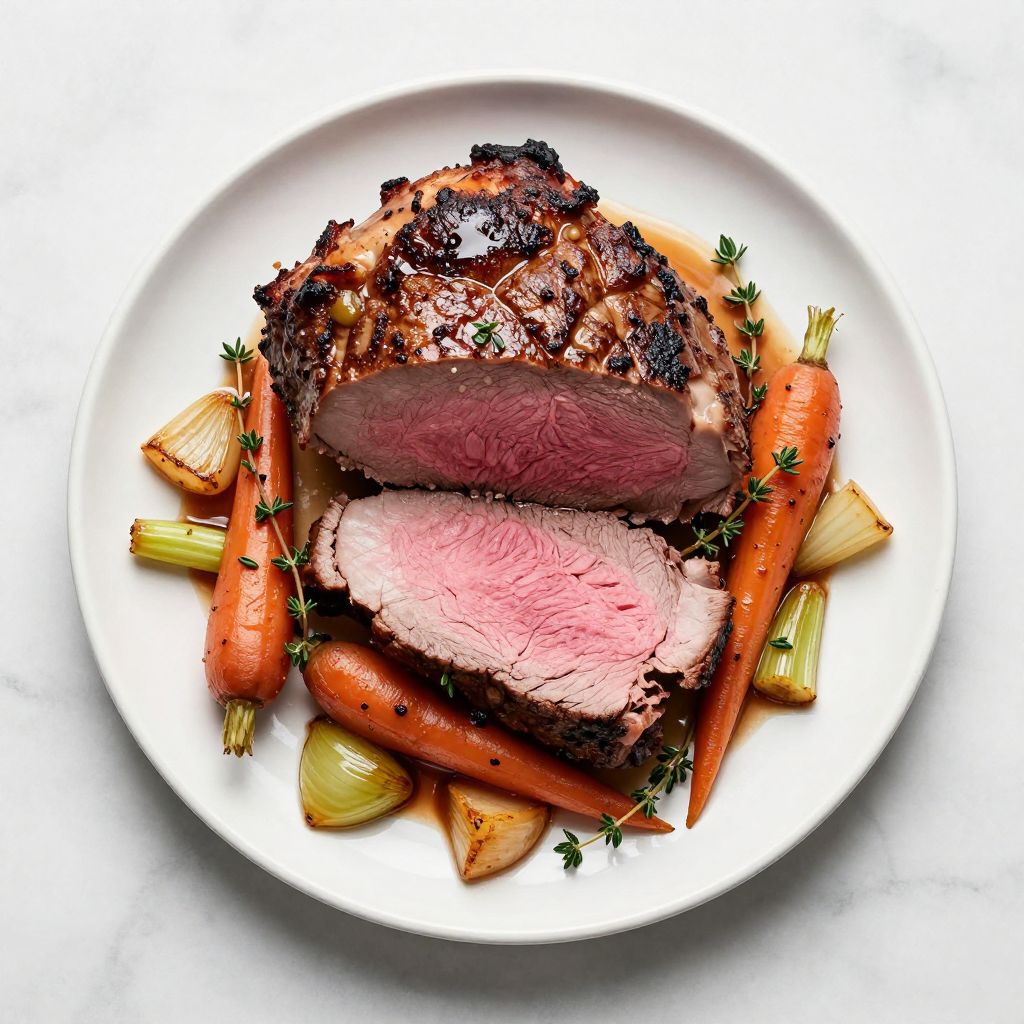
Bottom round roast recipe transforms one of the most affordable cuts of beef into a tender, flavorful meal that feeds a crowd without breaking the bank. This lean cut from the hindquarters becomes melt-in-your-mouth delicious when you apply the right cooking techniques and give it the low-and-slow treatment it deserves.
Perfect for Sunday dinners, meal prep, or any gathering where you need to stretch your budget, this recipe delivers maximum flavor with minimal fuss. Let me show you how to turn this underrated cut into something truly special.
Why You’ll Love This Recipe
This bottom round roast recipe proves that you don’t need expensive cuts to create an impressive centerpiece for your table. The method is straightforward, forgiving, and produces consistently delicious results every single time.
- Budget-friendly cut that feeds 6 to 8 people for less than premium roasts
- Hands-off cooking method that frees you up for other tasks
- Creates amazing pan drippings perfect for gravy
- Leftovers make incredible sandwiches and meal prep options
- Requires only basic seasonings and equipment you already own
My Experience Making This Recipe
I’ll be honest, I avoided bottom round for years because I’d heard it was tough and dry. Then a friend challenged me to give it another shot with proper technique, and I’m so glad I did.
The aroma that filled my kitchen during the slow roast was incredible, with garlic and herbs mingling with the rich beef scent. When I sliced into that roast after letting it rest, the meat was tender enough to cut with a fork, and the juices ran clear and savory.
My family devoured it, and the leftovers disappeared even faster as cold roast beef sandwiches the next day. Now this is my go-to recipe when I need to feed a group without spending a fortune.
Recipe Overview
- Recipe Name: Bottom Round Roast
- Servings: 6 to 8
- Prep Time: 15 minutes
- Cook Time: 3 hours
- Total Time: 3 hours 15 minutes
- Course: Main Course
- Cuisine: American
- Calories per Serving: 285
Equipment You Will Need
- Large roasting pan with rack
- Meat thermometer
- Sharp carving knife
- Cutting board
- Small bowl for seasoning mixture
- Aluminum foil
- Kitchen twine (optional, for tying roast)
Ingredients for Bottom Round Roast Recipe
For the Roast
- 3 to 4 pounds bottom round roast, trimmed of excess fat
- 2 tablespoons olive oil
- 4 cloves garlic, minced
- 2 teaspoons kosher salt
- 1 teaspoon black pepper, freshly ground
- 1 teaspoon dried thyme
- 1 teaspoon dried rosemary
- 1 teaspoon onion powder
- 1/2 teaspoon paprika
For the Roasting Pan
- 2 cups beef broth
- 1 large onion, quartered
- 3 carrots, cut into large chunks
- 3 celery stalks, cut into large chunks
Ingredient Notes and Substitutions
- Bottom round roast: This lean cut needs moisture during cooking to prevent drying out. You can substitute eye of round or rump roast, though cooking times may vary slightly.
- Olive oil: Helps the seasoning adhere and promotes browning on the exterior. Avocado oil or vegetable oil work equally well as substitutes.
- Fresh garlic: Provides aromatic depth that penetrates the meat during the long cooking process. Garlic powder (1 teaspoon) can substitute in a pinch but lacks the same punch.
- Dried herbs: Thyme and rosemary complement beef beautifully and withstand long cooking times. Fresh herbs (triple the amount) can be used but may lose potency.
- Beef broth: Creates a moist cooking environment and becomes the base for gravy. Chicken broth or vegetable broth work, though the beef flavor will be less pronounced.
- Vegetables: Aromatics add flavor to the broth and can be served alongside the roast. Parsnips, turnips, or potatoes make excellent substitutions or additions.
How to Make Bottom Round Roast Recipe
Step 1: Prepare the Roast
Remove the bottom round roast from the refrigerator 30 minutes before cooking to bring it to room temperature. Pat the meat completely dry with paper towels, as moisture on the surface prevents proper seasoning adherence and browning.
Step 2: Create the Seasoning Rub
Combine the minced garlic, kosher salt, black pepper, thyme, rosemary, onion powder, and paprika in a small bowl. Mix thoroughly to distribute the garlic evenly throughout the dry seasonings.
Step 3: Season the Meat
Rub the olive oil all over the roast, coating every surface generously. Apply the seasoning mixture to all sides of the roast, pressing it into the meat so it adheres properly and creates a flavorful crust during cooking.
Step 4: Prepare the Roasting Pan
Preheat your oven to 325°F, which is the ideal temperature for breaking down the tough connective tissue in this lean cut. Arrange the onion quarters, carrot chunks, and celery pieces in the bottom of your roasting pan, then pour the beef broth over them.
Step 5: Position the Roast
Place a roasting rack over the vegetables and set the seasoned roast on top, fat side up if any fat cap remains. Positioning the roast above the liquid prevents boiling while still allowing it to benefit from the steam and moisture.
Step 6: Roast Low and Slow
Insert a meat thermometer into the thickest part of the roast, making sure it doesn’t touch the pan. Roast for approximately 20 to 25 minutes per pound, or until the internal temperature reaches 135°F for medium-rare or 145°F for medium, as this lean cut becomes dry if overcooked.
Step 7: Baste Periodically
Every 45 minutes, open the oven and spoon some of the pan liquid over the roast to keep the surface moist. This basting step adds flavor and prevents the exterior from drying out during the extended cooking time.
Step 8: Rest Before Carving
When the roast reaches your desired temperature, remove it from the oven and tent it loosely with aluminum foil. Let it rest for 15 to 20 minutes, allowing the juices to redistribute throughout the meat rather than spilling out onto your cutting board when you slice.
Step 9: Slice Against the Grain
Identify the direction of the muscle fibers running through the meat, then slice perpendicular to those fibers in thin cuts, about 1/4 inch thick. Cutting against the grain shortens the muscle fibers, making each bite significantly more tender than slicing with the grain.
Pro Tip: Adding 1/2 cup of red wine to your roasting pan liquid creates an even richer, more complex flavor in both the meat and the pan drippings that you can transform into an incredible gravy.
Tips for the Best Bottom Round Roast Recipe
- Use a reliable meat thermometer rather than guessing by time alone, as oven temperatures vary and roast sizes differ. Overcooked bottom round becomes unpleasantly tough and dry.
- Let the meat come to room temperature before cooking so it cooks more evenly from edge to center. A cold roast straight from the fridge will cook unevenly, with overcooked outer layers and an undercooked center.
- Don’t skip the resting period, no matter how hungry everyone is. Those 15 to 20 minutes make the difference between juicy slices and dry, disappointing ones.
- Save all the pan drippings and vegetables to make gravy by straining the liquid, skimming the fat, and thickening with a flour or cornstarch slurry. That liquid is pure gold.
- Slice the roast as thinly as possible to maximize tenderness, especially if you accidentally overcooked it slightly. Thin slices are always more tender than thick ones with this cut.
- If your roast has an uneven shape, tie it with kitchen twine at 2-inch intervals to create a uniform cylinder that cooks evenly. Uneven roasts have overcooked thin sections and undercooked thick sections.
Common Mistakes to Avoid
- Cooking at too high a temperature causes the exterior to overcook before the interior reaches the proper temperature. Low and slow is the only way to achieve tenderness with this lean cut.
- Skipping the room temperature rest before cooking results in uneven cooking, with a cold center and overcooked edges. Always give your meat time to warm up.
- Slicing with the grain instead of against it makes even properly cooked meat seem tough and chewy. Always identify the fiber direction first.
- Overcooking past medium doneness turns this lean cut into shoe leather. Bottom round has minimal marbling, so it dries out quickly at higher temperatures.
- Not using a meat thermometer leads to guesswork that usually results in overcooked, dry meat. Every oven is different, so temperature is your only reliable guide.
Serving Suggestions
This savory roast pairs beautifully with classic comfort sides that soak up the delicious pan juices. Think about what textures and flavors will complement the tender beef without overwhelming it.
- Creamy mashed potatoes or roasted garlic mashed potatoes for a classic combination
- Roasted root vegetables like parsnips, sweet potatoes, and Brussels sprouts
- Simple green beans or asparagus with butter and lemon
- Fresh horseradish sauce or whole grain mustard for a spicy kick
- Crusty bread or dinner rolls to mop up every drop of gravy
Variations to Try
- Add a coffee rub by mixing 2 tablespoons of finely ground coffee with your seasonings for a deep, earthy flavor that complements the beef. The coffee adds complexity without tasting like your morning brew.
- Try an Italian variation by using Italian seasoning, adding fresh basil to the pan liquid, and serving with gremolata. The bright, herby flavors transform this into something restaurant-worthy.
- Create a French-inspired version by adding Dijon mustard to the exterior before seasoning and using herbes de Provence instead of thyme and rosemary. The mustard adds tang and helps the crust develop.
- Make it barbecue style by rubbing the roast with your favorite dry rub and adding a cup of barbecue sauce to the pan liquid. This method creates a sweet and smoky flavor profile perfect for casual gatherings.
- Go Asian-inspired by marinating the roast overnight in soy sauce, ginger, and sesame oil, then roasting with star anise in the liquid. The umami-rich flavors penetrate deeply and create something completely different.
Dietary Adaptations
- Gluten-free: This recipe is naturally gluten-free as written, just verify your beef broth contains no hidden gluten. When making gravy, use cornstarch instead of flour as your thickener.
- Dairy-free: The recipe contains no dairy, so it’s already suitable for dairy-free diets. Just keep any side dishes dairy-free as well.
- Low-carb/Keto: Bottom round roast is perfect for low-carb and keto diets since it’s pure protein with no carbohydrates. Serve with low-carb vegetable sides and skip any flour-thickened gravy.
- Paleo: This recipe fits paleo guidelines perfectly as written, featuring only meat, vegetables, herbs, and healthy fats. Make sure your broth is paleo-compliant with no additives.
Storage and Reheating
Refrigerator
Store leftover roast beef in an airtight container with some of the pan juices to keep it moist. It will keep for 3 to 4 days in the refrigerator.
- Slice only what you need and keep the remaining roast intact to prevent drying
- Pour extra pan juices over the sliced meat before sealing
- Label the container with the date so you track freshness
Freezer
Frozen roast beef maintains quality for 2 to 3 months when properly stored. Slice or leave whole depending on your intended use.
- Wrap tightly in plastic wrap, then again in aluminum foil to prevent freezer burn
- Freeze sliced portions in serving-size amounts for easier thawing
- Include some pan juices in the package to maintain moisture
- Thaw overnight in the refrigerator, never at room temperature
Reheating
Reheat gently to avoid drying out the lean meat. Low and slow works just as well for reheating as it does for the initial cooking.
- Oven method: wrap slices in foil with a splash of broth and heat at 250°F for 15 to 20 minutes
- Stovetop method: warm slices gently in a covered skillet with pan juices over low heat
- Microwave method: heat in 30-second intervals with a damp paper towel covering to trap steam
- For sandwiches, use cold sliced roast beef straight from the refrigerator
Nutrition Information
| Nutrient | Amount |
|---|---|
| Calories | 285 |
| Total Fat | 12g |
| Saturated Fat | 4g |
| Carbohydrates | 3g |
| Fiber | 1g |
| Sugar | 1g |
| Protein | 40g |
| Sodium | 620mg |
| Cholesterol | 105mg |
Nutritional values are approximate and based on a 3.5-ounce serving of cooked roast beef. Your actual values may vary based on the specific cut, trim level, and serving size.
Frequently Asked Questions
Can I cook bottom round roast in a slow cooker instead?
Absolutely, and the slow cooker produces incredibly tender results with this cut. Cook on low for 6 to 8 hours with your vegetables and liquid, though you’ll miss out on the nice exterior crust that oven roasting provides.
How do I know when the roast is done without a thermometer?
A meat thermometer is really the only reliable method, but if you don’t have one, press the meat with your finger. If it feels similar to the fleshy part of your palm below your thumb when making a fist, it’s around medium doneness.
Why is my bottom round roast always tough?
You’re probably cooking it too hot, too fast, or past medium doneness. This lean cut needs low temperatures (325°F or below), plenty of time, and should not be cooked beyond medium or it becomes dry and tough.
Can I sear the roast before putting it in the oven?
Searing adds flavor through caramelization, but it’s not necessary for this recipe and can actually make the meat tougher if not done carefully. The seasoning rub provides plenty of flavor without the extra step.
How thin should I slice the roast beef?
Aim for slices about 1/4 inch thick, or thinner if possible. The thinner you slice against the grain, the more tender each bite will be, which matters especially with leaner cuts like bottom round.
Can I make this recipe ahead of time for meal prep?
Yes, bottom round roast is excellent for meal prep since it reheats reasonably well and makes great cold sandwiches. Cook it a day or two ahead, slice what you need, and store it with some pan juices to maintain moisture.
What’s the difference between bottom round and top round?
Both come from the hindquarters, but top round is slightly more tender and expensive. Bottom round is leaner and tougher, but becomes wonderfully tender with proper low-and-slow cooking methods like this recipe.
Final Thoughts
This bottom round roast recipe proves that budget cuts can shine just as brightly as expensive ones when treated with respect. The low-and-slow method transforms tough muscle into fork-tender perfection that your whole family will love.
Give this recipe a try the next time you need an impressive yet affordable main dish. Once you master the technique, you’ll never pay premium prices for roast beef again.
Bottom Round Roast
This bottom round roast recipe transforms one of the most affordable cuts of beef into a tender, flavorful meal that feeds a crowd without breaking the bank. This lean cut from the hindquarters becomes melt-in-your-mouth delicious when you apply the right cooking techniques and give it the low-and-slow treatment it deserves.
- Large roasting pan with rack
- Meat thermometer
- Sharp carving knife
- Cutting board
- Small bowl for seasoning mixture
- Aluminum foil
- Kitchen twine (optional)
For the Roast
- 3 to 4 pounds bottom round roast (trimmed of excess fat)
- 2 tablespoons olive oil
- 4 cloves garlic (minced)
- 2 teaspoons kosher salt
- 1 teaspoon black pepper (freshly ground)
- 1 teaspoon dried thyme
- 1 teaspoon dried rosemary
- 1 teaspoon onion powder
- 1/2 teaspoon paprika
For the Roasting Pan
- 2 cups beef broth
- 1 large onion (quartered)
- 3 carrots (cut into large chunks)
- 3 celery stalks (cut into large chunks)
- Remove the bottom round roast from the refrigerator 30 minutes before cooking to bring it to room temperature. Pat the meat completely dry with paper towels.
- Combine the minced garlic, kosher salt, black pepper, thyme, rosemary, onion powder, and paprika in a small bowl. Mix thoroughly to distribute the garlic evenly throughout the dry seasonings.
- Rub the olive oil all over the roast, coating every surface generously. Apply the seasoning mixture to all sides of the roast, pressing it into the meat so it adheres properly.
- Preheat your oven to 325°F. Arrange the onion quarters, carrot chunks, and celery pieces in the bottom of your roasting pan, then pour the beef broth over them.
- Place a roasting rack over the vegetables and set the seasoned roast on top, fat side up if any fat cap remains.
- Insert a meat thermometer into the thickest part of the roast, making sure it doesn’t touch the pan. Roast for approximately 20 to 25 minutes per pound, or until the internal temperature reaches 135°F for medium-rare or 145°F for medium.
- Every 45 minutes, open the oven and spoon some of the pan liquid over the roast to keep the surface moist.
- When the roast reaches your desired temperature, remove it from the oven and tent it loosely with aluminum foil. Let it rest for 15 to 20 minutes.
- Identify the direction of the muscle fibers running through the meat, then slice perpendicular to those fibers in thin cuts, about 1/4 inch thick.
Use a reliable meat thermometer rather than guessing by time alone. Don’t skip the resting period. Save all the pan drippings and vegetables to make gravy. Slice the roast as thinly as possible to maximize tenderness. Adding 1/2 cup of red wine to your roasting pan liquid creates an even richer flavor. Store leftovers in an airtight container with pan juices for 3 to 4 days in the refrigerator or freeze for 2 to 3 months.