
There’s something undeniably mouthwatering about the aroma of a perfectly cooked porterhouse steak sizzling on the grill. This cut combines the tenderness of filet mignon with the rich flavor of New York strip, making it a true showstopper for any meat lover. It’s not just a meal; it’s an experience, whether you’re hosting a summer barbecue or enjoying a cozy dinner at home. With its juicy texture and robust flavor, this steak is sure to impress your guests. Ready to bring this culinary delight to your kitchen? Let’s get started with the ingredients!
Why You’ll Love This Recipe
This porterhouse steak recipe is a fantastic choice for any occasion. It’s designed to deliver restaurant-quality flavor right at home.
- Rich, beefy flavor that satisfies every meat craving.
- Perfectly tender and juicy with a nice crust.
- Simple ingredients that let the steak shine.
- Quick cooking time, making it perfect for busy nights.
- Great for grilling or pan-searing, depending on your preference.
My Experience Making This Recipe
When I first attempted this recipe, I was blown away by the aroma wafting through my kitchen. The steak’s sizzling sound instantly made my mouth water.
Once I took my first bite, I knew I had struck gold. The juicy texture combined with the crispy, charred exterior was simply unforgettable.
Recipe Overview
- Recipe Name: Porterhouse Steak
- Servings: 2
- Prep Time: 10 minutes
- Cook Time: 15-20 minutes
- Total Time: 25-30 minutes
- Course: Main Course
- Cuisine: American
- Calories per Serving: Approximately 800
Equipment You Will Need
- Grill or cast-iron skillet
- Meat thermometer
- Tongs
- Cutting board
- Sharp knife
Ingredients for Porterhouse Steak
- 2 porterhouse steaks (about 1.5 inches thick)
- 2 tablespoons olive oil
- Salt (to taste)
- Freshly ground black pepper (to taste)
- 2 tablespoons butter
- 2 cloves garlic, crushed
- Fresh rosemary (optional, for garnish)
Ingredient Notes and Substitutions
- Porterhouse Steaks: This cut gives you the best of both worlds with its tender filet and flavorful strip. Ribeye or T-bone can be used as alternatives.
- Olive Oil: Used to enhance the flavor and help create a nice crust. You can substitute with avocado oil if preferred.
- Salt and Pepper: Essential for enhancing the steak’s natural flavor. Use kosher salt for better seasoning control.
- Butter: Adds richness and depth to the flavor. Feel free to use ghee for a dairy-free option.
- Garlic: Imparts a wonderful aroma and flavor. Shallots can be a nice alternative.
How to Make Porterhouse Steak
Step 1: Prepare the Steak
Take your porterhouse steaks out of the refrigerator and let them come to room temperature for about 30 minutes. This helps them cook evenly and achieve that perfect doneness.
Step 2: Season Generously
Rub both sides of the steaks with olive oil, then season generously with salt and pepper. This will form a nice crust during cooking.
Step 3: Preheat Your Grill or Skillet
Heat your grill to high heat or place your cast-iron skillet over medium-high heat. A hot surface is crucial for achieving a good sear.
Step 4: Sear the Steaks
Place the steaks on the grill or skillet. Sear for about 4-5 minutes on one side without moving them, allowing a crust to develop.
Step 5: Flip and Add Flavor
Flip the steaks and add butter, crushed garlic, and rosemary on top. This infuses the meat with flavor while it cooks.
Step 6: Check for Doneness
Cook for another 4-6 minutes depending on your desired doneness. Use a meat thermometer; 130°F is medium-rare, while 145°F is medium.
Step 7: Rest the Steaks
Remove the steaks from heat and let them rest for 10 minutes. This allows the juices to redistribute for a juicy bite.
Step 8: Slice and Serve
Carefully slice the steak against the grain for maximum tenderness. Serve with your favorite sides and enjoy!
Pro Tip: Always let your steak rest before slicing to keep it juicy!
Tips for the Best Porterhouse Steak
- Use a meat thermometer for accuracy; it takes the guesswork out of cooking.
- Season the steak well in advance; this enhances flavor.
- Let the steak rest longer if you want it more tender.
- Avoid flipping the steak too often; let it sear properly.
- Experiment with different herbs and spices for unique flavors.
Common Mistakes to Avoid
- Not letting the steak come to room temperature; this leads to uneven cooking.
- Overcooking; use a thermometer to avoid this pitfall.
- Skipping the resting step; this can result in a dry steak.
- Using too low a heat; a good sear needs high temperatures.
- Not seasoning adequately; a lack of seasoning can dull the flavor.
Serving Suggestions
This steak pairs beautifully with a range of sides that complement its rich flavor.
- Grilled asparagus or roasted vegetables.
- Classic baked potatoes or garlic mashed potatoes.
- Fresh green salad with a tangy vinaigrette.
- Crusty bread to mop up those delicious juices.
- Red wine to enhance the meal experience.
Variations to Try
- Marinate your steak in a mixture of soy sauce and ginger for an Asian twist.
- Add a coffee rub for a unique, earthy flavor.
- Top with blue cheese for a rich, tangy finish.
- Use different herbs like thyme or sage for a fresh take.
- Grill with a mix of spices for a spicy kick.
Dietary Adaptations
- Gluten-free: This recipe is naturally gluten-free; enjoy without worry.
- Dairy-free: Omit the butter and use olive oil for cooking.
- Vegan/Vegetarian: This recipe is not suitable; consider a plant-based steak alternative.
- Low-carb/Keto: This recipe fits perfectly with keto diets; enjoy without carbs.
Storage and Reheating
Refrigerator
Store leftover steak in an airtight container in the refrigerator.
- Consume within 3-4 days for best flavor.
- Refrigeration helps maintain its quality.
Freezer
To freeze, wrap the steak tightly in plastic wrap and then in aluminum foil.
- Best consumed within 3 months for optimal taste.
- Thaw in the refrigerator overnight before reheating.
Reheating
Reheat gently to avoid overcooking the steak.
- Use a skillet on low heat or an oven set to 250°F.
- Cover with foil to retain moisture.
Nutrition Information
| Nutrient | Amount |
|---|---|
| Calories | 800 |
| Total Fat | 60g |
| Saturated Fat | 25g |
| Carbohydrates | 0g |
| Fiber | 0g |
| Sugar | 0g |
| Protein | 62g |
| Sodium | 180mg |
| Cholesterol | 185mg |
Nutrition values are estimated and may vary based on preparation methods.
Frequently Asked Questions
Can I use a different cut of steak?
Absolutely! Ribeye and T-bone steaks are great alternatives with similar flavors.
How do I store leftover steak?
Keep leftovers in an airtight container in the fridge for up to 4 days.
Can I grill the steak instead of pan-searing?
Yes, grilling will give you a delicious smoky flavor and is a fantastic option.
What if my steak is tough?
This can happen if it’s overcooked. Always use a meat thermometer for best results.
Can I make this ahead of time?
While steak is best fresh, you can marinate it beforehand to enhance the flavor.
Final Thoughts
Cooking a porterhouse steak can feel intimidating, but with these simple steps, you’ll be a pro in no time. It’s a delightful dish that can impress anyone at your table.
Don’t hesitate to explore other delicious options like cowboy butter for a flavorful drizzle. Or check out this baked steak recipe for another easy meal idea!
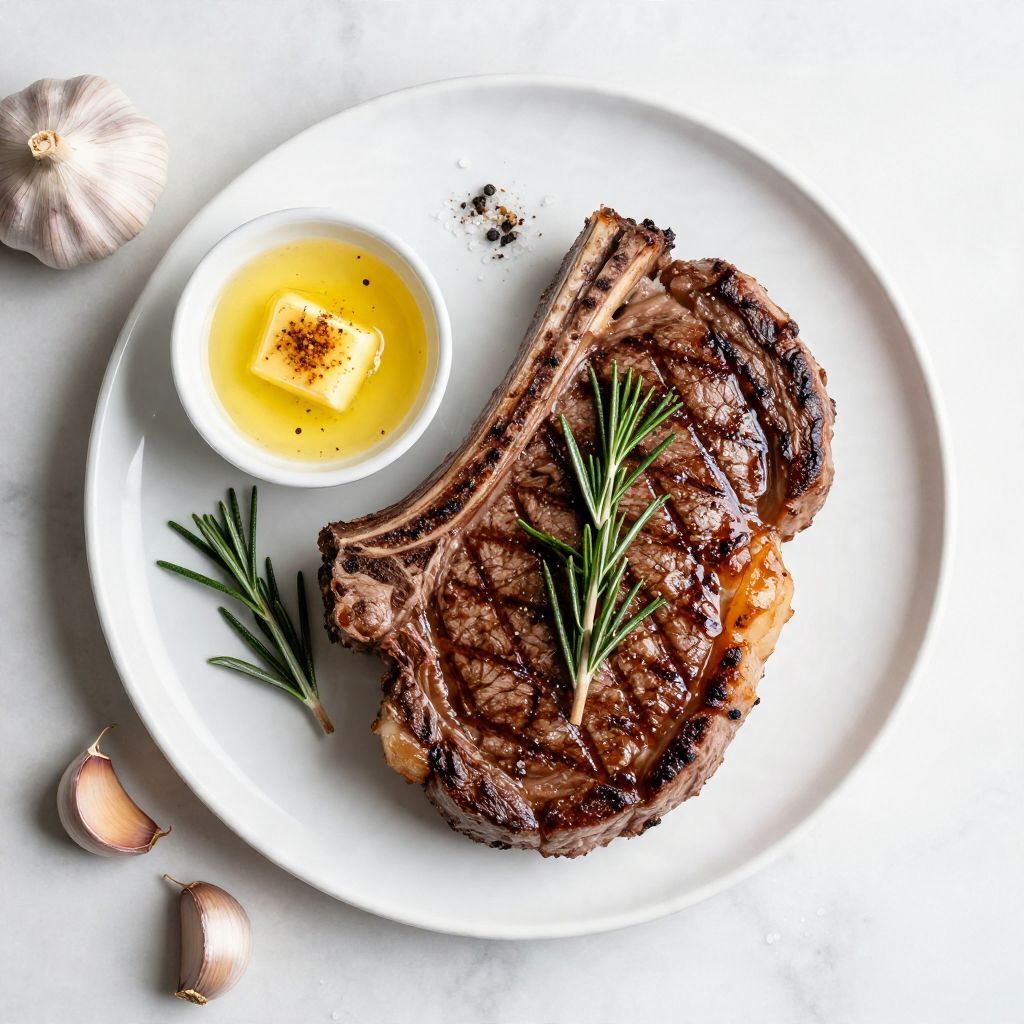
Porterhouse Steak
Ingredients
Equipment
Method
- Take your porterhouse steaks out of the refrigerator and let them come to room temperature for about 30 minutes.
- Rub both sides of the steaks with olive oil, then season generously with salt and pepper.
- Heat your grill to high heat or place your cast-iron skillet over medium-high heat.
- Place the steaks on the grill or skillet and sear for about 4-5 minutes on one side without moving them.
- Flip the steaks and add butter, crushed garlic, and rosemary on top.
- Cook for another 4-6 minutes depending on your desired doneness, checking with a meat thermometer.
- Remove the steaks from heat and let them rest for 10 minutes.
- Carefully slice the steak against the grain and serve with your favorite sides.