
Picture this: creamy pasta mingling with spicy, smoky flavors that set your taste buds on fire. That’s the allure of buldak carbonara, a fusion dish that elevates traditional carbonara with a kick of Korean heat.
This recipe is not only quick to whip up but also a delightful twist on a classic, making it perfect for busy weeknights or when you want to impress guests. With its rich texture and bold flavors, it’s sure to be a new favorite at your dinner table.
Why You’ll Love This Recipe
This dish is a standout for several reasons.
- Combines the comforting creaminess of carbonara with the fiery taste of buldak.
- Perfectly balanced flavors that keep you coming back for more.
- Quick to prepare, making it ideal for weeknight dinners.
- Customizable spice levels to suit your taste.
- Great for sharing or a cozy night in.
My Experience Making This Recipe
When I first made this buldak carbonara, the aroma filled my kitchen, creating a sense of warmth and excitement. The moment I took that first bite, I was hooked — the creamy sauce paired with just the right amount of heat was a flavor explosion.
My friends couldn’t stop raving about it, and I loved watching their reactions as they discovered the delightful spicy twist. It quickly became a staple in my cooking rotation, and I’m sure it will do the same for you!
Recipe Overview
- Recipe Name: Buldak Carbonara
- Servings: 4
- Prep Time: 10 minutes
- Cook Time: 20 minutes
- Total Time: 30 minutes
- Course: Main Course
- Cuisine: Korean-Italian Fusion
- Calories per Serving: 600
Equipment You Will Need
- Large pot for boiling pasta
- Skillet or frying pan
- Whisk
- Mixing bowl
- Measuring cups and spoons
- Knife and chopping board
Ingredients for Buldak Carbonara
- 8 oz spaghetti or your favorite pasta
- 4 oz diced bacon or pancetta
- 2 large eggs
- 1/2 cup grated Parmesan cheese
- 1/4 cup heavy cream
- 2 tbsp gochujang (Korean chili paste)
- 1 tbsp soy sauce
- 2 green onions, sliced
- Salt and pepper to taste
Ingredient Notes and Substitutions
- Spaghetti: This classic pasta pairs well, but any pasta works. Try penne or fettuccine for a different texture.
- Bacon or pancetta: These add flavor and richness. Turkey bacon is a lighter option.
- Eggs: They create a creamy sauce. For a vegan option, use silken tofu blended until smooth.
- Gochujang: This brings the heat and depth. Sriracha can substitute but will change the flavor slightly.
- Parmesan cheese: Adds a savory note. Nutritional yeast is a good dairy-free alternative.
How to Make Buldak Carbonara
Step 1: Cook the Pasta
Bring a large pot of salted water to a boil. Salting the water enhances the flavor of the pasta.
Step 2: Prepare the Bacon
In a skillet over medium heat, cook the diced bacon until crispy. This will add a savory crunch to the dish.
Step 3: Whisk the Eggs
In a mixing bowl, whisk together the eggs, Parmesan cheese, and heavy cream until smooth. This mixture will create the creamy sauce.
Step 4: Combine Gochujang and Soy Sauce
In a small bowl, mix the gochujang and soy sauce until well combined. This will be the flavor base of your sauce.
Step 5: Drain the Pasta
Once the pasta is cooked al dente, reserve a cup of pasta water and drain the rest. The reserved water helps adjust the sauce consistency later.
Step 6: Mix Everything in the Skillet
Add the drained pasta to the skillet with bacon and toss to combine. The heat will help infuse the pasta with delicious bacon flavor.
Step 7: Add the Creamy Egg Mixture
Remove the skillet from heat and quickly pour in the egg mixture, stirring constantly. This ensures the eggs cook gently, creating a creamy sauce.
Step 8: Add Gochujang Mixture
Stir in the gochujang and soy sauce mix, adding reserved pasta water as needed to reach your desired consistency. This step is crucial for balancing the flavors.
Pro Tip: Make sure to remove the skillet from heat before adding the egg mixture to prevent scrambling.
Tips for the Best Buldak Carbonara
- Always use freshly grated Parmesan for better flavor and texture.
- Adjust the amount of gochujang based on your spice tolerance.
- Serve immediately for the creamiest texture; the sauce thickens as it sits.
- Garnish with extra green onions and cheese for added flavor and presentation.
- Experiment with different types of pasta to find your favorite combination.
Common Mistakes to Avoid
- Cooking the eggs too long, which can lead to scrambled eggs instead of a creamy sauce.
- Not salting the pasta water, which can result in bland noodles.
- Adding the gochujang too early, which can cause it to lose its vibrant flavor.
- Using low-quality cheese, which can affect the overall taste of the dish.
Serving Suggestions
This dish shines on its own but pairs wonderfully with a fresh salad or garlic bread. Here are some great sides to consider:
- Simple arugula salad with lemon vinaigrette
- Garlic bread for a toasty crunch
- Steamed broccoli for a healthy touch
- Kimchi for an extra kick
Variations to Try
- Add sautéed mushrooms for an earthy flavor.
- Incorporate spinach or kale for a nutritional boost.
- Swap bacon for grilled chicken for a lighter option.
- Experiment with different types of cheese like pecorino for a sharper taste.
Dietary Adaptations
- Gluten-free: Use gluten-free pasta for a friendly alternative.
- Dairy-free: Substitute with coconut cream and nutritional yeast.
- Vegan/Vegetarian: Use plant-based bacon and silken tofu instead of eggs.
- Low-carb/Keto: Try shirataki noodles for a low-carb version.
Storage and Reheating
Refrigerator
Store any leftovers in an airtight container for up to three days.
- Cool the pasta completely before sealing to prevent condensation.
Freezer
This dish can be frozen, but the texture may change. It is best enjoyed fresh.
- Freeze in a freezer-safe container for up to one month.
Reheating
Reheat on the stovetop over low heat, adding a splash of water or cream to loosen the sauce.
- Stir frequently to ensure even heating.
Nutrition Information
| Nutrient | Amount |
|---|---|
| Calories | 600 |
| Total Fat | 30g |
| Saturated Fat | 12g |
| Carbohydrates | 65g |
| Fiber | 3g |
| Sugar | 2g |
| Protein | 20g |
| Sodium | 800mg |
| Cholesterol | 150mg |
This information is approximate and can vary based on specific ingredients and serving sizes.
Frequently Asked Questions
Can I make this dish ahead of time?
While it’s best enjoyed fresh, you can prepare the components in advance. Just combine them before serving for the best texture.
What can I substitute for gochujang?
If you don’t have gochujang, try sriracha for a similar heat, but note that the flavor will differ slightly.
How do I store leftovers?
Cool and store leftovers in an airtight container in the refrigerator for up to three days. Reheat on low heat, adding a bit of liquid to prevent drying out.
Why is my sauce not creamy?
If your sauce isn’t creamy, make sure to remove the skillet from heat before adding the egg mixture to prevent scrambling.
Can I use different pasta?
Absolutely! Feel free to use any pasta you enjoy, such as penne or fettuccine, for a unique texture.
Final Thoughts
This buldak carbonara is a flavorful fusion that’s sure to become a favorite in your home. With its creamy sauce and spicy kick, it brings excitement to any meal.
So, gather your ingredients and give this recipe a try; you won’t regret it. And if you’re looking for more delicious dishes, check out buldak ramen or creamy ramen for more culinary adventures!
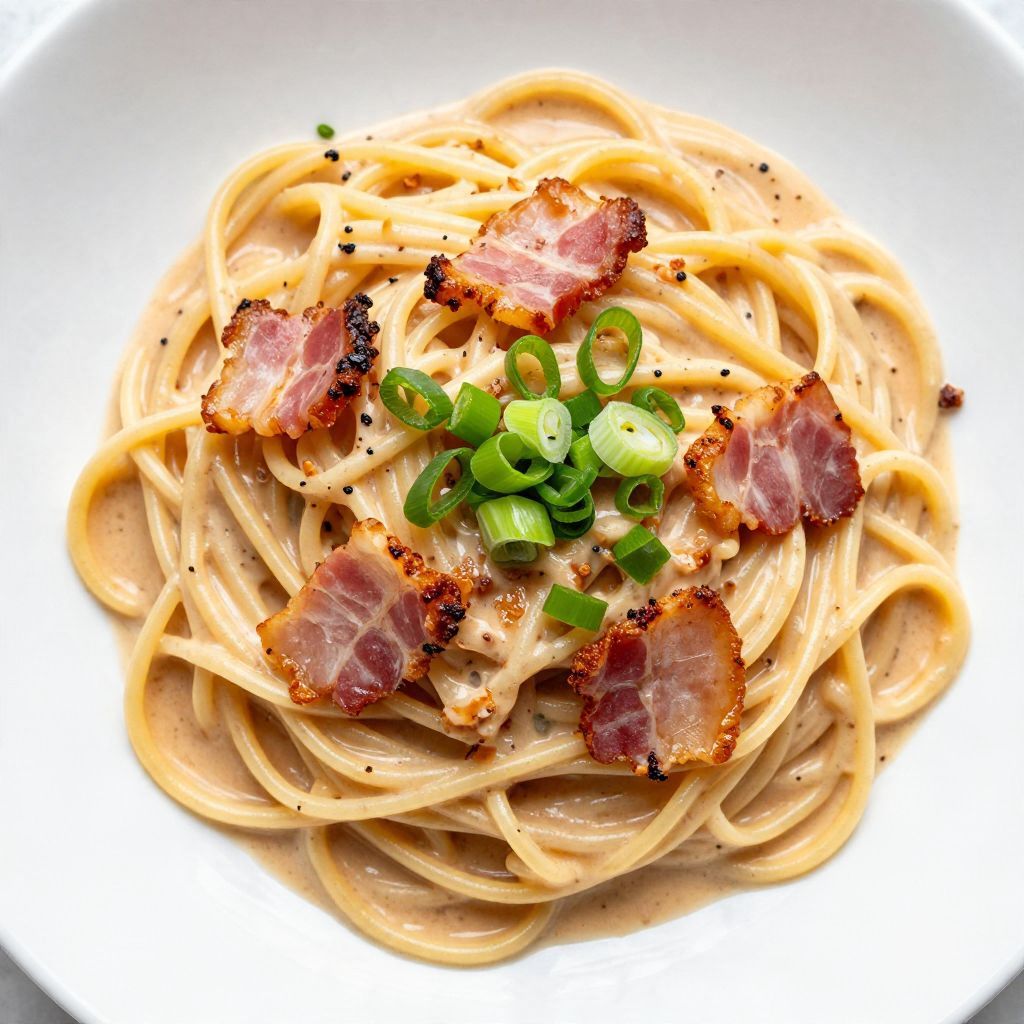
Buldak Carbonara
Ingredients
Equipment
Method
- Bring a large pot of salted water to a boil.
- In a skillet over medium heat, cook the diced bacon until crispy.
- In a mixing bowl, whisk together the eggs, Parmesan cheese, and heavy cream until smooth.
- In a small bowl, mix the gochujang and soy sauce until well combined.
- Once the pasta is cooked al dente, reserve a cup of pasta water and drain the rest.
- Add the drained pasta to the skillet with bacon and toss to combine.
- Remove the skillet from heat and quickly pour in the egg mixture, stirring constantly.
- Stir in the gochujang and soy sauce mix, adding reserved pasta water as needed for consistency.