
Picture this: a colorful stir-fry bubbling in a hot wok, the aroma of garlic and ginger filling your kitchen, and vibrant Thai eggplants soaking up all the flavors. This Thai Eggplant Recipe is a delightful twist that brings a taste of Thailand right to your dinner table. It’s special because it combines simplicity with boldness, making it perfect for a weeknight meal or a cozy gathering. The tender eggplants, paired with a savory sauce, create a dish that is both satisfying and packed with flavor. Let’s dive into how to make this delicious dish!
Why You’ll Love This Recipe
This Thai Eggplant Recipe is a fantastic addition to any cooking repertoire.
- Quick to prepare, making it ideal for busy weeknights.
- Versatile and can be served as a main or side dish.
- Packs a punch of flavor with minimal ingredients.
- Rich in nutrients and perfect for a healthy diet.
My Experience Making This Recipe
When I first tried this recipe, I was amazed at how something so simple could taste so good. The eggplants absorbed the sauce beautifully, creating a dish that was both rich and comforting.
My family couldn’t get enough of it, asking for seconds and thirds. Even my picky eater was impressed!
Recipe Overview
- Recipe Name: Thai Eggplant
- Servings: 4
- Prep Time: 15 minutes
- Cook Time: 10 minutes
- Total Time: 25 minutes
- Course: Main Course
- Cuisine: Thai
- Calories per Serving: 150
Equipment You Will Need
- Wok or large skillet
- Cutting board
- Sharp knife
- Measuring spoons
- Spatula or wooden spoon
Ingredients for Thai Eggplant
- 2 cups Thai eggplants, quartered
- 2 tablespoons vegetable oil
- 3 cloves garlic, minced
- 1 tablespoon ginger, grated
- 2 tablespoons soy sauce
- 1 tablespoon oyster sauce
- 1 tablespoon sugar
- 1/4 cup water
- 1 tablespoon sesame oil
- Optional: fresh basil for garnish
Ingredient Notes and Substitutions
- Thai eggplants: These mini eggplants are tender and absorb flavors well. You can substitute with Japanese eggplants if unavailable.
- Vegetable oil: Used for frying; can be swapped with olive oil or coconut oil.
- Soy sauce: Adds saltiness and depth; tamari can be a gluten-free option.
- Oyster sauce: Provides umami; for a vegetarian option, use mushroom sauce.
How to Make Thai Eggplant
Step 1: Prepare the Eggplants
Start by washing the Thai eggplants thoroughly. Quarter them and set aside to prepare for cooking.
Step 2: Heat the Oil
In a wok or large skillet, heat the vegetable oil over medium-high heat. This ensures even cooking and a nice sear on the eggplants.
Step 3: Sauté Garlic and Ginger
Add the minced garlic and grated ginger to the hot oil. Sauté for about 30 seconds until fragrant, being careful not to burn them.
Step 4: Add the Eggplants
Introduce the quartered Thai eggplants to the wok. Stir-fry for about 3-4 minutes until they start to soften.
Step 5: Mix in the Sauces
Pour in the soy sauce, oyster sauce, and sugar. These ingredients will create a delicious glaze that flavors the eggplants.
Step 6: Add Water
Stir in the water and cover the wok. Let it simmer for about 3-4 minutes to allow the eggplants to cook through.
Step 7: Finish with Sesame Oil
Once the eggplants are tender, drizzle in the sesame oil. This adds a nutty flavor that enhances the dish.
Step 8: Serve and Garnish
Transfer the eggplant to a serving dish and garnish with fresh basil if desired. This adds a pop of freshness and color.
Pro Tip: Always taste the sauce before serving to adjust flavors or sweetness to your liking.
Tips for the Best Thai Eggplant
- Choose small, firm eggplants for the best texture.
- Don’t skip the ginger; it adds a wonderful zing.
- Serve immediately for the best flavor and texture.
- Pair with steamed rice or noodles to round out the meal.
- Add chili flakes for a spicy kick if you enjoy heat.
Common Mistakes to Avoid
- Not salting the eggplants: This helps draw out bitterness.
- Overcooking them: They should be tender, not mushy.
- Skipping the sesame oil: It adds essential flavor.
- Using too high heat: This can burn the garlic and ginger.
Serving Suggestions
This dish is perfect on its own, but it pairs beautifully with other flavors.
- Serve with jasmine rice or coconut rice.
- Pair it with grilled chicken or tofu for protein.
- Complement with a spicy cucumber salad for crunch.
- Add a side of spring rolls for a full Thai feast.
Variations to Try
- Add bell peppers for more color and sweetness.
- Incorporate tofu for extra protein and texture.
- Use different sauces like hoisin for a new flavor twist.
- Mix in other vegetables like broccoli or snap peas.
Dietary Adaptations
- Gluten-free: Use tamari instead of soy sauce.
- Dairy-free: This recipe is naturally dairy-free.
- Vegan: It is suitable for a vegan diet without any changes.
- Low-carb: Replace sugar with a low-carb sweetener.
Storage and Reheating
Refrigerator
Store leftover Thai eggplant in an airtight container in the fridge.
- Keep for up to 3 days.
- Reheat in the microwave or on the stovetop.
Freezer
This dish can be frozen if needed, though the texture may change slightly.
- Freeze in a suitable container for up to 2 months.
- Thaw in the refrigerator before reheating.
Reheating
Reheat gently on the stovetop for best results.
- Add a splash of water to prevent sticking.
- Heat until warmed through, about 5 minutes.
Nutrition Information
| Nutrient | Amount |
|---|---|
| Calories | 150 |
| Total Fat | 8g |
| Saturated Fat | 1g |
| Carbohydrates | 16g |
| Fiber | 4g |
| Sugar | 5g |
| Protein | 3g |
| Sodium | 400mg |
| Cholesterol | 0mg |
This nutritional information is an estimate and may vary based on specific ingredients and preparation methods.
Frequently Asked Questions
Can I make this dish ahead of time?
Yes, you can prepare the eggplants and sauce separately, then combine them just before serving.
What can I substitute for Thai eggplants?
Japanese eggplants are a great substitute if Thai eggplants are hard to find.
How should I store leftovers?
Store leftovers in an airtight container in the refrigerator for up to 3 days.
Why are my eggplants bitter?
Eggplants can be bitter if not salted before cooking, so be sure to salt them to draw out bitterness.
Can I add more vegetables to this recipe?
Absolutely! Feel free to mix in broccoli, bell peppers, or snap peas for added nutrition and color.
Final Thoughts
Making this Thai Eggplant Recipe is a delicious way to explore new flavors in your cooking. I encourage you to give it a try and enjoy the delightful tastes of Thailand in your own kitchen.
If you enjoyed this recipe, check out my other favorites like Thai Cucumber Salad for more fresh and flavorful ideas.
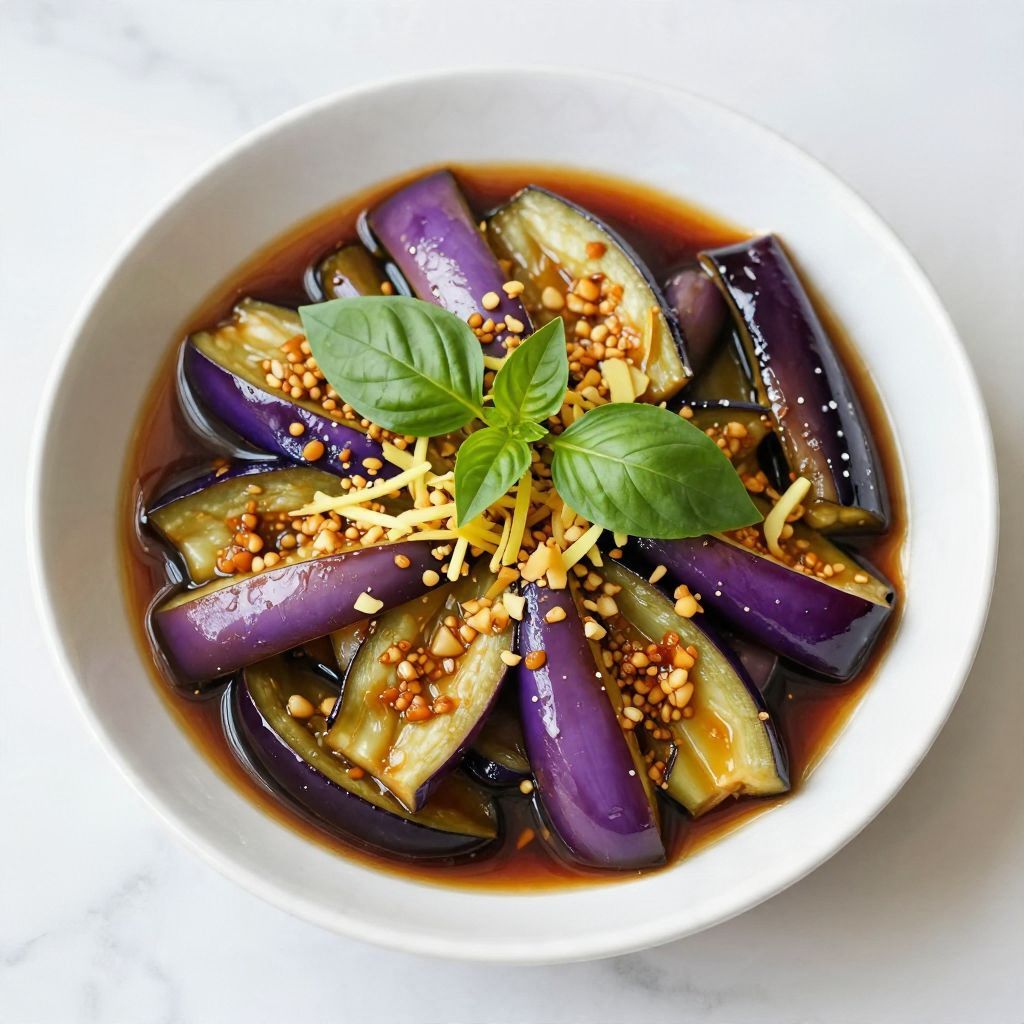
Thai Eggplant
Ingredients
Equipment
Method
- Start by washing the Thai eggplants thoroughly. Quarter them and set aside.
- In a wok or large skillet, heat the vegetable oil over medium-high heat.
- Add the minced garlic and grated ginger to the hot oil. Sauté for about 30 seconds until fragrant.
- Introduce the quartered Thai eggplants to the wok. Stir-fry for about 3-4 minutes until they start to soften.
- Pour in the soy sauce, oyster sauce, and sugar, mixing well.
- Stir in the water and cover the wok. Let it simmer for about 3-4 minutes.
- Once the eggplants are tender, drizzle in the sesame oil.
- Transfer the eggplant to a serving dish and garnish with fresh basil if desired.