Picture this: a vibrant green sauce bursting with flavor, ready to elevate your pasta, drizzle over roasted vegetables, or simply spread on warm, crusty bread. That’s what you get with this pistachio pesto recipe, a delightful twist on the classic basil version. With its nutty and slightly sweet flavor, this pesto is not just versatile but also incredibly easy to whip up. You only need a handful of ingredients and a few minutes to create a dish that feels like a gourmet treat. Ready to dive into the deliciousness? Let’s get started!
Why You’ll Love This Recipe
This recipe is a winner for several reasons.
- Quick to prepare, taking only about 10 minutes.
- Uses easy-to-find ingredients, making it accessible for everyone.
- Nutritious and packed with healthy fats from pistachios.
- Perfectly adaptable for various dishes, from pasta to sandwiches.
- Freezes well, so you can have it on hand for later use.
My Experience Making This Recipe
The first time I made this pistachio pesto, I was surprised by how quickly it came together. The aroma of fresh garlic and the vibrant color of the pistachios had me excited to taste it.
When I served it over pasta, my family was impressed. They couldn’t believe something so simple could pack such a punch!
Recipe Overview
- Recipe Name: Pistachio Pesto
- Servings: 4
- Prep Time: 10 minutes
- Cook Time: 0 minutes
- Total Time: 10 minutes
- Course: Sauce
- Cuisine: Italian
- Calories per Serving: 200
Equipment You Will Need
- Food processor
- Measuring cups
- Measuring spoons
- Spatula
- Serving bowl
Ingredients for Pistachio Pesto
- 1 cup shelled pistachios
- 2 cloves of garlic, minced
- 1/2 cup grated Parmesan cheese
- 1/2 cup extra virgin olive oil
- 1/4 cup fresh basil leaves, packed
- 1 tablespoon fresh lemon juice
- Salt and pepper to taste
Ingredient Notes and Substitutions
- Pistachios: These provide the unique flavor. You can substitute with walnuts for a different taste.
- Garlic: Adds a nice bite. For a milder flavor, use roasted garlic instead.
- Parmesan cheese: Gives creaminess and depth. Nutritional yeast can be a great vegan substitute.
- Olive oil: This binds everything together. Avocado oil can work as a lighter alternative.
- Basil leaves: They add freshness. Feel free to mix in parsley for a unique twist.
How to Make Pistachio Pesto
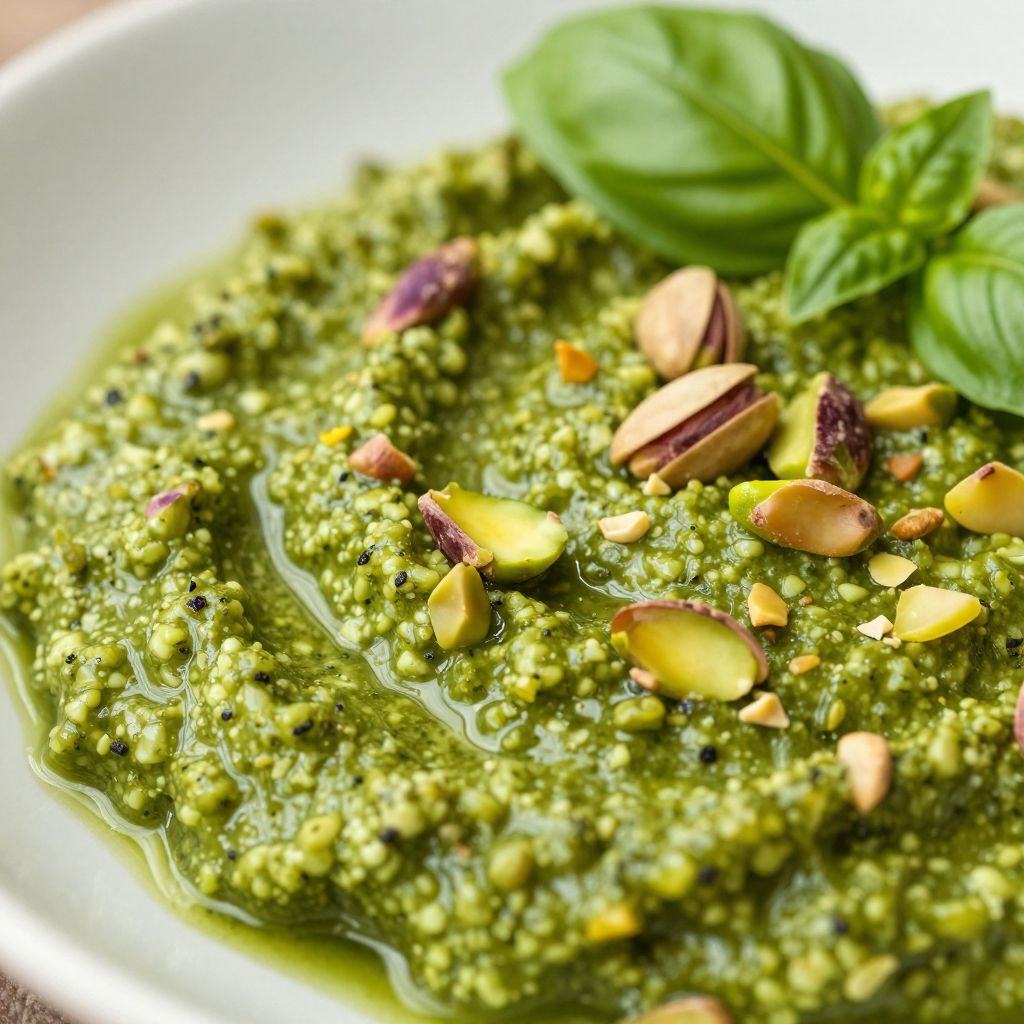
Step 1: Gather Your Ingredients
Start by measuring out all your ingredients. Having everything ready makes the process smoother.
Step 2: Toast the Pistachios (Optional)
If you prefer a deeper flavor, toast the pistachios in a dry skillet over medium heat for about 3-5 minutes. This enhances their nuttiness and aroma.
Step 3: Process the Nuts and Garlic
Add the pistachios and minced garlic to your food processor. Pulse a few times until the mixture resembles coarse crumbs.
Step 4: Add Cheese and Basil
Next, add in the grated Parmesan and fresh basil leaves. Pulse again to combine everything well.
Step 5: Stream in the Olive Oil
While the food processor runs, slowly drizzle in the olive oil. This helps emulsify everything, creating a creamy texture.
Step 6: Season the Pesto
Once blended, taste your pesto and add salt and pepper as needed. This step is crucial for balancing flavors.
Step 7: Add Lemon Juice
Mix in the lemon juice for a zesty kick. This brightens up the pesto and enhances the overall flavor.
Step 8: Serve or Store
Your pistachio pesto is ready! Serve it immediately or transfer it to an airtight container for later use.
Pro Tip: If you’re making this ahead, drizzle a little olive oil on top before sealing to keep it fresh.
Tips for the Best Pistachio Pesto
- Use high-quality olive oil for the best flavor; it makes a big difference.
- Don’t skip the lemon juice; it adds brightness and balances the richness.
- Adjust garlic according to your taste; more garlic means more flavor!
- Blend until smooth, but leave a bit of texture for a rustic feel.
- Store in the fridge with a layer of oil on top to prevent browning.
Common Mistakes to Avoid
- Overprocessing the pesto can lead to a paste-like texture. You want it chunky, not mushy.
- Skipping the seasoning means missing out on flavor. Always taste and adjust as needed.
- Using old nuts can result in bitterness. Fresh nuts are key for a delicious pesto.
- Not balancing acid and fat can make the pesto taste flat. Lemon juice is your friend here.
Serving Suggestions
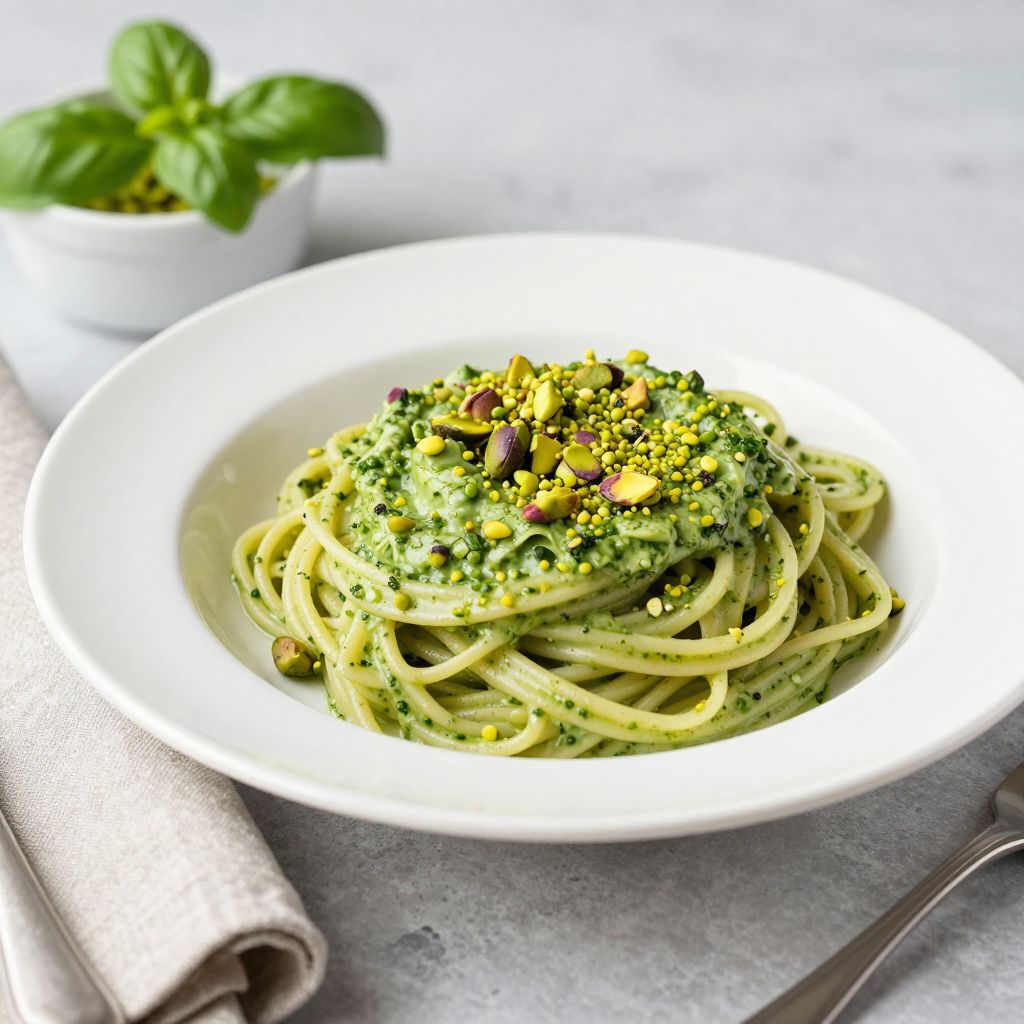
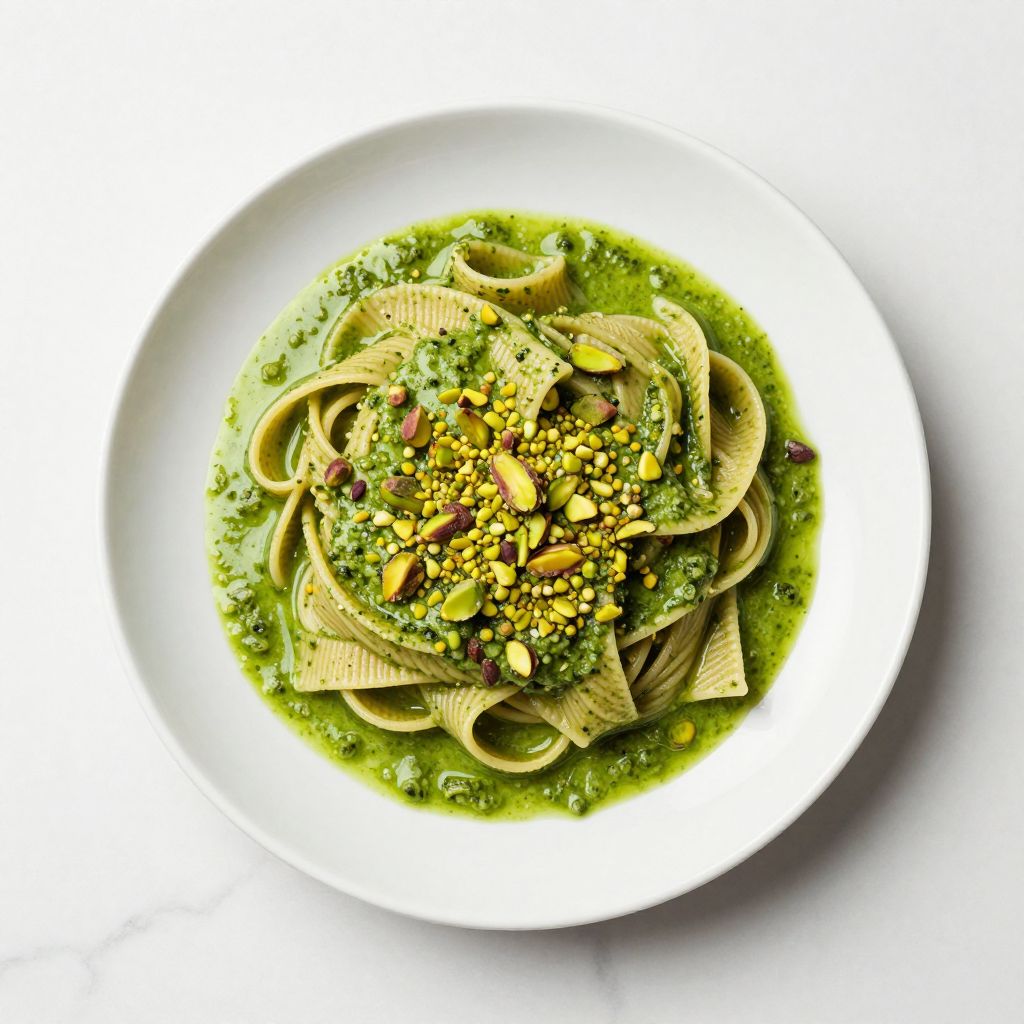
This pesto is fantastic on pasta but can be used in various ways. Try it on grilled chicken, as a dip for fresh veggies, or as a topping for bruschetta.
- Mixed with pasta for a quick meal.
- Spread on sandwiches or wraps.
- Drizzled over grilled vegetables.
- Served as a dip with crackers or bread.
Variations to Try
- Swap pistachios for walnuts for a richer flavor.
- Add a handful of spinach for extra nutrients without losing flavor.
- Incorporate some sun-dried tomatoes for a Mediterranean twist.
- Mix in a pinch of red pepper flakes for a spicy kick.
Dietary Adaptations
- Gluten-free: This recipe is naturally gluten-free.
- Dairy-free: Substitute nutritional yeast for cheese.
- Vegan: Use nutritional yeast and skip the cheese.
- Low-carb/Keto: Enjoy as is; it’s low in carbs!
Storage and Reheating
Refrigerator
Store your pesto in an airtight container in the fridge. It will keep fresh for about a week.
- Drizzle olive oil on top to prevent browning.
- Cover tightly to maintain freshness.
Freezer
Pesto freezes beautifully. Portion it into ice cube trays for easy use.
- Once frozen, transfer to a zip-top bag.
- Label with the date to keep track of freshness.
Reheating
Since pesto is served cold, simply let it thaw in the refrigerator. No need to cook!
- Stir well before using to recombine.
- Adjust seasoning as needed after thawing.
Nutrition Information
| Nutrient | Amount |
|---|---|
| Calories | 200 |
| Total Fat | 18g |
| Saturated Fat | 2.5g |
| Carbohydrates | 7g |
| Fiber | 2g |
| Sugar | 1g |
| Protein | 5g |
| Sodium | 150mg |
| Cholesterol | 10mg |
This nutritional information is based on using the specified ingredients and can vary based on brands and specific measurements.
Frequently Asked Questions
Can I substitute the pistachios?
Yes, walnuts or almonds can be used as alternatives, each giving a different flavor profile.
Can I make this pesto ahead of time?
Absolutely! Pesto stores well in the fridge and even freezes nicely for later use.
How long does pesto last in the fridge?
It can stay fresh for about a week in the refrigerator if stored properly in an airtight container.
Why is my pesto too thick?
If it’s too thick, simply thin it out with a bit more olive oil until you reach your desired consistency.
Can I use other herbs in this recipe?
Definitely! Feel free to mix herbs like parsley or cilantro for a unique twist on the flavor.
Final Thoughts
This pistachio pesto is a delightful addition to your culinary repertoire. With its unique flavor and versatility, I hope you enjoy making and sharing it as much as I do.
Don’t forget to explore more delicious recipes like Pistachio Cream for even more nutty goodness!
Pistachio Pesto
Ingredients
Equipment
Method
- Measure and prepare all ingredients before starting.
- Optional: Toast pistachios in a dry skillet over medium heat for 3-5 minutes until fragrant.
- Add pistachios and minced garlic to the food processor and pulse until coarse crumbs form.
- Add grated Parmesan cheese and basil leaves; pulse to combine.
- With the processor running, slowly drizzle in olive oil until the mixture is smooth and creamy.
- Season with salt and pepper to taste and blend briefly to incorporate.
- Add lemon juice and pulse just until mixed.
- Serve immediately or transfer to an airtight container; drizzle a thin layer of olive oil on top before sealing to prevent browning.