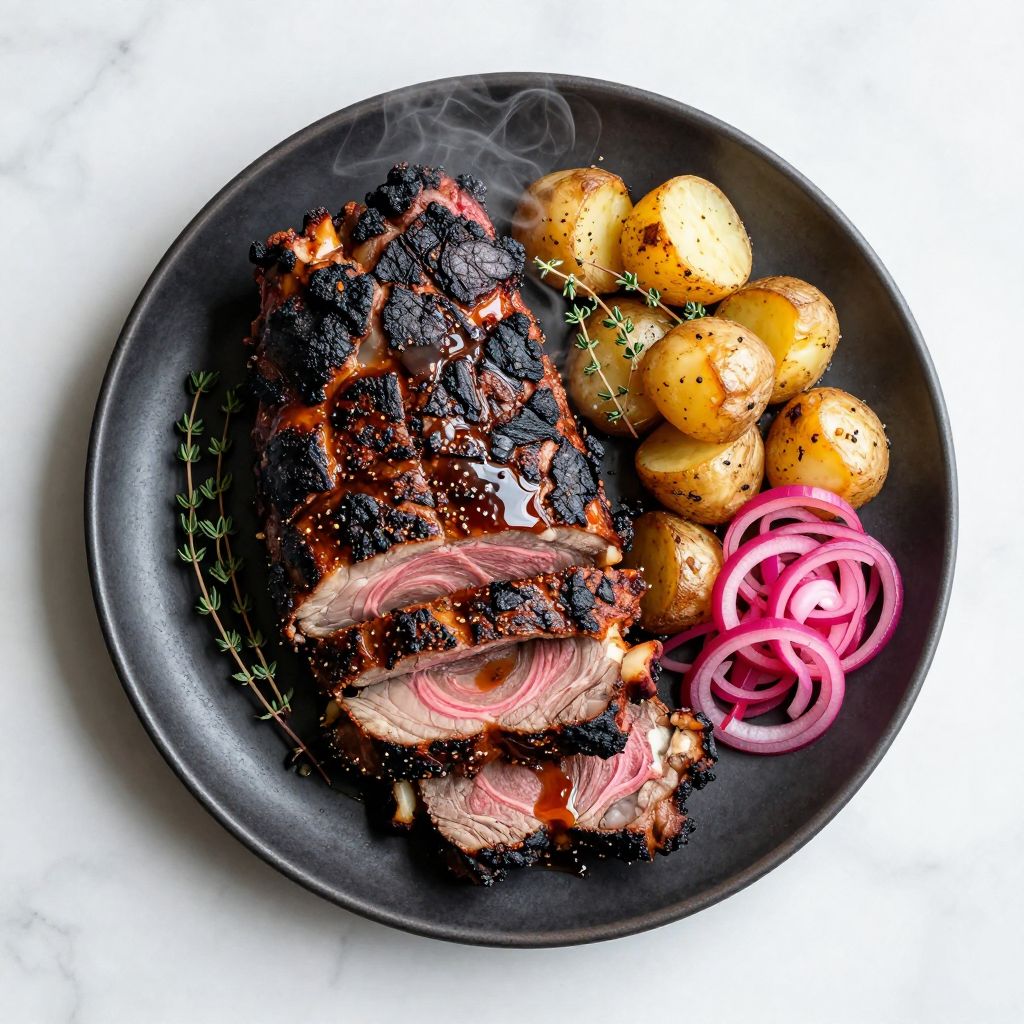
The moment you lift the lid on a perfectly smoked chuck roast, you’re met with a mahogany bark that glistens like a treasure and smoke that curls up carrying whispers of oak and beef fat. This cut transforms from a humble shoulder muscle into something that pulls apart with the gentlest tug, each strand soaked in smoky flavor that makes brisket jealous at half the price.
Chuck roast doesn’t get the spotlight it deserves in the smoking world, but after you nail this recipe, it might become your secret weapon for impressing guests without emptying your wallet. The marbling in this cut breaks down into buttery richness during the low and slow cook, while the smoke penetrates deep into every fiber.
What makes this recipe special is the balance between building a crusty exterior and maintaining that fall-apart tenderness inside. You’ll learn the exact techniques to get both without babysitting your smoker all day.
Why You’ll Love This Recipe
This smoked chuck roast delivers brisket-level results without the intimidation factor or premium price tag. The straightforward process rewards you with meat that practically melts on your tongue while filling your backyard with aromas that’ll have neighbors peeking over fences.
- Costs about one-third the price of brisket but delivers comparable tenderness and flavor
- Forgiving cut that doesn’t punish small temperature fluctuations like leaner meats do
- Ready in 6-8 hours instead of the 12-16 hour marathon that brisket demands
- Versatile leftovers work beautifully in tacos, sandwiches, or chopped into burnt ends
- Simple rub and technique let the natural beef flavor shine through the smoke
My Experience Making This Recipe
The first time I smoked a chuck roast, I was skeptical that anything besides brisket could achieve that perfect pull-apart texture. Two hours in, the bark had set into a deep russet crust that crackled when I pressed it, and I knew something special was happening.
By hour six, the internal temperature stalled at 165°F just like brisket does, which actually reassured me that the collagen was breaking down properly. I wrapped it in butcher paper, and within ninety minutes it pushed through to 203°F where it felt like warm butter when I probed it.
When I sliced into that roast at dinner, the smoke ring glowed pink beneath the bark, and my family went silent for about thirty seconds. My brother-in-law, who considers himself a brisket purist, asked for the recipe before he finished his first serving.
Recipe Overview
- Recipe Name: Smoked Chuck Roast
- Servings: 8-10
- Prep Time: 20 minutes
- Cook Time: 6-8 hours
- Total Time: 6 hours 20 minutes to 8 hours 20 minutes
- Course: Main Course
- Cuisine: American Barbecue
- Calories per Serving: 385
Equipment You Will Need
- Offset smoker, pellet grill, or charcoal grill set up for indirect heat
- Instant-read meat thermometer or wireless probe thermometer
- Butcher paper or aluminum foil for wrapping
- Sharp slicing knife
- Large cutting board with juice groove
- Small bowl for mixing rub
- Spray bottle filled with apple juice or beef broth
- Wood chunks or chips (oak, hickory, or mesquite)
Ingredients for Smoked Chuck Roast
For the Chuck Roast
- Chuck roast: 4-5 pounds, boneless
- Yellow mustard: 3 tablespoons (as binder)
- Coarse kosher salt: 2 tablespoons
- Coarse black pepper: 2 tablespoons
- Garlic powder: 1 tablespoon
- Onion powder: 1 tablespoon
- Smoked paprika: 1 tablespoon
- Brown sugar: 2 teaspoons
- Cayenne pepper: 1 teaspoon
For Spritzing
- Apple juice: 1 cup or beef broth
- Apple cider vinegar: 2 tablespoons
Ingredient Notes and Substitutions
- Chuck roast: This cut has perfect marbling that keeps the meat moist during long smoking sessions. You can substitute with a shoulder roast or beef brisket flat, though brisket requires more careful temperature management.
- Yellow mustard: Acts as a binder to help the rub adhere and adds a subtle tang that disappears during cooking. Olive oil or Worcestershire sauce work as alternatives, though mustard creates better bark.
- Kosher salt: The coarse texture distributes evenly and doesn’t dissolve too quickly into the meat. Table salt can work in a pinch, but reduce the amount by half since it’s much finer.
- Smoked paprika: Adds color and a layer of smoky depth to complement the wood smoke. Regular paprika works but won’t contribute the same complexity.
- Brown sugar: Balances the savory elements and helps with bark formation through caramelization. Coconut sugar or regular white sugar can substitute, though you’ll lose some molasses notes.
- Apple juice: Keeps the surface moist during smoking and adds a hint of sweetness. Beef broth, beer, or even water work fine if you want a more savory profile.
How to Make Smoked Chuck Roast
Step 1: Prepare the Chuck Roast
Remove the chuck roast from the refrigerator and pat it completely dry with paper towels, getting into all the crevices. Trim any large, hard pieces of surface fat thicker than a quarter inch, but leave most of the marbling intact since that fat will render and baste the meat from within.
Drying the surface allows the rub to stick properly and helps that initial smoke penetrate the meat instead of bouncing off moisture. Room temperature meat also cooks more evenly, so letting it sit for 30-45 minutes before seasoning helps.
Step 2: Apply the Binder and Rub
Slather the entire roast with yellow mustard using your hands, creating a thin, even coating on all sides. Mix all your dry seasonings in a small bowl, then generously apply the rub to every surface, pressing it into the meat so it adheres.
The mustard acts like glue for your spices and won’t leave any tangy flavor after hours in the smoker. Be generous with the rub since some will render off with the fat, and that thick spice crust is what becomes your prized bark.
Step 3: Preheat Your Smoker
Fire up your smoker to a steady 225°F, adding your choice of wood chunks once the fire is established. Oak provides a medium smoke that won’t overpower the beef, while hickory brings a stronger punch and mesquite delivers an aggressive, earthy flavor.
Getting the temperature stable before adding meat prevents temperature swings that can extend your cook time unpredictably. A steady, thin blue smoke is what you want, not thick white billows that taste bitter.
Step 4: Smoke the Chuck Roast
Place the seasoned chuck roast directly on the grate fat-side up, insert your probe thermometer into the thickest part, and close the lid. Let it smoke undisturbed for the first two hours so the smoke can set into the meat and the rub can form its initial crust.
Positioning fat-side up allows the rendering fat to drip down through the meat, basting it naturally. Resisting the urge to peek maintains consistent temperature and smoke levels, which are critical for that first phase.
Step 5: Spritz and Monitor
After two hours, begin spritzing the roast with your apple juice mixture every 45-60 minutes to keep the surface moist. Continue smoking until the internal temperature reaches 165°F, which typically takes 4-5 hours total depending on the size of your roast.
Spritzing prevents the bark from drying out and cracking while adding subtle flavor layers. This is also when you’ll hit the stall, where evaporative cooling halts the temperature rise, which is completely normal.
Step 6: Wrap the Roast
Once the roast hits 165°F and has developed a dark, firm bark, remove it from the smoker and wrap it tightly in butcher paper or aluminum foil. Butcher paper allows some moisture to escape while protecting the bark, whereas foil steams the meat more and softens the crust.
Wrapping pushes the meat through the stall faster by trapping heat and moisture around it. This technique, called the Texas crutch, can shave 1-2 hours off your total cook time without sacrificing tenderness.
Step 7: Finish to Temperature
Return the wrapped roast to the smoker and continue cooking until it reaches an internal temperature of 203-205°F. Start checking for tenderness at 200°F by inserting your probe, which should slide in and out like it’s passing through soft butter.
Temperature matters less than tenderness at this stage, since collagen breakdown happens in a range rather than at an exact number. Some roasts are perfect at 200°F while others need to hit 207°F, so trust the probe test over the numbers.
Step 8: Rest and Slice
Remove the wrapped chuck roast from the smoker and let it rest for at least 30 minutes in an insulated cooler or on the counter. Unwrap carefully to preserve any accumulated juices, then slice against the grain into half-inch thick pieces using a sharp knife.
Resting allows the juices to redistribute throughout the meat instead of spilling onto your cutting board. Slicing against the grain shortens the muscle fibers, making each bite more tender than cutting with the grain would.
Pro Tip: Don’t rely solely on temperature readings. The probe test is your best friend. When your thermometer slides into the thickest part of the roast with zero resistance, feeling like soft butter, you’ve hit the perfect doneness regardless of whether you’re at 200°F or 207°F.
Tips for the Best Smoked Chuck Roast
- Choose a roast with visible marbling throughout rather than one with all the fat on the exterior, since internal fat bastes the meat from within. Look for a roast that feels heavy for its size, which indicates good moisture content.
- Maintain a clean, thin blue smoke rather than thick white smoke by ensuring your fire has enough oxygen and using dry, seasoned wood. Thick smoke deposits bitter creosote on your meat instead of pleasant smoke flavor.
- Resist opening your smoker lid frequently, since each peek drops the temperature 15-25°F and adds 10-15 minutes to your cook time. Trust your thermometer probe and only open when you need to spritz or wrap.
- Let the roast rest longer than you think necessary, at least 30 minutes but up to 2 hours if you wrap it in towels and place it in a cooler. The carryover cooking continues tenderizing the meat, and longer rests actually keep it hotter than shorter ones since the heat stabilizes.
- Save all the juices from resting and drippings from the wrap to make an au jus or to moisten any slices that seem dry. Those liquids are liquid gold packed with rendered fat and concentrated beef flavor.
- Slice only what you plan to serve immediately and keep the rest of the roast whole wrapped in foil, since sliced meat dries out faster than a whole piece. You can reheat the intact roast more successfully than reheating slices.
Common Mistakes to Avoid
- Trimming away too much fat before smoking removes the natural moisture source that keeps chuck roast tender during long cooks. Leave at least a quarter-inch fat cap and don’t remove any interior marbling.
- Pulling the roast at 190-195°F because it seems “done enough” leaves you with tough, chewy meat since the collagen hasn’t fully broken down yet. Push through to 203°F minimum for that pull-apart texture.
- Using lighter fluid-soaked briquettes or starting chips that produce acrid smoke ruins your meat with chemical flavors. Stick with natural lump charcoal or hardwood and let any starter smoke burn off before adding meat.
- Slicing with the grain instead of against it makes even perfectly cooked meat seem tough and stringy. Identify the direction the muscle fibers run and cut perpendicular to those lines.
- Cranking up the smoker temperature to speed things along toughens the exterior before the interior can break down properly. Low and slow at 225°F is non-negotiable for achieving that melt-in-your-mouth texture.
Serving Suggestions
This smoked chuck roast shines as the centerpiece of a barbecue spread, where its rich, beefy flavor pairs beautifully with tangy, creamy, or pickled sides that cut through the richness. Serve it sliced on a platter with juices drizzled over the top, or pull it apart for a more rustic presentation.
- Classic coleslaw with a vinegar-based dressing that provides acidity to balance the fatty, smoky meat
- Creamy mac and cheese or loaded baked potato casserole for comfort food lovers who want maximum indulgence
- Pickled vegetables like dill pickles, pickled red onions, or giardiniera to refresh your palate between bites
- Cornbread or Texas toast for sopping up every drop of au jus and meat drippings on your plate
- Baked beans with bacon and molasses that complement the smoke and add a sweet-savory element
Variations to Try
- Coffee-rubbed chuck roast using finely ground coffee mixed into your spice blend adds earthy bitterness that intensifies the beef flavor without tasting like coffee. The coffee grounds also create an exceptionally dark, crunchy bark.
- Asian-inspired version by replacing the rub with a mixture of five-spice powder, ginger, and brown sugar, then spritzing with a soy sauce and rice vinegar blend. The result tastes like the best Korean barbecue you’ve ever had.
- Spicy chipotle variation using ground chipotle peppers and extra cayenne in the rub, then spritzing with a mixture of beer and hot sauce. This version brings serious heat that builds with each bite.
- Herb-crusted style by adding dried rosemary, thyme, and oregano to your rub for a more Mediterranean flavor profile. Spritz with red wine mixed with beef broth for extra sophistication.
- Burnt ends transformation by cubing the finished roast into 1-inch pieces, tossing them in barbecue sauce and brown sugar, then returning them to the smoker for 45 minutes until caramelized and sticky.
Dietary Adaptations
- Gluten-free: This recipe is naturally gluten-free as long as you verify your spice blends don’t contain hidden wheat fillers or anti-caking agents. Most pure spices and mustard are safe, but always check commercial spice blend labels.
- Dairy-free: The recipe contains no dairy products, making it naturally suitable for lactose-intolerant guests. Just ensure any barbecue sauce you serve alongside doesn’t contain butter or cream.
- Low-carb and keto: Skip the brown sugar in the rub and replace it with a granulated erythritol-based sweetener, reducing the carbs to nearly zero. The meat itself is perfectly keto-friendly with high fat and protein content.
- Paleo: Use coconut aminos instead of Worcestershire sauce if you add any, and ensure your mustard is compliant. The whole recipe fits paleo guidelines beautifully since it focuses on quality meat and simple seasonings.
Storage and Reheating
Refrigerator
Store leftover smoked chuck roast wrapped tightly in aluminum foil or in an airtight container with any reserved juices poured over the meat. Properly stored, it will maintain its quality for 3-4 days in the refrigerator.
- Keep the meat in larger pieces rather than pre-sliced to prevent it from drying out
- Pour any pan juices or au jus over the meat before sealing to keep it moist
- Label the container with the date so you track freshness
Freezer
Freeze smoked chuck roast for up to 3 months by wrapping portions tightly in plastic wrap, then aluminum foil, and finally placing them in freezer bags with the air pressed out. Freezing in meal-sized portions makes thawing more convenient.
- Slice or shred the meat before freezing if you know you’ll use it for sandwiches or tacos
- Freeze some of the au jus separately in ice cube trays for adding moisture when reheating
- Thaw overnight in the refrigerator rather than at room temperature for food safety
Reheating
Reheat refrigerated chuck roast in a 300°F oven wrapped in foil with a splash of beef broth or au jus for 20-30 minutes until warmed through. This gentle method preserves moisture and prevents the meat from toughening.
- Add 2-3 tablespoons of liquid per pound of meat to create steam inside the foil packet
- Reheat only the amount you plan to eat, keeping the rest refrigerated
- For quick reheating, microwave slices covered with a damp paper towel in 30-second intervals
- Frozen meat should be thawed completely before reheating for even warming
Nutrition Information
WP Recipe Maker #4113remove
 Smoked Chuck Roast This smoked chuck roast delivers brisket-level tenderness at a fraction of the cost. With a mahogany bark, deep smoke flavor, and fall-apart texture, this forgiving cut transforms into something spectacular in 6-8 hours of low and slow smoking. Course: Main Course Cuisine: American Barbecue Keyword: barbecue, BBQ, chuck roast, smoked beef, smoked chuck roast Prep Time: 20m Cook Time: 420m Total Time: 440m Servings: 10 servings – Offset smoker, pellet grill, or charcoal grill set up for indirect heat – Instant-read meat thermometer or wireless probe thermometer – Butcher paper or aluminum foil for wrapping – Sharp slicing knife – Large cutting board with juice groove – Small bowl for mixing rub – Spray bottle filled with apple juice or beef broth – Wood chunks or chips (oak, hickory, or mesquite) For the Chuck Roast – 4-5 pounds boneless chuck roast – 3 tablespoons yellow mustard as binder – 2 tablespoons coarse kosher salt – 2 tablespoons coarse black pepper – 1 tablespoon garlic powder – 1 tablespoon onion powder – 1 tablespoon smoked paprika – 2 teaspoons brown sugar – 1 teaspoon cayenne pepper For Spritzing – 1 cup apple juice or beef broth – 2 tablespoons apple cider vinegar 1) Remove the chuck roast from the refrigerator and pat it completely dry with paper towels. Trim any large, hard pieces of surface fat thicker than a quarter inch, but leave most of the marbling intact. Let it sit for 30-45 minutes to come to room temperature. 2) Slather the entire roast with yellow mustard using your hands, creating a thin, even coating on all sides. Mix all dry seasonings (kosher salt, black pepper, garlic powder, onion powder, smoked paprika, brown sugar, and cayenne pepper) in a small bowl, then generously apply the rub to every surface, pressing it into the meat so it adheres. 3) Fire up your smoker to a steady 225°F, adding your choice of wood chunks (oak, hickory, or mesquite) once the fire is established. Wait until you have a steady, thin blue smoke. 4) Place the seasoned chuck roast directly on the grate fat-side up, insert your probe thermometer into the thickest part, and close the lid. Let it smoke undisturbed for the first 2 hours. 5) After 2 hours, begin spritzing the roast with the apple juice and vinegar mixture every 45-60 minutes. Continue smoking until the internal temperature reaches 165°F, which typically takes 4-5 hours total. 6) Once the roast hits 165°F and has developed a dark, firm bark, remove it from the smoker and wrap it tightly in butcher paper or aluminum foil. 7) Return the wrapped roast to the smoker and continue cooking until it reaches an internal temperature of 203-205°F. Start checking for tenderness at 200°F by inserting your probe, which should slide in and out like it’s passing through soft butter. 8) Remove the wrapped chuck roast from the smoker and let it rest for at least 30 minutes in an insulated cooler or on the counter. Unwrap carefully to preserve any accumulated juices, then slice against the grain into half-inch thick pieces using a sharp knife. Don’t rely solely on temperature readings. The probe test is your best friend. When your thermometer slides into the thickest part of the roast with zero resistance, feeling like soft butter, you’ve hit the perfect doneness regardless of whether you’re at 200°F or 207°F. Save all the juices from resting and drippings from the wrap to make an au jus or to moisten any slices that seem dry. calories 385
| Nutrient | Amount |
|---|---|
| Calories | 385 |